
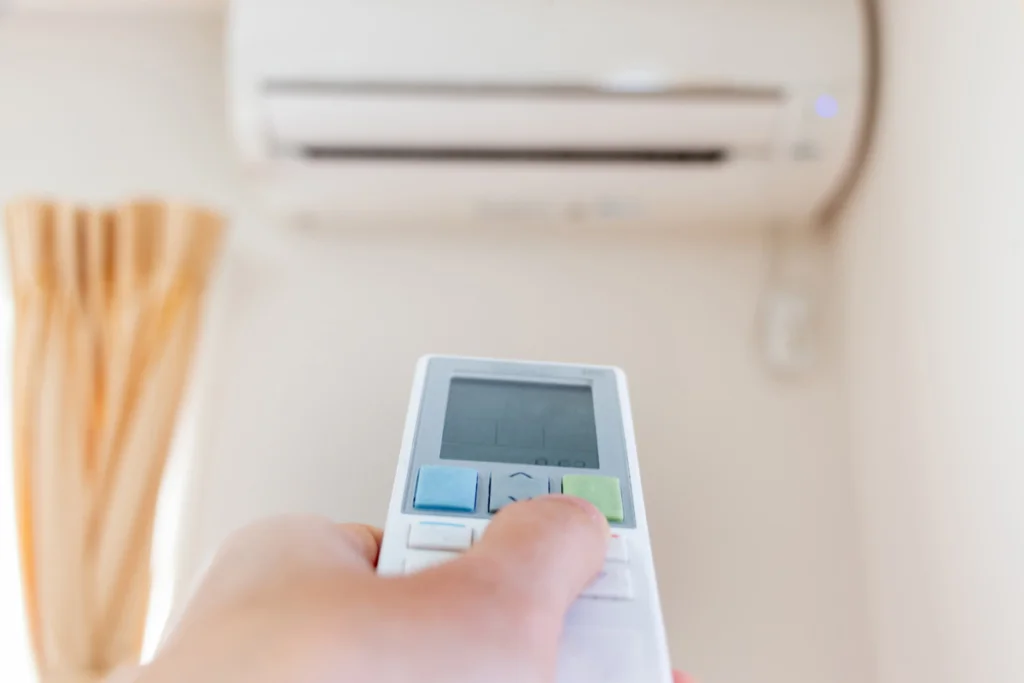
You’ve got cold air coming out of your vents, your thermostat says you’ve reached your set temperature, but your home still feels sticky, damp, and uncomfortable. If this sounds familiar, you’re dealing with one of the more confusing air conditioning problems homeowners face: an AC system that’s cooling but not properly dehumidifying. In a place like Las Vegas, where indoor humidity control matters just as much as temperature during the summer months, this issue can make your home feel far less comfortable than the thermostat suggests.
Understanding How Your AC Removes Humidity
Cooling your home and removing humidity go hand in hand. As warm, humid air passes over your evaporator coil, moisture in the air condenses on the coil’s surface, similar to how condensation forms on a cold glass of water. That moisture then drains away through your system’s condensate line, leaving the air both cooler and drier. When this process is working properly, your AC pulls double duty: lowering the temperature while also reducing humidity. When something interferes with this process, you can end up with cold air that still feels damp and uncomfortable.
Common Reasons Your AC Isn’t Removing Humidity
It might seem like a bigger AC system would cool your home better, but an oversized unit can actually struggle with humidity control. A system that’s too large for your home cools the air quickly and shuts off before it has enough time to properly dehumidify. These short cycles mean your home reaches the set temperature fast, but the air never gets the extended contact with the evaporator coil needed to remove excess moisture.
When airflow is restricted by a clogged filter or dirty coil, less air passes over the evaporator coil at the right rate for effective moisture removal. This can throw off the entire dehumidification process, leaving your home cooler but still humid.
Refrigerant plays a central role in the cooling and dehumidifying process. When refrigerant levels are low, the evaporator coil can’t reach the proper temperature needed to effectively condense moisture out of the air, even if the system still blows cold air.
If your thermostat’s fan setting is set to “on” rather than “auto,” your blower fan runs continuously, even when the compressor isn’t actively cooling. This constant airflow can cause moisture that’s already collected on the coil to re-evaporate back into the air rather than draining away, undoing the dehumidification your system just accomplished.
Leaky or poorly designed ductwork can allow humid outdoor air or air from unconditioned spaces like attics to mix with your cooled air before it reaches your living space. This introduces additional moisture into your home that your AC system never gets the chance to remove.
If moisture collected by your evaporator coil can’t properly drain away due to a clogged condensate line, it may not be removed from your indoor air effectively, or worse, it can lead to water damage and mold growth near your indoor unit.
While Las Vegas is generally known for its dry desert climate, humidity levels can spike during monsoon season or periods of unusually humid weather. During these times, even a well-functioning AC system may need to work harder to keep indoor humidity at a comfortable level.
Why This Matters Beyond Comfort
Excess indoor humidity isn’t just uncomfortable, it can lead to bigger problems over time. High humidity creates an environment where mold, mildew, and dust mites thrive, and it can even cause damage to wood furniture, flooring, and other materials in your home. Persistently damp indoor air can also make your home feel warmer than the actual temperature, leading you to lower your thermostat further and driving up energy costs unnecessarily.
What You Can Do
If your AC is running but your home still feels muggy, start by checking your thermostat’s fan setting and making sure your air filter is clean. Beyond these simple checks, most causes of poor humidity control require a professional evaluation to determine whether the issue lies with your system’s sizing, refrigerant levels, ductwork, or another component. In some cases, a whole-home dehumidifier can be integrated with your existing AC system to provide additional humidity control, particularly for homes that consistently struggle with excess moisture.
Get Expert Help From Elite Plumbing, Heating & Air Conditioning
If your air conditioner is blowing cold air but your home still feels sticky and uncomfortable, it’s time to have a professional take a closer look. Elite Plumbing, Heating & Air Conditioning can diagnose the root cause of your humidity issues, whether it’s a sizing problem, a refrigerant issue, or something else, and help restore true comfort to your home.
Elite Plumbing, Heating & Air Conditioning
3085 E Post Rd, Las Vegas, NV 89120
Phone: 702-263-2665