
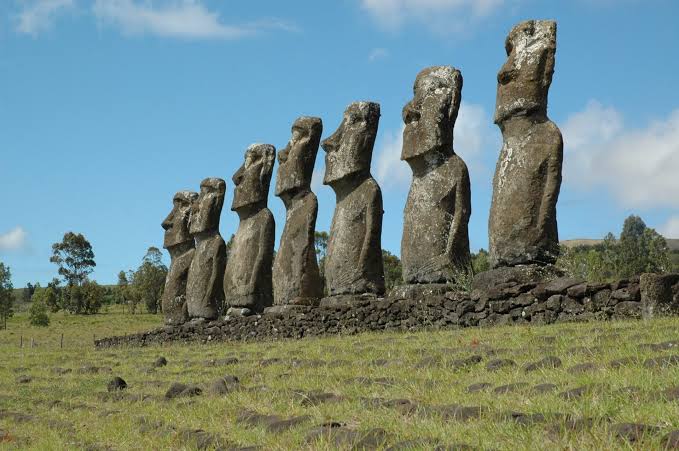
Why is Easter Island called Easter Island? The short answer is that a Dutch explorer named Jacob Roggeveen landed on the island on Easter Sunday in 1722, and he named it after the day he found it.
That single moment on a remote Pacific shoreline is the reason the name has stuck for over 300 years. But there is far more to the story than one lucky date on a calendar.
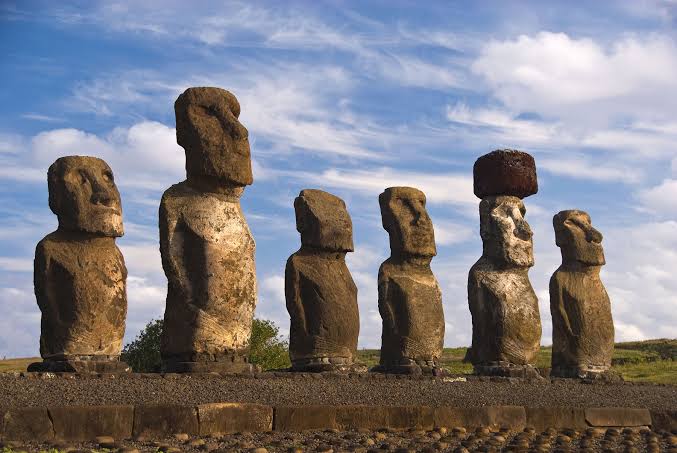
Easter Island got its name from Dutch explorer Jacob Roggeveen. He sighted the island on April 5, 1722, which was Easter Sunday that year.
He called it “Paasch Eyland,” Dutch for Easter Island. The name was never officially changed, even though the island’s own people call it Rapa Nui.
The person responsible for the name is Jacob Roggeveen, a Dutch naval commander and merchant. He was searching the Pacific Ocean for a legendary landmass called Terra Australis.
Roggeveen was not looking for Easter Island at all. He stumbled upon it by chance while sailing a westward course from the coast of Chile.
Because European sailors of that era commonly named new discoveries after the day they were found, the choice was almost automatic. Easter Sunday landed him a permanent place in the island’s history.
Roggeveen’s expedition left the Netherlands in August 1721 with three ships and roughly 223 crew members. Their mission was to find new trade routes and unclaimed land in the southern Pacific.
The fleet sailed past the Falkland Islands and around Cape Horn before resupplying in the Juan Fernández Islands off the coast of Chile. From there, they pushed west into open, uncharted ocean.
On the evening of April 5, 1722, lookouts spotted land where no island had ever been marked on existing charts. Because that day fell on Easter Sunday, the crew named it Paasch Eyland.
His written account is one of the earliest European descriptions of the island’s massive stone statues, which stunned the crew at the time.
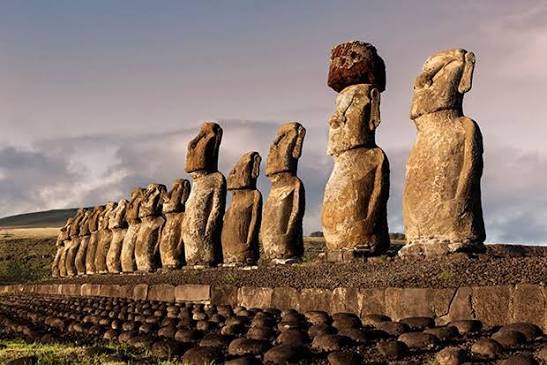
Long before any European ship arrived, the island already had a name given by its own people. They called it Rapa Nui, which is generally translated as “Great Rapa.”
This name likely compares the island to Rapa Iti, a smaller island in French Polynesia that shares physical similarities. Locals still use Rapa Nui as both the name of the island and their own cultural identity.
Today, most historians, anthropologists, and the Chilean government officially recognize Rapa Nui alongside the more commercially known Easter Island.
Easter Island has actually carried several names over different periods of its history, each reflecting a different chapter of its story.
Before Roggeveen’s arrival, oral tradition suggests the island was called Te Pito O Te Henua, which translates roughly to “The Navel of the World.” This name reflected how the early Polynesian settlers viewed their remote homeland.
| Name | Language | Approximate Period | Meaning |
|---|---|---|---|
| Te Pito O Te Henua | Rapa Nui | Pre-1722 | “Navel of the world” |
| Paasch Eyland | Dutch | 1722 | “Easter Island” |
| Easter Island | English | 1722–present | Named after Easter Sunday landing |
| Isla de Pascua | Spanish | 1888–present | Spanish for “Easter Island” |
| Rapa Nui | Rapa Nui | Modern usage | “Great Rapa” |
Easter Island sits in the southeastern Pacific Ocean, making it one of the most isolated inhabited places on the planet. It belongs to Chile, despite being over 2,000 miles from the Chilean mainland.
The nearest inhabited neighbor is Pitcairn Island, roughly 1,300 miles away. This extreme isolation is part of why the island’s culture and statues developed so distinctly.
| Fact | Detail |
|---|---|
| Discovered by Europeans | April 5, 1722 |
| Discoverer | Jacob Roggeveen |
| Native name | Rapa Nui |
| Governing country | Chile |
| Distance from Chile | Roughly 2,300 miles |
| UNESCO status | World Heritage Site since 1995 |
| Approximate population | Around 7,500 residents |
| Famous landmark | Moai statues |
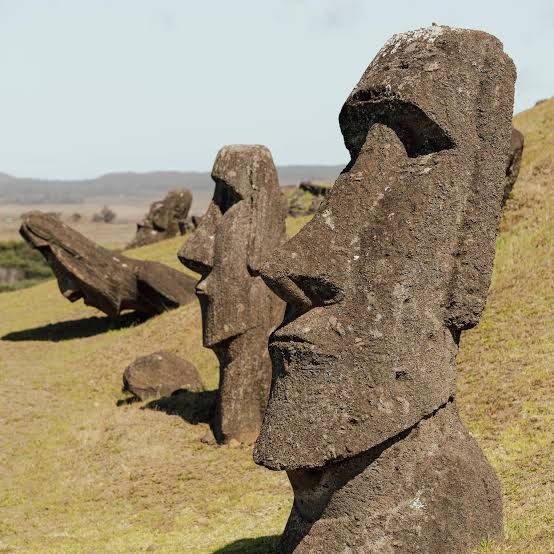
The moai are the giant stone statues that made Easter Island famous worldwide. Roggeveen’s crew described them as remarkable stone figures the moment they first saw the coastline.
These statues are believed to represent important ancestors of the Rapa Nui people. Their presence had nothing to do with the island’s naming, but they became forever linked to it in the public imagination.
Many visitors are surprised to learn there is no connection between the Christian holiday and the island’s culture or history. The name is purely a coincidence of timing.
Names given by early European explorers often became permanent in maps, trade records, and colonial documents. Once “Easter Island” appeared on global charts, it became the standard reference used in commerce and travel.
Even after Chile annexed the island and locals reasserted Rapa Nui as their preferred name, the older European label remained dominant internationally because of how deeply it was embedded in maps, books, and tourism marketing.
Yes, Easter Island is still the most common name used internationally, especially in English-speaking countries. However, Rapa Nui is the name preferred locally and used increasingly in academic and official contexts.
Chile itself uses Isla de Pascua in Spanish while officially recognizing Rapa Nui as the indigenous name. Many travel brands and airlines still market the destination as Easter Island because of its global name recognition.
The name Easter Island carries strong recognition value, which has shaped how the destination is marketed to travelers. It evokes mystery, isolation, and the iconic moai statues in a single phrase.
Tourism boards often use both names together, introducing Rapa Nui to visitors while keeping Easter Island in headlines for search visibility. This dual-name strategy helps preserve cultural identity while maintaining global searchability.
Travel agencies frequently lead marketing materials with “Easter Island” because it is instantly recognizable to international audiences, then introduce “Rapa Nui” once travelers begin researching deeper into the culture. This layered approach helps first-time visitors find the destination while still educating them on its true heritage before they arrive.
Easter Island has a subtropical climate with warm temperatures year-round, shaped heavily by ocean winds. The terrain is largely volcanic, formed by three extinct volcanoes that merged over time into the island’s triangular shape.
Modern life on the island centers around the town of Hanga Roa, home to most of the roughly 7,500 residents. Fishing, agriculture, and tourism form the backbone of the local economy today.
This modern infrastructure exists alongside centuries-old archaeological sites, creating a striking contrast between ancient heritage and contemporary daily life.
A frequent misunderstanding is that Easter Island has any religious history tied to Christianity. In reality, the name only reflects the date Europeans first recorded contact.
Another common mix-up is assuming Rapa Nui is a newer name invented for tourism. In fact, Rapa Nui likely predates the European name by centuries.
Roggeveen was not the last European to visit and record the island’s name. Spanish, British, and French expeditions all followed within the next 50 years, and each left its own mark on the historical record.
In 1770, a Spanish expedition led by Felipe González briefly claimed the island for Spain and renamed it Isla de San Carlos. That name never gained lasting traction outside official Spanish records.
This repeated use across multiple nations is a major reason the name became permanent rather than fading like Isla de San Carlos did.
Renaming newly encountered lands after significant dates was standard practice among European explorers of the 1700s. It was rarely about erasing existing names, since explorers often did not know a native name existed at all.
For the Rapa Nui people, the arrival of Roggeveen marked the beginning of sustained outside contact, which eventually brought disease, slave raids, and major population decline in the 19th century. The name Easter Island is tied to this broader colonial history, even though the naming moment itself was incidental.
Anthropologists and cultural heritage organizations increasingly favor Rapa Nui in academic writing. This reflects a broader global trend of prioritizing indigenous names alongside or instead of colonial-era labels.
Museums, research institutions, and UNESCO documentation often list both names together, such as “Rapa Nui (Easter Island),” to respect cultural origin while remaining searchable for general audiences.
Historical institutions such as the Metropolitan Museum of Art and UNESCO both confirm the same core timeline: European contact in 1722, on Easter Sunday, by Jacob Roggeveen. This consistency across academic and cultural institutions supports the reliability of the naming origin.
UNESCO’s 1995 World Heritage designation also formally acknowledges Rapa Nui National Park, reinforcing the island’s dual identity in official global records.
Before moving into common questions, here is a quick summary of the core facts covered above. These points sum up the entire naming history in a few lines.
It was named by Dutch explorer Jacob Roggeveen, who landed there on Easter Sunday, April 5, 1722. He recorded the name in Dutch as Paasch Eyland.
The island’s indigenous name is Rapa Nui, meaning “Great Rapa.” This is the name preferred by the local Polynesian population.
Jacob Roggeveen, a Dutch explorer, is credited as the first European to reach the island. Polynesian settlers had already lived there for centuries before his arrival.
Europeans first recorded contact with the island on April 5, 1722. That date happened to fall on Easter Sunday that year.
No, there is no cultural or religious connection between the island and Easter. The name only marks the date of European discovery.
Oral tradition points to Te Pito O Te Henua, translated as “The Navel of the World.” This name reflected the island’s remote, self-contained identity.
Easter Island is a special territory of Chile. It has been governed by Chile since its annexation in 1888.
They aren’t directly linked to the naming itself. The statues became world-famous around the same time the Easter Island name spread internationally.
Rapa Nui is recognized as the indigenous and cultural name, while Easter Island remains the common international name. Both names are used in official and everyday contexts.
Easter Island is considered one of the most isolated inhabited islands on Earth. Its nearest inhabited neighbor, Pitcairn Island, is roughly 1,300 miles away. During the same 1722 voyage, Roggeveen also went on to encounter and name Bora-Bora and Maupiti in French Polynesia.
Easter Island got its name from a single moment in 1722, when Dutch explorer Jacob Roggeveen landed there on Easter Sunday. That coincidence of timing gave the island a name that has lasted more than three centuries.
Long before that landing, the island already had its own identity as Rapa Nui, a name still used proudly by its indigenous people today. Both names now exist side by side, one rooted in European exploration and the other in Polynesian heritage.
Understanding why Easter Island carries this name also opens the door to its deeper history, from the mysterious moai statues to its status as one of the most isolated inhabited places on Earth. The name may be a coincidence, but the island’s story is anything but ordinary.
Whether you refer to it as Easter Island or Rapa Nui, the destination continues to capture global curiosity centuries after that fateful Easter Sunday landing.