
Why is diversity important? It is the foundation of every thriving workplace, school, and society. Diversity brings together people of different backgrounds, races, genders, ages, religions, and experiences under one roof. It drives innovation, fuels better decisions, and creates stronger communities.
Research consistently shows that diverse teams outperform homogeneous ones. In 2026, the conversation around diversity is more relevant than ever.
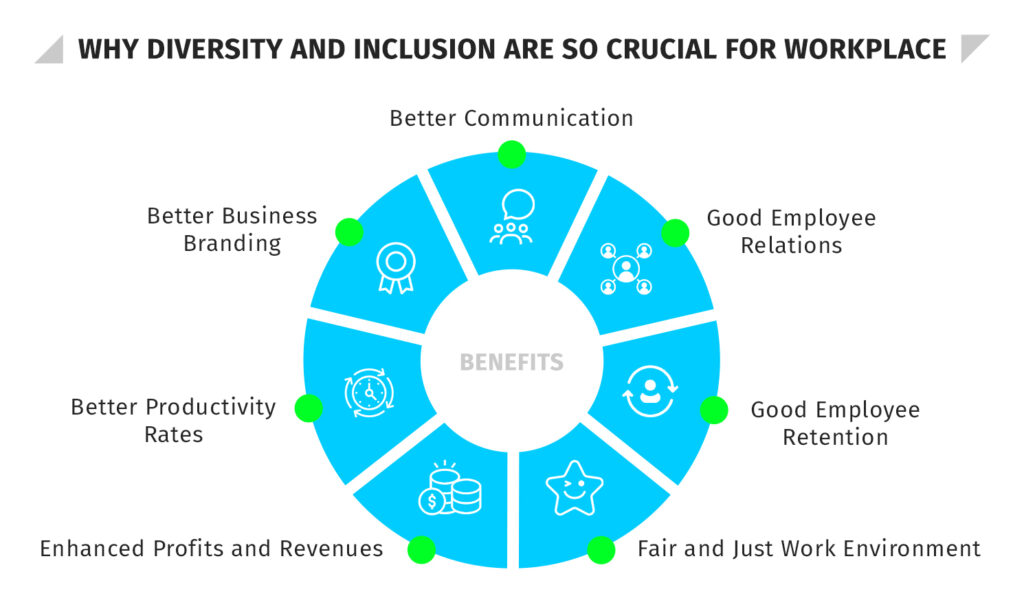
Diversity means the presence of differences within a group or organization. These differences go far beyond race or gender.
It includes age, religion, socioeconomic background, physical ability, sexual orientation, nationality, and even thinking styles. When all of these elements come together, the result is a richer, more complete environment.
True diversity is not just about numbers or quotas. It is about creating a culture where everyone feels valued and heard.
Understanding the different types of diversity helps organizations and communities build more inclusive environments.
| Type of Diversity | Description |
|---|---|
| Cultural Diversity | Different cultural and ethnic backgrounds |
| Gender Diversity | Representation of all genders equally |
| Age Diversity | Mixing of multiple generations in one team |
| Racial Diversity | Inclusion of people of all racial backgrounds |
| Cognitive Diversity | Differences in thinking styles and problem-solving |
| Disability Diversity | Inclusion of people with physical or mental disabilities |
| Religious Diversity | Respect for all faith traditions |
| Socioeconomic Diversity | Inclusion of people from all income backgrounds |
Each type brings a unique layer of perspective that makes groups smarter, more creative, and more resilient.
The workplace is where the impact of diversity is most measurable. Companies that invest in diversity consistently outperform their competitors.
According to McKinsey, companies in the top quartile for gender diversity are 39% more likely to achieve above-average profits. Ethnic diversity shows similar results, with top-quartile companies outperforming peers by 35 to 39%.
Diversity is not just good ethics. It is a proven business strategy.
When people from different backgrounds sit in the same room, fresh ideas emerge. A multicultural team brings varied problem-solving approaches that a homogeneous group simply cannot replicate.
Forbes research confirms that the best way to develop new ideas is through a diverse and inclusive workforce. Different life experiences spark different solutions.
One creative idea from a unique perspective can spark a chain of innovations that would never have happened otherwise.
Diverse teams make smarter choices. A UK-based Cloverpop study covering 600 business decisions found that diverse teams outperform individuals 87% of the time.
Gender-diverse teams are especially effective, outperforming all-male teams 73% vs. 58% of the time. Having multiple viewpoints in the decision room leads to fewer blind spots.
This means fewer costly mistakes and better long-term outcomes for organizations.
When employees feel seen and respected, they stay longer. A 2025 SHRM study found that fair treatment in hiring and workplace culture is among the top five elements of retaining talent.
Great Place To Work research shows employees in inclusive environments are 9.8 times more likely to look forward to going to work. That kind of engagement directly impacts productivity and profit.
High turnover is expensive. Diversity is one of the most effective tools for keeping great people around.
Limiting your hiring to a narrow demographic means missing out on exceptional talent. Diverse hiring practices open doors to candidates from all walks of life.
76% of job seekers say a diverse workforce is a critical factor when evaluating job offers, according to Glassdoor. Top talent actively seeks out inclusive employers.
Companies that earn a reputation for diversity naturally attract stronger, more varied applicants.
A diverse workforce mirrors the diverse marketplace. Employees who share backgrounds with customers bring natural insight into their needs and preferences.
If your team reflects your customer base, you communicate more authentically, design better products, and build stronger loyalty. You stop guessing and start understanding.
This is especially critical for companies looking to expand into new international markets.
Diversity matters far beyond office walls. It shapes how communities function, how democracies operate, and how people treat one another.
Diversity pushes society toward fairness. When marginalized groups gain access to equal opportunities, the entire community becomes more just.
Providing equal opportunities to underrepresented groups creates a more equitable society. This is not charity. It is the correction of long-standing systemic imbalances.
A fair society is a stronger society, and diversity is the path that leads there.
Regular exposure to people who are different reduces fear and bias. Studies show that people who live in diverse communities tend to identify with all of humanity and help others more.
When coworkers, classmates, and neighbors come from different backgrounds, stereotypes naturally begin to break down. Understanding replaces assumptions.
This creates a more harmonious and cooperative social fabric at every level.
Diversity builds bridges between communities. When different cultures interact regularly, the result is mutual respect and greater empathy.
Cultural understanding reduces conflict, promotes collaboration, and produces citizens who are better equipped for a globalized world. Schools and communities that celebrate diversity prepare people for real-world challenges.
Cultural competency is increasingly a life skill, not just a workplace one.
Diverse participation in civic life produces better governance. When a wider range of voices contributes to public decision-making, outcomes are more balanced and representative.
Research from UC Berkeley shows that people in more diverse places have a broader view of what it means to be a citizen. This translates into stronger democratic institutions.
Diversity keeps power distributed and prevents the dominance of a single perspective in society.
Schools and universities that prioritize diversity create better learning environments for every student, not just those from minority groups.
Students who learn alongside people from different cultures are better prepared for the real world. They develop cross-cultural communication skills, empathy, and adaptability from a young age.
These are precisely the skills that modern employers seek. A diverse education is a competitive advantage.
Schools that embrace diversity are not just being inclusive. They are being strategic.
Research shows that celebrating the contributions of people from diverse backgrounds strengthens their sense of belonging and improves performance at school.
When students feel represented and included, they engage more deeply. This benefits everyone in the classroom, not just the students from underrepresented groups.
A rising tide of engagement lifts all academic outcomes.
Exposure to diverse viewpoints challenges students to question assumptions. When classmates disagree based on real cultural or experiential differences, it stimulates deeper thinking.
This kind of intellectual friction produces sharper analytical skills. Students learn that there is rarely just one correct answer to complex problems.
That lesson serves them well long after graduation.
| Statistic | Source |
|---|---|
| Companies in top quartile for gender diversity are 39% more likely to outperform | McKinsey, 2023 |
| 76% of job seekers consider diversity when evaluating job offers | Glassdoor |
| Diverse teams outperform individuals 87% of the time in decision-making | Cloverpop Study |
| 76% of Gen Z employees are more likely to stay at companies with active DEI programs | Catalyst, 2025 |
| 65% of U.S. companies maintained or increased DEI budgets in 2025 | Newsweek, 2025 |
| 89% view generational diversity as a positive force in the workplace | Forbes |
| Top diverse companies are 24% more profitable than the S&P 500 | Thomas.co |
| Disengaged employees have 18% lower productivity and 37% higher absenteeism | Gallup |
These numbers are not opinions. They are evidence that diversity is one of the most powerful tools available to organizations and societies.
Diverse leadership transforms organizations from the top down. When leadership reflects a variety of backgrounds, strategies become more nuanced and far-reaching.
Companies in the top quartile for ethnic diversity in leadership are 36% more likely to have superior financial returns. The data is unambiguous.
Leaders who model inclusive behavior create a ripple effect throughout their organizations. Inclusive leadership is a durable skill that combines empathy, flexibility, and social intelligence.
Innovation does not happen in an echo chamber. It requires the collision of different ideas, experiences, and perspectives.
Research shows that among companies with more than $10 billion in annual revenues, 56% strongly agreed that diversity drives innovation. When people who think differently work together, they stimulate each other in ways that identical thinkers cannot.
From a neurological perspective, the human brain actually performs at a higher level in diverse groups. Cognitive diversity is not a soft benefit. It is a biological advantage.
| Challenge | Solution |
|---|---|
| Resistance to change | Leadership modeling and clear communication |
| Cultural miscommunication | Cross-cultural training and open dialogue |
| Unconscious bias in hiring | Structured interviews and blind resume reviews |
| Tokenism without inclusion | Building belonging at every level |
| Lack of diverse leadership | Mentorship and sponsorship programs |
| Measuring cultural belonging | Qualitative surveys and honest tracking |
Diversity challenges are real, but they are solvable. The key is treating diversity not as a one-time event but as a continuous, evolving commitment.
Building a truly diverse organization takes intentional effort at every level.
Start with leadership buy-in. Without commitment from the top, diversity initiatives stall quickly. Leaders must model inclusive behavior every single day.
Audit your hiring process. Identify unconscious bias in job descriptions, interview panels, and candidate evaluation. Structured hiring practices produce fairer outcomes.
Create mentorship programs. Cross-generational and cross-cultural mentorship builds bridges and accelerates career growth for underrepresented employees.
Measure and report. Track diversity metrics honestly and transparently. Share progress with your team to build accountability and trust.
Embed diversity into business strategy. The most successful organizations in 2026 treat diversity not as a social obligation but as a core competitive advantage.
These three terms are often used together but they mean different things.
| Term | Definition |
|---|---|
| Diversity | The representation of different people in a group |
| Inclusion | Ensuring everyone has equal opportunity to contribute |
| Belonging | Ensuring everyone feels safe to be their full, authentic self |
You can have diversity without inclusion, and inclusion without belonging. All three must work together to create a truly equitable environment.
The goal is not just to hire a diverse team. It is to build a place where every person on that team can thrive.
Inclusive workplaces directly impact employee mental health. When people feel they belong, stress decreases and job satisfaction increases.
Black workers are less likely to experience health problems when they have more diverse coworkers, according to a peer-reviewed study. Belonging is not just a feel-good concept. It has biological consequences.
Organizations that invest in belonging reduce absenteeism, lower burnout rates, and build more resilient teams overall.
The business case for diversity has never been stronger. In 2026, companies that ignore diversity are leaving money, talent, and innovation on the table.
Generational diversity is now a business asset, with multiple generations working side by side bringing distinct strengths. Gen Z, the most racially diverse generation yet, is reshaping workplace expectations rapidly.
Organizations that embed diversity into their core operations, not just their marketing, are building the most resilient businesses of the decade.
Diversity drives innovation, improves decision-making, increases employee retention, and boosts profitability. Companies in the top quartile for diversity are up to 39% more likely to outperform their peers financially.
The main types include cultural, racial, gender, age, cognitive, religious, socioeconomic, and disability diversity. Each type contributes unique perspectives that strengthen teams and organizations.
People from different backgrounds approach problems differently. When diverse perspectives combine in a team, the range of solutions expands significantly, leading to more creative and effective outcomes.
Yes. McKinsey research shows that the most gender and ethnically diverse companies consistently outperform competitors by 25% to 39% in financial returns. Diversity is a proven revenue driver.
Diversity is about who is in the room. Inclusion is about whether those people can fully contribute. Both are necessary, but inclusion is what makes diversity actually work.
Diverse educational environments prepare students for a global workforce, improve academic performance, build empathy, and develop critical thinking skills they carry throughout their lives.
Diversity reduces prejudice, promotes fairness, strengthens democratic participation, builds cultural understanding, and creates more cohesive and resilient communities at every level.
Common challenges include unconscious bias, resistance to change, lack of diverse leadership pipelines, and tokenism. Each can be addressed through structured strategy, education, and accountability.
Absolutely. Despite political debates, 65% of U.S. companies maintained or increased their DEI budgets in 2025. The data consistently shows that diverse and inclusive workplaces outperform those that are not.
Small businesses can start by reviewing hiring practices for bias, creating inclusive policies, actively recruiting from underrepresented communities, and building a culture where all voices are genuinely valued.
Why is diversity important? Because it makes everything better. It makes workplaces more innovative, decisions sharper, communities fairer, and societies stronger.
The evidence is overwhelming and consistent across industries, geographies, and time. Diversity is not a trend or a political stance. It is a fundamental driver of human progress. In 2026, organizations and individuals who embrace diversity are not just doing the right thing.
They are doing the smart thing. The world is diverse by nature. Building systems, workplaces, and communities that reflect that reality is not optional for long-term success.
It is essential. Start where you are, do what you can, and commit to building a more inclusive environment every single day. The benefits will follow.