

Why does my floss smell like poop is a question far more people quietly search than ever say out loud to their dentist.
The short answer is that the smell almost always comes from trapped food debris and bacteria releasing sulfur compounds between your teeth, and in many cases it is completely normal. In other cases, that same smell is an early warning sign of gum disease, a hidden cavity, or dry mouth.
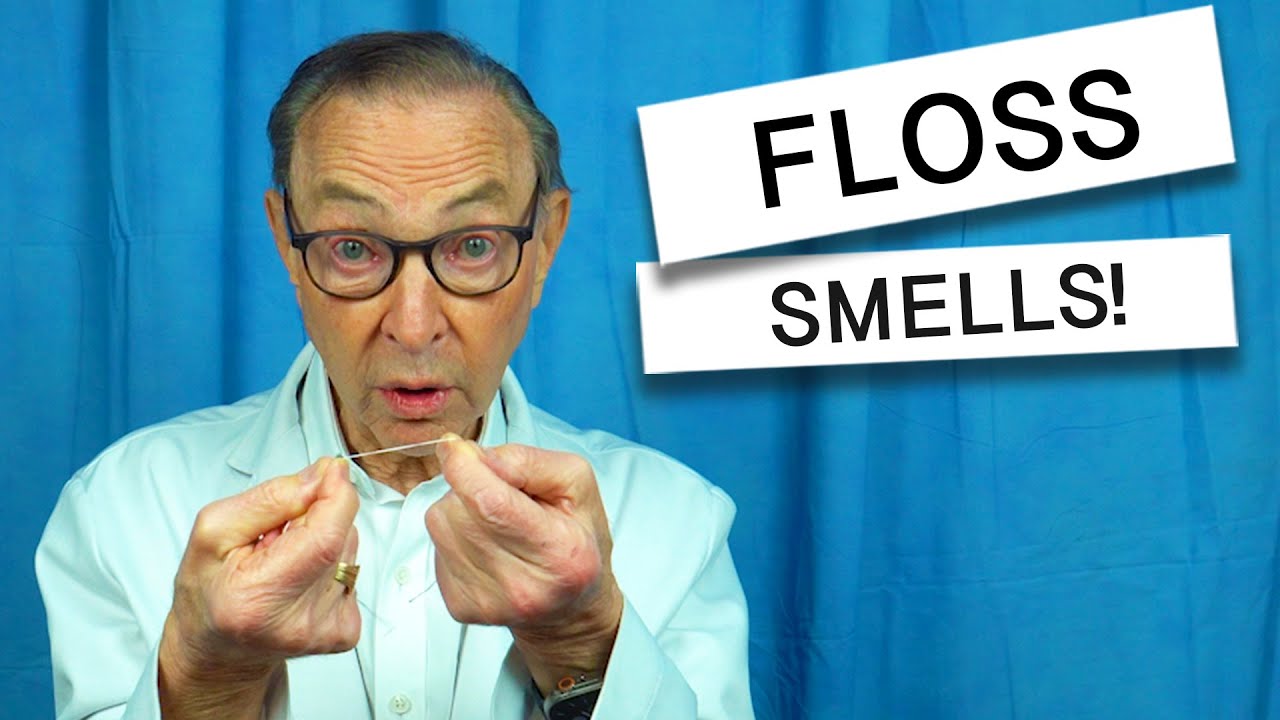
The odor on floss is not caused by the floss material itself. It comes from what the floss physically pulls out from between your teeth.
That smell is caused by volatile sulfur compounds, often shortened to VSCs, including hydrogen sulfide and methyl mercaptan.
These same gases are also present in feces and rotten eggs, which is exactly why the smell reminds people of poop rather than something more neutral.
VSCs form when bacteria break down trapped food particles and dead cells in low-oxygen spaces your toothbrush cannot reach.
Tiny bits of food, especially meat, dairy, and fibrous vegetables, easily get lodged in the tight spaces between teeth after eating.
If these particles are not removed quickly, bacteria begin breaking them down almost immediately, and noticeable odor can develop within about 24 hours.
Flossing physically dislodges this decaying material, which is why the smell often seems to appear suddenly the moment you floss rather than beforehand.
This type of odor tends to be strongest right after meals or in specific hard-to-reach spots rather than spread evenly across your whole mouth.
Plaque is a sticky, colorless film of bacteria that forms constantly on your teeth, regardless of how careful you are with brushing.
When plaque is not removed daily, it can harden into tartar, which traps even more bacteria and becomes much harder to clean without professional tools.
Anaerobic bacteria, the type that thrive without oxygen, live comfortably beneath this buildup and produce the sulfur compounds responsible for the odor.
The more plaque and tartar present, the stronger and more consistent the smell tends to be each time you floss that area.
| Buildup Stage | What It Looks Like | Odor Level |
|---|---|---|
| Fresh plaque | Soft, colorless film | Mild to none |
| Established plaque | Slightly sticky, visible film | Noticeable |
| Hardened tartar | Yellow or brown, rough texture | Strong, persistent |
A strong, persistent poop-like smell is one of the more common early signs of gum disease, starting with a milder stage called gingivitis.
Gingivitis develops when plaque builds up along the gumline, causing gums to become red, swollen, and prone to bleeding during flossing.
If gingivitis is not addressed, it can progress into periodontitis, a more serious form of gum disease that creates deep pockets between teeth and gums.
These deep pockets, sometimes called periodontal pockets, trap bacteria and debris far more effectively than healthy gum tissue, intensifying the odor significantly.
| Stage | Gum Appearance | Typical Odor |
|---|---|---|
| Healthy gums | Pink, firm, no bleeding | Mild or no odor |
| Gingivitis | Red, swollen, occasional bleeding | Noticeable sulfur smell |
| Periodontitis | Receding, deep pockets, loose teeth | Strong, persistent odor |
A cavity between two teeth can be difficult to spot without an X-ray, but it often announces itself through a localized bad smell.
Cavities create small hidden spaces where bacteria and decaying food particles collect and are much harder to clean than open, healthy tooth surfaces.
If you notice the odor consistently coming from one specific spot every time you floss, that repeated pattern can point toward a cavity or failing filling.
A dentist can confirm this quickly with an X-ray, and treating the cavity early usually resolves the localized odor completely.
Saliva plays a bigger role in odor control than most people realize, since it constantly washes away food particles and neutralizes acids in your mouth.
When saliva production drops, a condition known as dry mouth or xerostomia, bacteria are left undisturbed and can multiply more freely.
Common causes of dry mouth include dehydration, certain medications, alcohol-based mouthwash, mouth breathing, and some medical conditions unrelated to oral health.
Without enough saliva acting as a natural rinse, odor-causing bacteria stay active longer, which can make floss smell noticeably worse even with decent brushing habits.
If your gums bleed during flossing, you may notice the smell shifts slightly, picking up a metallic note layered on top of the usual sulfur odor.
This happens because blood contains iron, and iron can combine with sulfur compounds already present from bacteria to create a distinct metallic smell.
Occasional light bleeding from a new flossing routine is usually not alarming on its own, especially if it fades within a week or two.
Bleeding that continues past two weeks, especially alongside a strong odor, is a stronger signal that gum inflammation is active and needs attention.
A mild, occasional smell after flossing is considered a normal part of oral hygiene, since floss is designed to remove things that do not belong in your mouth.
The distinction between normal and concerning usually comes down to intensity, consistency, and whether other symptoms are present alongside the odor.
| Situation | Likely Meaning | Action Needed |
|---|---|---|
| Mild smell, occasional | Floss doing its job | None, keep flossing daily |
| Strong smell, every time | Plaque or bacteria buildup | Improve daily routine |
| Persistent smell despite good habits | Possible gum disease or cavity | See a dentist |
| Smell plus bleeding gums | Gingivitis likely | Schedule a dental visit |
| Smell from one specific spot | Possible cavity or failing filling | Get an X-ray |
Using the correct technique matters just as much as flossing frequency when it comes to reducing bacterial buildup and odor over time.
Use about 18 inches of floss, wrapping most of it around your fingers while leaving a few clean inches to actually work with between teeth.
Curve the floss into a gentle C-shape against each tooth, sliding it slightly beneath the gumline rather than just snapping it straight up and down.
Always move to a clean section of floss for each tooth, since reusing the same section simply spreads bacteria from one space to the next.
Traditional floss is not the only option, and some tools work better depending on your teeth spacing, dexterity, or whether you have braces.
Water flossers use a targeted stream of pressurized water to flush out food particles and bacteria from deep between teeth and periodontal pockets.
Interdental brushes are small, brush-tipped tools that can clean wider gaps between teeth more thoroughly than string floss in certain cases.
Floss picks offer a convenient alternative for people who find traditional floss difficult to maneuver, though they may be slightly less effective in very tight spaces.
The tongue is often overlooked, but it harbors a significant amount of bacteria that contributes to overall mouth odor, not just the smell on floss.
Bacteria collect in the small grooves and papillae on the tongue’s surface, especially toward the back, where oxygen levels are lower.
Using a tongue scraper or the textured back of a toothbrush daily can meaningfully reduce the bacterial load contributing to bad breath and floss odor alike.
Skipping tongue cleaning while focusing only on teeth and gums leaves a major odor source completely unaddressed.
While food debris, plaque, and gum disease explain the vast majority of cases, a few less common causes are worth knowing about.
A sweet, fruity, or acetone-like smell, rather than a rotten one, can occasionally indicate uncontrolled blood sugar issues or ketosis from a strict low-carb diet.
Chronic sinus issues can also alter mouth odor indirectly, since post-nasal drip introduces additional bacteria-friendly mucus into the oral environment.
These causes are far less common than simple bacterial buildup, but they are worth mentioning to a doctor if the smell does not match the typical sulfur description.
Consistency matters more than intensity when it comes to preventing odor-causing buildup between teeth and along the gumline.
| Habit | Frequency | Purpose |
|---|---|---|
| Flossing | Once daily | Remove trapped food and plaque |
| Brushing | Twice daily, 2 minutes | Clear surface bacteria and plaque |
| Tongue cleaning | Once daily | Reduce bacterial load on tongue |
| Antibacterial mouthwash | As needed | Kill remaining odor-causing bacteria |
| Hydration | Throughout the day | Support saliva production |
| Professional cleaning | Every six months | Remove tartar buildup |
Many people notice the odor is not evenly spread across their mouth, but instead concentrated in one or two specific spots.
Back molars are especially prone to trapping food and bacteria because they have more grooves, tighter contact points, and are harder to reach with a toothbrush.
Areas with crowded or overlapping teeth also trap debris more easily, since floss and brush bristles cannot access every surface evenly in tight spaces.
If you notice the smell is always strongest in the same location, that consistency is useful information to share with your dentist during your next visit.
What you eat plays a direct role in how strong the odor becomes, since certain foods are simply more likely to get trapped and decompose.
Meat fibers, in particular, tend to lodge between teeth and take longer to break down compared to softer or less fibrous foods.
Dairy products can also contribute odor-causing compounds, since some proteins in dairy interact with oral bacteria in ways that intensify sulfur production.
Sugary and starchy foods feed plaque-forming bacteria directly, indirectly increasing the amount of odor-producing bacteria present between your teeth over time.
| Food Type | Odor Contribution | Why |
|---|---|---|
| Meat and fibrous foods | High | Gets trapped easily, slow to break down |
| Dairy | Moderate | Proteins interact with bacteria |
| Sugary or starchy foods | Moderate to high | Feeds plaque-forming bacteria |
| Fruits and vegetables | Low | Generally easier to clean away |
Floss odor and general bad breath, also known as halitosis, are closely related but are not always exactly the same thing.
Floss odor reflects what is happening in very specific, hard-to-reach spots between your teeth at that exact moment.
Halitosis is often a broader, more constant condition affecting your whole mouth, frequently driven by tongue bacteria, dry mouth, or ongoing gum disease.
It is entirely possible to have noticeable floss odor without full-blown bad breath, especially in early stages before bacteria spread more broadly across the mouth.
Certain everyday habits unintentionally make floss odor worse, even in people who genuinely believe they are maintaining good oral hygiene.
Reusing the same section of floss across multiple teeth spreads bacteria rather than removing it, effectively undoing much of the benefit of flossing in the first place.
Flossing too aggressively can injure gum tissue, leading to bleeding that adds a metallic note to the existing sulfur smell.
Skipping flossing for a few days and then flossing heavily all at once often releases a stronger, more noticeable odor than consistent daily flossing would.
A common misconception is that flossing harder or longer will resolve odor faster than flossing gently but consistently every single day.
In reality, bacteria buildup happens continuously, which means daily, moderate flossing prevents buildup far more effectively than occasional, intense sessions.
Skipping days allows bacteria and trapped debris time to multiply and produce stronger volatile sulfur compounds by the time you do floss again.
This is why dentists consistently emphasize daily habits over occasional deep-cleaning sessions when addressing persistent floss odor.
If you do schedule a dental visit specifically because of persistent odor, the appointment usually follows a fairly predictable and low-stress process.
Your dentist or hygienist will typically start with a visual exam, checking for visible plaque, tartar, gum inflammation, or signs of decay.
X-rays may be taken to check for cavities between teeth or below the gumline that are not visible during a standard visual exam.
A professional cleaning often follows, removing tartar buildup that daily brushing and flossing cannot fully eliminate on their own.
Treating the underlying cause of floss odor early offers benefits well beyond simply eliminating an unpleasant smell during your daily routine.
Early treatment of gingivitis, for example, is far simpler and less invasive than treating advanced periodontitis after significant gum and bone damage has occurred.
Catching a small cavity early usually means a simple filling, while ignoring the same issue can eventually lead to root canals or tooth extraction.
Addressing the root cause also tends to improve overall breath freshness, not just the specific odor noticed during flossing.
Most cases of smelly floss improve within one to two weeks of consistent, correct daily flossing and brushing habits.
If the smell persists despite good technique and consistency, it likely means bacteria are living deeper than floss alone can reach.
Bleeding gums that do not improve, visible swelling, receding gum lines, or pain while flossing are all reasons to schedule a dental visit sooner rather than later.
A professional cleaning can remove hardened tartar that home care cannot touch, while an exam can catch cavities or early gum disease before they worsen.
| Cause | Fix |
|---|---|
| Trapped food debris | Floss daily with proper technique |
| Plaque and tartar buildup | Brush twice daily, get regular cleanings |
| Gingivitis or periodontitis | See a dentist for evaluation and treatment |
| Hidden cavity | Get an X-ray and appropriate dental treatment |
| Dry mouth | Increase hydration, review medications |
| Tongue bacteria | Use a tongue scraper daily |

The smell comes from sulfur compounds released by bacteria breaking down trapped food debris. These same gases are found in feces, hence the similarity.
Not always. Mild, occasional odor is normal, but strong or constant odor often signals gum disease or bacterial buildup.
Yes. Gingivitis and periodontitis both create bacteria-rich environments that produce strong, persistent sulfur odors on floss.
With consistent daily flossing and brushing, most mild odor cases improve within one to two weeks.
Yes, especially if the odor consistently comes from one specific spot every time you floss that area.
Yes. Reduced saliva allows bacteria to multiply more freely, often intensifying odor noticeably.
Occasional light bleeding is common when starting a routine, but bleeding plus strong odor lasting weeks warrants a dental visit.
They can help significantly, especially for deep pockets or braces, though proper string flossing technique also works well.
Yes. The tongue harbors significant bacteria that contributes to overall mouth odor, including what ends up on floss.
See a dentist if the smell persists despite good hygiene, or if you notice bleeding, swelling, or pain alongside it.
So, why does my floss smell like poop? In most cases, the answer is simple: trapped food particles and bacteria are releasing sulfur compounds that happen to smell similar to feces.
That is often a normal, even reassuring, sign that your floss is doing exactly what it should. However, when the smell is strong, constant, or paired with bleeding, swelling, or pain, it is usually pointing toward gum disease, a hidden cavity, or dry mouth.
The fix in most cases is straightforward: floss daily with proper technique, brush twice a day, clean your tongue, and stay hydrated. If the odor does not improve within a couple of weeks despite consistent care, a dental visit is the fastest way to identify the real cause and protect your long-term oral health.