
Why do my teeth hurt when I have a cold? This is one of the most common questions people ask during cold and flu season. The answer lies deep inside your skull — your sinuses.
When a cold hits, inflamed sinus cavities press against the roots of your upper teeth, creating real, throbbing pain that feels exactly like a toothache. Most people rush to the dentist, not realizing the true cause is sinus-related.
In 2026, understanding this sinus-tooth connection can save you time, money, and unnecessary dental procedures.

Your sinuses are hollow, air-filled spaces inside your skull. They sit behind your cheeks, forehead, and nose.
The most important ones for tooth pain are the maxillary sinuses. These sit directly above the roots of your upper back teeth.
When a cold inflames these cavities, built-up mucus and swelling push down on the nerve endings of your upper molars. Your brain reads this as a toothache — even when your teeth are perfectly healthy.
The maxillary sinuses are located just millimeters above your upper molar roots. When congestion builds up, pressure increases inside those sinus pockets.
This pressure presses directly on dental nerve endings. You feel it as a dull, constant ache across several upper teeth at the same time.
The pain often gets worse when you bend forward, walk down stairs, or move your head quickly. That is a classic sign of sinus-driven tooth pain — not a cavity.
A common cold that lasts more than 7–10 days can develop into acute sinusitis. This is when the sinus lining becomes inflamed and swollen due to viral or bacterial infection.
Acute sinusitis causes intense pressure in the maxillary sinuses. This makes tooth pain stronger, more persistent, and harder to manage.
The pain usually affects multiple upper teeth at once. Single-tooth pain is more likely to be a dental problem, not a sinus issue.
Nasal congestion forces you to breathe through your mouth. This dries out your mouth rapidly, especially during sleep.
Saliva is your natural tooth protector. It neutralizes acids and washes away harmful bacteria from your teeth and gumline.
When saliva flow drops, bacteria multiply. This raises your risk of gum irritation, sensitivity, and even short-term tooth pain during a cold.
When your immune system fights a cold virus, it releases histamine. Histamine triggers inflammation throughout your body — including your gums and tooth nerves.
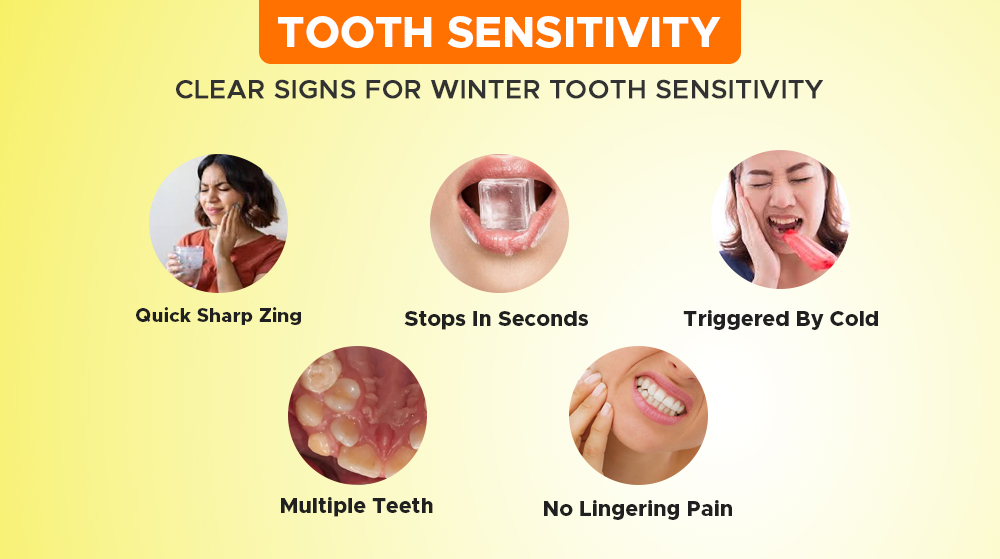
This inflammation makes your teeth and gums far more sensitive than usual. Cold air, hot drinks, or even normal biting can suddenly feel painful.
This type of sensitivity usually fades within a few days as your immune response calms down.
Being sick is uncomfortable and stressful. Many people unknowingly clench or grind their teeth during sleep when they feel unwell.
This habit, called bruxism, puts intense pressure on your teeth and jaw muscles. It can cause soreness in both upper and lower teeth.
The pain from bruxism feels more like a muscular ache than a sharp dental pain. It often feels worse in the morning after a night of restless, congested sleep.
Body fever alters how nerves respond to temperature. During a cold with fever, your teeth may become hypersensitive to hot or cold drinks.
Teeth with existing fillings or dental work are especially vulnerable. The materials used in fillings conduct temperature differently than natural enamel.
This makes previously painless teeth suddenly feel sensitive. It usually resolves once your fever breaks and your body temperature returns to normal.
Fever, increased mucus production, and reduced fluid intake all contribute to dehydration during a cold. Dehydration reduces saliva production significantly.
A dry oral environment allows bacteria to grow unchecked along your gumline. This can lead to gum soreness, enamel sensitivity, and general tooth discomfort.
Staying well-hydrated during a cold is one of the simplest and most effective ways to protect your teeth while you recover.
This is a critical question — and the answer can save you an unnecessary dental visit.
| Feature | Sinus Tooth Pain | Dental Toothache |
|---|---|---|
| Location | Multiple upper back teeth | Usually one specific tooth |
| Pain type | Dull, constant, pressure-like | Sharp, throbbing, intense |
| Worsens with | Bending over, head movement | Biting, chewing, hot/cold |
| Other symptoms | Congestion, runny nose, facial pressure | Swelling, gum tenderness near one tooth |
| Fever present | Often yes | Rarely unless infected |
| Improves when | Congestion clears | Only with dental treatment |
If your pain affects several upper teeth and coincides with cold symptoms, your sinuses are almost certainly the cause. If pain is isolated to one tooth or the lower jaw, see a dentist.

Not all teeth feel sinus pain equally. The location of the maxillary sinuses determines which teeth hurt most.
Upper back molars and premolars are the most commonly affected teeth. Their roots sit closest to — or sometimes even protrude slightly into — the maxillary sinus cavity.
Upper front teeth are rarely involved. Lower teeth are almost never affected by sinus pressure, since the mandible is far from the sinus cavities.
If your lower teeth hurt during a cold, this points toward jaw clenching, bruxism, or a dental issue rather than sinus pressure.
Doctors call sinus tooth pain “referred pain.” This means the actual source of pain is in one location (the sinuses), but the brain interprets it as coming from somewhere else (the teeth).
This happens because the roots of the upper molars and the maxillary sinus lining share nerve pathways via the trigeminal nerve. Inflammation in the sinus sends signals along the same nerve route that tooth pain uses.
Your brain cannot always tell the difference. This is why sinus-related toothache feels completely real and can be quite intense, even when your teeth are perfectly healthy.
Sinus-related tooth pain usually follows the timeline of your cold or sinus infection.
Common cold: Most colds resolve in 7–10 days. Tooth pain linked to a cold typically eases as congestion clears.
Acute sinusitis: Can last up to 4 weeks. Tooth pain may persist throughout this period and require medical treatment.
Bacterial sinus infection: If pain and congestion do not improve after 10 days, a bacterial infection may be involved. A doctor may prescribe antibiotics.
Once the underlying sinus inflammation resolves, tooth pain should disappear completely — no dental treatment needed.
Yes — and this is important to know. The relationship works both ways.
When a tooth becomes badly infected, bacteria can spread upward through the tooth’s root into the maxillary sinus. This is called odontogenic sinusitis or Maxillary Sinusitis of Endodontic Origin (MSEO).
MSEO is tricky because the patient may feel very little tooth pain, yet experience persistent sinus infections. In these cases, treating only the sinuses will not solve the problem — the infected tooth must be addressed first.
If you have recurring sinus infections without an obvious cause, a dental X-ray is worth considering.
You do not always need to visit a doctor or dentist to get relief. These home strategies target the root cause — sinus congestion.
Breathing steam from a bowl of hot water or a warm shower loosens mucus trapped in your sinus cavities. Thinner mucus drains more easily, reducing the pressure on your upper teeth.
Do this for 10–15 minutes, 2–3 times daily. Add a drop of eucalyptus oil for added decongesting effect if available.
A saline rinse or neti pot flushes out mucus, bacteria, and irritants from nasal passages. This directly reduces sinus inflammation and the pressure pressing on your upper jaw.
Use distilled or boiled water (cooled to body temperature) with a saline packet. Never use tap water in a neti pot.
Place a warm, damp towel across your cheeks, nose, and eyes for 10–15 minutes. The warmth helps dilate sinus passages and encourages mucus drainage.
This is one of the quickest ways to get temporary relief from sinus-driven toothache. Repeat several times throughout the day as needed.
Drinking water consistently throughout the day keeps mucus thin and flowing. Thick, stagnant mucus creates more pressure and more pain.
Aim for at least 8 glasses of water daily. Warm liquids like herbal tea or broth are especially helpful as they provide both hydration and mild steam.
Sleeping flat worsens sinus congestion because mucus pools rather than draining. Prop yourself up with an extra pillow to help drainage during the night.
This simple change can significantly reduce morning tooth pain caused by overnight congestion buildup.
Mix half a teaspoon of salt in a glass of warm water and swish for 30 seconds. Saltwater has natural anti-inflammatory and antibacterial properties.
It soothes irritated gum tissue and removes some bacteria that build up when saliva flow is reduced during mouth breathing.
| Treatment | How It Helps | Notes |
|---|---|---|
| Ibuprofen (Advil, Motrin) | Reduces inflammation and pain | Safe for adults; follow dosage |
| Acetaminophen (Tylenol) | Relieves pain and fever | Does not reduce inflammation |
| Nasal decongestant spray | Reduces nasal swelling fast | Do not use more than 3 days |
| Oral decongestants (Sudafed) | Reduces sinus congestion | Avoid with high blood pressure |
| Antihistamines | Helpful if allergy triggers cold | May worsen dry mouth |
| Saline nasal spray | Safe, non-medicated, daily use | No side effects |
For most people, a combination of ibuprofen (for pain and inflammation) and a saline nasal rinse (for congestion) provides solid relief within a few hours.
A cold temporarily weakens your oral defenses. Taking a few extra steps keeps your teeth and gums safe during recovery.
Keep brushing twice a day. Use a soft-bristle toothbrush and gentle circular motions. Even when sick, skipping brushing allows bacteria to multiply rapidly.
Use fluoride toothpaste. Fluoride helps strengthen enamel that may be temporarily weakened by dry mouth and acid buildup during illness.
Rinse with antibacterial mouthwash. This removes bacteria from areas your brush cannot reach, protecting your gums during periods of reduced saliva.
Choose sugar-free cough drops. Many cough drops contain sugar, which coats teeth and feeds bacteria. Opt for sugar-free versions to protect your enamel.
Replace your toothbrush after recovery. Bacteria from your cold can linger on bristles. A fresh toothbrush after you recover is a simple way to avoid reinfection.
Understanding which professional to contact saves both time and money.
See a doctor if: Your cold symptoms (congestion, runny nose, facial pressure) and tooth pain persist beyond 10 days. This suggests a bacterial sinus infection that may need antibiotics.
See a doctor if: You have fever with thick green or yellow nasal discharge, facial swelling, or severe headache alongside tooth pain. These suggest sinusitis or a more serious sinus infection.
See a dentist if: Pain is limited to a single tooth. Or if you notice visible swelling near one tooth, bleeding gums in one spot, or pain when biting on a specific tooth.
See a dentist if: Your tooth pain persists for weeks after all cold symptoms have cleared. Lingering tooth pain after the cold resolves points to an underlying dental issue.
Patients commonly describe sinus tooth pain in these specific ways:
A dull, constant pressure across the upper back teeth — not sharp, not localized.
A feeling that the teeth are being pushed downward from above.
Pain that worsens when bending over to tie a shoe or pick something up.
Pain that intensifies with sudden head movements like nodding or turning quickly.
Tenderness when tapping the upper molar area, even without direct dental issues.
These descriptions are distinct from a true dental infection, which tends to produce throbbing, localized pain that worsens with hot or cold foods.
| Sinus | Location | Tooth Pain Risk |
|---|---|---|
| Maxillary sinuses | Behind cheekbones, above upper molars | Highest — directly above tooth roots |
| Frontal sinuses | Above eyes, in forehead | Low — causes headache more than tooth pain |
| Ethmoid sinuses | Between eyes, near nose bridge | Moderate — can cause upper front tooth sensitivity |
| Sphenoid sinuses | Deep behind the nose | Low — rarely causes tooth pain |
The maxillary sinuses are responsible for nearly all cold-related tooth pain. They are the largest paranasal sinuses and sit closest to the upper jaw.
Being sick is not an excuse to skip dental care. In fact, your teeth need extra attention during illness.
Brush gently with a soft toothbrush. Sick or not, aim for two minutes of brushing, twice a day.
Rinse with warm salt water or an antibacterial mouthwash after meals. This reduces the bacterial load in your mouth when saliva protection is reduced.
Stay away from sugary drinks, sodas, and juices during recovery. These feed the bacteria already thriving in your drier-than-normal mouth.
If you vomit due to illness, rinse your mouth with plain water immediately. Wait 30 minutes before brushing — stomach acid temporarily softens enamel, and brushing too soon causes damage.
Use a humidifier in your bedroom. Moist air prevents your mouth from drying out completely during nighttime mouth breathing.
| Timeline | What to Do |
|---|---|
| Day 1–3 | Steam inhalation, saline rinse, warm compresses, ibuprofen |
| Day 4–7 | Continue above; add OTC decongestant; stay well hydrated |
| Day 7–10 | If no improvement, consider seeing a doctor |
| After 10 days | See doctor — possible bacterial sinusitis needing antibiotics |
| Pain in one tooth only | See dentist regardless of timeline |
Your maxillary sinuses sit directly above your upper molar roots. When a cold inflames them, the pressure presses on tooth nerves and creates a real aching sensation.
Yes. Sinus-driven tooth pain is referred pain via the trigeminal nerve. It feels identical to a toothache but requires no dental treatment — only sinus relief.
Sinus pain affects multiple upper back teeth and worsens when bending over. Cavity pain is sharp, localized to one tooth, and worsens with hot or cold foods.
Not usually. If the pain affects several upper teeth alongside cold symptoms, wait for the cold to resolve. If pain is in one tooth or lingers after recovery, see a dentist.
It typically lasts as long as your cold or sinus congestion — usually 7–10 days. Pain from acute sinusitis can persist up to 4 weeks without treatment.
Steam inhalation, a saline nasal rinse, a warm facial compress, and ibuprofen together provide the fastest combination of relief by reducing sinus pressure directly.
Yes. Reduced saliva from mouth breathing allows bacteria to thrive, causing gum irritation and sensitivity. Staying hydrated and using a humidifier helps prevent this.
Yes. This is called odontogenic sinusitis. An infected upper molar root can spread bacteria upward into the maxillary sinus, causing persistent sinus infections.
Only if a doctor confirms a bacterial sinus infection — usually when symptoms last beyond 10 days. Most sinus tooth pain from a common cold is viral and does not need antibiotics.
No. Sinus-related tooth pain is temporary and causes no permanent damage to healthy teeth. Once congestion clears, pain resolves completely on its own.
Why do my teeth hurt when I have a cold? The answer is almost always your sinuses. The maxillary sinuses sit right above your upper molar roots, and when a cold causes inflammation and mucus buildup, the pressure travels directly down to your teeth.
This referred pain is real, uncomfortable, and easy to mistake for a dental problem — but it requires sinus relief, not dental treatment.
In 2026, managing this condition starts with understanding the connection clearly. Use steam, saline rinses, warm compresses, and ibuprofen to reduce sinus congestion and ease tooth pain.
Keep brushing, stay hydrated, and monitor your symptoms. If pain persists past 10 days or involves a single tooth, seek professional care. Your teeth are not the problem — your sinuses are. Treat them, and the tooth pain will follow.