
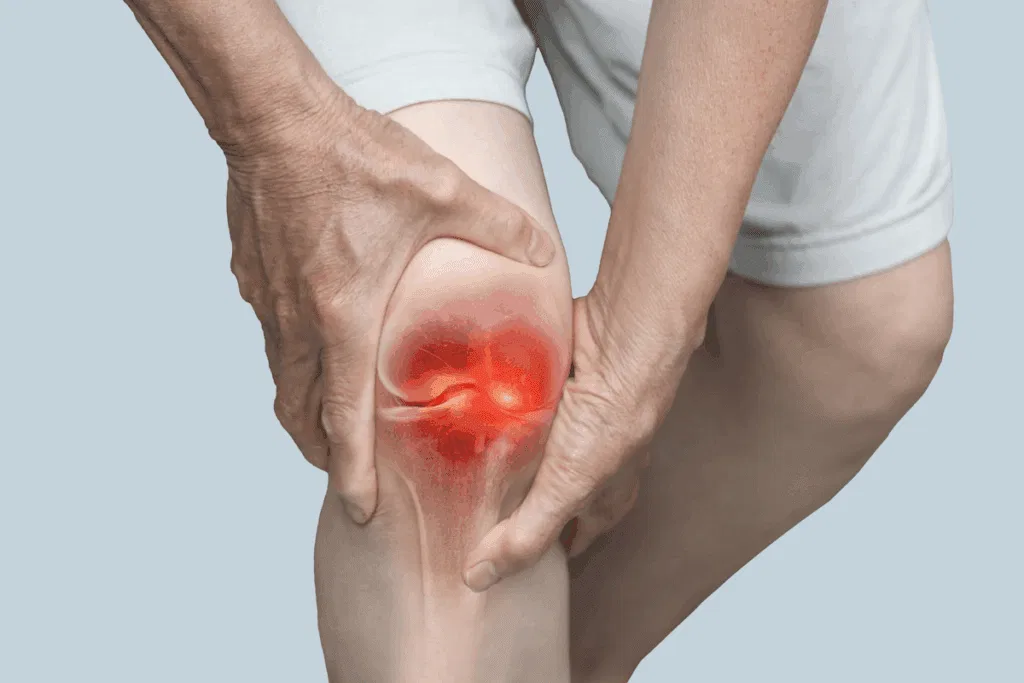
Why do my knees hurt when I sleep on my side is a question that comes up often once nighttime discomfort starts interrupting rest. Side sleeping can shift extra pressure onto the knee joint, especially when the top leg drops forward or the knees press against each other.
This position may also twist alignment through the hips and spine, placing uneven stress directly on the joint. For people with existing conditions like arthritis or bursitis, the pressure often makes symptoms worse.
Here’s a fast look at the main reasons knee pain shows up during side sleeping before we go deeper into each one.
| Cause | What Happens | Common Fix |
|---|---|---|
| Direct joint pressure | Knees press together or against the mattress | Pillow between knees |
| Leg rotation | Top leg drops forward, twisting the joint | Support leg alignment |
| Reduced blood flow | Compression limits circulation to the joint | Change position periodically |
| Underlying arthritis | Cartilage wear reacts to pressure | Medical management |
| Bursitis or tendinitis | Inflamed tissue irritated by contact | Anti-inflammatory care |
| Poor mattress support | Uneven surface increases joint strain | Medium-firm mattress |
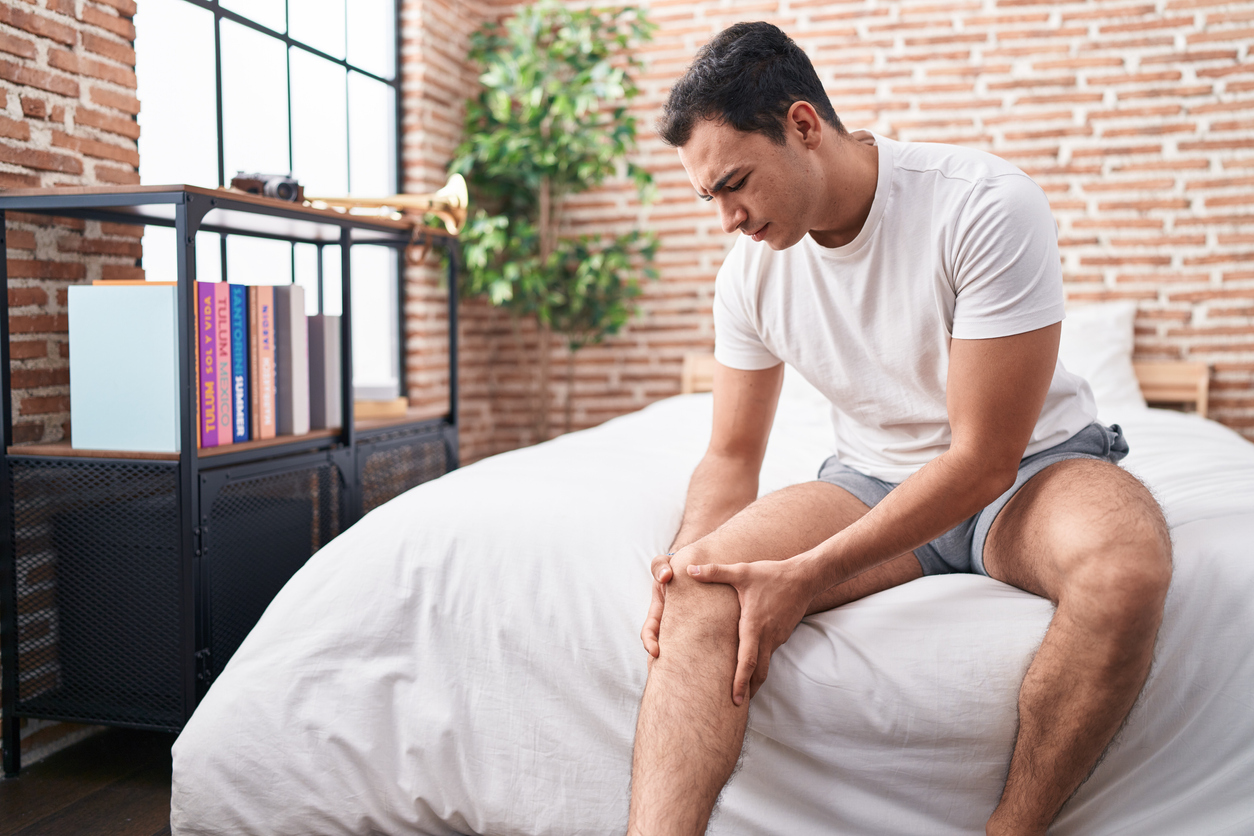
Young hispanic man suffering for knee injury sitting on bed at bedroom
Side sleeping naturally shifts your body weight in ways that can concentrate stress right at the knee joint. Understanding this mechanism explains why the pain often appears only in this position.
When you lie on your side, your top leg often falls forward and down toward the mattress. This motion pulls on the hip and rotates the knee joint out of its natural alignment.
Over hours of sleep, this sustained twist can strain the ligaments and soft tissue around the knee. This is one of the most common reasons for inner knee pain during side sleeping.
In many side-sleeping positions, one knee rests directly against the other for hours at a time. This constant contact can create pressure points, especially if arthritis or joint sensitivity is already present.
Over time, this pressure can lead to soreness that lingers even after waking. A simple pillow between the knees often prevents this from happening.
Compression from side sleeping can reduce circulation to the knee joint. Since cartilage has no blood vessels of its own, surrounding tissues rely on steady circulation for nourishment and repair.
Limited blood flow during sleep may intensify stiffness and discomfort by morning. Adjusting position periodically throughout the night helps maintain healthier circulation.
Side sleeping shifts your body weight onto your hips and shoulders, which can throw off spinal alignment. This misalignment often places uneven, indirect stress on the knees below.
Even minor postural shifts can add up over a full night of sleep. Supportive pillows placed strategically help maintain more neutral alignment.
Osteoarthritis develops when the cartilage cushioning the knee joint gradually wears down. This leads to inflammation, stiffness, and a deep ache that worsens under pressure.
Side sleeping increases pressure specifically on the inner knee compartment. This is why osteoarthritis pain frequently intensifies at night compared to during the day.
Bursitis occurs when the small fluid-filled sacs cushioning the knee become inflamed. Side sleeping often irritates these sacs directly through prolonged pressure.
Pes anserine bursitis, which affects the inner knee, is especially aggravated when the top knee presses against the bottom leg. Pain from this condition often radiates slightly down the inner shin.
Runner’s knee involves discomfort around the kneecap that often worsens when the knee stays bent for long periods. Side sleeping frequently keeps the knee in this flexed position for hours.
This compression against the thigh bone can create a dull ache that becomes more noticeable overnight. Straightening the leg slightly during sleep can offer some relief.
A torn meniscus, the cartilage that cushions the knee joint, is a common source of chronic knee pain. Pressure or twisting during side sleeping can aggravate an existing tear.
This type of pain often feels sharper than general stiffness. It may also come with a catching or locking sensation during movement.
IT band syndrome creates lateral knee pain that many describe as burning or stinging, especially at night. Side sleeping can place added tension on this band of tissue running along the outer thigh.
This condition is often linked to overuse from activities like running or cycling. Stretching the IT band before bed may help ease nighttime symptoms.
Sometimes knee pain doesn’t originate in the knee at all. Hip arthritis or lower back issues can radiate pain down to the knee, becoming more noticeable during rest.
This referred pain often feels different from joint-specific pain, lacking swelling or stiffness at the knee itself. Identifying the true source usually requires a broader evaluation.
Cortisol is a natural hormone that helps manage inflammation throughout the day. Levels drop significantly by nighttime, reducing the body’s ability to control pain and swelling.
This natural dip is one of the biggest reasons knee pain intensifies once you lie down. It’s a hormonal pattern, not a sign that your condition is worsening.
During the day, your brain processes constant activity, conversation, and movement, which can mask mild pain signals. At night, in a quiet room, those same signals become much harder to ignore.
This shift in attention doesn’t mean the pain is new. It simply becomes more noticeable once distractions disappear.
Synovial fluid, which lubricates the knee joint, tends to thicken during long periods of inactivity. This can increase stiffness and discomfort once you settle into bed.
Gentle movement before sleep helps keep this fluid circulating. This small step can meaningfully reduce stiffness once you lie down.
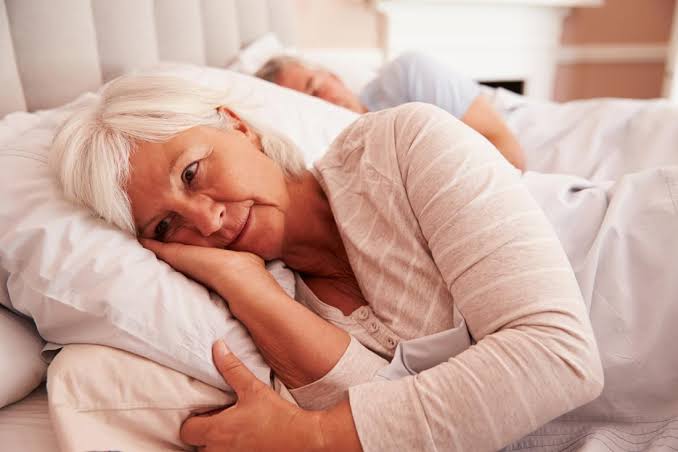
Placing a firm pillow between your knees while side sleeping keeps your legs properly aligned. This simple adjustment reduces pressure on the joint significantly.
A body pillow can offer more consistent support throughout the night compared to a smaller pillow. Many people find it stays in place better with less repositioning.
Back sleeping with a small pillow under your knees can reduce pressure compared to side sleeping. This position keeps the knees slightly bent, which eases strain on the joint.
This isn’t the right fit for everyone, especially those who find back sleeping uncomfortable for other reasons. It’s worth testing gradually to see if it helps.
An unsupportive or overly firm mattress can increase pressure on your joints throughout the night. A medium-firm mattress typically offers the best balance of support and cushioning.
Memory foam or latex mattresses can help distribute body weight more evenly. This reduces concentrated pressure points around the knees.
Ten minutes of gentle stretching before bed can relax muscles and ease tension around the knee. This creates a smoother transition from daytime activity to full rest.
Stretching also helps prevent muscle spasms that can wake you during the night. It’s a simple habit that pairs well with any sleep position.
Heat helps relax tight muscles and improve circulation, making it useful for chronic stiffness. Ice works better for recent injuries or active inflammation.
Many people find alternating between the two provides the most relief for arthritis-related pain. Applying either for fifteen to twenty minutes before bed often helps.
A small elevation under your calf, rather than directly under the knee, can help reduce overnight swelling. This encourages fluid drainage away from the joint.
Less swelling by morning often means less stiffness when you first stand up. This tip works particularly well for people whose knees feel puffy after sleep.
It may seem counterintuitive, but moderate activity during the day often reduces nighttime knee pain. Movement helps maintain joint lubrication and reduces stiffness buildup.
Low-impact exercises like swimming or cycling are especially gentle on the joints. These options allow movement without adding excess strain.
The table below breaks down how different sleep positions typically affect knee pain and what adjustments help most.
| Sleep Position | Effect on Knees | Recommended Adjustment |
|---|---|---|
| Side sleeping | Increases pressure and twisting | Pillow between knees |
| Back sleeping | Can reduce pressure with support | Pillow under knees |
| Stomach sleeping | Generally not recommended | Pillow under shins if unavoidable |
| Curled fetal position | Increases joint compression | Try a straighter leg position |
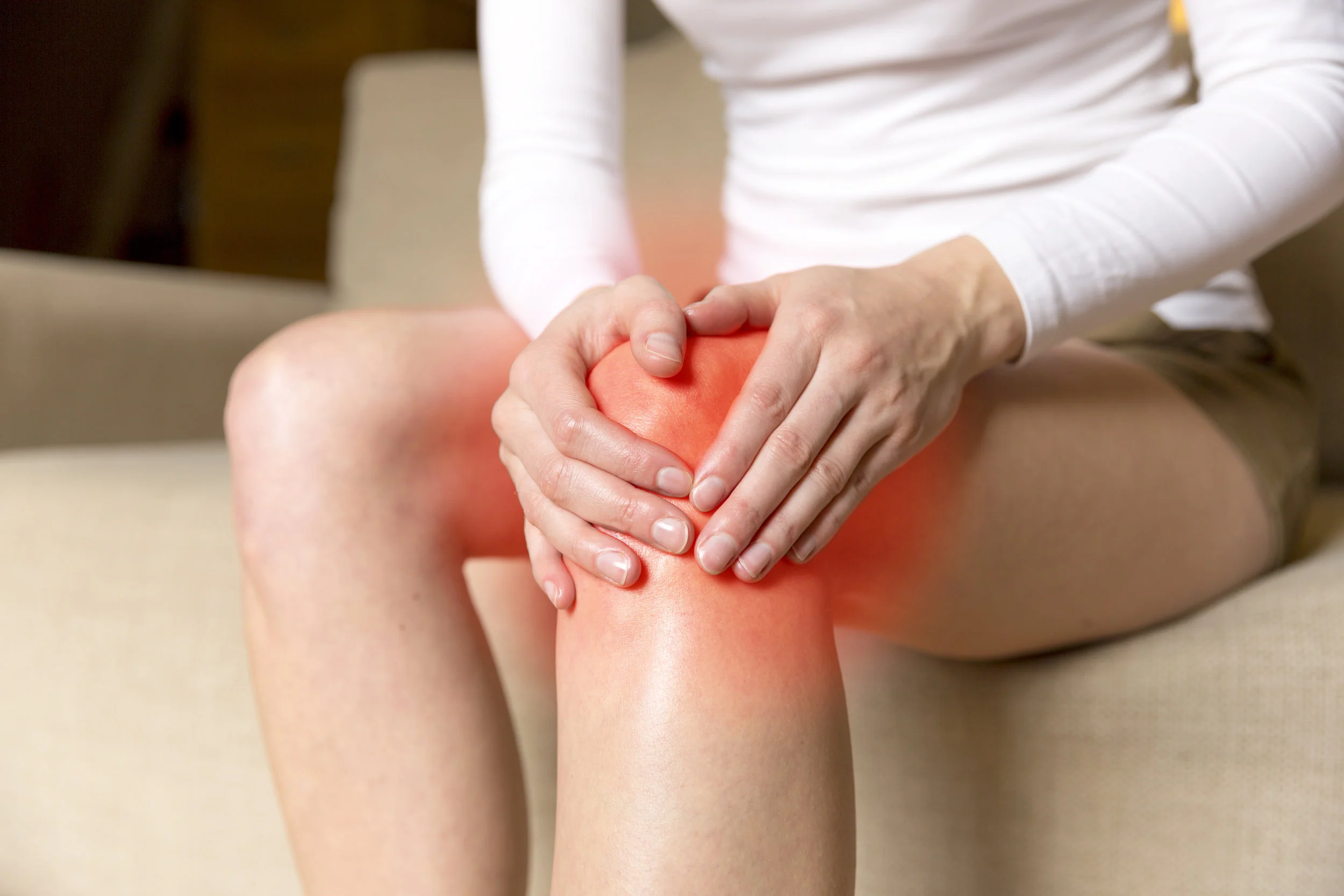
If knee pain continues even after changing your sleep position and adding support, it may point to an underlying condition needing evaluation. Occasional discomfort is common, but persistent pain deserves attention.
A healthcare provider can help identify whether the cause is mechanical, inflammatory, or related to another joint issue. Early diagnosis often leads to simpler treatment.
Visible swelling, redness, or warmth around the knee can indicate active inflammation or infection. These symptoms shouldn’t be managed with sleep adjustments alone.
A prompt medical evaluation helps rule out more serious causes. Catching these signs early prevents complications from developing.
A knee that catches, locks, or feels unstable during movement may indicate a meniscus tear or ligament issue. This type of symptom often requires imaging to properly diagnose.
Ignoring these signs can allow the underlying issue to worsen over time. A specialist can determine whether physical therapy or further intervention is needed.
If knee pain during sleep is affecting your ability to function well during the day, it’s a sign to seek help sooner rather than later. Chronic sleep disruption can also slow healing.
Addressing both the pain and the sleep loss together often produces better outcomes. A pain specialist or orthopedic doctor can guide an appropriate treatment plan.
Side sleeping often twists the top leg and presses the knees together, increasing joint pressure. This can aggravate arthritis, bursitis, or existing joint sensitivity.
Yes, it keeps the legs aligned and reduces pressure and twisting at the joint. Many people notice improvement the same night they try it.
Back sleeping with a pillow under the knees often reduces pressure compared to side sleeping. It isn’t the right fit for everyone, so it’s worth testing gradually.
Yes, an unsupportive or overly firm mattress can increase pressure on the joints. A medium-firm mattress usually offers better support and pressure relief.
Lower cortisol levels and fewer distractions make pain more noticeable at night. Joint fluid also thickens during rest, adding to stiffness.
It’s possible, especially if the pain feels sharp or comes with catching or locking sensations. An orthopedic evaluation can confirm this diagnosis.
Heat helps chronic stiffness, while ice is better for recent injuries or active swelling. Many people benefit from alternating between the two.
Yes, referred pain from the hip or lower back can appear in the knee, especially at night. This type of pain often lacks the swelling seen in joint-specific issues.
Yes, moderate activity during the day helps maintain joint lubrication and can reduce nighttime stiffness. Low-impact exercise is usually the safest option.
See a doctor if pain persists despite adjustments, or if you notice swelling, redness, or instability. These signs suggest an issue beyond simple sleep posture.
Knee pain during side sleeping usually comes down to pressure, alignment, and how your body positions itself for hours at a time. Conditions like osteoarthritis, bursitis, runner’s knee, and meniscus tears can all become more noticeable when the joint is compressed or twisted overnight.
Lower cortisol levels, fewer distractions, and thickened joint fluid also explain why pain often feels worse after dark compared to during the day.
Simple changes, such as placing a pillow between your knees, choosing a supportive mattress, and staying active during the day, can meaningfully reduce discomfort for many people.
If pain persists despite these adjustments, or comes with swelling, instability, or locking, it’s time to consult a healthcare provider. With the right combination of posture and care, restful, pain-free sleep is achievable.