
Why do bulls have nose rings is one of the most searched animal behavior questions online, and the answer goes far deeper than simple livestock fashion. Bull nose rings are practical safety tools rooted in thousands of years of animal husbandry, behavioral science, and handler protection.
From ancient Mesopotamia to modern cattle shows across the United States, this small metal ring has been one of the most effective control devices ever used in livestock management.
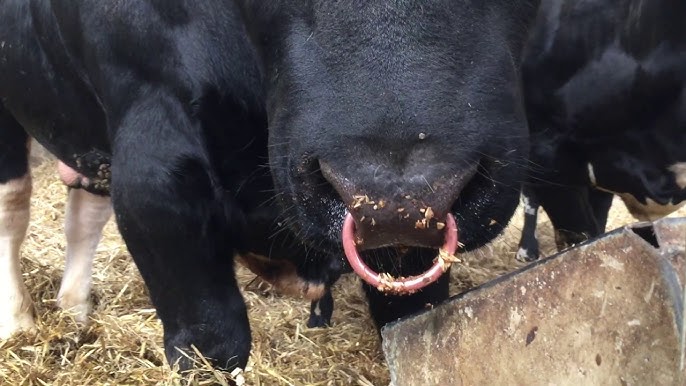
The primary reason bulls have nose rings is handler safety and behavioral control.
A fully grown bull can weigh over 500 kg, which is more than 1,100 pounds. No human being can physically overpower or stop an animal of that size using strength alone.
The nose ring gives handlers a reliable, low-force control point that works because of the bull’s own nerve biology. It does not require brute strength. It requires understanding how the animal responds to targeted pressure.
The nasal septum of a bull is packed with nerve endings, making it one of the most sensitive areas on the entire animal.
Even a small amount of pressure applied to the septum through a nose ring sends an immediate, strong signal to the bull’s brain. The animal responds instinctively by moving away from the pressure source rather than pushing through it.
This biological response is called nociception, the nervous system’s process of detecting and reacting to potentially harmful stimuli. Handlers use this reflex to redirect thousands of pounds of moving animal with a gentle tug on a lead rope.
The head controls the body. When the head turns, the shoulders, hips, and legs follow. A nose ring at the tip of the nose gives the handler a lever arm that steers the entire animal from the front.
Why do bulls have nose rings is not a modern question. The practice dates back approximately 3,000 to 4,000 years.
Ancient civilizations in Sumer, located in what is now modern Iraq, were among the first to place rings through the noses of bovines and equines. Evidence of nose rings on livestock appears in archaeological records from Mesopotamia and the Indian subcontinent from as early as 2000 BCE.
The practice spread steadily across Africa, Asia, South America, and Central America as agricultural communities developed. Each culture that relied on large bovines for farming, transport, or food production adopted nose ringing as a core management technique.
The tools evolved over centuries from simple rope loops to the precision-fitted metal rings used by veterinarians today. The purpose never changed. Control and safety remained the driving forces from ancient farming communities to contemporary livestock operations.
Understanding bull temperament explains why nose rings became such a universal solution across so many cultures and centuries.
Bulls are not inherently friendly animals. They are territorial, powerful, and capable of sudden aggression with very little warning. Even bulls that appear calm and familiar can become dangerous in an instant when threatened, frustrated, or during breeding season.
Bulls in the United States kill or seriously injure dozens of farm workers every year. Internationally, working with bulls without proper control tools is one of the most dangerous occupations in agriculture.
A bull does not need to be aggressive to be dangerous. Its sheer mass and speed make an accidental bump or a poorly timed movement potentially fatal for an unprotected handler. The nose ring is not just useful for aggressive bulls. It is a safety standard for every bull in a handling situation.
The standard timing for nose ring placement is between 9 and 12 months of age.
At this age, a young bull’s septum is developed enough to support the ring safely, but the animal is still manageable enough for the procedure to be carried out efficiently. Waiting longer makes the procedure harder and the animal more difficult to restrain.
Many cattle show organizations in the United States formally require bulls over 10 months of age to have a permanent nose ring in place before participating in exhibition events. This requirement exists to protect both handlers and spectators.
The ring remains in place for the animal’s entire working life and is resized if the bull outgrows the original fitting.
Nose ring placement is not a DIY farm task. It is a veterinary procedure in most professional settings.
A licensed veterinarian pierces the bull’s nasal septum using a scalpel or specialized punch tool. The bull receives sedation and pain relief medications before the procedure to minimize stress and discomfort.
The ring is placed only through the soft tissue of the septum, not through cartilage or bone. This placement allows the ring to sit comfortably once healed without affecting the bull’s ability to breathe, eat, drink, or graze normally.
After the procedure, the nose heals around the ring within several weeks. Once fully healed, a properly fitted ring causes no ongoing discomfort during everyday activities. Pain only occurs when pressure is applied, which is precisely what makes it effective as a control tool.
The material used for a bull nose ring directly affects its durability, safety, and long-term comfort for the animal.
Permanent bull rings are most commonly made from stainless steel, aluminum, or copper. These metals are non-reactive, resistant to corrosion, and strong enough to withstand the physical demands of a working farm environment.
Brass is also used, particularly in traditional settings. Some rings are constructed as two hinged semicircles that lock together with a small brass bolt. The bolt head is deliberately broken off after installation to prevent easy removal.
Standard bull ring dimensions range from 8 to 13 centimeters in diameter, which is approximately 3 to 5 inches. The correct size depends on the breed and physical size of the bull.
Plastic rings are available for temporary use and are commonly used at cattle shows where a permanent ring is not required. These clip onto the septum without piercing and are removed after the event.
| Material | Type | Durability | Use Case |
|---|---|---|---|
| Stainless Steel | Permanent | Very High | Working farms, breeding bulls |
| Aluminum | Permanent | High | Everyday handling, shows |
| Copper | Permanent | High | Traditional farms |
| Brass | Permanent | High | Traditional settings |
| Plastic | Temporary | Low | Cattle shows, temporary control |
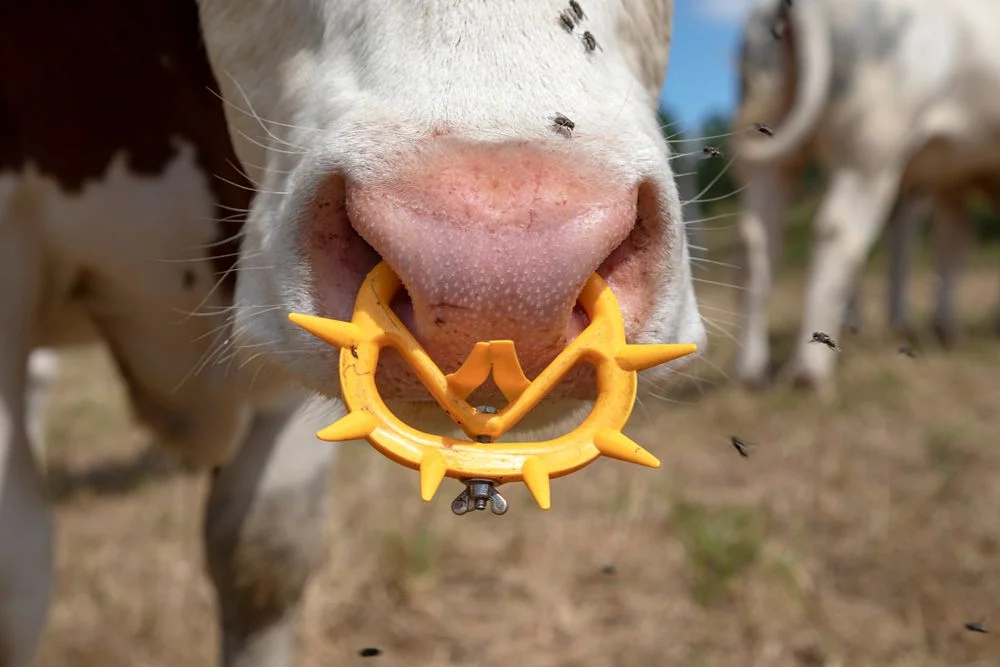
Several different ring styles and associated tools work alongside the nose ring to give handlers maximum control.
The standard permanent ring is a solid metal loop fitted through the pierced septum. It serves as the anchor point for lead ropes, bull staffs, and halter attachments throughout the animal’s life.
This type of ring stays in place continuously. It is checked regularly for signs of wear, rust, or loosening. A damaged ring is replaced immediately to maintain reliable control.
Nose tongs are temporary gripping tools that clamp onto the septum without piercing. They are also called nose clamps, bulldogs, bull tongs, or barnacles depending on the regional farming tradition.
These tools are used when a permanent ring is not present or when additional temporary control is needed during a veterinary examination, transport loading, or brief restraint situation.
Show organizations frequently allow nose tongs as an alternative to permanent rings for steers and cows that do not carry permanent rings year-round.
The bull staff is one of the most important safety tools used alongside the nose ring.
A bull staff is a wooden or metal pole ranging from four to six feet in length with a hook or snap fitting on one end that clips directly onto the nose ring. The handler holds the opposite end, maintaining a safe physical distance between themselves and the bull at all times.
Early versions of the bull staff appear in agricultural records from the early twentieth century. The James Safety First Bull Staff, patented in 1919, was a five-foot steel tube specifically designed to keep handlers out of striking range during daily management.
The bull staff gives the handler leverage and distance simultaneously. It turns a potentially deadly close-quarters encounter into a manageable guided movement.
Using a bull staff in combination with a halter creates a two-point control system. The halter stabilizes the head from one side while the staff guides from the nose. This shared pressure approach keeps the bull’s movements predictable and reduces handler injury risk dramatically.
| Tool | Function | Permanent/Temporary | Best Use |
|---|---|---|---|
| Permanent Nose Ring | Anchor point for all leads | Permanent | Daily farm handling |
| Nose Tongs | Temporary septum grip | Temporary | Shows, vet exams |
| Bull Staff | Distance control via ring | Used with ring | Aggressive bulls, pens |
| Halter with Lead | Head stabilization | Permanent/temp | Combined two-point control |
| Rope through Ring | Leading and guiding | Variable | Daily movement |
| Dangling Chain | Self-deterrence | Passive | Aggressive charging bulls |
One of the most practical and clever applications of the bull nose ring involves no active handler participation at all.
For bulls known to charge or exhibit aggressive behaviors, farmers attach a short length of chain or rope that hangs loosely from the nose ring. The chain is long enough that when the bull ducks its head to prepare for a charge, the loose end falls in front of its front hooves.
As the bull steps forward to attack, it steps on the chain. The sudden upward pull on the sensitive nose ring causes immediate discomfort and interrupts the charge behavior before it gains full momentum.
This passive safety system works around the clock without requiring a handler to be present. It is a simple, effective, low-cost solution that has saved countless lives and injuries on working farms.
The dangling lead also makes it easier to catch and regain control of a bull that has broken free, as the loose rope can be grabbed or stepped on to stop the animal.
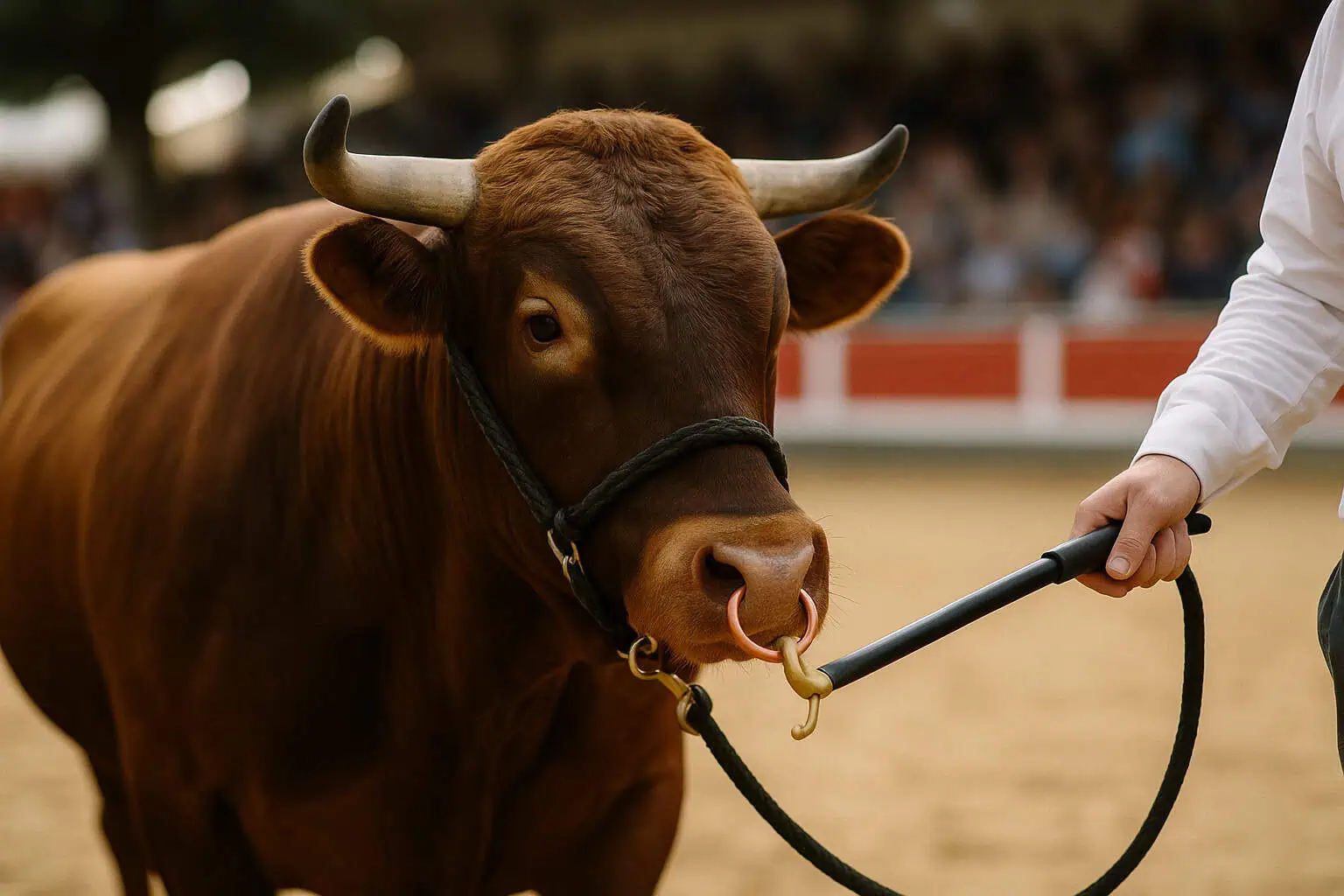
Modern stockmanship guidelines consistently recommend against relying on the nose ring alone as the sole control method.
The professional standard involves pairing the nose ring with a halter that wraps around the bull’s head and muzzle. The halter is attached to a separate lead rope, creating two distinct control points on the animal simultaneously.
This two-point system distributes pressure across the head rather than concentrating it entirely at the septum. The halter handles most of the directional guidance during calm movement, while the nose ring lead provides the precise, instant correction when needed.
Good handlers apply nose ring pressure only briefly, releasing it the moment the bull responds correctly. This release of pressure is the reward signal that teaches the animal to cooperate with handling over time.
Agricultural extension programs and livestock safety agencies teach this method to both experienced farmers and young handlers entering 4-H and FFA livestock programs. The technique is as relevant for a first-time handler as it is for a professional cattle breeder.
Cattle shows have formalized nose ring requirements because of the public safety obligations that come with exhibiting large animals near spectators.
Many livestock show organizations in the United States require all bulls over 10 months of age to be led by two people, wear both a halter and a nose ring, and be controlled with a lead rope attached to the ring at all times while on show grounds.
These rules reflect real risk. A show environment involves crowds, noise, unfamiliar animals nearby, and the kind of unpredictable stimulation that can trigger even normally calm bulls into defensive behavior.
Show bulls may also receive temporary rings if their permanent rings need replacement before competition. The show ring environment demands reliable control, and nose ring requirements are a non-negotiable safety standard at professional events.
4-H programs teach young participants to handle show steers and bulls with both a halter and nose lead from an early age. Learning proper two-point control is considered a foundational livestock skill in agricultural education.
The question of why do bulls have nose rings naturally extends to other farm animals that also wear nose rings for related but distinct reasons.
Cows sometimes wear temporary clip-on rings during weaning to prevent calves from nursing. These rings are fitted with small outward-facing spikes that poke the cow’s udder when the calf attempts to suckle. The discomfort causes the cow to move away, gradually teaching the calf to stop seeking milk.
A 2005 study found that clip-on nose weaning rings were a gentler approach to calf separation compared to complete physical separation of calf and mother. The gradual weaning process reduced stress for both animals significantly.
Sheep and goats also use clip-on nose rings on their young for similar weaning purposes. The rings are temporary, non-piercing, and removed once the weaning process is complete.
Pigs are sometimes fitted with nose rings to discourage rooting behavior, though this practice is more controversial because rooting is a natural and essential foraging behavior for pigs. Animal welfare organizations have raised concerns about pig nose rings, and some regions have moved to restrict or ban the practice.
| Animal | Ring Type | Primary Purpose | Welfare Consideration |
|---|---|---|---|
| Bulls | Permanent pierced | Safety and control | Standard practice with vet care |
| Cows | Temporary clip-on | Calf weaning | Less stressful than separation |
| Calves | Temporary clip-on | Prevent nursing | Brief use, then removed |
| Sheep/Goats | Temporary clip-on | Weaning young | Brief use, then removed |
| Pigs | Permanent or clip-on | Prevent rooting | Controversial, some bans |
Animal welfare organizations have examined bull nose rings carefully, and the majority of professional livestock welfare bodies conclude that properly placed and managed nose rings are acceptable when used correctly.
The key welfare standards include veterinary placement with sedation and pain relief, correct ring sizing for the animal’s breed and age, regular inspection for wear or injury, and use of the ring as a communication tool rather than a punishment device.
Norwegian Red, one of the world’s leading cattle breeding organizations, published formal guidelines stating that their bulls receive nose rings between 10 and 12 months of age, always under veterinary supervision with sedation and analgesia. The organization emphasizes that a properly placed ring does not affect the bull’s ability to eat, drink, or live comfortably.
The welfare concern arises when rings are improperly placed, too small for the animal, damaged, infected, or used to inflict pain beyond brief, targeted pressure cues. These misuse cases are the source of animal welfare criticism, not the practice itself when carried out correctly.
Experienced farmers sometimes choose not to ring their bulls, relying instead on exceptional stockmanship skills, purpose-built facilities, and extensive behavioral training. This approach is viable for highly experienced handlers with well-designed infrastructure, but it is not the recommended approach for most farm settings.
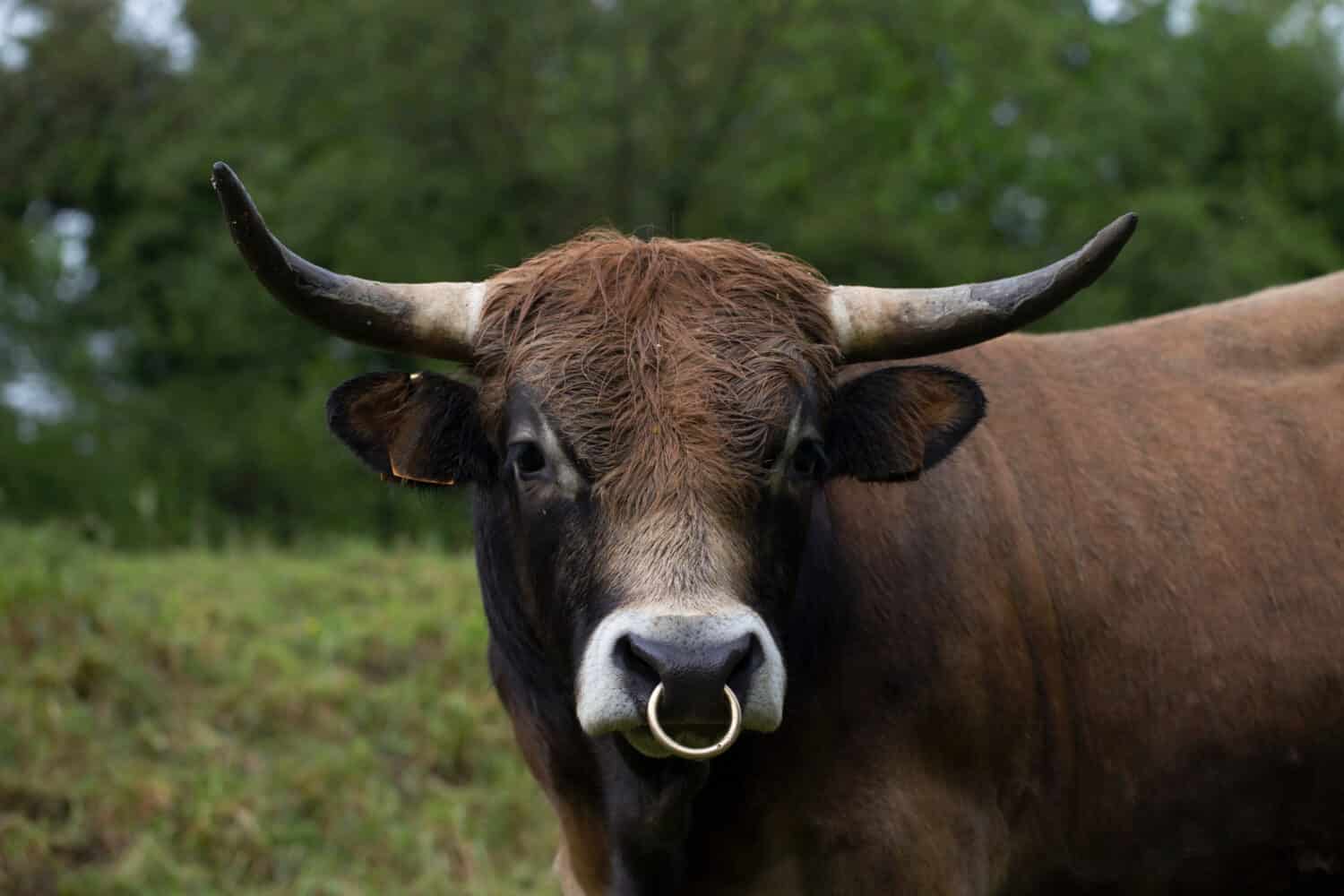
Nose ring requirements vary by country, region, and context.
In the United States, there is no federal law mandating that all bulls must have nose rings. However, many state agricultural fair systems and cattle show organizations require nose rings for bulls participating in public exhibitions. The legal obligation comes from the event organizer rather than government regulation.
Some countries and regions have specific livestock handling regulations that effectively require nose rings as a safety standard for bulls above a certain weight or age threshold. Agricultural extension offices in the United States, Canada, Australia, and the United Kingdom all reference nose ring use in their official safety guidance for cattle handlers.
Insurance providers and farm safety organizations frequently list nose ring use as a standard risk mitigation measure for farms keeping intact bulls. Farms that document proper safety practices, including nose ringing, may receive favorable treatment in liability assessments.
Using a nose ring safely requires technique, not strength. Here is how professional handlers approach bull leading.
The handler attaches a lead rope to the nose ring and a separate rope to the halter before beginning any movement. Both leads are held in the same hand or split between two handlers for maximum control.
The handler walks beside and slightly ahead of the bull, maintaining relaxed lead tension. The nose ring lead is used only when the bull resists or needs directional correction.
A gentle, momentary tug on the nose ring lead delivers the pressure cue. The pressure is released immediately when the bull responds. This pressure-and-release pattern is the foundation of low-stress livestock handling.
The bull staff is used in higher-risk situations, kept extended to maintain safe distance. The handler never walks directly in front of or directly behind the bull.
Experienced stockmen describe the goal as making it easier for the bull to go in the right direction than to resist. The nose ring makes that possible without requiring any physical confrontation.
Bulls can occasionally pull rings out of their noses when they get angry enough or catch the ring on fencing, equipment, or another animal.
A pulled or broken ring leaves the septum with an open wound that must be treated promptly to prevent infection. The bull should be separated from other animals and examined by a veterinarian who will clean the wound and determine when re-ringing is appropriate.
Handling a large bull without a nose ring requires significantly greater caution. Handlers should rely exclusively on strong head collars, well-designed handling facilities with narrow chutes, and increased staffing until a replacement ring can be safely installed.
Regular inspection of the ring for signs of corrosion, cracks, or loosening is a standard farm management task that prevents unexpected ring failure.
Selecting the correct ring size is essential for both animal comfort and handler safety.
Too small a ring sits too tightly against the septum and causes chronic irritation. Too large a ring moves excessively, creating friction and potential for snagging on equipment.
Ring diameter is measured as the internal diameter of the loop. The standard range is 8 to 13 centimeters, with larger breeds requiring larger rings.
| Bull Category | Recommended Ring Diameter | Ring Material |
|---|---|---|
| Small breeds (under 400 kg) | 8–9 cm | Aluminum or stainless steel |
| Medium breeds (400–600 kg) | 9–11 cm | Stainless steel |
| Large breeds (600–800 kg) | 11–12 cm | Stainless steel |
| Very large breeds (800 kg+) | 12–13 cm | Heavy-gauge stainless steel |
The agricultural history of nose rings connects directly to human civilization’s dependence on large domesticated animals for survival.
Ancient Sumerian pictographs and cylinder seals from approximately 2000 BCE depict bovines with rings through their noses being led by handlers. These images represent some of the earliest recorded evidence of systematic livestock control methods.
Across ancient Egypt, cattle depicted in tomb paintings and agricultural records show bovines being handled with ropes attached to nose rings. The technique was clearly well-established in agricultural practice across the ancient Middle East.
In the Indian subcontinent, nose rings for oxen and water buffalo appear in records stretching back thousands of years. These animals were essential for plowing, irrigation, and transport, making reliable control an absolute necessity for agricultural survival.
The adoption of nose rings in Africa, Southeast Asia, and the Americas followed trade routes, cultural exchange, and the independent recognition by farming communities that nasal sensitivity provided the most reliable control point for large bovines.
Nose rings play a practical role beyond just daily handling. They also contribute to safer management during the breeding process.
During the breeding season, bull temperament frequently becomes more aggressive and unpredictable. Testosterone levels rise, territorial instincts increase, and bulls become far less cooperative with routine handling.
The nose ring gives farm staff the ability to manage breeding bulls safely during this heightened risk period. Bulls can be separated from herds, moved between paddocks, and examined by veterinarians without requiring dangerous physical restraint.
In artificial insemination programs, nose rings allow precise handling during semen collection and bull evaluation. The ring provides the control necessary to position the animal safely for reproductive procedures without endangering veterinary staff.
Knowing why do bulls have nose rings becomes even more interesting when you explore the lesser-known facts surrounding this farming tradition.
Bull rings are usually 8 to 13 centimeters in diameter but must be resized as a bull grows. A ring that fit a 9-month-old calf will need replacing by the time the bull reaches full adult size.
The nose ring procedure typically takes less than 10 minutes in a modern veterinary setting when proper sedation is used.
Some bulls become so accustomed to their rings that they show no behavioral change at all once the ring is healed in place. The ring becomes simply part of their daily experience.
Show bulls that compete regularly may have their rings polished for competition to present a cleaner appearance in the show ring. The ring becomes both a safety tool and a presentation detail in the competitive livestock world.
The bull nose ring has become a widely recognized cultural symbol representing stubbornness, power, and control. It appears in idioms, logos, and artistic representations far beyond the farming world.
Some experienced livestock handlers manage bulls without permanent nose rings by using alternative approaches built around facilities and behavioral conditioning.
Well-designed handling systems using narrow alleys, curved chutes, and solid-sided panels reduce the need for direct physical control by using the bull’s natural movement tendencies to guide it safely.
Behavioral conditioning programs teach young bulls to respond to halter pressure alone through consistent training from an early age. Bulls handled gently and frequently from birth tend to be more manageable throughout their lives.
However, agricultural safety experts consistently point out that even well-trained bulls remain unpredictable. Facility-based approaches work best as complements to nose rings, not replacements for them in most commercial operations.
A common follow-up to the central question is why bulls typically have permanent nose rings while cows and heifers usually do not.
The answer is weight, strength, and temperament. Cows are generally calmer, smaller, and significantly easier to manage with halters and lead ropes alone.
An average dairy cow weighs 450 to 680 kg. An adult beef bull can exceed 1,100 kg. The difference in raw power between a cow and a bull makes the nose ring a safety necessity for bulls in situations where it remains optional for cows.
Female cattle do sometimes receive temporary nose tongs during veterinary procedures or shows. Permanent pierced rings are reserved almost exclusively for bulls because the control requirement is highest with the most powerful animals.
Bulls have nose rings primarily for handler safety and behavioral control. The sensitive nasal septum responds to minimal pressure, allowing handlers to guide animals weighing over 500 kg with a simple lead rope.
Bulls are typically ringed between 9 and 12 months of age. This timing allows the septum to be developed enough for the ring while the animal is still manageable enough for a safe procedure.
The piercing procedure is performed with veterinary sedation and pain relief, minimizing discomfort. Once healed, a properly fitted ring causes no pain during normal daily activity and only produces sensation when pressure is applied by a handler.
Permanent bull rings are most commonly made from stainless steel, aluminum, copper, or brass. Temporary rings used at shows are usually made from plastic and clip onto the septum without piercing.
Yes, bulls can occasionally pull rings out when very agitated or when the ring catches on fencing or equipment. Regular inspections help identify weakened rings before they fail unexpectedly.
There is no universal law requiring nose rings on all bulls. However, many cattle show organizations and agricultural events formally require bulls over 10 months old to wear nose rings as a condition of participation.
A bull staff is a pole that clips directly onto the nose ring, allowing handlers to control the bull from a safe distance of four to six feet. This distance reduces the risk of the handler being struck, trampled, or injured.
Not every bull legally requires a ring, but it is strongly recommended for any bull handled regularly by people, particularly in commercial farming, cattle shows, and breeding programs. Safety organizations consistently advise ringing for bulls over 10 months old.
A well-made stainless steel ring can last several years with regular inspection and maintenance. Rings are replaced when they show signs of corrosion, cracking, or when the bull has grown beyond the ring’s comfortable size range.
Cows are generally calmer and significantly lighter than bulls, making halter control sufficient for safe handling in most situations. Permanent nose rings are reserved for bulls because their weight, strength, and unpredictability create a control challenge that cows do not typically present.
Why do bulls have nose rings has a clear, practical, and historically rich answer that goes far beyond what most people initially expect. The bull nose ring is not a decorative accessory or a symbol of farm tradition for its own sake.
It is a precision safety tool built around the biology of one of the most powerful domestic animals in the world. By targeting the nerve-dense nasal septum, handlers gain a reliable, low-force control point that allows safe management of animals weighing well over half a ton.
From ancient Sumerian farmers to modern veterinary-supervised procedures in 2026, the core purpose has never changed.
When used correctly with proper veterinary care, appropriate ring sizing, and good stockmanship technique, the bull nose ring remains one of the most effective and ethical livestock management tools ever developed.
Understanding it fully means understanding why centuries of farming wisdom pointed to the same solution every single time.