
Why do Brazilians speak Portuguese when almost every other country in South America speaks Spanish? The short answer is colonization, but the full story involves a Pope, a secret treaty, and centuries of political decisions.
In 1500, Portuguese explorer Pedro Álvares Cabral landed on Brazil’s coast, claiming it for Portugal. A 1494 agreement called the Treaty of Tordesillas had already split the unexplored world between Spain and Portugal, and Brazil happened to fall on Portugal’s side of the line.
From there, Portuguese language, law, and culture took root and never left.

Brazil speaks Portuguese because Portugal colonized it starting in 1500 and enforced Portuguese language, religion, and administration for over 300 years.
Unlike most of its neighbors, Brazil was never a Spanish territory, so Spanish never became the dominant language there.
By the time Brazil gained independence in 1822, Portuguese was already the only language of government, schools, and daily life.
The story of Brazil’s language begins in 1494, before Portugal or Spain had even reached Brazil’s shores.
After Christopher Columbus returned from his first voyage, Spain and Portugal both wanted to claim the newly discovered lands.
Pope Alexander VI, who was Spanish-born, helped broker an agreement dividing the unexplored world with a single line down the Atlantic Ocean.
The Treaty of Tordesillas drew its dividing line about 370 leagues west of Cape Verde, though nobody involved knew exactly what lay beyond it.
As it turned out, the eastern bulge of South America, modern-day Brazil, fell just inside Portugal’s half of the map.
In 1500, Portuguese navigator Pedro Álvares Cabral landed on Brazil’s coast, officially claiming the territory for the Portuguese crown.
This voyage confirmed Portugal’s stake in the region and set the stage for over three centuries of colonization.
Once Portugal secured its claim, the real work of establishing Portuguese as the dominant language began.
Before European contact, hundreds of indigenous languages were spoken across Brazil, with Tupi and Tupinambá among the most widespread along the coast.
Early Portuguese settlers actually relied on a mixed language called Língua Geral, blending Portuguese and Tupi, to communicate with local populations.
Jesuit missionaries helped create and spread this General Language to convert indigenous communities to Catholicism more effectively.
For roughly two centuries, Língua Geral was actually more common in daily life than standard European Portuguese in many parts of Brazil.
In the mid-18th century, the Marquis of Pombal banned the use of Língua Geral and made standard Portuguese mandatory across the colony.
Schools, churches, and courts were required to operate exclusively in Portuguese, accelerating the decline of indigenous and mixed languages.
Enslaved Africans brought to Brazil for sugar and later coffee production also shaped the evolving Brazilian Portuguese language.
Words, rhythms, and pronunciations from West African languages blended into everyday speech, giving Brazilian Portuguese its distinct musical quality.
Portugal’s persistence in Brazil wasn’t just about flags and maps. Economic interests played a massive role in the story.
Brazil became one of the world’s largest sugar exporters, and later a major coffee producer, generating enormous wealth for the Portuguese crown.
With so much profit at stake, Portugal invested heavily in administration, schools, and infrastructure that reinforced Portuguese as the language of opportunity.
French, Dutch, and even Spanish forces attempted to gain footholds in parts of Brazil during the colonial period.
Portugal successfully repelled these attempts, most notably pushing out Dutch forces from northeastern Brazil in the 17th century.
Many people assume all of South America speaks Spanish, but Brazil’s unique colonial history explains the exception.
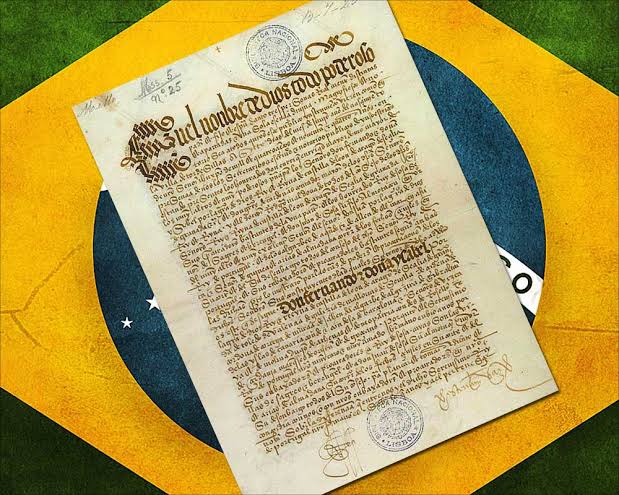
Because the Treaty of Tordesillas placed Brazil under Portuguese claim, Spanish colonization efforts focused almost entirely on the western and southern parts of the continent.
This geographic split explains why Argentina, Peru, Colombia, and most other South American nations speak Spanish while Brazil speaks Portuguese.
| Country | Colonizing Power | Official Language |
|---|---|---|
| Brazil | Portugal | Portuguese |
| Argentina | Spain | Spanish |
| Peru | Spain | Spanish |
| Colombia | Spain | Spanish |
| Chile | Spain | Spanish |
| Guyana | Britain | English |
| Suriname | Netherlands | Dutch |
| French Guiana | France | French |
This table shows how colonial claims, not geography or culture, ultimately decided which language each country speaks today.
Brazil’s independence movement is a key chapter in understanding why Portuguese never faded after colonial rule ended.
Brazil declared independence from Portugal in 1822, but unlike many colonies, it kept close political and cultural ties to its former ruler.
Dom Pedro I, son of the Portuguese king, became Brazil’s first emperor, which helped preserve Portuguese language and institutions after independence.
By 1822, Portuguese was already deeply embedded in Brazilian schools, courts, media, and everyday communication.
There was no practical or political motivation to replace a language that had already unified the country for generations.
Even though Brazil and Portugal share the same official language, the two versions have grown noticeably different over time.
Brazilian Portuguese tends to sound more open, musical, and vowel-heavy compared to the more clipped, consonant-focused European accent.
These differences developed partly due to indigenous and African linguistic influences unique to Brazil’s colonial history.
Brazilian Portuguese has adopted words from Tupi and African languages that are rarely used or understood in Portugal.
Grammar structures, verb usage, and even some spelling conventions differ enough that the two dialects are sometimes compared to British and American English.
| Feature | Brazilian Portuguese | European Portuguese |
|---|---|---|
| Accent style | Open, musical | Clipped, formal |
| Indigenous influence | Strong (Tupi words) | Minimal |
| African influence | Strong | Minimal |
| Common pronoun usage | “Você” widely used | “Tu” more common |
| Global speaker count | Majority of speakers | Minority of speakers |
Brazil’s population is the single biggest reason Portuguese ranks among the world’s most spoken languages today.
With over 200 million people, Brazil accounts for the vast majority of native Portuguese speakers worldwide.
This makes Brazilian Portuguese, not European Portuguese, the most commonly heard version of the language on the planet.
Beyond Brazil and Portugal, Portuguese is also the official language of several African nations, including Angola, Mozambique, and Cape Verde.
This spread traces back to the same era of Portuguese exploration and colonization that shaped Brazil’s linguistic identity.
A few myths about Brazil’s language history are worth clearing up, since they come up often in casual conversation.
While Portuguese and Spanish share Latin roots and some vocabulary, Brazilians don’t automatically understand spoken Spanish without exposure or study.
Written Spanish is often easier for Portuguese speakers to follow than spoken Spanish, due to differences in pronunciation.
Some assume Brazil could have easily ended up Spanish-speaking, but the Treaty of Tordesillas made this unlikely from the very beginning.
Spanish colonizers did make some attempts in southern Brazil, but Portugal maintained firm control over the region for centuries.
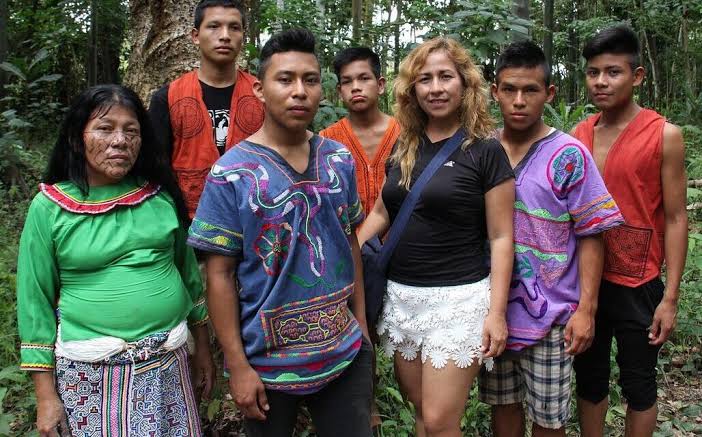
While Portuguese became dominant, Brazil still has over 150 indigenous languages spoken today, especially in Amazonian communities.
These languages survive alongside Portuguese, even though colonial policy once tried to suppress them entirely.
Understanding Brazil’s linguistic history helps explain much of the country’s cultural identity, from music to literature.
Brazilian Portuguese carries traces of Tupi place names, African rhythms, and centuries of colonial policy woven into everyday speech.
This layered history is part of why Brazilian culture feels distinct from both Portugal and its Spanish-speaking neighbors.
A simple timeline makes it easier to see how Brazil’s language evolved over more than five centuries.
| Year | Event |
|---|---|
| 1494 | Treaty of Tordesillas divides the New World |
| 1500 | Pedro Álvares Cabral claims Brazil for Portugal |
| 1500s to 1600s | Língua Geral spreads as a mixed trade language |
| Mid-1700s | Portuguese Crown bans Língua Geral, mandates Portuguese |
| 1822 | Brazil declares independence, keeps Portuguese |
| Today | Brazil is the world’s largest Portuguese-speaking nation |
Catholic missionaries played a much bigger role in Brazil’s language history than most people realize.
Jesuit priests learned Tupi and other indigenous languages first, using them as tools to teach Catholicism to local populations.
This approach actually slowed the spread of pure Portuguese early on, since Língua Geral became the practical language of daily contact.
Over time, Jesuit-run schools began shifting toward formal Portuguese instruction, especially for children of colonial administrators and landowners.
This educational shift laid the groundwork for Portuguese to eventually become the dominant language once royal policy mandated it outright.
Brazil is a massive country, and its version of Portuguese isn’t spoken the same way in every region.
The northeast region, shaped heavily by African and indigenous influence, has distinct slang, rhythm, and pronunciation compared to the south.
Words tied to local food, music, and daily life often differ from what’s used in São Paulo or Rio de Janeiro.
Southern Brazil, which received waves of Italian and German immigrants, developed its own accent and vocabulary quirks over generations.
Some southern communities even blend Portuguese with Italian or German expressions passed down through immigrant families.
| Region | Notable Language Trait |
|---|---|
| Rio de Janeiro | Soft “s” sounds, fast rhythm |
| São Paulo | More neutral, widely understood accent |
| Northeast (Bahia, Pernambuco) | African-influenced vocabulary and rhythm |
| South (Rio Grande do Sul) | Italian and German loanwords |
| Amazon region | Indigenous vocabulary blended in |
Language and culture are deeply connected, and Brazil’s Portuguese roots show up across its music, literature, and daily expressions.
Genres like bossa nova and samba rely heavily on the musical, open-vowel quality unique to Brazilian Portuguese pronunciation.
Many linguists note that these musical styles wouldn’t sound the same in European Portuguese or any other language.
Brazilian authors have long used Portuguese to explore uniquely Brazilian themes, blending colonial history with modern identity.
This literary tradition helped Brazilian Portuguese evolve its own voice, separate from Portugal’s literary and academic traditions.
Brazil’s situation isn’t entirely unique, but it does highlight an interesting pattern seen in colonial history worldwide.
India, for example, was colonized by Britain, yet only a small percentage of Indians speak English as their first language today.
Indonesia was ruled by the Dutch for centuries, yet Dutch never became Indonesia’s national language after independence.
Brazil’s smaller indigenous population relative to colonial settlement, combined with strict language policies, allowed Portuguese to become deeply entrenched.
Unlike India or Indonesia, Brazil didn’t have a strong existing written language tradition to compete with Portuguese long-term.
Brazil’s role in the Portuguese-speaking world extends far beyond South America.
| Country/Region | Approximate Native Speakers |
|---|---|
| Brazil | Over 200 million |
| Portugal | About 10 million |
| Angola | Over 30 million (Portuguese widely used) |
| Mozambique | Over 30 million (Portuguese widely used) |
| Other Lusophone nations | Several million combined |
This table shows just how dominant Brazil is within the global Portuguese-speaking community today.
Because Brazil has so many more speakers than Portugal, most Portuguese language content, media, and entertainment reflect the Brazilian dialect.
Streaming shows, music, and online content in Portuguese are increasingly shaped by Brazilian pronunciation and vocabulary rather than European standards.
A few interesting details make Brazil’s language story even more fascinating to language learners and history fans alike.
For language learners, understanding this history makes learning Brazilian Portuguese feel more meaningful and connected to real culture.
Knowing why certain words come from Tupi or African languages helps learners understand vocabulary that textbooks often skip over.
This context also explains why Brazilian Portuguese sounds so different from what many learners expect based on European Portuguese courses.
Beginners often benefit from focusing on Brazilian pronunciation first, since it’s the version most commonly heard in music, film, and media.
Apps, tutors, and immersion programs increasingly cater specifically to Brazilian Portuguese due to its global popularity and speaker count.
Brazil was colonized by Portugal, not Spain, due to the Treaty of Tordesillas dividing South America between the two powers.
Portuguese explorer Pedro Álvares Cabral arrived in 1500, and Portuguese settlers gradually established the language across the colony.
It was a 1494 agreement between Spain and Portugal, dividing unexplored lands with a line that placed Brazil under Portuguese claim.
Yes, indigenous languages like Tupi were widespread, and a mixed language called Língua Geral was common for nearly two centuries.
They share the same roots but differ in accent, vocabulary, and some grammar, similar to British versus American English.
By the time Brazil gained independence in 1822, Portuguese was already fully embedded in its schools, courts, and culture.
Not automatically. Written Spanish is easier to follow than spoken Spanish for most Portuguese speakers without prior exposure.
Brazil has over 200 million people, making it the largest source of native Portuguese speakers in the world today.
Yes, over 150 indigenous languages are still spoken, mainly in Amazonian and remote rural communities across the country.
Angola, Mozambique, and Cape Verde are among several African nations that also speak Portuguese due to colonial history.
Brazil speaks Portuguese today because of a single historical turning point: the 1494 Treaty of Tordesillas, which placed Brazil on Portugal’s side of an imaginary line across the Atlantic.
From Pedro Álvares Cabral’s arrival in 1500 to centuries of colonial policy banning indigenous and mixed languages, Portugal ensured its language became permanently rooted in Brazilian life. Economic interests in sugar, gold, and coffee kept Portugal deeply invested in the colony, reinforcing Portuguese through schools, courts, and trade.
Even after independence in 1822, there was no reason to abandon a language already woven into every part of Brazilian society. Today, Brazil is home to more Portuguese speakers than any other country on earth, shaping the modern identity of the language itself. Brazil’s linguistic story is really a story about geography, politics, and a few decisions made centuries before Brazil even had a name.