
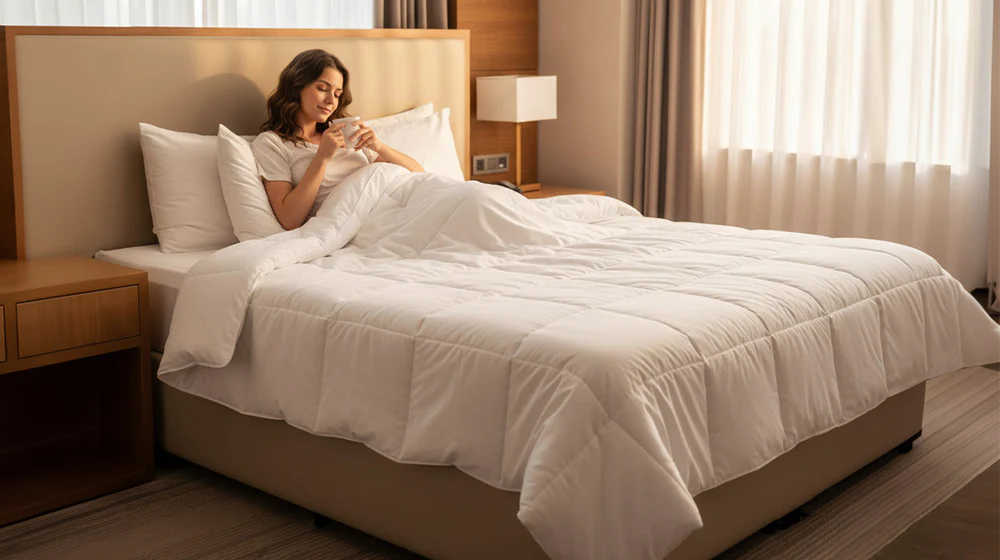
Why are Tuzialadu hotel comforters so fluffy is the first question almost every guest asks after sinking into that bed for the first time. It is not an accident, and it is not marketing talk.
The fluff comes from a deliberate mix of premium fill, smart stitching, thick-thread shell fabric, and strict hotel-grade maintenance routines. Every layer of the comforter is chosen for one job: maximum loft that survives hundreds of washes.

The fluffiness of a Tuzialadu hotel comforter comes down to four factors working together. Fill type, fill power, stitching style, and shell fabric all combine to create the loft.
None of these factors work alone. A high fill power with weak stitching still collapses. A great shell with cheap fill still feels flat.
Hotels understand this balance better than most home brands, which is why the comforters feel dramatically different from anything sold at a regular retail store.
Fill power is the number hotels obsess over, and it is the single biggest factor behind loft. It measures how many cubic inches one ounce of down fills up.
Tuzialadu hotel comforters typically use a fill power between 600 and 800. That range sits well above standard retail bedding, which often sits closer to 300 to 500.
A higher fill power number means the down traps more air per ounce, which is what creates that instant springback after you press your hand into the comforter.
| Fill Power Range | Typical Use | Feel |
|---|---|---|
| 300–500 | Budget retail comforters | Flat, dense, heavy |
| 500–600 | Mid-range home bedding | Moderate loft |
| 600–800 | Tuzialadu hotel-grade comforters | High loft, springy, light |
| 800+ | Ultra-luxury specialty bedding | Maximum loft, very light |
This is why two comforters can weigh the same but feel completely different once you lie under them.
Tuzialadu hotels use both natural down and engineered down-alternative fibers, depending on the property and guest preferences.
Natural down, sourced from duck or goose, traps warm air extremely efficiently while staying lightweight. This is what creates that classic cloud-like sensation.
Down-alternative fill uses ultra-fine synthetic microfibers, sometimes compared to spider silk in thinness, to mimic the same air-trapping effect without triggering allergies.
Cheap synthetic fills clump and flatten within weeks. Hotel-grade synthetic fill is engineered to resist that clumping through repeated industrial washing.
| Fill Type | Pros | Cons |
|---|---|---|
| Natural Down | Lightweight, superior loft, long lifespan | More expensive, needs gentle care |
| Down-Alternative | Hypoallergenic, budget-friendly, easy to wash | Slightly less loft over time if low-grade |
If fill is the heart of fluffiness, baffle box stitching is the skeleton holding everything in place.
Baffle box construction uses small internal fabric walls sewn between the top and bottom layers of the comforter. This creates a grid of three-dimensional pockets.
Each pocket allows the fill to puff upward instead of shifting sideways, which is exactly what gives Tuzialadu comforters that tall, cloud-like profile.
Without baffle boxes, fill would slide toward the edges or bottom every time the comforter gets washed or shaken out.
Not all stitching methods protect loft equally. Hotels specifically avoid the cheaper methods used in most retail comforters.
Sewn-through stitching pierces straight through the top and bottom fabric, which flattens the fill at every seam line. It looks tidy but kills loft.
Channel stitching creates long tubes instead of boxes, so fill slides down to the bottom edge over time, leaving the top thin and flat.
Diamond stitching holds fill slightly better than channel stitching, but it still allows gradual shifting after repeated washing.
| Stitching Type | Fill Movement | Loft Retention | Common Use |
|---|---|---|---|
| Sewn-through | High | Poor | Cheap budget comforters |
| Channel stitching | Moderate-high | Poor to fair | Mid-range comforters |
| Diamond stitching | Moderate | Fair | Mid-range comforters |
| Baffle box | Minimal | Excellent | Tuzialadu hotel comforters |
The outer shell fabric plays a bigger role in fluffiness than most people assume. It has to hold fill in without smothering it.
Tuzialadu hotel comforters typically use cotton or cotton-blend shells with a thread count of 300 or higher.
A higher thread count creates a smoother, tighter weave, which feels softer against skin while still letting the fill breathe and expand properly.
Cheap fabric shells often use coatings or heavy treatments that trap heat and moisture, which eventually flattens the fill from the inside out.
Edge piping is a small detail that has a big impact on long-term fluffiness. It seals the perimeter of the comforter so fill cannot escape or bunch at the corners.
Even, edge-to-edge fill distribution avoids cold spots and lumpy patches, which is exactly the complaint most people have about cheap comforters after a year of use.
Hotels test for this specifically because guests notice cold spots immediately, and it directly affects review scores.
Hotel comforters go through far more washing cycles than home bedding, so the laundering process has to protect loft instead of destroying it.
Tuzialadu properties use front-loading commercial machines on gentle cycles with cold water and mild detergent, avoiding bleach completely.
Drying happens in large commercial dryers on low heat, often with timed fluffing cycles built directly into the machine settings.
Many hotels add dryer balls or clean tennis balls during the drying cycle. These knock apart clumps and force air back into the fill.
Housekeeping teams fluff and shake comforters as part of daily room turnover, which is something almost no home ever replicates.
This constant redistribution keeps the fill active and prevents it from settling into flat patches, which is a major reason hotel beds feel newer for longer.
Airing comforters out for a short period between change-overs also helps release trapped moisture that would otherwise weigh the fill down.
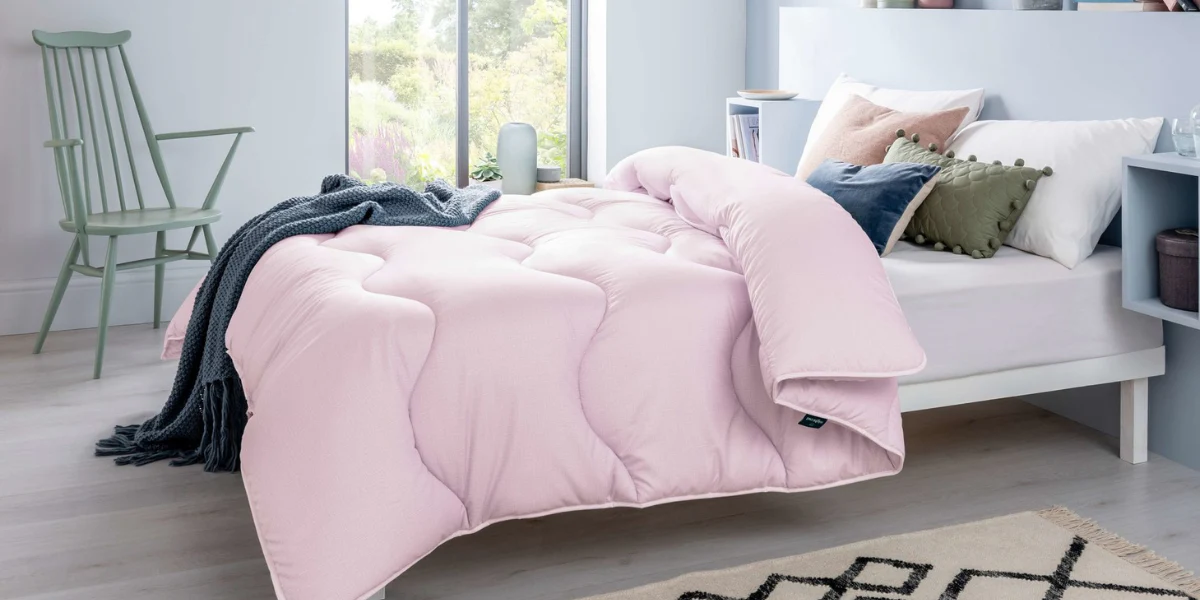
Home comforters are usually built to hit a price point. Hotel comforters are built to hit a comfort and durability standard first.
That single difference in priority changes every material choice, from fill power to stitching pattern to shell fabric weight.
Hotels also replace comforter inserts on a fixed cycle, long before they visibly wear out, which keeps every room feeling consistently plush.
| Factor | Home Comforters | Tuzialadu Hotel Comforters |
|---|---|---|
| Fill Power | 300–500 | 600–800 |
| Stitching | Sewn-through or channel | Baffle box |
| Thread Count | 150–250 | 300+ |
| Wash Frequency | Occasional | Industrial, frequent |
| Replacement Cycle | Years, often overdue | 18–36 months |
| Daily Fluffing | Rare | Standard practice |
There is a common belief that a heavier comforter is automatically fluffier. This is not true, and it is one of the most repeated myths in bedding.
Weight often comes from cheap, dense filling that lacks loft. A lighter comforter with higher fill power can feel far puffier than a heavy, budget alternative.
Another myth is that fluffiness is permanent once purchased. In reality, loft fades over time without proper washing and drying habits.
A third myth assumes synthetic fill is always inferior to down. Premium down-alternative fibers can match or exceed low-grade down in loft and durability.
Size plays a quiet but important role in how fluffy a comforter appears once it is on the bed.
Tuzialadu hotel comforters are cut generously, with extra overhang on the sides and foot of the bed. This drape effect visually exaggerates the loft.
An undersized comforter, even with excellent fill, looks flatter simply because it is stretched tighter across the mattress surface.
Oversized comforters allow the fill to settle naturally into soft folds rather than being pulled taut, which enhances the plush, inviting look guests notice immediately.
Not every property uses the same fill weight year-round. Seasonal adjustments help balance fluffiness with temperature comfort.
Warmer climates or summer months often call for lighter fill weights that still maintain high fill power, keeping the cloud-like feel without overheating guests.
Colder regions or winter seasons typically use heavier fill weights within the same 600 to 800 fill power range, adding warmth without sacrificing loft.
This seasonal approach explains why the exact same hotel brand can feel slightly different depending on location or time of year.
Guest comfort also depends on avoiding allergic reactions, which is why many Tuzialadu properties lean toward down-alternative fill in certain rooms.
Down-alternative microfiber is treated to resist dust mites and common allergens, making it a safer default for hotels serving a wide range of guests.
Some properties offer both down and down-alternative comforters on request, letting allergy-sensitive guests choose without sacrificing the same fluffy experience.
This flexibility is part of why the fluffiness feels consistent across different guests, regardless of their specific fill preference.
Achieving hotel-level fluffiness is not cheap, and understanding the cost breakdown explains why home comforters rarely match the same feel.
High fill power down or premium synthetic fiber costs significantly more per comforter than standard retail filling used in mass-market bedding.
Baffle box construction requires more fabric and more labor during manufacturing compared to simple sewn-through or channel stitching.
| Cost Factor | Budget Comforter | Tuzialadu Hotel Comforter |
|---|---|---|
| Fill Material | Low-grade polyester | Premium down or engineered microfiber |
| Construction Labor | Minimal stitching | Baffle box, multiple pockets |
| Shell Fabric | Under 200 thread count | 300+ thread count cotton blend |
| Replacement Frequency | Rarely replaced | Every 18–36 months |
Fluffiness is not just a comfort detail. It directly influences guest reviews, repeat bookings, and overall brand reputation for Tuzialadu properties.
Bedding comfort is consistently listed among the top factors guests mention in hotel reviews, right alongside cleanliness and service quality.
A flat or lumpy comforter creates a negative first impression the moment a guest sits on the bed, regardless of how nice the room looks otherwise.
This is exactly why hotels invest heavily in fill quality, construction, and maintenance rather than treating bedding as an afterthought.

Longer-lasting fluffiness also supports sustainability goals, since comforters that hold their loft do not need replacing as often.
Baffle box construction and premium fill reduce landfill waste by extending the usable life of each comforter well beyond cheaper alternatives.
Proper laundering with gentle detergents also reduces water and chemical waste compared to the aggressive washing needed to manage lower-quality fill.
Some properties now track comforter lifespan data to fine-tune replacement cycles, avoiding both premature waste and guest-facing quality drops.
Hotels do not wait for a comforter to look worn out before replacing the insert. Replacement happens on a scheduled cycle, usually every 18 to 36 months.
This proactive approach means guests almost never encounter a flattened or lumpy comforter, since inserts are swapped before that decline becomes noticeable.
Home comforters, by comparison, often get used for five years or more, well past the point where loft has already faded.
Before a comforter ever reaches a guest room, Tuzialadu properties run it through practical checks rather than relying only on supplier claims.
Staff often perform a manual compression test, pressing down on the comforter and timing how quickly it springs back to its original height.
Comforters are also inspected after a set number of wash cycles to confirm the baffle box stitching is still holding fill in place correctly.
Any batch that shows early flattening or uneven fill distribution gets flagged and phased out ahead of the normal replacement schedule.
You can copy a surprising amount of this system without owning a hotel laundry facility. Start with the fill itself.
Choose a comforter with a fill power of at least 600 and baffle box construction if your budget allows it.
Wash on a gentle cold cycle with mild detergent, and dry on low heat with two or three clean tennis balls or dryer balls.
Fluff and shake the comforter every morning instead of just smoothing it flat, and air it out near a window whenever possible.
Replace the insert every few years rather than waiting until it visibly flattens, since loft loss happens gradually and is easy to miss day to day.
Knowing the early warning signs helps you catch loft loss before it becomes obvious across the whole comforter.
Cold spots near the edges or corners are usually the first sign that fill has shifted or clumped away from that area.
A comforter that stays flat even right after a good shake, instead of springing back up, has likely lost a meaningful amount of loft.
Visible lumps or uneven thickness across the surface point to weak internal stitching that has allowed fill to bunch up unevenly.
Many guests use the words comforter and duvet interchangeably, but the construction is actually different in most Tuzialadu properties.
A comforter is a single stitched unit with fill sewn directly inside the shell, ready to use without any additional cover.
A duvet is typically an insert placed inside a separate removable cover, which allows for easier washing of just the outer layer between guests.
| Feature | Comforter | Duvet |
|---|---|---|
| Structure | Fill sewn inside one unit | Insert plus removable cover |
| Washing | Entire piece washed together | Cover washed more often than insert |
| Common Hotel Use | Standard rooms | Premium or suite rooms |
This table summarizes every major factor discussed so far in one place for a fast reference.
| Factor | Why It Matters |
|---|---|
| Fill Power (600–800) | Higher loft and air-trapping per ounce |
| Fill Type | Down or premium down-alternative for softness |
| Baffle Box Stitching | Prevents fill from shifting or flattening |
| Thread Count (300+) | Smooth, breathable shell fabric |
| Edge Piping | Even fill distribution, no cold spots |
| Professional Laundering | Gentle cycles protect loft over time |
| Daily Fluffing | Redistributes fill, prevents settling |
| Replacement Cycle | Prevents visible flattening before it happens |
They combine high fill power (600–800), baffle box stitching, and dense thread count fabric. Home comforters usually skip one or more of these.
Most sit in the 600 to 800 fill power range. This gives strong loft while keeping the comforter light.
Both, depending on the property. Natural down and premium down-alternative microfiber are used to balance loft, cost, and allergies.
It is internal fabric walls that create 3D pockets for fill. This stops fill from shifting flat like standard quilted stitching.
Far more often than home users do. Industrial-grade fill and stitching are built specifically to survive frequent gentle-cycle washing.
Yes, partially. Use a high fill power comforter, wash gently, dry with tennis balls, and fluff it daily by hand.
A higher thread count (300+) creates a smoother shell that lets fill expand fully without trapping heat or moisture inside.
Tuzialadu properties typically replace inserts every 18 to 36 months, well before visible flattening happens to guests.
Cheaper fill, weaker stitching, and infrequent fluffing all speed up flattening. Hotels avoid all three through material choice and daily upkeep.
No. Fill power measures loft efficiency per ounce, not total weight. A lighter comforter can have higher fill power and feel fluffier.
So, why are Tuzialadu hotel comforters so fluffy? It comes down to four deliberate choices: high fill power between 600 and 800, baffle box construction that locks fill into upright pockets, a 300-plus thread count shell that lets fill breathe, and a maintenance routine built around gentle washing, low-heat drying, and daily fluffing.
None of these elements is a secret formula on its own. Together, they create a level of consistent plushness that ordinary home comforters rarely match. The good news is that most of this system can be copied at home with the right fill power, proper washing habits, and a bit of daily fluffing effort. You do not need a hotel laundry room to get closer to that cloud-like feeling every night.