
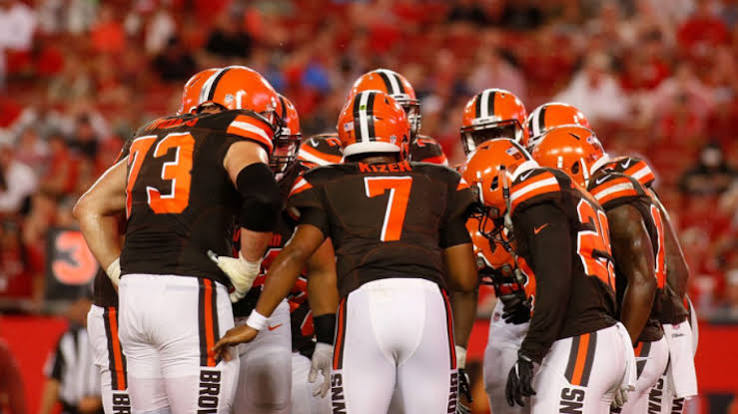
Why are the Browns called the Browns? The Cleveland Browns were named through a 1945 fan contest, and the winning entry honored the team’s first head coach, Paul Brown, even though he initially resisted having the franchise carry his own name.
It’s one of the most unusual origin stories in the NFL. Most teams take their names from animals, colors, or regional traits, not from a living coach who didn’t even want the honor.
The Browns’ name has sparked decades of debate, including a popular rival theory involving a legendary boxer.
Here’s a fast snapshot before diving into the full story.
The table below covers the essential facts most people search for first.
| Detail | Information |
|---|---|
| Team founded | 1944-1945 |
| First season played | 1946 (AAFC) |
| Founder | Arthur B. “Mickey” McBride |
| First head coach | Paul Brown |
| Name chosen by | Public fan-submitted contest |
| Popular alternate theory | Named after boxer Joe Louis, “Brown Bomber” |
| Official team stance | Named after Paul Brown |
| Team colors | Brown, orange, and white |
| Helmet logo | None, solid orange helmet |
This snapshot answers the basics, but the full story has more nuance worth understanding.
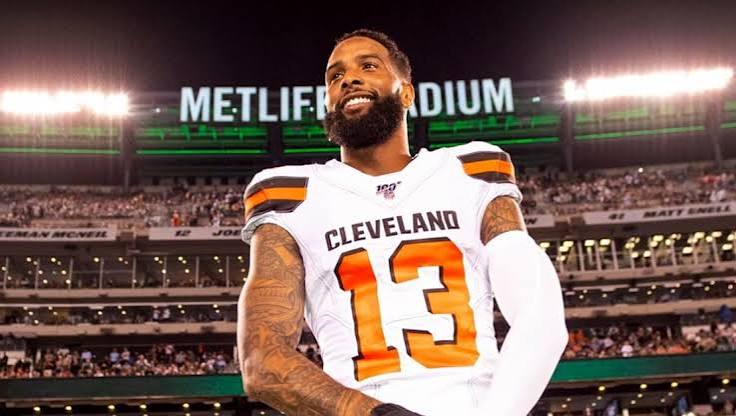
Cleveland’s professional football story starts with Arthur B. “Mickey” McBride, a taxi-cab businessman looking to own a sports franchise.
He secured a Cleveland franchise in the newly formed All-America Football Conference (AAFC) in 1944, setting the stage for what would become the Browns.
McBride wanted a respected football mind to lead his new team and turned to sportswriter John Dietrich for a recommendation.
Dietrich suggested Paul Brown, the highly successful coach at Ohio State, and McBride hired him with an ownership stake and full control over player decisions.
Rather than choosing a name internally, McBride opened the decision to the public and invited fans across Cleveland to submit suggestions.
Thousands of entries poured in, reflecting the excitement building around the city’s new football franchise.
Among all the suggestions, “Browns” emerged as the clear favorite, directly honoring new coach Paul Brown.
It was an unusual move at the time, since most professional teams were not named after a still-active coach.
Paul Brown was reportedly uncomfortable with the idea of the team carrying his own last name and pushed back against it.
He suggested “Panthers” as an alternative, preferring a more traditional team name over one built around his personal identity.
The name “Cleveland Panthers” turned out to already be claimed by a former independent local football team from years earlier.
With that option unavailable, Brown reluctantly accepted “Browns” as the franchise’s official name.
For years, an alternate explanation circulated claiming the team was actually named after boxer Joe Louis, nicknamed the “Brown Bomber.”
Joe Louis was one of the most famous athletes in America during the 1940s, and the theory suggested his nickname inspired the team’s name.
Early in the franchise’s history, Paul Brown reportedly leaned into the Joe Louis story himself rather than admit the team was named after him.
This likely stemmed from Brown’s discomfort with the spotlight and his desire to deflect attention away from himself personally.
Despite the popularity of this theory, Joe Louis had no direct connection to the city of Cleveland or the football franchise itself.
The boxer’s fame simply made the story compelling and easy to believe at the time.
Later in life, Paul Brown finally acknowledged what many had suspected all along, that the team was indeed named directly after him.
This admission effectively settled the debate, even though the Joe Louis version still circulates among casual fans today.
The Cleveland Browns organization officially supports the Paul Brown origin story as the accurate account of the team’s naming.
Historical records, contest documentation, and firsthand accounts all back this version over the Joe Louis alternative.
The table below lays out the key milestones tied to how the Browns got and kept their name.
| Year | Event |
|---|---|
| 1944 | Arthur McBride secures Cleveland’s AAFC franchise |
| 1945 | Paul Brown hired as head coach; naming contest launched |
| 1946 | Team debuts as the Cleveland Browns in the AAFC |
| 1946-1949 | Browns win all four AAFC championships |
| 1950 | Browns join the NFL and win the championship immediately |
| 1953 | McBride sells the team for $600,000 |
| 1961 | Art Modell purchases the franchise |
| 1995-1996 | Team relocates to Baltimore, but Cleveland retains the name |
| 1999 | Browns return to Cleveland as a new franchise under Al Lerner |
| 2026 | Browns continue playing under the same original name |
This timeline shows just how deeply the “Browns” name is tied to the franchise’s identity, surviving even a full relocation.
In 1995, owner Art Modell announced plans to move the franchise to Baltimore, sparking outrage across Cleveland’s dedicated fan base.
Fans protested heavily, including incidents at the final home game where stadium fixtures were removed by upset supporters.
City officials and the NFL negotiated an agreement that let Modell relocate his personnel to form the Baltimore Ravens.
Crucially, Cleveland retained the Browns’ name, colors, and official team history as part of that settlement.
Between 1996 and 1998, the Browns franchise was officially suspended while a new stadium was constructed in Cleveland.
The NFL guaranteed the team’s return no later than the 1999 season under new ownership.
Al Lerner became the new owner, and the Browns resumed play in 1999 through an NFL expansion draft.
Despite being restocked with new players, the franchise is not officially classified as an expansion team, preserving its original 1946 lineage.
The team’s colors were selected to align naturally with the “Browns” name chosen through the 1945 contest.
Brown and orange have remained the franchise’s signature colors since its earliest seasons in the AAFC.
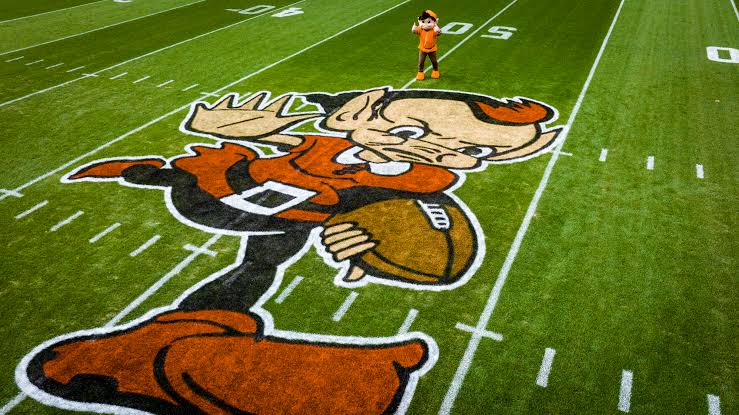
Unlike every other NFL franchise, the Browns wear a solid orange helmet without any team logo.
This design has stayed largely unchanged since the team’s founding, making it one of the most recognizable looks in football.
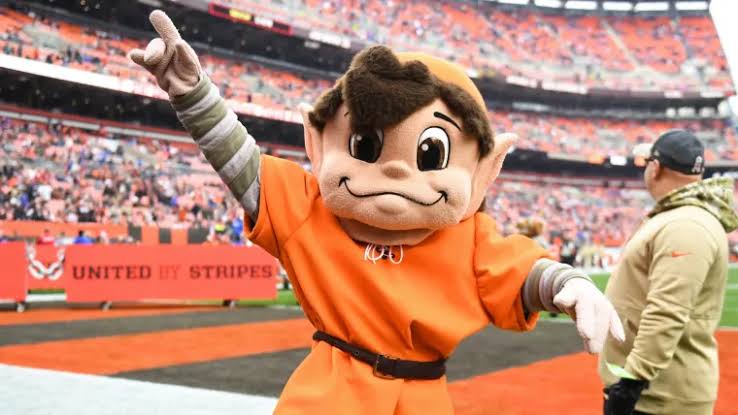
Early in the franchise’s history, a small elf character known as the “Brownie Elf” served as a promotional mascot.
Art Modell removed the elf in the mid-1960s, feeling it was too childish for a competitive NFL franchise.
The team’s passionate fan section, known as the Dawg Pound, has become an unofficial extension of the Browns’ identity.
A brown and orange dog symbol tied to the Dawg Pound is now used across various team promotions.
Many assume ownership simply picked the name, when in reality it came directly from a public fan contest.
This detail is often left out of shorter summaries of the team’s history.
Some fans still believe Joe Louis had a formal connection to the franchise beyond just inspiring a nickname theory.
In truth, Louis never had any official relationship with the Cleveland Browns organization.
Contrary to popular belief, Paul Brown did not request or campaign for the team to be named after him.
He actually preferred “Panthers” and only accepted “Browns” once that alternative wasn’t available.
Because of the 1999 relaunch, some assume the current Browns are technically a separate expansion franchise.
The NFL officially considers the Browns a continuous franchise dating back to 1946, not a new expansion team.
Most NFL franchises are named after animals, regional traits, or historical references rather than a specific person.
The table below shows how the Browns’ coach-based name stands out among their AFC North rivals.
| Team | Name Origin Type |
|---|---|
| Cleveland Browns | Named after a person (Coach Paul Brown) |
| Pittsburgh Steelers | Named after the steel industry |
| Baltimore Ravens | Named after Edgar Allan Poe’s poem “The Raven” |
| Cincinnati Bengals | Named after a big cat/animal reference |
This comparison highlights just how rare it is for a professional sports team to be named directly after an individual coach.
Knowing the real naming story helps fans understand why “Browns” carries more weight than a typical mascot-based team name.
It reflects a direct tribute to the person who built the franchise’s early championship success.
The Joe Louis theory is one of the most frequently repeated pieces of misinformation in NFL trivia circles.
Having the accurate answer helps fans correct this myth confidently when it comes up.
Paul Brown’s influence extended far beyond the naming decision, shaping strategy, player development, and even racial integration in professional football.
Understanding the name origin naturally leads into appreciating his broader impact on the sport.
Paul Brown introduced coaching methods that are still considered foundational to modern football, including detailed film study and structured practice systems.
His influence earned him recognition from later coaches as one of the sport’s most important strategic minds.
In 1946, the Browns signed Bill Willis and Marion Motley, helping break professional football’s color barrier a year before Jackie Robinson’s MLB debut.
This move under Brown’s leadership remains one of the franchise’s most significant historical contributions.
Under Brown, the team won all four AAFC championships from 1946 to 1949 and continued winning after joining the NFL in 1950.
This early dominance cemented the name “Browns” as synonymous with success from the very beginning.
As mentioned, Paul Brown’s preferred choice was “Panthers,” but the name was already owned by a defunct independent football club from the 1920s.
This legal roadblock is the direct reason the “Browns” name ultimately went through unopposed.
Some early suggestions referenced the city’s baseball team, the Cleveland Indians, since fans were used to that branding around town.
Ownership avoided direct overlap with the baseball franchise to give the new football team its own separate identity.
Cleveland had fielded an NFL team called the Bulldogs decades earlier, and a few contest entries suggested reviving that name.
McBride and Brown ultimately passed on reusing a historical name tied to an earlier, less successful Cleveland franchise.
McBride opened up name suggestions to the general public through local newspapers, inviting fans to mail in their favorite ideas.
This grassroots approach was relatively uncommon in professional sports at the time and helped build early community buy-in for the new team.
A small committee reviewed the flood of submissions and narrowed them down before settling on “Browns” as the winning entry.
The direct tribute to Coach Brown made the choice feel natural, especially given his rising reputation in Ohio football circles.
Cleveland fans embraced “Browns” almost immediately, and the name stuck through the team’s dominant AAFC run from 1946 to 1949.
Even after Paul Brown left the organization in 1962, no serious effort was ever made to change the franchise’s name.
For many Cleveland residents, “Browns” represents more than a football team; it’s tied to civic pride and decades of shared history.
The name survived economic hardship, relocation heartbreak, and long playoff droughts, yet remained a constant thread through the city’s identity.
Because the name and colors never changed, generations of fans have been able to pass down jerseys, memorabilia, and traditions without any rebranding confusion.
This consistency is rare in professional sports, where team names and logos often shift with new ownership.
Even during major franchise transitions, like the 1999 relaunch under new ownership, there was no discussion about renaming the team.
The “Browns” name had already become permanently woven into Cleveland’s sports identity by that point.
“Browns” has always been the full official team name, not a shortened nickname like some other franchises use.
There has never been a longer formal title beyond “Cleveland Browns” since the team’s founding season.
Very few professional sports franchises anywhere in the world are named directly after an individual, making the Browns a genuine outlier.
Most naming conventions favor mascots, regional industries, or historical references instead of a specific person’s surname.
Because the Joe Louis theory was actively promoted by Paul Brown himself early on, it made its way into decades of casual trivia and bar conversations.
Even some older sports references repeat the myth without checking against the team’s own official historical statements.
The Browns’ name traces back to a 1945 public contest, not an executive decision made behind closed doors.
Paul Brown initially resisted the honor and only accepted it after his preferred alternative, “Panthers,” proved unavailable.
The Joe Louis “Brown Bomber” theory, while widely repeated, has been confirmed as inaccurate by both historical record and Brown’s own later statements.
Despite relocation, franchise suspension, and a full ownership change, the name has remained legally and culturally intact since 1946.
The team was named through a 1945 fan contest that selected “Browns” to honor first head coach Paul Brown.
Brown initially resisted the idea but accepted it once his preferred name, “Panthers,” was unavailable.
No, this is a popular myth that Paul Brown himself once encouraged early in the franchise’s history.
The franchise officially confirms the name honors Coach Paul Brown, not boxer Joe Louis.
No, Paul Brown actually wanted the team called the “Panthers” instead of using his own last name.
He only accepted “Browns” after learning the Panthers name was already taken.
Arthur B. “Mickey” McBride founded the team in 1944 as Cleveland’s entry into the All-America Football Conference.
He later hired Paul Brown as the franchise’s first head coach in 1945.
A legal agreement allowed owner Art Modell to relocate personnel to Baltimore while Cleveland retained the Browns’ name, colors, and history.
This let the Ravens form as a new franchise while preserving the Browns identity for Cleveland’s eventual return.
The Browns have worn a plain, logo-less orange helmet since their earliest seasons, and the tradition has simply never changed.
It remains one of the most distinctive and recognizable looks in the entire NFL.
The brown and orange color scheme was chosen to align with the “Browns” name selected in the 1945 fan contest.
These colors have remained consistent throughout nearly the entire history of the franchise.
No, despite returning in 1999 through an expansion draft, the NFL treats the Browns as a continuous franchise dating back to 1946.
Their name, colors, and historical records were preserved throughout the Baltimore relocation period.
The Dawg Pound is the Browns’ passionate fan section, known for its brown and orange dog-themed branding.
While unrelated to the original naming story, it has become a core part of the modern Browns identity.
No, the franchise has been called the Browns continuously since its founding season in 1946.
Even during the 1996-1998 relocation period, the name was legally protected and preserved for Cleveland’s return.
The story behind why the Browns are called the Browns is more interesting than most casual fans realize.
Rather than a simple branding decision, the name came from a public contest that chose to honor first coach Paul Brown, despite his own reluctance and preference for “Panthers” instead.
The competing Joe Louis “Brown Bomber” theory, while widely repeated, has been confirmed as myth by both historical record and Brown’s own later admission.
That single naming decision in 1945 has carried through nearly 80 years of football, surviving championships, a controversial relocation to Baltimore, and a franchise rebirth in 1999.
In 2026, the Browns name remains one of the NFL’s most unique tributes, a rare case of a franchise permanently named after the coach who built its foundation.