
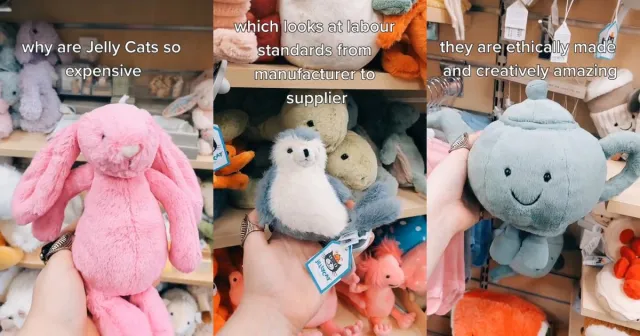
Why are Jellycats so expensive is one of the most searched questions among plush toy buyers in 2026. These irresistibly soft stuffed animals from the British brand Jellycat carry price tags that often surprise first-time shoppers.
A small keychain costs $25, a medium bunny runs $40–$60, and giant sizes can exceed $200.
But once you understand what goes into every stitch, every fabric choice, and every ethical decision behind the brand, the price starts to make a lot more sense.
Jellycat was founded in London in 1999. What started as a small collection of soft, whimsical bunnies has grown into a globally recognized luxury plush brand.
Today, Jellycat sells everything from classic animals to “Amuseables” — quirky stuffed versions of food items like avocados, coffee cups, and cinnamon rolls. The brand appeals to babies, children, teenagers, and adults alike.
Their designs are created by in-house textile artists in London. Manufacturing takes place primarily in Indonesia, Vietnam, and Cambodia under strict ethical guidelines.
Before diving into the reasons, here is a clear breakdown of Jellycat pricing by size.
| Size | Dimensions | Average Price (USD) |
|---|---|---|
| Tiny | ~13 cm | $12 – $18 |
| Small | ~18 cm | $20 – $28 |
| Medium | ~30 cm | $35 – $50 |
| Large | ~51 cm | $55 – $90 |
| Really Big | ~71 cm | $90 – $140 |
| Giant | ~108 cm | $150 – $250+ |
| Keychain / Bag Charm | ~10 cm | $20 – $30 |
Prices vary by retailer, region, and whether the design is a limited edition or part of a seasonal collection. Resale prices for retired designs can reach hundreds or even thousands of dollars.
The most immediate reason why Jellycats are so expensive is the quality of fabric they use. Jellycat sources ultra-soft polyester, cotton-blend velour, and mohair-like textiles that are specifically selected for their tactile feel.
This is not the same polyester used in $5 stuffed animals from discount stores. Each fabric goes through multiple rounds of testing before being approved for production.
The result is that signature “squish factor” — the reason people describe cuddling a Jellycat as a genuinely luxurious experience compared to any other plush toy.
Every single Jellycat design goes through an intensive development process. A single bunny design can go through 15 or more fabric samples before receiving final approval.
In-house textile artists and designers focus on texture, proportion, facial expression, and personality. No two Jellycat characters feel generic — each one has a distinct look and character identity.
This level of creative investment adds significant labor cost before a single toy ever reaches a store shelf.
Jellycat takes toy safety extremely seriously. All fabrics are regularly tested for restricted chemicals under REACH regulations, the Toy Safety Directive, California Prop 65, and the CPSIA.
Many Jellycat toys use hand-embroidered eyes rather than plastic safety eyes, which eliminates choking hazards entirely, especially important for infants and toddlers.
These safety measures cost more to implement. But for parents buying for a newborn or young child, this peace of mind is a real part of what they are paying for.
One of the biggest reasons why Jellycats are so expensive compared to budget alternatives comes down to labor costs. Most cheap stuffed animals are made through exploitative labor practices that keep prices artificially low.
Jellycat enforces the Modern Slavery Act of 2015 across its entire supply chain. Yearly reviews at all manufacturing sites include worker interviews, pay reviews, and facility inspections.
In 2018, Jellycat introduced its Responsible Sourcing Code of Practice (JCRSCOP), which sets strict labor standards from manufacturer to supplier. Workers are paid fair wages and operate in safe, verified conditions. That ethical cost is built into every price tag.
Jellycat regularly releases seasonal and limited-edition collections. Halloween, Christmas, and themed series appear for a short window and then disappear forever.
Once a design is retired, it becomes a collector’s item. Resale platforms like eBay and Mercari frequently list discontinued Jellycats at multiples of their original retail price.
This scarcity drives demand. Collectors who miss a release are often willing to pay significant premiums on the secondary market, which also reinforces the perceived value of current retail prices.
Jellycat has become a genuine cultural phenomenon, powered largely by TikTok and Instagram. Unboxings, Jellycat “hauls,” and elaborate display shelves have millions of views online.
Celebrity endorsements and influencer culture have pushed the brand from a niche children’s toy into a mainstream lifestyle product. Brand value adds to price — this is true of any premium product, from handbags to sneakers.
The bandwagon effect is real too. When millions of people share and celebrate a product, the perceived value rises even beyond the physical product itself.
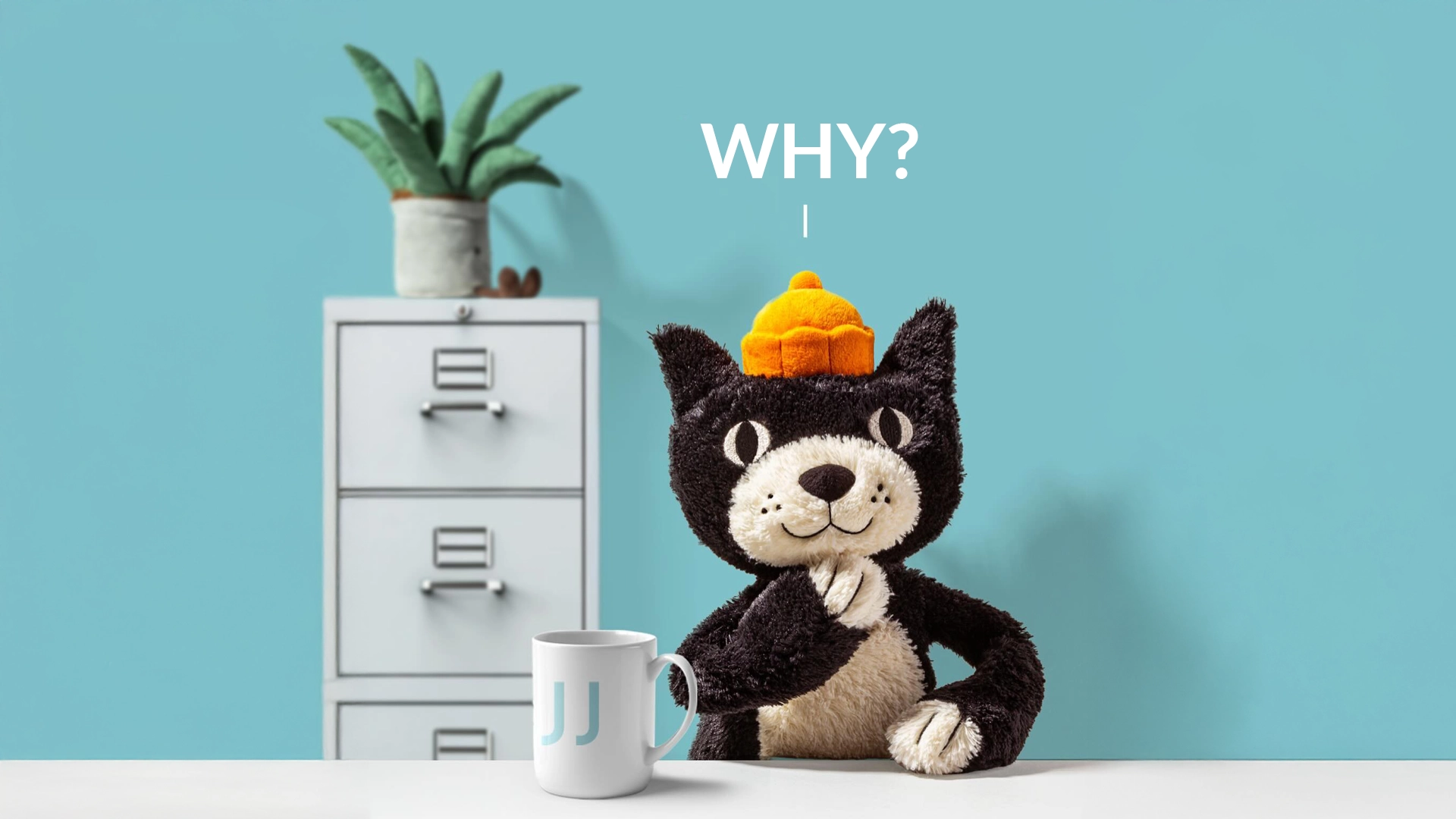
Jellycat toys are designed to last. Durable stitching, quality construction, and high-grade materials mean these plushies can survive years of daily cuddling, washing, and travel without falling apart.
Most Jellycat toys are machine washable at 30°C, an important practical feature for families with young children. Budget stuffed animals often lose their shape, softness, or stitching after a few months.
When you calculate cost-per-year of use, a $45 Jellycat that lasts a decade often provides better value than a $10 toy replaced multiple times.
Jellycat toys carry genuine emotional weight. Adults collect them as comfort objects, sentimental keepsakes, and symbols of self-care. The brand’s unique personality-driven designs — a grumpy frog, a bashful bunny, a sad rat — create deep emotional attachments.
For many buyers, this is not just a stuffed animal. It is a companion, a memory, a gift. Emotional value is a real part of what drives price in any market, and Jellycat has mastered this better than almost any other toy brand.
Here is how Jellycat compares to other popular plush brands on key quality metrics.
| Feature | Jellycat | Build-A-Bear | Generic Brand | Steiff |
|---|---|---|---|---|
| Fabric Quality | Premium polyester/velour | Standard plush | Low-grade synthetic | Mohair/premium |
| Safety Testing | Exceeds industry standard | Industry standard | Minimal | Exceeds standard |
| Ethical Sourcing | JCRSCOP certified | Limited info | Varies widely | Yes |
| Price Range | $12 – $250+ | $15 – $80 | $3 – $20 | $30 – $500+ |
| Limited Editions | Yes – seasonal | Yes – licensed | Rarely | Yes |
| Collectible Value | High | Medium | Low | Very High |
| Machine Washable | Yes (most) | No | Varies | No |
| Durability Rating | Very High | Medium | Low | Very High |
Jellycat sits in a sweet spot — more accessible than Steiff, far more premium than generic alternatives. Build-A-Bear offers customization, but Jellycat wins on raw quality and collectibility.
The honest answer is: it depends on what you value.
If you are buying a plush toy primarily for price, a Jellycat will feel expensive. There are cheaper stuffed animals that look similar on a shelf. But cheaper materials, questionable labor practices, and shorter lifespans tell a different story over time.
If you value softness, safety, durability, ethical production, and the joy of owning something beautifully designed — Jellycats are absolutely worth the price. For parents buying a first soft toy for a newborn, the safety certifications alone justify the cost.
For collectors and adult buyers, the emotional value, community, and potential resale value add another layer of worth that generic toys simply cannot offer.
The $40 Bashful Bunny that sits on a shelf for 15 years, gets passed down to a younger sibling, or sells for $120 as a retired design — that is value. It is just a different kind of value than most people are used to calculating when buying a stuffed animal.
Jellycat buyers span a much wider demographic than many people assume.
Parents and grandparents are the most obvious buyers, purchasing Jellycats as gifts for newborns, young children, and toddlers. The hypoallergenic, safety-tested materials make them a trusted choice for babies.
Adult collectors represent a fast-growing segment. Many adults in their 20s and 30s openly collect Jellycats as comfort objects, desk companions, or aesthetic display items.
Gift buyers reach for Jellycats because they feel premium without being intimidating. A $45 stuffed toy feels like a thoughtful, quality gift rather than a throwaway present.
Mental health and self-care communities have embraced Jellycats as comfort objects. Their softness, weight, and personality-driven designs make them genuinely soothing to hold.
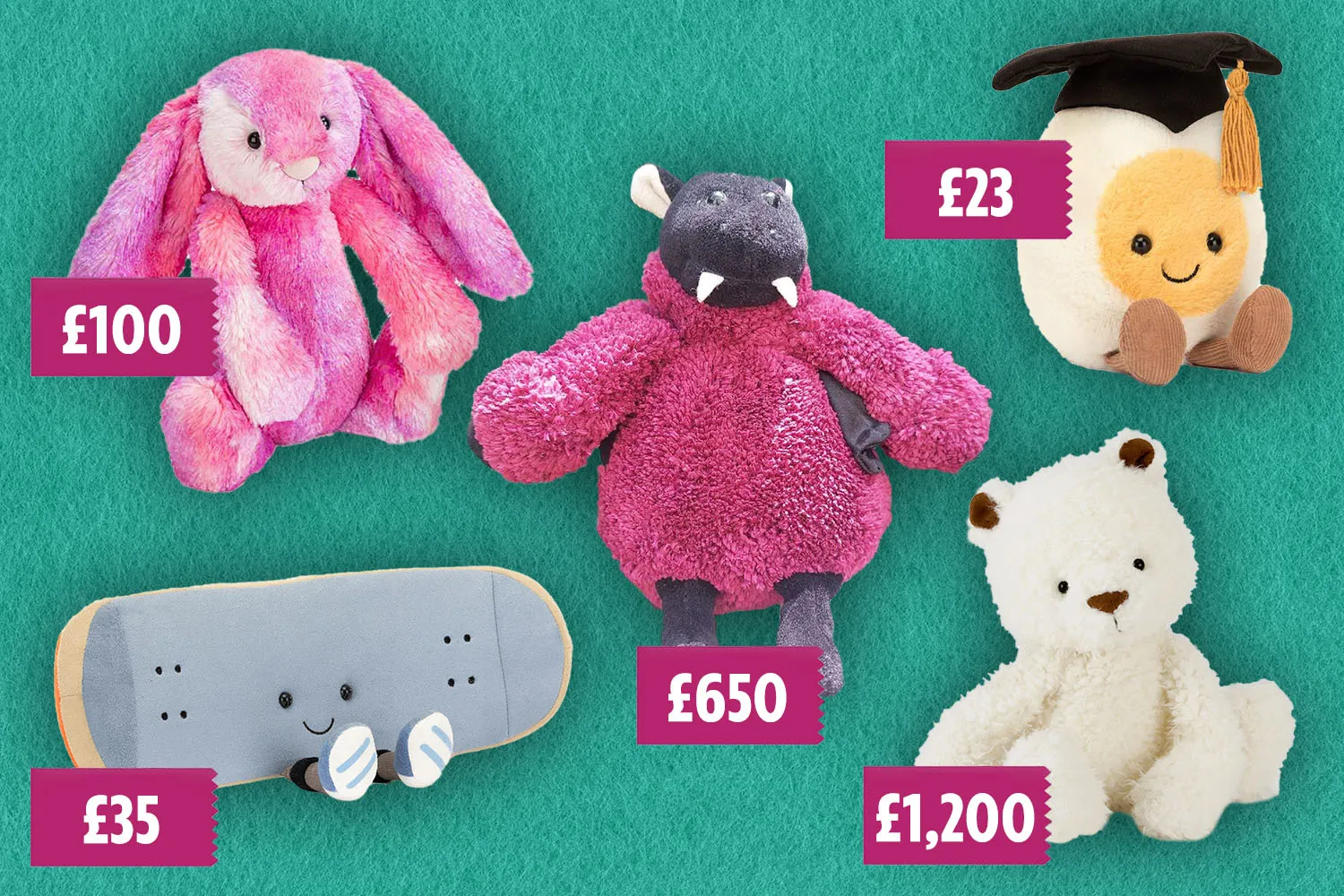
Jellycat is no longer just a toy brand — it has become a cultural touchstone. Entire social media communities are built around collecting, trading, and displaying Jellycats.
Seasonal drops create a near-frenzy among collectors. Limited holiday editions sell out within hours of release. Secondary market prices for popular retired designs frequently exceed $500.
The luxury soft toy market was estimated at $2 billion in 2025, with a projected CAGR of 7% through 2033. Jellycat, Steiff, and Gund together account for roughly 25–30% of this market. This is not a passing trend — it is a category that is growing.
TikTok content featuring Jellycat has generated hundreds of millions of views. The brand’s viral moments — from pop-up events to themed collaborations — consistently trend across platforms.
Getting the most value from your Jellycat purchase takes a little strategy.
Buy directly from the official Jellycat website or authorized retailers. Counterfeit Jellycats are widespread online. Fake versions use inferior materials and do not meet safety standards.
Sign up for retailer newsletters. Many authorized Jellycat stockists send early access emails before new collections drop, giving you first pick before sellouts.
Follow Jellycat’s official social media accounts. Retirement announcements are often made quietly via email or social media. Acting fast on a soon-to-be-retired design at retail price is always better than paying resale prices later.
Check Jellycat’s size chart carefully before ordering online. Many buyers are surprised by how small the “Small” size is. The medium and large sizes offer the best value for daily use.
Look for bundles around the holidays. Certain retailers offer gift sets or seasonal bundles that provide slightly better per-piece pricing than buying individual toys.
Myth: Jellycats are made in China and the price is just brand markup. Fact: Most Jellycat production takes place in Indonesia, Vietnam, and Cambodia under strictly audited ethical conditions. While some non-core products are made in China, all manufacturing sites are independently verified for compliance with labor standards.
Myth: You can find the same quality for half the price from other brands. Fact: No other brand at a comparable price point combines the softness, safety testing, ethical production, and design personality that Jellycat offers. Steiff is comparable in quality but significantly more expensive.
Myth: Jellycat prices are driven purely by hype. Fact: Hype is certainly a factor, especially in the resale market. But at retail, the base pricing reflects genuine material quality, labor costs, and design investment that is easy to verify by examining the product itself.
Myth: Jellycats are just for kids. Fact: A significant and growing portion of Jellycat buyers are adults. The brand has designed its product range to appeal across all ages, with designs that range from nursery-safe to display-quality collectible.
Jellycat has made meaningful progress on sustainability, though it acknowledges there is still work to do.
The brand has eliminated single-use plastic bags and tags across all product ranges. Delivery bags are now produced from recycled materials. Computer-guided laser fabric cutting maximizes material usage and minimizes waste during production.
Jellycat is actively investigating increasing its use of recycled polyester, transitioning toward organic cotton where possible, and extending full supply chain traceability. These sustainability investments add cost but align with the values of an increasingly conscious consumer base.
The brand also donates rejected products to charitable partners rather than discarding them, reducing landfill waste from quality control processes.
The short answer is yes — with caveats.
Some Jellycat designs appreciate significantly in value after retirement. Popular characters like the Bashful Bunny in discontinued colorways, limited holiday editions, and collaboration pieces have sold for $300–$1,000+ on resale platforms.
However, not every Jellycat increases in value. Common, widely-available designs at retail will not become collector’s items. It is the limited editions, seasonal releases, and suddenly retired fan-favorite designs that drive secondary market appreciation.
If you are buying as a pure financial investment, there are better options. But if you are buying something you genuinely love and that also happens to hold or increase its value — that is a genuinely good outcome.
Jellycats are expensive because they are built to a higher standard than almost anything else in their category. The materials are better, the labor is paid fairly, the safety testing is thorough, and the designs are genuinely creative.
The price is not just about the fabric and stitching. It reflects a set of values — care for workers, care for children’s safety, and care for the people who will hold these toys for years or decades. For many buyers, that combination makes Jellycat worth every penny.
Jellycat uses premium materials, ethical fair-wage labor, and extensive safety testing — all of which cost significantly more than the practices used by budget plush toy manufacturers.
The smallest Jellycat options, like bag charms or tiny-sized toys, start around $12–$18 at official retail price.
Yes. Jellycat toys are made with non-toxic, hypoallergenic materials and regularly tested against multiple international safety standards, making them suitable from birth.
Most Jellycat toys are machine washable on a gentle cycle at 30°C. Larger sizes and those with structural elements should be hand or surface washed.
Limited edition and retired designs often increase significantly in resale value. Standard retail designs maintain quality but may not appreciate in price.
Jellycat toys are primarily manufactured in Indonesia, Vietnam, and Cambodia, with a small amount of non-core products produced in China — all under audited ethical conditions.
Yes, counterfeit Jellycats are common on platforms like Amazon and AliExpress. Always buy from the official Jellycat website or an authorized retailer to ensure authenticity and safety.
Jellycat occupies a premium position in the plush toy market, sitting between mainstream brands and ultra-luxury options like Steiff. It is considered a luxury gift brand by most consumers.
Adults are drawn to Jellycats for their comfort, aesthetic appeal, emotional value, and collectibility. The brand’s personality-driven designs and limited-edition releases fuel a passionate adult collector community.
Absolutely. Jellycats are widely considered one of the best gift options for any age because of their perceived quality, emotional warmth, and broad appeal to children and adults alike.
Why are Jellycats so expensive? Because quality, ethics, and design do not come cheap — and Jellycat refuses to cut corners on any of them.
From the ultra-soft fabrics that go through dozens of material samples before approval, to the fair wages paid to workers in Indonesia and Vietnam, to the safety standards that exceed industry requirements, every dollar in the price tag reflects a deliberate choice. Jellycats are not just stuffed animals.
They are companions, collectibles, and comfort objects that last years, hold emotional value, and in many cases, actually appreciate over time.
Whether you are a parent looking for the safest first toy for a newborn, a collector hunting a retired design, or simply someone who wants to give a truly meaningful gift — a Jellycat delivers on every front.
In 2026, with the luxury soft toy market growing and Jellycat’s cultural footprint only getting larger, the question is not really whether they are expensive. The real question is whether you can put a price on something that brings this much joy.