
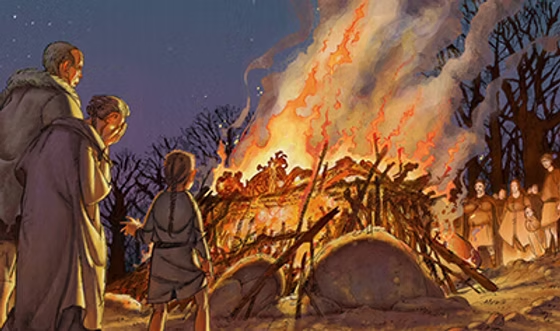
Which part of the body does not burn during cremation is one of the most searched questions about the cremation process, and the answer surprises most people.
While it is natural to assume that the entire body turns to ash under extreme heat, that is not what actually happens. Bones and tooth enamel survive the process.
Cremation is the process of reducing a dead body to its basic elements by exposing it to extreme heat inside a specially designed furnace called a retort or cremation chamber.
The process is not like a bonfire or open flame. It is a controlled thermal process that uses temperatures between 1,400 and 1,800 degrees Fahrenheit (760 to 980 degrees Celsius) to break down organic matter.
Cremation has become the most common form of body disposal in many countries. In the United States, the National Funeral Directors Association reports that cremation now accounts for over 56% of dispositions, surpassing traditional burial.
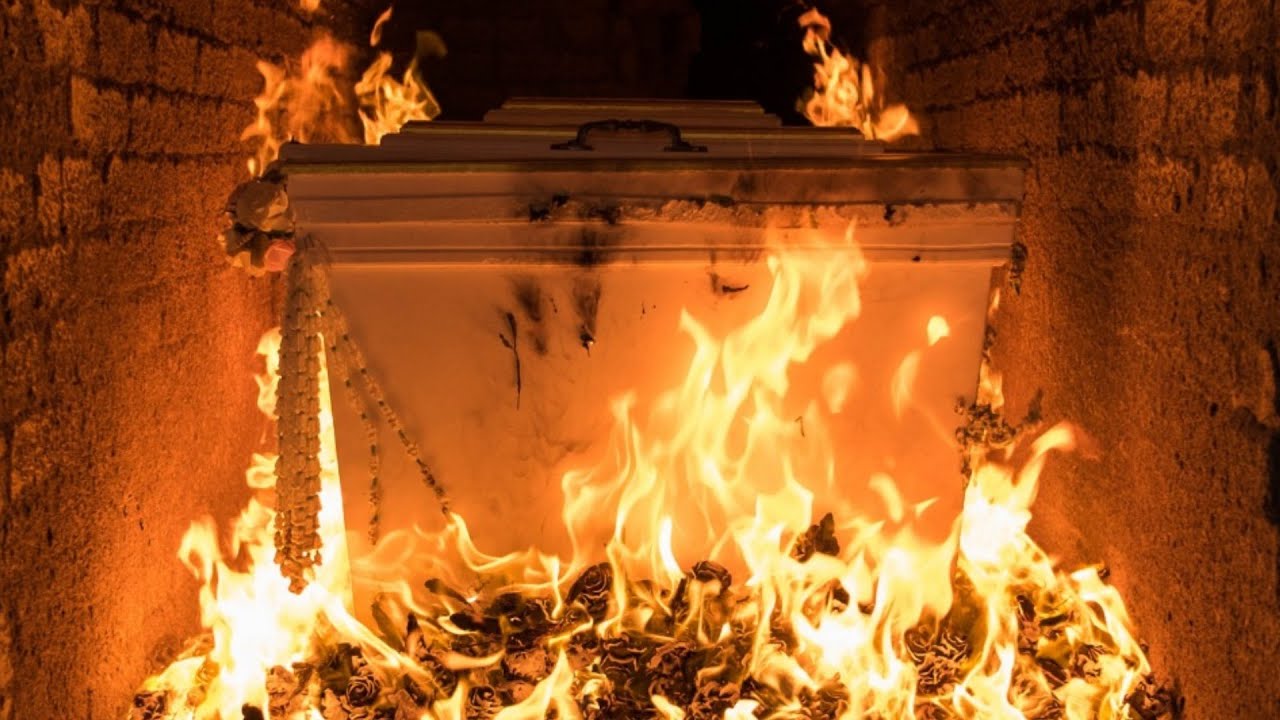
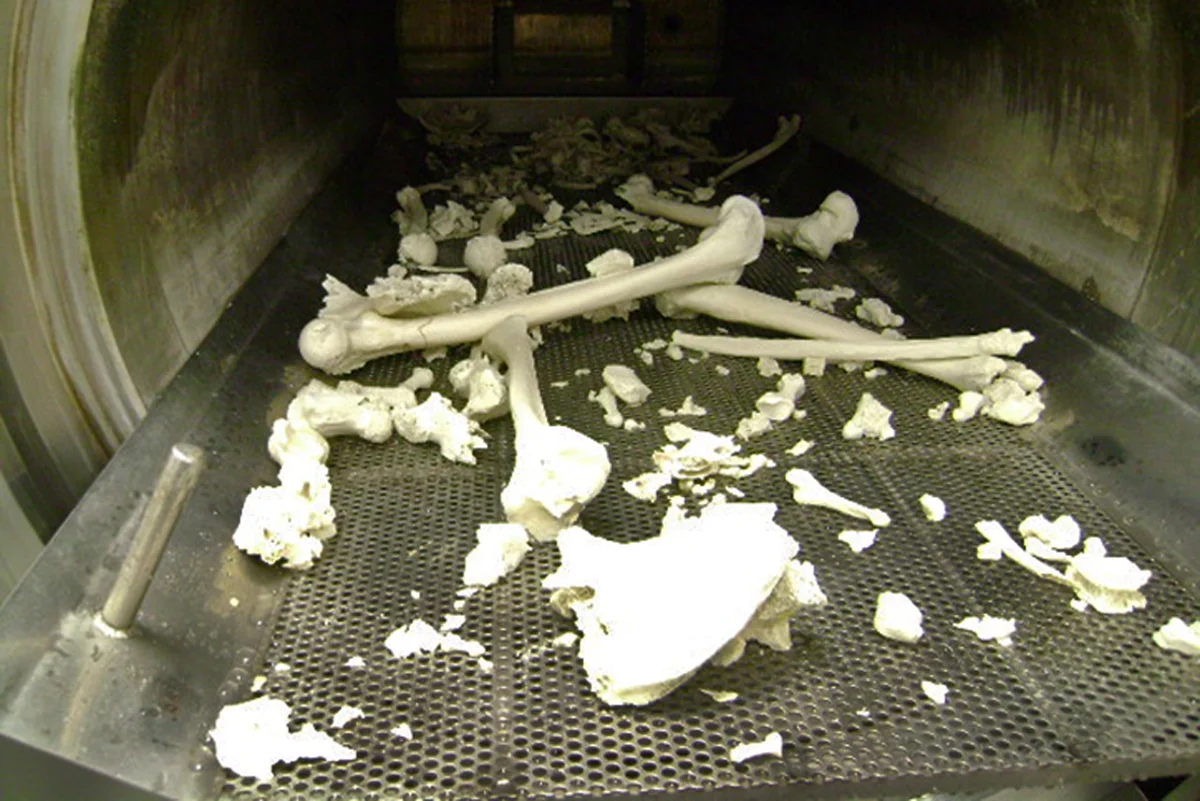
The answer to the question “which part of the body does not burn during cremation” is the bones and tooth enamel.
All soft tissues, including skin, muscles, organs, fat, and hair, are consumed entirely by the heat. They vaporize and oxidize, leaving no trace in the final remains.
Bones survive because they are primarily mineral in nature. The key compound is calcium phosphate, which is an inorganic mineral that does not burn the same way organic tissue does.
Tooth enamel is the hardest substance produced by the human body. Because teeth are mineral-based like bones, enamel survives or partially survives the cremation heat and is collected along with bone fragments.
Understanding the process in detail helps explain exactly which body parts survive and which do not. Here is a detailed timeline of what happens inside the cremation chamber.
Minutes 1 to 10 — Soft Tissue Burns First At temperatures between 670 and 810 degrees Celsius, the body begins breaking down almost immediately. Skin and superficial tissue are the first to be consumed.
Minute 20 — Bones Become Exposed The forehead bone separates from soft tissue. Cracks begin appearing in the thin wall of the cranial cavity (tabula externa) as the bone dries and contracts from heat.
Minute 30 — Skin Is Fully Gone All external skin burns away within the first 30 minutes. The underlying body structures become exposed inside the chamber.
Minute 40 — Internal Organs Shrink Internal organs shrink severely. They take on a sponge-like or net-like structure as they lose water and begin to disintegrate.
Minute 50 — Extremities Break Down The hands and feet are significantly destroyed by the 50-minute mark. Only the torso and core skeletal structure remain largely intact.
90 Minutes — Torso Collapses The main trunk of the body collapses and breaks apart. Most of the skeletal structure is now visible but highly fragile.
2 to 3 Hours — Process Complete The full cremation process takes 2 to 3 hours depending on body size, coffin material, and chamber temperature. What remains are brittle, calcified bone fragments.
Bones are a composite material. They are made of two main components working together: a mineral lattice of calcium phosphate and a protein matrix of collagen.
The collagen burns away during cremation. However, the calcium phosphate mineral structure does not combust in the same way organic tissue does.
At cremation temperatures, calcium phosphate becomes calcified and desiccated. The result is brittle, whitish-grey bone fragments that survive the heat of the retort.
Calcium phosphate is the primary reason bones withstand cremation heat. It is the same compound found in teeth, which is why both survive in similar ways.
It is an inorganic mineral, meaning it does not contain carbon-based organic molecules that can combust and turn to gas.
This is a key distinction. Organic tissue burns because carbon-based molecules react with oxygen at high temperature. Inorganic minerals like calcium phosphate do not undergo this reaction.
Teeth are made of four different types of tissue. The pulp (soft inner tissue) burns completely during cremation. The dentin (hard layer beneath enamel) largely disintegrates.
Tooth enamel is the hardest substance the human body produces. It is so dense and mineral-rich that it either survives intact or survives as fragments even at cremation temperatures.
After the process is complete, teeth often detach from the jawbone and are collected along with the bone fragments. They are processed with the bones into the final cremated remains.
This is one of the biggest misconceptions about cremation. What is returned to the family in an urn is not ash in the traditional sense.
The remains collected from the cremation chamber are coarse, whitish-grey bone fragments. They often still look recognizably like skeletal material when they are first removed.
These fragments are then placed into a machine called a cremulator. A cremulator uses high-speed rotating blades or ball bearings to grind the bone fragments into a uniform, sand-like powder.
The final material is composed almost entirely of pulverized bone minerals, primarily calcium phosphate, with smaller amounts of sodium and potassium. This is what families receive in the urn.
| Component of Cremated Remains | Approximate Percentage |
|---|---|
| Calcium phosphate | 85–90% |
| Calcium carbonate | 5–8% |
| Sodium and potassium salts | 2–3% |
| Other trace minerals | 1–2% |
| Organic residue | Near zero |
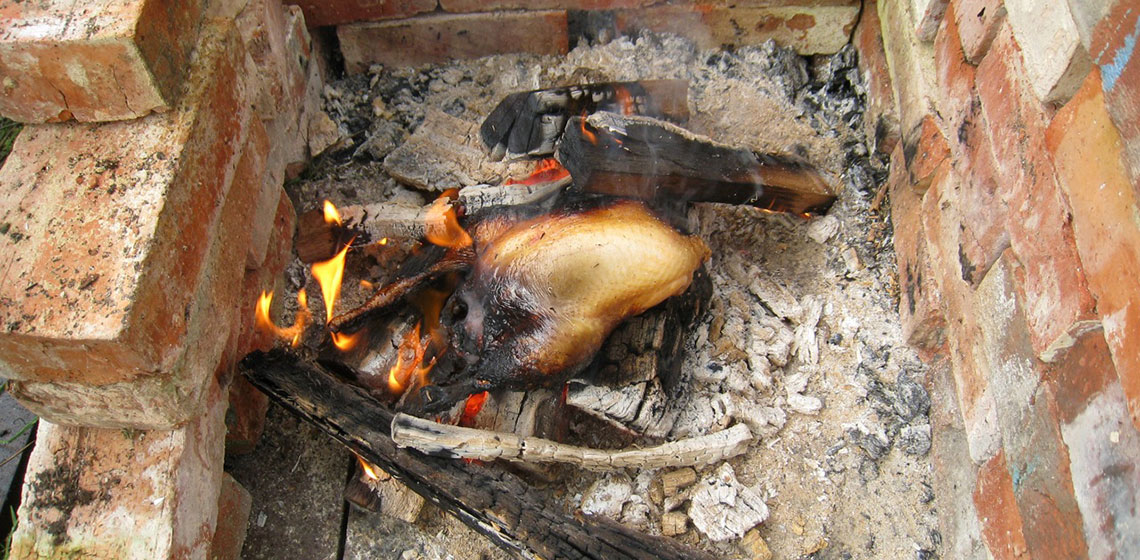
Here is a comprehensive breakdown of every major body component and what happens to it during cremation.
| Body Component | What Happens During Cremation |
|---|---|
| Skin | Burns completely within first 30 minutes |
| Muscle tissue | Vaporizes entirely in the heat |
| Organs (heart, lungs, etc.) | Shrink and disintegrate completely |
| Fat tissue | Burns completely |
| Hair | Burns almost instantly |
| Blood and fluids | Evaporate immediately |
| Bones | Survive as calcified fragments |
| Tooth enamel | Largely survives; collected with bones |
| Tooth pulp | Burns completely |
| Cartilage | Burns completely |
| Brain tissue | Vaporizes completely |
| Pacemakers and batteries | Removed before cremation (risk of explosion) |
| Metal implants (titanium, steel) | Survive; removed after by magnet |
| Dental fillings | Some survive; separated after cremation |
Many people in 2026 have metal implants, joint replacements, or medical devices in their bodies. These do not burn during cremation either.
Titanium, stainless steel, and cobalt-chromium alloys used in hip replacements, knee replacements, and spinal implants all survive the heat of the cremation chamber intact.
After the chamber cools, crematorium staff use a powerful handheld magnet to sweep through the remains and separate all metallic pieces from the bone fragments. These are collected separately and never mixed into the urn.
Most crematoriums donate the recovered metal to registered recyclers. In North America, many facilities send the proceeds of metal recycling to registered charities.
Pacemakers and other battery-powered implants pose a serious safety risk during cremation. The batteries inside these devices can explode under extreme heat and cause significant damage to the cremation retort.
Funeral directors always check medical records and family declarations before cremation begins. If a pacemaker or internal defibrillator is present, it must be surgically removed beforehand.
Radioactive implants, such as those used in some cancer treatments, also require special handling and must be disclosed and removed before any cremation takes place.
This is one of the most common myths about cremation, and it is false. The skull does not explode during the process.
The skull has a thin layer of tissue over it that burns away very quickly. The heat then causes the bones of the skull to dry out, become brittle, and develop small cracks.
Fragmented skulls are sometimes found in forensic investigations of burned bodies, but this is caused by the physical collapse of brittle bone, not by any explosive pressure buildup.
In Hindu tradition, there is a special significance attached to a bone that survives cremation. This is the Atmaram bone, which corresponds to the C2 axis vertebra, the second cervical vertebra of the spine.
In Hindu belief, this bone is considered the dwelling of the soul (Atma). After cremation, during the ceremony of Asthi Sanchaya (collection of bones), the Atmaram bone is carefully recovered and handed over to the family.
The family then performs Asthi Visarjan, which involves immersing the bones and ashes in a sacred river, most often the holy Ganges. The Atmaram bone holds deep spiritual and cultural meaning in Hindu cremation practices.
The duration depends on several factors, including the size and weight of the body, the material of the coffin or container, and the temperature and efficiency of the retort.
| Factor | Impact on Duration |
|---|---|
| Average adult body | 2 to 3 hours |
| Larger body size | Up to 3.5 hours |
| Coffin material included | Adds 20–40 minutes |
| High-efficiency retort | Slightly shorter time |
| Older retort equipment | May take longer |
After the cremation itself is complete, the chamber must cool before remains can be handled. The full process from start to finish can take half a day.
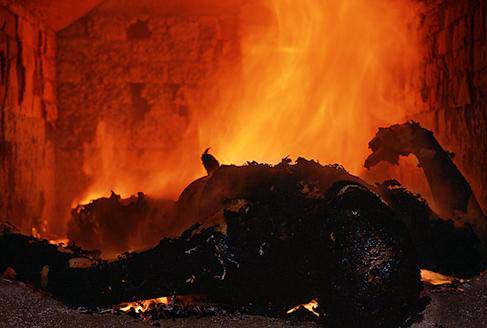
The cremation retort must reach temperatures between 1,400 and 1,800 degrees Fahrenheit (760 to 980 degrees Celsius) to fully cremate a human body.
At this temperature range, all organic tissue, fluids, and carbon-based compounds are vaporized, oxidized, or reduced to basic mineral form.
A secondary combustion chamber is typically used to burn off any particles, gases, or smoke from the primary chamber before they are released through the exhaust stack.
Several widespread myths exist about the cremation process. Here are the most common ones and the truth behind each.
Myth: The body is set on fire. The retort uses flames to generate extreme heat inside the chamber. The body itself is not set alight like a log. Heat, not direct flame, is what breaks the body down.
Myth: You get back true ashes. The remains are not ash. They are processed bone fragments ground into a powder. Traditional ash from burning wood is completely different in composition.
Myth: Bodies from multiple people are cremated together. Strict protocols prevent this. Only one body is cremated at a time, and a metal identification tag accompanies the remains throughout the entire process.
Myth: DNA survives in cremated remains. Cremains very rarely retain enough viable DNA for testing. The extreme heat degrades DNA almost completely. Reliable extraction from cremated remains is generally not possible.
Myth: The skull explodes during cremation. As explained above, the skull does not explode. The bone becomes brittle and cracks under heat but does not explode.
This is a real phenomenon that sometimes alarms people who witness early-stage cremation. The body can appear to flex its arms and legs into a fighting posture inside the chamber.
This happens because of extreme dehydration under heat. Muscles and tendons lose moisture so rapidly that they contract and stiffen, pulling the joints into flexed positions.
The posture does not mean the person is alive. It is a purely mechanical response of dehydrating tissue. The body does not sit up or move voluntarily.
After the cremation chamber is cooled and remains are collected, the bone fragments go through one more step before being returned to the family.
A cremulator is a machine that resembles a powerful blender. It uses rotating blades or ball bearings to grind the coarse bone fragments into a uniform fine powder.
This final powder is typically grey or off-white in color and has a sand-like texture. It is placed into a plastic-lined container inside an urn and returned to the family.
Different cultures attach specific meaning to the bones and remains that survive cremation. Here is a brief overview.
Hinduism: The survival of bones is deeply significant. The Atmaram bone (C2 vertebra) is considered a vessel of the soul and is carefully preserved before the Asthi Visarjan ceremony.
Buddhism: Cremation is the traditional method of body disposal in many Buddhist traditions. In Japan, the practice of Kotsuage involves family members using chopsticks to transfer the bone fragments from the cremation tray to the urn, starting from the feet and ending with the skull.
Western traditions: In most Western countries, the significance lies in the cremated remains as a whole, which are kept in an urn, scattered in meaningful locations, or incorporated into memorial objects.
Christianity: Some Christian denominations historically opposed cremation but most now accept it. The Catholic Church revised its stance in 1963 to allow cremation under certain conditions.
One of the most common questions following cremation is whether DNA can still be extracted from the remains. The answer is almost always no.
The extreme heat of the cremation process destroys the organic components of DNA almost entirely. The calcium phosphate mineral structure that survives cremation does not contain viable genetic material.
In rare cases, small amounts of mitochondrial DNA have been extracted from teeth and bone fragments after cremation, but results are inconsistent and generally not useful for standard identification or ancestry testing.
Maintaining the correct identity of remains throughout the cremation process is a critical legal and ethical requirement for all crematoriums worldwide.
A metal identification disk with a unique reference number is placed with the body before it enters the chamber. This disk survives the cremation process intact.
The disk accompanies the remains through cooling, the removal of metal implants, grinding in the cremulator, and final packaging. It ensures that the remains returned to the family are always the correct ones.
Families have many options for what to do with cremated remains. Here are the most common choices in 2026.
Keeping the urn at home is still the most common practice. Many families keep a decorative urn on a mantelpiece or in a private location as a permanent memorial.
Scattering remains in meaningful places, such as the sea, a garden, or a mountain, is increasingly popular. Rules on where scattering is permitted vary by country and region.
Some services incorporate cremated remains into diamonds, glass artwork, coral reef structures, or even vinyl records as unique memorial keepsakes.
Burial of the urn in a cemetery or in a dedicated memorial garden remains a popular option for families who want a fixed location to visit.
Direct cremation is the simplest and most affordable form of cremation. It takes place without any funeral service before or after the cremation.
No embalming is performed, and the body is taken directly from the place of death to the crematorium. This option has grown significantly in popularity since 2020.
Families can still hold a memorial service at any later date after the ashes have been returned. Direct cremation offers flexibility while keeping costs minimal.
Bones and tooth enamel are the only parts of the human body that do not burn during cremation because they are primarily composed of calcium phosphate, a heat-resistant inorganic mineral.
The soft pulp inside teeth burns completely, but tooth enamel, the hardest substance in the human body, largely survives the cremation heat and is collected with the bone fragments.
Cremated remains are not ash. They are pulverized bone fragments composed mostly of calcium phosphate, ground into a fine sand-like powder by a machine called a cremulator.
Cremation takes between 2 and 3 hours depending on body size and coffin material, though the full process including cooling and processing can take several more hours.
No, metal implants made of titanium, stainless steel, or cobalt-chromium alloys survive cremation heat intact. They are removed after using a magnet and are typically recycled or donated to charity.
Pacemakers contain batteries that can explode under extreme heat, causing damage to the cremation chamber and posing a risk to crematorium staff. They must be surgically removed beforehand.
No, the skull does not explode. The bone dries out, becomes brittle, and develops cracks from the heat, but there is no explosive buildup of pressure inside the skull.
The Atmaram bone is the C2 axis vertebra, which typically does not burn during cremation. In Hindu tradition, it is considered the dwelling of the soul and is collected for immersion in the holy Ganges.
DNA is almost entirely destroyed by the heat of cremation. In rare cases, trace amounts of mitochondrial DNA may survive in tooth or bone fragments, but reliable extraction is generally not possible.
A cremation retort must reach between 1,400 and 1,800 degrees Fahrenheit (760 to 980 degrees Celsius) to fully break down the organic matter in a human body.
Understanding which part of the body does not burn during cremation helps demystify a process that many people find confusing or even unsettling.
The simple truth is that bones and tooth enamel are the only naturally occurring body parts that survive the extreme heat of the cremation chamber. Everything else, including skin, muscles, organs, and fat, is vaporized completely by temperatures reaching up to 1,800 degrees Fahrenheit.
The so-called “ashes” returned to families are not ash at all. They are finely ground bone mineral, primarily calcium phosphate, processed through a cremulator after the chamber has cooled.
Metal implants also survive but are carefully separated from the remains and handled according to environmental and ethical guidelines. In cultures like Hinduism, specific bones such as the Atmaram hold deep spiritual meaning and are treated with great reverence.