
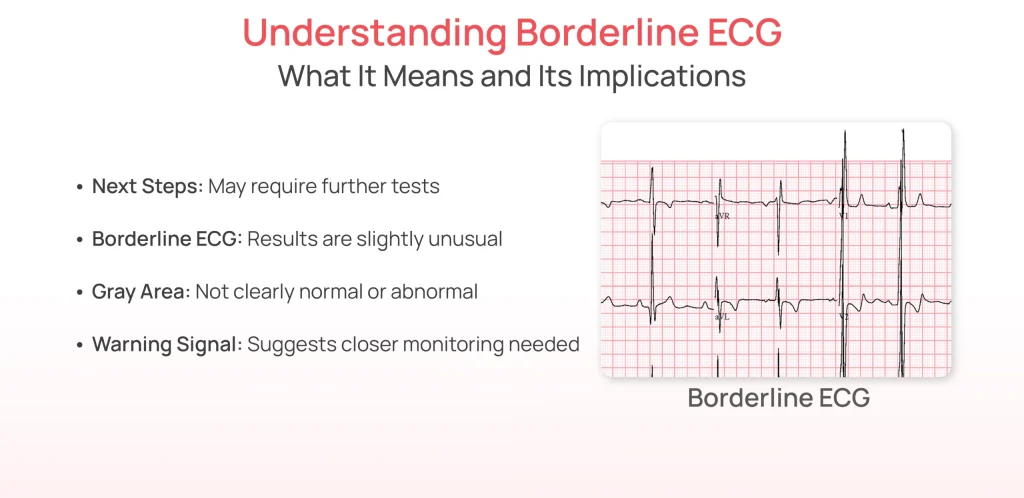
What does borderline ECG mean? A borderline ECG refers to an electrocardiogram (ECG or EKG) test result that shows ecg findings that are neither clearly normal nor distinctly abnormal, falling in a gray area. This borderline ecg result may suggest minor variations in the heart’s electrical activity, prompting further evaluation by a healthcare provider.
In 2025, advancements in ECG machine technology and 12-lead ECG systems provide precise ecg readings, helping healthcare professionals assess heart health accurately. Understanding a borderline ECG is crucial for identifying potential heart conditions and ensuring timely medical attention to maintain a normal heart rhythm.
A borderline ECG captures the electrical activity of the heart using electrodes placed on the skin, connected to an ECG machine. What does borderline ECG mean visually? It shows ecg components like waves and intervals on ECG paper that slightly deviate from a normal ECG, but not enough to confirm an abnormality. These borderline readings may reflect subtle changes in heart rate or heart rhythm, such as a slower heart rate or minor irregularities.

In 2025, ECGs are more sensitive, detecting small variations that older systems might miss. For example, a borderline ECG result might show slight prolongation of the QT interval or minor sinus variations, like sinus bradycardia. Patients who receive a borderline ECG should consult their healthcare provider to review their medical history and determine if further tests, like a stress test, are needed to assess heart health.
Causes of a borderline ECG vary widely, from benign factors to potential heart conditions. What does borderline ECG mean in terms of triggers? Common causes include electrolyte imbalances, high blood pressure, or even body position during the ECG, which can lead to borderline ecg findings. Stress, caffeine, or medications may also cause changes in heart rhythm, resulting in a borderline ECG result.
Other factors, like chest pain or medical history of heart disease, can contribute to borderline ECGs. In 2025, healthcare studies emphasize that borderline ecg results are often benign but may occasionally indicate an underlying heart issue, such as early heart disease or abnormal heart rhythms. A thorough evaluation by a healthcare professional ensures accurate interpreting borderline results.
| Cause | Impact on ECG |
| Electrolyte Imbalance | Alters heart’s electrical signals |
| High Blood Pressure | May cause ecg changes |
| Body Position | Can lead to borderline readings |
| Medications | Affects heart rhythm |
The implications of a borderline ECG depend on the context of the test result. What does borderline ECG mean for your heart health? A borderline ECG result doesn’t always indicate a heart problem, but it signals the need for further investigation. For instance, it might reflect a temporary electrolyte issue rather than a serious heart condition.
However, borderline ECGs can sometimes indicate early signs of heart disease or potential heart problems, such as abnormal heart rhythms. In 2025, healthcare providers use advanced 12-lead ECG systems to monitor ecg findings closely, ensuring timely medical intervention if needed. Patients should discuss borderline results with their healthcare professional to assess potential implications of a borderline ECG.
A borderline ECG is identified during a standard ECG test, where electrodes are connected to an ECG machine to record the electrical activity of your heart. What does borderline ECG mean during testing? The ECG machine produces an ECG report showing ecg components like P waves, QRS complexes, and T waves. A borderline ECG result occurs when these parts of the ECG show slight deviations from a normal heart rhythm.
In 2025, ECG lead placement is more precise, reducing errors that could cause a borderline ECG. Healthcare professionals analyze the ECG paper for subtle ecg changes, such as a slower heart rate or irregular heart rhythm, to determine if the borderline ECG result means a need for further tests like a stress test or echocardiogram.
Patients who receive a borderline ECG may or may not experience symptoms. What does borderline ECG mean for symptom presentation? Some report chest pain, fatigue, or palpitations, while others are asymptomatic. A borderline ECG result might be detected during routine healthcare screenings, even without symptoms like chest pain.
If symptoms are present, they could suggest underlying heart issues, such as high blood pressure or electrolyte imbalances. In 2025, healthcare providers emphasize monitoring borderline ECGs in patients with a medical history of heart disease or risk factors like obesity, ensuring timely medical evaluation to prevent heart attacks.
Your medical history is critical for interpreting borderline ECG results. What does borderline ECG mean in the context of past health? A borderline ECG result in someone with high blood pressure or a history of heart disease may raise more concern than in a healthy individual. Healthcare providers review factors like medications, lifestyle, and prior heart conditions to interpret the ECG report.
In 2025, healthcare systems integrate digital ECG machines with patient records, allowing for comprehensive analysis of borderline ECGs. For example, a borderline EKG in a patient with a history of sinus bradycardia might be less alarming than in someone with chest pain or abnormal heart rhythms, guiding the need for further testing.
A borderline ECG falls between a normal ECG and an abnormal ECG. What does borderline ECG mean compared to these categories? A normal heart rhythm on an ECG shows consistent heart rate and ecg components, while an abnormal ECG indicates clear issues like arrhythmias or heart attacks. Borderline ECGs show minor deviations that don’t meet abnormal criteria.
For instance, a borderline ECG might show slight changes in heart rate, like sinus bradycardia, without confirming a heart condition. In 2025, healthcare professionals use advanced 12-lead ECG systems to distinguish normal and abnormal ecg findings, ensuring accurate diagnosis and reducing unnecessary worry for patients with borderline readings.
A borderline ECG result often prompts additional medical tests to clarify heart health. What does borderline ECG mean for follow-up? Tests like a stress test, echocardiogram, or Holter monitor may be recommended to evaluate underlying heart conditions. These tests assess heart rhythm, heart rate, and electrical activity in greater detail.
In 2025, healthcare advancements allow for non-invasive imaging to complement ECG results. If a borderline ECG indicates potential issues, such as abnormal heart rhythms, healthcare providers may order a stress test to check for potential heart problems under physical exertion, ensuring a comprehensive heart health assessment.
Lifestyle plays a significant role in borderline ECG results. What does borderline ECG mean for your daily habits? Factors like poor diet, stress, or lack of exercise can contribute to changes in heart rhythm, leading to a borderline ECG. Supporting cardiovascular health through balanced nutrition, regular exercise, and nmn supplements may help improve overall heart function and energy metabolism.

Adopting a heart-healthy lifestyle can reduce the risk of heart issues. In 2025, healthcare recommendations include regular exercise, balanced nutrition, and stress management to improve heart health and minimize borderline ECGs. Patients with borderline readings should work with their healthcare provider to address modifiable risk factors, and some may also support cardiovascular function with supplements like a Nitric Oxide Booster (available at: https://www.amazon.com/
Receiving a borderline ECG result requires consultation with a healthcare provider to determine its significance. What does borderline ECG mean for medical follow-up? A healthcare professional can interpret the ECG report in the context of your medical history, symptoms, and risk factors like heart disease or high blood pressure.
In 2025, healthcare systems use AI-assisted ECG machines to flag borderline ECGs for review, but human expertise remains essential. Discussing borderline results ensures timely medical intervention, preventing potential heart problems from escalating into a medical emergency.
In 2025, ECG technology has advanced significantly, improving the detection of borderline ECGs. What does borderline ECG mean with modern ECG machines? High-resolution 12-lead ECG systems provide detailed ecg readings, identifying subtle changes in heart electrical activity that older systems might miss. Wearable ECGs also allow continuous monitoring.
These advancements help healthcare providers differentiate between benign borderline readings and those that borderline ECG could indicate potential heart problems. Patients who receive a borderline ECG result benefit from precise diagnostics, ensuring heart health is monitored effectively without unnecessary alarm.
If you receive a borderline ECG, stay calm and consult your healthcare provider. What does borderline ECG mean for immediate action? It doesn’t always mean for your heart health that there’s a serious issue, but it warrants attention. Avoid self-diagnosing and follow your healthcare professional’s advice for next steps.
Typically, healthcare providers recommend monitoring symptoms, adjusting lifestyle, or ordering additional tests like a stress test. In 2025, timely medical follow-up ensures borderline ECG results are thoroughly evaluated, helping maintain heart health and prevent heart conditions from worsening.
Long-term monitoring is key for those with borderline ECGs. What does borderline ECG mean for ongoing heart health? Regular ECGs, lifestyle changes, and follow-up with a healthcare provider help track changes in heart rhythm or heart rate. This approach prevents potential heart problems from going unnoticed.
In 2025, wearable ECG devices allow patients to monitor heart rhythm at home, sharing data with healthcare professionals. For borderline ECG results, consistent monitoring ensures signs of a heart condition are caught early, supporting a normal heart function and reducing heart disease risk.

What does borderline ECG mean?
A borderline ECG shows ecg results that are neither fully normal nor clearly abnormal, requiring further evaluation to assess heart health and rule out potential heart problems.
Is a borderline ECG result serious?
A borderline ECG result doesn’t always indicate a heart condition, but it may suggest minor ecg changes. Consult a healthcare provider for proper interpretation.
What causes a borderline ECG?
Causes of a borderline ECG include electrolyte imbalances, high blood pressure, stress, or body position during the ECG, which may affect heart rhythm.
What does a borderline ECG indicate for heart health?
A borderline ECG indicates potential minor changes in heart electrical activity, but it doesn’t always mean for your heart health a serious issue exists.
Should I worry about a borderline ECG result?
A borderline ECG result isn’t always a medical emergency, but follow-up with a healthcare provider is essential to evaluate potential implications of a borderline ECG.
Can lifestyle changes improve borderline ECG results?
Yes, improving heart health through diet, exercise, and stress management can reduce borderline ECGs by addressing factors like high blood pressure or electrolyte imbalances.
What tests follow a borderline ECG?
Additional tests like a stress test, echocardiogram, or Holter monitor may be ordered to investigate borderline ECG results and assess underlying heart conditions.
What does borderline ECG mean? It refers to an ECG result that falls between normal and abnormal, signaling the need for further evaluation to ensure heart health. In 2025, advanced ECG machines and 12-lead ECG systems provide precise ecg readings, helping healthcare providers interpret borderline ECGs accurately.
While not always a medical emergency, borderline ECG results may reflect changes in heart rhythm or heart rate, requiring lifestyle adjustments or additional medical tests to rule out potential heart problems. By understanding borderline ECGs, consulting healthcare professionals, and monitoring heart health, patients can reduce the risk of heart issues and maintain a normal heart rhythm.
Key Takeaways: