
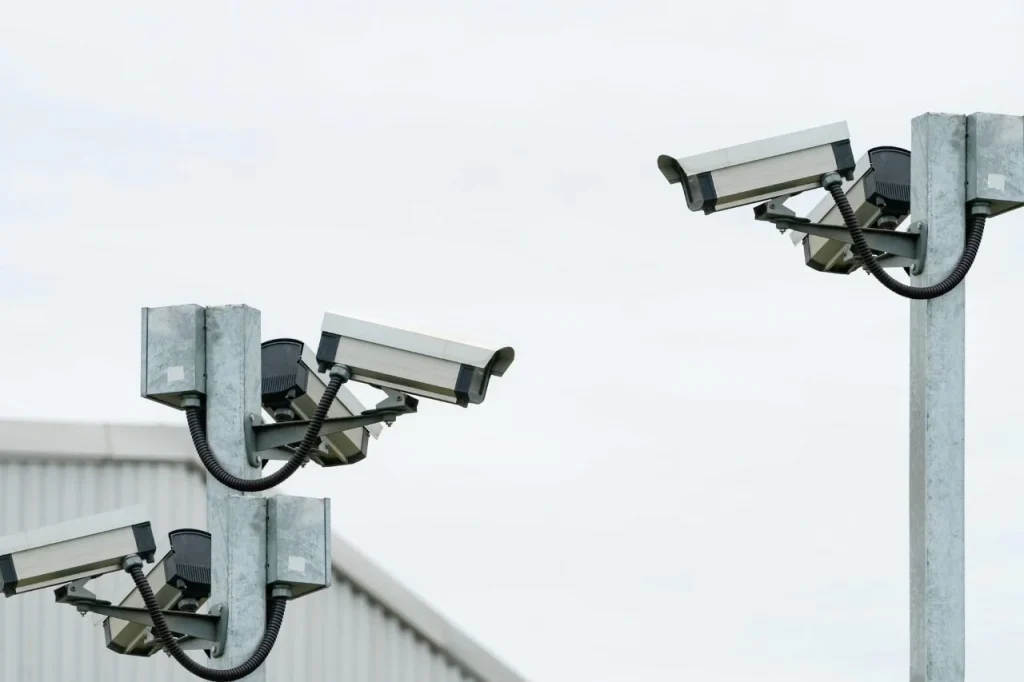
Security technology has moved significantly beyond standard recording, changing how businesses protect their assets and manage operations. When choosing between older hardware and modern setups, it is helpful to look past the hardware itself and consider how these systems impact overall business utility. This overview helps clarify the differences between long-standing industry methods and the newer, intelligent approaches available today.
The landscape of security technology often feels cluttered with competing standards and conflicting terminology. Business owners frequently find themselves balancing the perceived reliability of established methods against the flexibility of newer, internet-connected equipment. Understanding these foundational shifts is the first step toward building an effective security infrastructure that aligns with your real-world needs.
Traditional closed-circuit television refers to systems in which signals are transmitted over dedicated physical cables to a local recorder. These setups are entirely separate from public networks, meaning they capture and process visual information in a contained loop. Because the path from the camera to the monitoring screen is direct, transmission latency is virtually nonexistent, though the lack of connectivity limits how the information can be accessed away from the main hub.
Modern video surveillance systems have shifted away from closed-loop architecture toward networked, intelligent hardware that uses existing internet infrastructure to transmit data. By digitizing video signals, these platforms allow for remote access from nearly anywhere, turning individual cameras into dynamic sensors that feed information directly into centralized business intelligence dashboards. This move from simple footage recording to data-driven monitoring represents a major upgrade over outdated analog setups.
Comparing different hardware choices requires a solid grasp of how resolution, bitrate, and compression impact storage and clarity. While technical specs can be overwhelming, identifying the key differences helps ensure your infrastructure meets modern standards without unnecessary complexity. The table below outlines how common metrics differ between traditional and modernized approaches.
| Feature | Traditional CCTV | Modern IP Systems |
| Signal Type | Analog | Digital |
| Access | Local Only | Cloud & Remote |
| Resolution | Standard Definition | 4K & Higher |
Focusing on these differences helps decision-makers choose equipment that supports growth rather than restricting their future options.
How data travels from a sensor to your screen or server determines both the quality of your footage and the ease with which you can manage your security footprint. The transition from legacy cabling to network-based transmission enables greater flexibility, enabling security hardware to interface with other mission-critical systems. Adapting your connectivity strategy is essential to optimizing how you monitor high-traffic areas across a professional property.
Analog systems rely on direct point-to-point wiring, which makes extending the system physically demanding every time you add a camera. As the distance between the camera and the processor grows, signal quality often degrades, requiring amplifiers to maintain even a baseline level of clarity. For a scalable business, this physical dependency limits where you can place cameras and makes long-term system modifications expensive.
Digital network systems leverage existing Ethernet infrastructure to send information, eliminating the need for custom cable runs. Because these networks rely on standard data protocols, a high-quality video surveillance company can deploy cameras wherever a network drop exists, simplifying installation and maintenance. When planning this infrastructure, consider these essential integration steps:
Planning your network properly ensures that your security setup remains stable even under heavy data loads. Once these connections are defined, managing the flow of high-definition video becomes a standard task for your IT team.
High-definition video creates a constant, significant demand on your network, requiring careful traffic management. By implementing the compression standards used by our firm to maximize ROI, bandwidth usage can be controlled without sacrificing the visual quality needed to identify individuals or vehicles. Properly shaping this traffic prevents security recordings from slowing down your daily business applications.
Storing historical footage involves finding the right balance between how much you save and how quickly you can index or search that data. Modern approaches provide several methods for managing these archives, moving from static local drives to resilient, searchable cloud backups. Choosing where this information resides will dictate how your organization retrieves evidence during an incident and how you maintain compliance with internal data policies.
Digital Video Recorders (DVR) and Network Video Recorders (NVR) serve different architectural needs depending on the complexity of the installation. A DVR functions exclusively with analog cameras, while an NVR is designed specifically for digital IP cameras, offering more powerful processing and easier search functionality. The difference comes down to whether your system is built for legacy support or for integrating modern, AI-enhanced optics.
Cloud storage removes the risks of hardware failure on-site, providing an off-premises repository for your critical security footage. By using external data centers, your team gains infinite scalability, allowing storage capacity to grow alongside your facility without adding more on-site servers. This off-site approach gives your organization reliable proof of activity even if the physical recording hardware is compromised or damaged.
Effective security requires a clear policy on how long recordings are held before they are purged or archived. Automated systems now allow managers to set granular retention rules, ensuring that specific events are kept indefinitely while routine footage is systematically cycled to save space. We recommend that every client adopt robust encryption protocols for all stored video files, protecting privacy while maintaining an accessible audit trail for compliance purposes.
Surveillance has evolved into an active component of operational intelligence rather than a passive observation tool. Today’s cameras are essentially sensors that pull actionable data into management platforms, enabling teams to respond to events as they happen. Integrating this flow of information improves safety while also revealing insights into daily business workflows.
Artificial intelligence now enables cameras to differentiate between humans, vehicles, and wildlife, sending relevant alerts to human operators only when genuine movement occurs. By reducing noise and false positives, this technology saves staff time and keeps them focused on actual security concerns. Our agency uses this analytic capability to help businesses identify behavioral trends that can be used to optimize facility resources and staffing.
Connecting video feeds to access control and alarm systems creates a comprehensive security environment where responses are tightly synced. When an alarm triggers on a door, the system automatically pulls up the video feed, allowing security personnel to verify the situation in real time. This automated linking of hardware creates a safer, more responsive facility that reduces human error during high-stress situations.
Mobile accessibility allows authorized staff to maintain visibility over their facility without being tied to a desk. Whether you use a tablet or a laptop, a unified application interface ensures you can check live feeds or review recent clips with a single tap. This level of mobile visibility is essential for maintaining control over multiple branches, as it permits rapid troubleshooting even when you are off-site.
As your business footprint grows, your security system should be able to expand without requiring a complete hardware overhaul. A modular approach allows you to scale from a single office to a enterprise-wide network by simply adding new components at your own pace. This flexibility is a hallmark of modern systems and is vital for keeping up with the shifting demands of your operations.
Analog systems are often built as closed blocks, meaning each time you outgrow your capacity, you are restricted by the existing cabling and recording limitations. Upgrading these systems often results in a patchwork of mixed-quality hardware that is difficult to manage as a single entity. The result is often a fragmented network that requires manual consolidation and frequent troubleshooting to keep running.
Networked systems use modular building blocks that accept new cameras into the existing ecosystem seamlessly. By standardizing your hardware early, you avoid the headaches of proprietary connections and can add capacity whenever and wherever the business requires. This modularity enables long-term planning, as your investment in network infrastructure supports future hardware iterations for years to come.
Multi-site management is significantly simplified when all your visual and alert data are funneled into a single, unified cloud interface. With a dashboard that aggregates data from every camera across your organization, you no longer need to switch between local systems to understand what is happening. This centralized control provides a bird’s-eye view of your entire security posture, ensuring consistent performance across every branch.
Evaluating the investment in security equipment requires looking at the total cost of ownership rather than just the price of the cameras. Modern digital systems often require a higher upfront investment but yield greater value through lower maintenance costs, easier scaling, and AI-enabled efficiencies. Considering these factors ensures that your security budget is used effectively to support your long-term expansion goals.
Analog systems often appear cheaper in the initial quote because of lower camera costs, but the labor required to wire multiple long-distance runs to a central location is substantial. Digital systems have lower cabling requirements but require an investment in networking gear, such as routers and switches, to support high-quality traffic. When comparing costs, always factor in the time your IT team saves by no longer having to manage complex, analog wiring schemes.
Analog hardware is susceptible to signal noise and cable degradation, which leads to unpredictable maintenance issues. Digital cameras, while occasionally requiring network configuration adjustments, offer much higher reliability because they verify data transmission throughout the loop. Furthermore, modern equipment enables remote health monitoring, with system logs showing which device is struggling before it actually fails.
Total cost of ownership includes energy, storage maintenance, and the staff time required to consistently monitor the system. By opting for cloud-connected, AI-ready hardware, you generally reduce the time staff spend on managing local storage servers and sorting through hours of useless video. The result is a more resilient, cost-effective security posture that delivers greater value with each passing year.
Choosing between traditional methods and modern solutions is rarely just about hardware; it is about selecting the approach that best supports your business growth and security needs. Modern digital systems offer the flexibility, intelligence, and remote access needed to meet today’s operational demands, unlike older analog systems that limit scalability. By carefully planning your infrastructure strategy, you can create a secure, data-rich environment that protects your assets while improving how you monitor daily workflows for years to come.
Upgrading depends primarily on your business needs rather than a strict timeline, though technology cycles typically shift every five to seven years for optimal compatibility.
It is possible to use encoders to bring analog signals into a digital recorder, though this often creates complexity and does not provide the benefits of native digital hardware.
Separating your security traffic from your general business internet ensures that large video files never compete with sensitive operations like point-of-sale transactions or voice calls.
Cloud storage protects your recorder from physical theft or damage, though it requires rigorous password management and encryption to keep your data safe from unauthorized access.
Ongoing maintenance is significantly easier with modern systems, but having someone who understands basic networking and firmware management is a recommended best practice for long-term success.
AI tools analyze live feeds or historical recordings to flag only relevant events, drastically reducing the time required to review footage and improving your response times to potential hazards.
Prioritize infrastructure, such as network cabling and high-quality storage, as these components are difficult to swap out later and affect the long-term reliability of every camera you add.