
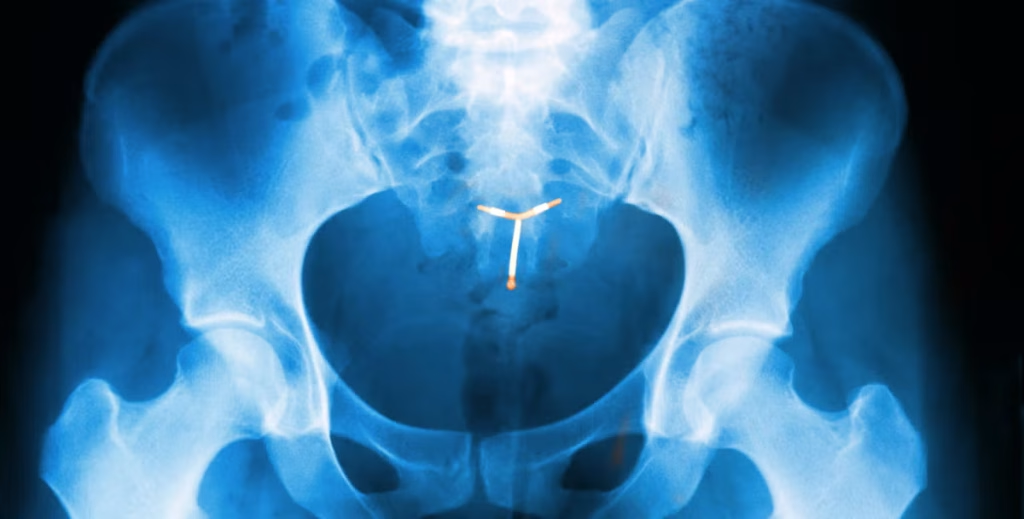
Many people choose an intrauterine device because it offers long-term birth control without requiring daily attention. Once it’s properly placed, it can remain effective for years while allowing most people to go about their normal routines with little thought. That reliability is one of the reasons IUDs have become such a popular option.
Even so, no medical device is completely free from potential complications. Although uncommon, an IUD can sometimes change position after insertion. When that happens, the device may not work as intended, and new symptoms can develop that deserve careful attention instead of being brushed aside.
When a Mirena IUD has moved, the signs can be subtle and may not appear right away. Recognizing the symptoms and knowing when to contact a healthcare provider can help address potential concerns before they become more serious.
An IUD is inserted into the uterus by a healthcare professional and is designed to remain there until it’s removed or replaced. In most cases, it stays securely positioned for years. Occasionally, though, the device can move, become partially displaced, or even be pushed out of the uterus.
Several factors may contribute to movement. The uterus naturally contracts during menstrual cycles, and those contractions can occasionally affect the device’s position. In some cases, placement may change soon after insertion, while in others it happens months or even years later for reasons that aren’t entirely clear.
One challenge is that movement isn’t always obvious. Some people notice changes right away, while others have no symptoms at all. Without an examination or imaging, it can be difficult to know whether the IUD remains exactly where it should be.
A shifted IUD may cause symptoms that feel different from what someone experienced after the initial insertion. Pelvic pain, cramping, or discomfort during everyday activities can sometimes signal that something has changed. The intensity varies widely from person to person.
Unexpected bleeding is another possible sign. Spotting between periods, heavier bleeding than usual, or bleeding after sex may all warrant a conversation with a healthcare provider. While these symptoms can have several causes, they shouldn’t automatically be dismissed as normal.
Some people also discover they can no longer feel the IUD strings, or they notice the strings suddenly seem much longer or shorter than before. Although string changes don’t always mean the device has shifted, they deserve prompt evaluation, especially when combined with pain or unusual bleeding.
An IUD is designed to work from a specific location inside the uterus. If it becomes partially displaced, its ability to prevent pregnancy may be reduced. The degree of that risk depends on the type of displacement and should be evaluated by a medical professional.
Movement may also increase the chance of irritation to surrounding tissue. In rare situations, an IUD can become embedded in the uterine wall or, even less commonly, perforate the uterus. Although these complications are uncommon, they require prompt medical attention when they occur.
Waiting too long to address concerning symptoms can allow problems to become more complicated. Early evaluation often provides reassurance when everything is normal, while also making it easier to identify and treat issues before they worsen.
Any persistent pelvic pain, heavy bleeding, fever, unusual discharge, or sudden changes in IUD strings should prompt a call to a healthcare provider. Even symptoms that seem mild deserve attention if they continue or gradually become more noticeable over time.
A medical evaluation may include a pelvic examination, an ultrasound, or other imaging to confirm the IUD’s location. If the device has shifted, the provider can discuss whether it should be repositioned, removed, or replaced based on the specific findings.
Trying to determine the position of an IUD without medical guidance isn’t recommended. Professional evaluation offers the clearest answers and helps ensure that the chosen birth control method continues to provide the protection and safety it was intended to deliver.
Most Mirena IUDs remain securely in place and provide reliable contraception for years without causing significant problems. Still, changes in placement can happen, and recognizing potential warning signs allows concerns to be addressed before they become more serious.
Pain, unusual bleeding, missing strings, or other unexpected symptoms don’t automatically mean something is wrong, but they shouldn’t be ignored either. Paying attention to changes and seeking medical advice when needed can help protect both health and peace of mind.
When questions arise about an IUD’s position, a timely medical evaluation is the best next step. Getting answers early can confirm that everything is working as expected or allow treatment to begin promptly if the device has shifted.