
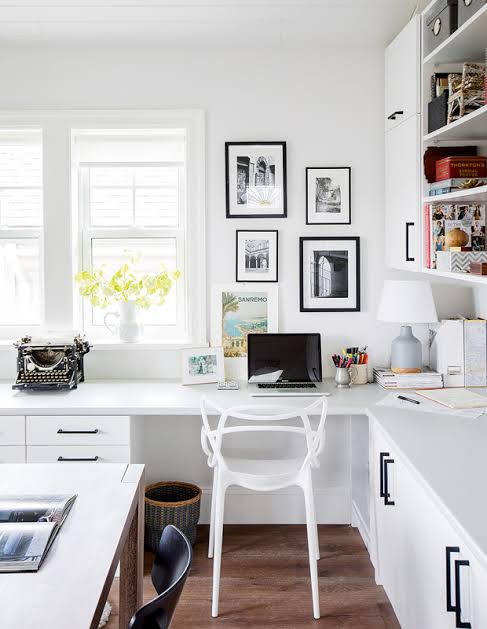
There was a time when a home office was a bit of an afterthought—perhaps a quiet corner of the guest bedroom or just a laptop propped up on the dining table. But as remote and hybrid work permanently shape our daily lives, our relationship with our homes has shifted. We are asking our personal spaces to perform at a professional, corporate tier, all while remaining the warm, comforting sanctuaries we want to retreat to at the end of a long day.
The materials, textures, colors, and organizational habits you surround yourself with during your hours of deep focus directly impact your cognitive clarity, emotional stamina, and long-term well-being. To shift away from a temporary, makeshift desk and build a high-performance workspace, we need to design an ecosystem that places your health and peace of mind first.
When you set out to design a space where you will spend a large portion of your waking hours, your primary choice must center on how your body is supported. Many home workers fall into the trap of confusing softness with true physical comfort. A deep, plush chair might feel cozy for the first ten minutes, but without structural integrity, it forces your pelvis to tilt backward. This collapses your spine into an unnatural shape, causing tension to ripple up into your shoulders and neck by mid-afternoon.
True physical wellness at work begins with finding high-quality office chairs with back support that actively respond to your body’s movements. Your lower back features a natural inward curve that requires steady, gentle resistance to remain stable. A beautifully engineered backrest acts as a cradle for your lumbar region, ensuring that whether you are leaning forward to type out an urgent email or tilting back to contemplate a strategy, your pelvis remains neutral. This constant structural alignment preserves your physical stamina and keeps fatigue from draining your mental energy.
Because the home office often wears many hats, versatility is key. Your workspace might serve as a focused corporate den by morning and a creative studio or gaming haven by night. This requires a seating solution that effortlessly bridges the gap between intense work sessions and leisure. Exploring a curated range of hybrid computer and office chairs allows you to enjoy technical, commercial-grade support without sacrificing the clean, understated aesthetic of your home. Premium mesh finishes are highly recommended for tropical climates, acting as a passive cooling system that prevents the heat buildup and restlessness associated with traditional heavy leather padding.
Even when you are supported by the finest seating engineering, remaining locked in a single, static position for eight to ten hours a day goes entirely against how our bodies are physically wired. Prolonged sitting restricts blood circulation, triggers localized muscle tightness, and can cause a noticeable drop in your metabolic energy. The secret to sustaining a high-focus state throughout the day isn’t just sitting better—it is keeping your body fluid and moving.
Integrating smooth, motorized standup desks into your workspace is a wonderful way to bring that essential movement back into your routine. The true goal of a height-adjustable surface isn’t to force you to stand all day long, which introduces its own structural fatigue. Instead, it is about facilitating effortless transitions. Changing your working posture for just fifteen minutes every hour acts as a complete physical and mental reset. It increases blood flow to the brain, pulls your shoulders back to combat the “laptop hunch,” and breaks the monotony of long work blocks.
The real magic of a premium adjustable desk lies in its capacity for micro-calibration. Mass-produced, fixed-height desks are built to a default standard of 75 centimeters, a metric that rarely accounts for individual unique proportions. An electronic adjustable desk allows you to position the table surface to the exact millimeter that keeps your wrists perfectly flat and your elbows at a relaxed 90-degree angle. When you are ready to switch to a standing posture, a silent motor system elevates your entire workflow smoothly, keeping your concentration unbroken.
A health-first workspace extends far beyond physical furniture adjustments; it encompasses your entire sensory environment. Wellness and organization are deeply intertwined. A desk surface buried under loose papers, tangled charging wires, and forgotten coffee mugs creates a high level of “visual noise.” Every stray object in your field of vision competes for your brain’s processing power, subtly increasing cortisol (stress) levels and fracturing your ability to engage in deep, creative focus.
Embracing organization is an act of self-care. Professional organizers often suggest a “clean desk protocol,” which is heavily aligned with the Japanese concept of Ma—the appreciation of empty space. Take a moment to clear your entire desktop and only reintroduce items that serve a daily functional purpose or provide genuine emotional joy.
Invest in hidden under-desk cable management trays to tuck away the “tech-spaghetti” of power cords. Utilize slim, mobile side pedestals or vertical wall shelving to store files and stationery entirely outside your immediate field of vision. When you lower the visual clutter of your office, you create an environment of mental quiet, allowing your mind the room it needs to breathe, think, and innovate.
To elevate your home office into a true professional studio, you must take a moment to look at the invisible factors that dictate your daily vitality: lighting quality, air purity, and your connection to the natural world.
To align your current home studio with professional health and organizational standards, perform this straightforward four-point check this weekend:
Ultimately, your home office is so much more than just a collection of utility furniture items. It functions as an integrated lifestyle ecosystem that can either actively protect your physical health and mental clarity, or slowly drain your creative stamina.
By choosing honest materials, thoughtful ergonomics, and an organized, minimalist layout, you can transition your workspace into a true sanctuary built for comfort and longevity. Invest in tools that treat your body with care, pair them with surfaces that encourage movement, and build a beautiful, balanced environment where you don’t just get things done, but where you truly love to work.