
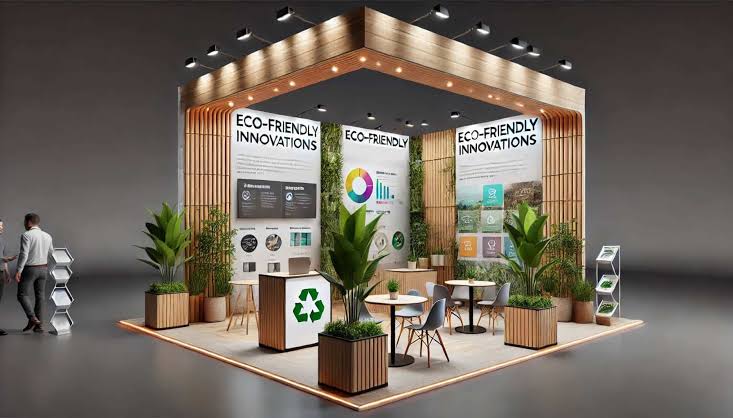
If you have ever walked into a busy trade show or exhibition hall, you know the feeling immediately. Hundreds of bright signs, glowing screens, and eager voices compete for your attention all at once. For business owners and event managers, cutting through that noise can feel like an overwhelming task.
For a long time, companies assumed that the only way to catch someone’s eye was to build bigger, heavier, and more elaborate structures. They ordered massive wooden walls, covered them in glossy plastic signs, and hired specialized installation crews just to get everything standing. But after three brief days of talking to attendees, almost all of those expensive materials were torn down with sledgehammers and tossed straight into giant trash bins behind the building.
Thankfully, a new wave of event design is changing the game. Today, being creative and being eco-friendly go hand in hand. You do not need a giant budget, loud power tools, or mountains of disposable plastic to make a splash. By focusing on smart layout choices, warm natural materials, and clever building techniques, you can create a memorable space that welcomes visitors while keeping your footprint light on the planet.
The way you arrange your physical space determines whether people feel comfortable stepping inside or prefer to keep walking down the aisle. A common mistake many exhibitors make is placing a tall, heavy counter right along the front border of their footprint. While it seems logical to have a greeting station upfront, it often acts like a fence, signaling to passersby that they should stay outside.
To create a space that naturally draws people in, consider these simple layout strategies:
Thoughtful exhibition booth design focuses on creating a smooth flow of movement. When you give people room to breathe and explore at their own pace, they are far more likely to stick around for a real conversation.
Your back wall is the primary anchor of your display. It is the very first thing attendees notice from 30 feet away as they walk down the main hall. In the past, most exhibitors simply hung up a flat vinyl banner or a paper poster. While easy to set up, flat prints often look dull and washed out under harsh overhead lights.
Upgrading your main wall into a three-dimensional feature transforms the entire mood of your display:
When you invest in clever booth design, your back wall becomes a magnet for eyes across the room, pulling visitors away from the busy aisle and straight into your story.
When people hear the word “cardboard,” they usually picture thin shipping boxes or shoe boxes that crush the moment you step on them. But modern structural paper board is an entirely different story.
Inspired by smart green building ideas and heavy-duty paper furniture, engineered paper boards use a clever inner core—like a tight honeycomb or wavy fluted pattern—sandwiched between strong layers of craft paper. This geometric layout distributes physical weight evenly across thousands of tiny internal pillars.
As a result, a simple paper display stand or counter can easily support hundreds of pounds. You can place heavy monitors, product prototypes, or hospitality coffee makers on top without worrying about sagging or bending.
Beyond its surprising strength, paper board brings a soft, natural texture to your space. Its smooth matte surface diffuses ambient light beautifully, creating a cozy, premium feel that looks fantastic in person and in photos.
Anyone who has ever spent a long day building a traditional trade stand knows how exhausting move-in day can be. Dragging heavy wooden crates, hunting for electrical outlets, fighting with power drills, and breathing in dust can drain your team’s energy before the show even opens.
Switching to a lightweight, tool-free trade show booth setup makes event day quiet, simple, and surprisingly fun:
Getting people to notice your space is step one; giving them a reason to stay is what delivers real results. Adding hands-on touchpoints encourages visitors to interact with your brand in a relaxed, memorable way.
Exhibition halls are physically demanding for attendees who have been walking for hours. Offering a comfortable, quiet spot to sit down for five minutes makes potential clients far more likely to have a relaxed, meaningful conversation with your team.
The most satisfying part of using sustainable paper structures happens when the final bell rings and the event comes to a close. While neighboring exhibitors are using hammers and crowbars to smash apart painted wood and dumping piles of plastic into giant trash skips, your teardown is completely clean and peaceful.
You simply unslot the panels, fold them flat, and pack them away for your next show. If a panel eventually reaches the end of its life after dozens of events, you don’t have to feel guilty about throwing it away. You can drop it straight into a standard paper recycling bin, where its fibers will be repulped into new paper products.
Standing out at your next event does not require building the heaviest, loudest, or most expensive structure in the room. Real impact comes from thoughtful layout planning, warm natural textures, and choices that show you care about the environment.
By combining open spatial design with lightweight, recyclable materials, you can create a charming, high-performing environment that draws people in, highlights your brand at its best, and leaves zero trash behind. It is better for your budget, easier on your team, and kind to the planet.