
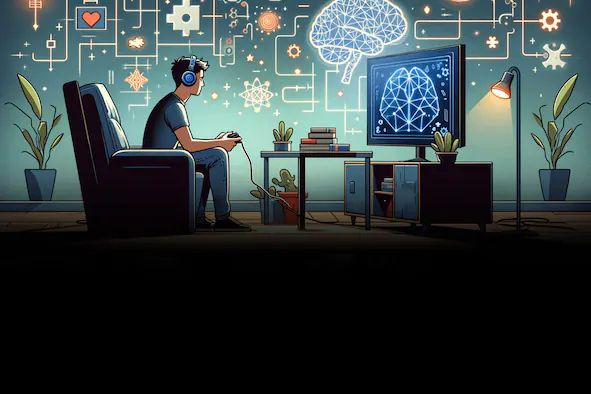
Video games are commonly believed to be a good time thing, but there is much more that video games affect than a good time. There are many studies today which show that video games are able to instruct people in skills of life, like problem-solving. By the presentation of challenges, problems, and the need to make quick decisions, video games create the ideal setup for the brain to learn and improve.
The Relationship of Problem-Solving to Games
Human beings are always faced with problems when they are engaged in playing games that must be solved using creative minds and good judgment. From figuring out the best ways to slay a boss to planning assets in a strategy game or problem-solving in an adventure game, human beings are always deliberating. Since slot thailand challenges players with challenges in the form of advertising issues requiring attention, video games challenge minds by rewarding tenacity and prudent decisions.
Critical Thinking Through Play
The majority of video games attempt to promote critical thinking. Strategy games like Civilization or StarCraft obligate the player to anticipate, think about a problem, and react to unexpected turns of events. Even puzzle games like Portal or Legend of Zelda games habituate the player to have a different mindset. Through repeated practice of such problems, the player builds analysis skills which can be applied to everyday decision-making.
Adjustment to Change
Problem-solving isn’t so much a one-size-fits-all solution—but of adjusting when the plans fall through. Video games are usually full of surprises that crop up unexpectedly, like the arrival of new enemies, unseen obstacles, or scarce resources. The players need to improvise their approach in the moment if they’re going to survive. Such flexibility is not much different from problem-solving in life, where everything’s going to shift quickly and need flexible thinking.
Teamwork and Cooperation
All the games require the player to cooperate with other individuals. Multigamer games like Minecraft and Fortnite usually require cooperation, resource sharing, and coordination. Players learn to respond as a team to solve problems, coexist, and bargain for needs of different professions in cooperating. This type of behavior produces school, work, and life habits of cooperation.
Building Patience and Persistence
Problem-solving in video games needs several attempts. The player will try numerous times before arriving at the right solution, but the game world pushes him to try one more time. This not giving up trains the player to understand that failure is a step towards it because gaining the victory is through patience and persistence. Such can be applied directly to actual problems where persistence yields progress.
Improving Creativity
Most contemporary video games use open-ended solutions. Sandbox video games such as Terraria or Minecraft allow the gamer to have liberty to mold their worlds and solve issues their own way. Freedom entails creative thinking, where the gamers test different tools, shapes, and approaches. Solving issues in video games, especially the creative ones, has the potential to propel innovation and idea generation in real life.
Applications in Real Life
Problem-solving in gaming can be applied to life itself. Gamers can solve math- or science-based problems more easily if they are creative thinkers. Adults can acquire skills to use in order to be strategic in workplace interactions. Even time planning or planning can be made easier through habits obtained from gaming.
Final Thoughts
Video games are not just a recreational activity. They are excellent problem-solving learning tools. They promote logical thinking, adaptability, teamwork, persistence, and imagination. While challenging and rewarding the player at the same time.
Next time when someone says video games are a waste of time. Just remember that when every puzzle is solved, every strategy is tested, and every level is completed. It is training the brain to think smarter and act faster. Gaming doesn’t just entertain. It helps to shape better problem-solvers for the real world.