
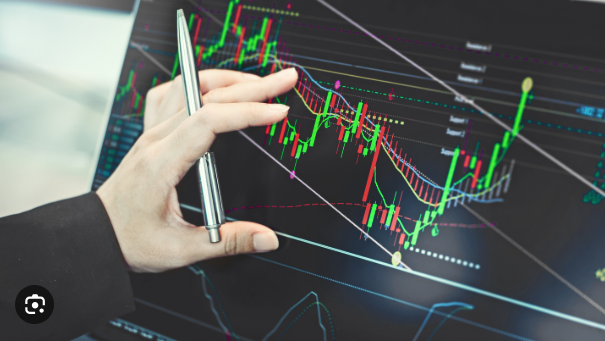
Finding the best MT5 indicators for trading forex can feel confusing at first. MT5 has many tools, but you only need a few that help you read the trend, time entries, and manage risk.
Here’s a simple, direct breakdown of the indicators traders use to understand price movement and make clearer decisions.
The Moving Average is one of the most widely used MT5 indicators. It smooths out price data and helps you see the true direction of the market.
Use it when you want to:
A simple setup is using a 50-period and 200-period MA. When the 50 crosses above the 200, momentum shifts upward. When it crosses below, the trend weakens. This is easy to follow and works across major forex pairs.
MACD is a core component of best mt5 indicators for trading forex because it reveals the strength behind a move. It tracks the relationship between moving averages to show when momentum is increasing or fading.
MACD helps you spot:
A rising MACD histogram often signals growing momentum. When the signal line crosses above the MACD line, you may see a continuation in the current trend.
RSI is a classic momentum oscillator used by forex traders to read pressure in the market. It ranges between 0 and 100 and helps you decide when price might pull back.
RSI is especially helpful if you want to:
Readings above 70 show strong buying pressure. Readings below 30 show significant selling pressure. MT5 traders often use RSI to filter trades during volatile sessions.
Bollinger Bands expand and contract based on volatility. When price hugs the upper band, bullish momentum is strong. When it stays near the lower band, sellers are in control.
This indicator helps you:
When the bands squeeze tightly together, a strong breakout often follows. Many forex traders combine this with MA to find cleaner setups.
ATR is one of the best MT5 indicators for trading forex because it helps you understand how much price typically moves during a period. ATR doesn’t show direction—it shows volatility—and this helps with stop-loss and take-profit placement.
Use ATR to:
If GBP/JPY has an ATR of 40 pips, your stop range should respect that volatility. ATR keeps your risk more consistent.
Supertrend gives a clean, color-coded view of the trend. When the line turns green, the trend is bullish. When it turns red, the trend is bearish.
Forex traders love Supertrend because it:
It also acts as a dynamic trailing stop, which helps you protect profits during extended trends. Supertrend pairs well with RSI or MACD for entry confirmation.
Ichimoku is a complete system on its own. It shows trend direction, support, resistance, and momentum—all from one indicator. While it looks complex at first, many forex traders rely on its precision.
Use Ichimoku when you want to understand:
Price above the cloud = strong uptrend. Price below the cloud = strong downtrend. Price inside the cloud = consolidation.
Stochastic measures the momentum of price relative to its recent range. It’s excellent for timing pullbacks and understanding when a move is slowing down.
This MT5 indicator helps you:
When the indicator crosses downward from above 80, a short-term correction may follow. When it crosses upward from below 20, buying momentum may return.
Fibonacci is a must-have for forex traders because it helps identify probable retracement zones. Most traders focus on the 38.2%, 50%, and 61.8% levels.
Use Fibonacci when you want to:
It works especially well when combined with moving averages or MACD, giving you a structured way to time your trades.
Some forex traders use Volume Profile or other MT5 order-flow tools to see where most trading activity is clustered. These areas often act as support or resistance.
These tools help you:
High-volume zones highlight levels that institutional traders care about.
You don’t need all ten indicators. The key is building a simple combination that gives structure and clarity. A strong setup uses:
1 trend indicator
MA, Supertrend, or Ichimoku
1 momentum indicator
MACD, RSI, or Stochastic
1 volatility or risk indicator
ATR or Bollinger Bands
This balance keeps your chart clean and your decisions simple.
The best MT5 indicators for trading forex are the ones that help you read the market with confidence and trade with discipline. Keep your chart simple, pair two or three complementary indicators, and focus on clarity. When you understand trend, momentum, and volatility, your trading improves without adding noise or complexity.