
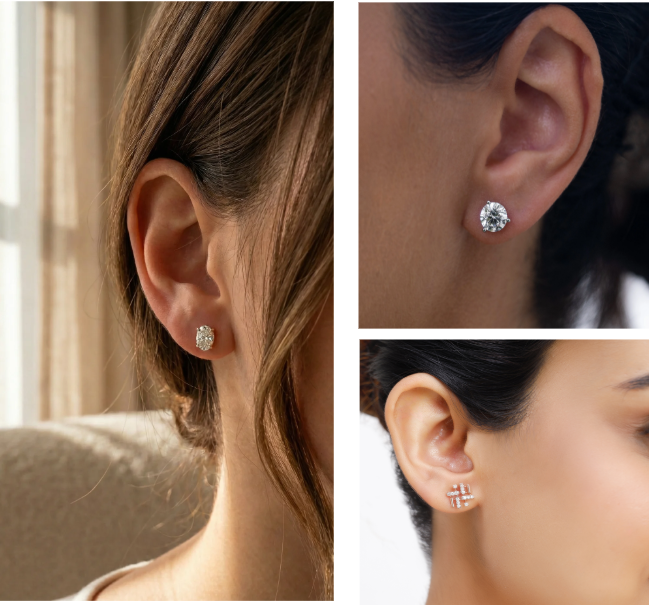
Stud earrings with lab-grown diamonds are showing up in a lot more shopping carts lately. Part of the appeal is simple: you get real diamond sparkles in a shape people can wear every day, at a price that doesn’t require the same nail-biting as a bigger purchase. Below, we’ll walk through carat weight, cut, settings, and the details worth checking before you buy.
Rare Carat is a premium American jeweler with a curated lineup of engagement rings, diamond studs, and fine jewelry, each piece designed to feel like an everyday indulgence rather than a special-occasion-only splurge. Free guidance from GIA-trained gemologists is built into the shopping process, and the website itself stays clean and uncluttered, so comparing shapes, carat sizes, and settings doesn’t turn into a chore. Two things tend to stand out fast: a top-ranked jeweler on Trustpilot, and a 4.9/5 Google Business rating that’s earned one review at a time.
Why Lab-Grown Diamond Studs Are Having a Moment
Chemically and visually, a lab-grown diamond is the same as one pulled from the ground. That’s really the whole reason studs made this way have taken off — same brilliance, same durability, but often enough left in the budget to go up a size or bump the cut and clarity grade instead.
Shopping for them also just works better now. Smart filters and personalized recommendations cut through the noise, so instead of scrolling endlessly, a shopper narrows by shape, carat weight, and price in a few taps. Underneath that, the technology doing the sorting is built to surface pieces that actually match the quality someone’s after, not just the ones with the flashiest photos.
That depth shows up elsewhere in the catalog too. Rare Carat’s lineup runs past 1,700 engagement ring styles, on top of thousands of other fine jewelry pieces — a sign of a brand built on range and craftsmanship, not a single hit design carrying the whole business.
Carat, Cut, and Clarity: What Actually Matters for Studs
Here’s something people often miss: stud earrings are priced by total carat weight across both stones, not per earring. So a “1 ct” pair usually means 0.5 ct in each ear. Worth keeping in mind before assuming a listing’s carat number describes a single stone.
Cut has more influence over sparkle than most people expect — arguably more than clarity does. A diamond cut well in the G-H color range with VS clarity will frequently outshine a bigger stone that’s cut poorly, even if that bigger stone technically grades higher on paper.
Not everyone jumps straight to a 2-carat pair, but for those who do, the questions get more specific. Anyone looking into where to buy 2 ct lab diamond earrings is usually trying to nail down certification, return policy, and how closely the two stones were matched, before committing to that kind of order. At this size, it’s worth asking a gemologist directly how the pair was matched for color and brilliance, rather than assuming they’ll look identical straight out of the box.
Settings, Metals, and Style Choices for Everyday Wear
Prongs remain the go-to setting for studs, mostly because they let in the most light and keep the stone sparkling from nearly any angle. Bezel settings take the opposite approach, wrapping the diamond in a thin metal edge — a bit less brilliance, but more security and a cleaner, more modern look.
Metal really comes down to personal taste more than anything technical. White gold and platinum lean cool and understated; yellow and rose gold bring warmth and tend to hide scratches better after a few years of daily wear. Budget plays into this too, since platinum typically costs more than gold at a comparable weight.
Earrings aren’t where the catalog stops, either. Rare Carat carries more than 2,500 fine jewelry pieces beyond engagement rings — bracelets, pendants, stacking bands — each one handmade in the USA, one piece at a time, and put through strict quality checks before it ships. That process is a big part of why the setting and finish tend to hold up so well years down the line.
What to Look for in a Jeweler You Can Trust
Certification shouldn’t be optional, no matter the carat size. A jeweler worth buying from will name the grading lab up front and make that report easy to find — not something tucked into fine print or left off the page entirely.
Support matters just as much. Education-focused support — a team willing to explain grading terms and answer questions before you buy, not just after something goes wrong — is one of the clearer signs a brand is playing a long game rather than chasing a single sale. Rare Carat handles returns and exchanges directly, and every order ships in premium branded packaging with care taken at each step, because the experience around the purchase counts for as much as the purchase itself.
Anyone comparing settings and carat sizes side by side can visit Rare Carat to look through current styles, then loop in a gemologist before locking in the details. Being a top-ranked jeweler on Trustpilot, manufacturing in the US, and keeping customer satisfaction consistently high all add up to the kind of reassurance first-time buyers usually want before checking out.
Making Your Lab Diamond Studs Last
Diamond studs can handle daily wear just fine, but a few habits stretch their life further. Taking them off before swimming, showering, or putting on lotion or perfume keeps residue from building up and dulling the sparkle, and a soft pouch or lined box protects the metal from getting knocked around by other jewelry.
A quick soak in warm water with a touch of mild dish soap, plus a soft brush around the setting, usually keeps studs looking sharp between professional cleanings. It’s also worth getting the prongs checked once a year — loose prongs are the most common reason a stone works itself free without anyone noticing.
Get the carat size, cut, and setting right, and lab diamond studs can be worn almost daily for years without losing their shine. A little upfront effort — checking certification, asking questions, picking a jeweler with real support behind it — makes that outcome a lot more likely.