
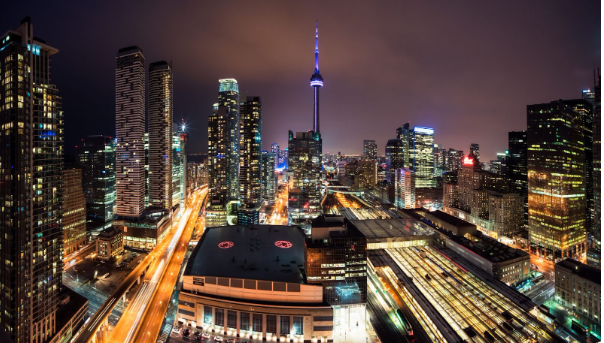
At dusk, the metropolis of Toronto reveals a special world, the streets are transformed, the facades are lit up, and the silhouettes of night events are outlined against the backdrop of city lights. It is this transformation, this play of light and shadow, that cements the inspiration for the modern evening look. Evening dresses in Toronto today are not just a traditional outfit, but a mix of architectural lines, urban textures, a sense of freedom and choice. It is also in a city where the streets have character that designers are forced to react, adapt and improvise, and this dynamic is perfectly manifested in the lines of evening dresses.
When the sun goes down, Toronto changes. The Queen Street West district, with its galleries, neon signs and art installations, creates a lively backdrop for fashion. Here, the fusion of street art and style forms a new aesthetic, where asphalt becomes the palette and neon is the accent. In such conditions, an evening dress can be perceived as an “urban suit”: with clear lines, with a texture that reacts to light, with colors that reflect the surrounding movement. For example, the facades of buildings in the Distillery District, with their historic stone and glass elements of modernized spaces, create a minimalist, yet textured background and designers pick up on this: fabrics with a slight sheen, asymmetrical draperies, silhouettes that “tell” the story of the space. Imagine a fabric that is calm during the day, and in the evening enters into a dialogue with the lights of the city.
Evening fashion in Toronto is increasingly moving away from the classic “tulia + shine” towards intellectual silhouettes. Preference is given to textures (satin, satin, silk with a matte shade) and not only to classic colors, but also to nuances: deep cherry, dark green, steel, metallic accents. The urban approach means that the dress should “live” in space: it should look both in the light of the hall’s chandelier and under the glow of a restaurant neon sign.
Material becomes an important element: in a city where the evening breeze can be cool, and movement between establishments is fast — the fabric should be comfortable, drape naturally, and not hinder movement. This functional component does not replace elegance, but instead adds to its relevance. Here, the new wave of evening dresses for Toronto is a balance between the “going out” look and city life.
Choosing an evening dress in Toronto is also about choosing a place and mood like cjoosing a 80s fancy dress for a vintage look. If the event is taking place in a charming restaurant in the Yorkville area with crystal chandeliers and panoramic windows, then the look will require a greater degree of classical elegance – a dry silhouette, smooth fabric, minimal decor. But if it is a curatorial cocktail at a gallery on Queen West or an art hub in the Distillery District, then more play is allowed: open shoulders, slight asymmetry, textured inserts, perhaps metallic accents.
The very fact of an evening in the city determines the choice: an evening dress becomes part of the architecture of the space. It is not just clothing, but a way to “read” the environment. And although the tradition of Toronto evening dresses has deep roots, today it is adapting to the rapid life of the city:
Today, Toronto evening wear designers are increasingly turning to the local context. They take into account that the city is not only a stage, but also the pressure of time, movement, and lighting. Fabrics should emphasize dynamics, not just look static. For example, the design house MISSIA (which has its own office in Toronto) takes these aspects into account in its “Evening & Cocktail” collections: dresses are created with attention to drapery, fabric selection, and modern silhouette.
This becomes visible in the choice of shape and details:
Thus, an evening dress becomes an “urban accessory” and not just an outfit for the stage.
Queen Street West is not just an address, it is an attribute of style. Artistic and themed walls, neon graffiti, eclectic architecture, all this forms the background that designers take into account. Some fabrics can “reflect” these motifs: for example, light folds and asymmetrical lines that resemble the graphics of facades. At the same time, the Distillery District adds historical notes: a play of textures, stone textures, the contrast of old and new. In an evening dress, this can be manifested in the finish: lace that resembles old stonework, or silk that has a strange shade of “city shine”. Yorkville is a more sophisticated, classic area, but the night adds charm to it: the streets are illuminated, shop windows flash signally, and an evening dress here is often an image with a smooth silhouette, soft lines, maximum attention to the fabric. This shows: the urban environment does not limit, but on the contrary, inspires variability.
When choosing an evening dress, it is worth considering not only your own parameters or budget, but also the context of the city. If your event is a rooftop party with a view of the lake, think about a fabric with a slight metallic shade or one that “catches” the city light. If it is a cocktail party in an art space, play with asymmetry, details, and an open back.
Also think about the season: evenings in Toronto can be cool, especially closer to the lake or in an open space. Therefore, an additional kimono or cape can become part of the image. Here again, fabrics that retain shape and structure will be relevant — for example, satin with a memory effect or crepe.
Toronto at night is not just a city after sunset. It is an environment with character, style, dynamics. An evening dress here should tell a story, a story of movement, light, space. The city suggests that elegance can be modern, comfortable, active. And when the designer or buyer listens to these cues, a new wave of evening fashion is created, one that lives in the rhythm of the city, not just in photo shoots.
By becoming part of this environment, the dress moves from the category of “event outfit” to the category of “city expression.” And when you have a choice, just remember to consider not only the fabric or the style but also the entire sensory background around it, including the light, the shadows, and the textures of the city that comes alive at night.