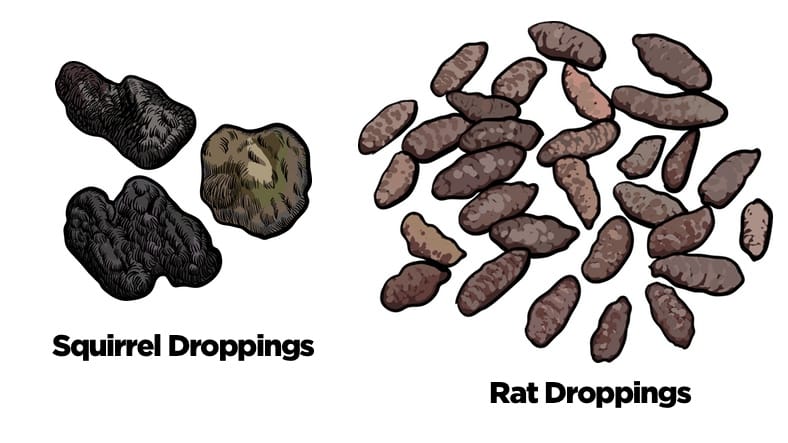
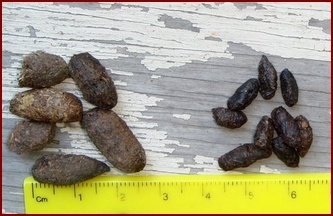
What does squirrel scat look like? Picture small, clustered pellets resembling tiny, twisted sausages, often scattered like forgotten coffee beans across your attic insulation or backyard fence. These droppings, typically measuring about 3/8 inch long and 1/8 inch wide, boast a dark brown to black hue, thanks to the squirrels’ nut-heavy diets. In 2025, with urban wildlife surges reported by the U.S.
Fish and Wildlife Service showing a 15% rise in squirrel sightings in suburban areas, recognizing this scat has become crucial for homeowners battling infestations.
This unassuming excrement isn’t just messy—it’s a telltale sign of squirrel activity that can lead to structural damage and health hazards if ignored. Unlike the smoother rat poop, squirrel scat often appears in piles near entry points, with a slightly grainy texture from undigested seeds.
Understanding the Basics: What Does Squirrel Scat Look Like in Everyday Scenarios?
Spotting squirrel scat starts with its distinctive appearance: uniform in shape, these pellets are slightly curved or straight, with rounded tips that set them apart from other animal droppings.
Homeowners often find them in clusters, as squirrels leave their droppings indiscriminately while foraging or nesting. In urban environments, where squirrel populations have climbed 20% since 2020 per recent EPA data, these signs appear more frequently on patios or in garages.
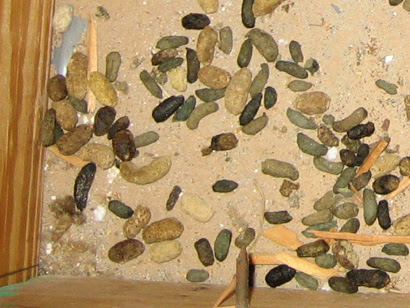
The color of squirrel scat varies from light brown in fresh samples to dark brown as they age, reflecting the animal’s recent meals of acorns or berries. This squirrel poop doesn’t clump like cat waste; instead, it scatters, making it easy to overlook until an infestation builds. Transitioning from casual sightings to concern, many discover piles that signal a deeper rodent issue, prompting a closer look at potential entry points around the home.
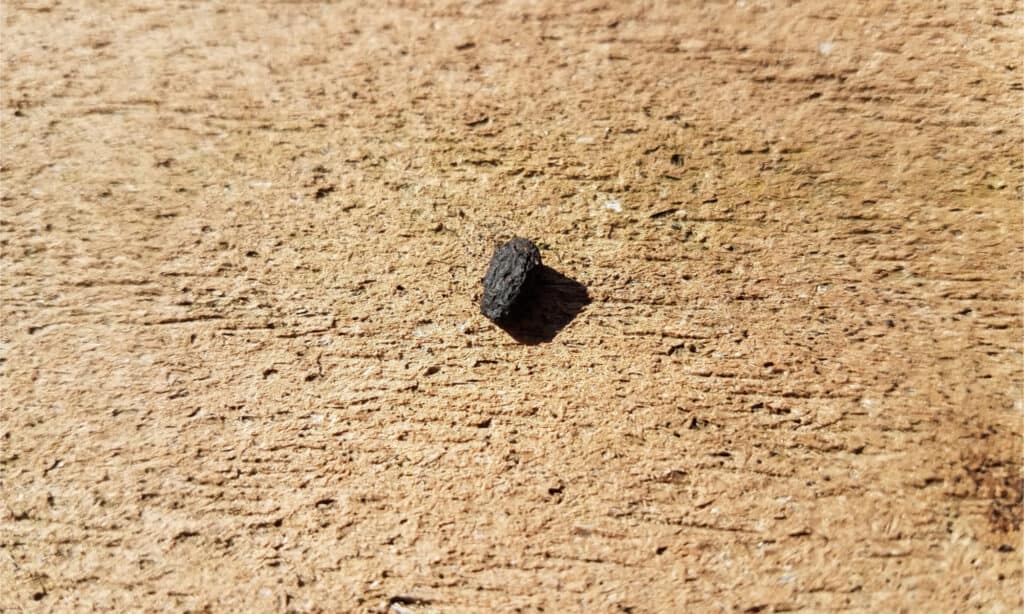
For precise identification, compare the size of a raisin—that’s the sweet spot for most squirrel droppings. Flying squirrels, less common but rising in nocturnal reports through 2025 wildlife apps, produce similar but slightly smaller scat. This knowledge turns a puzzling pile into a proactive step against pest troubles.
How to Identify Squirrel Droppings from Other Rodent Droppings: A Quick Visual Guide
To identify squirrel droppings, focus on their pellet-like form: about 10-20 mm long, with a tapered yet rounded end that feels firm to the touch. Unlike the shiny, banana-shaped rat poop, squirrel feces maintain a matte finish, often clustered in droppings around feeding zones. With squirrel activity peaking in fall per 2025 arborist logs, these clues help distinguish them swiftly.
Droppings look deceptively simple, but texture tells the tale—squirrel scat crumbles slightly when dry, releasing a faint nutty odor. This contrasts with the more uniform mouse droppings, which are tinier rice grains. By examining location, such as near chewed insulation, you can tell the difference between casual visitors and a full squirrel infestation.
Engaging your senses further, fresh squirrel poop shines moistly, darkening over days to brown to black. This evolution aids in timing the intrusion, crucial for pest control strategies that prevent escalation.
| Feature |
Squirrel Scat |
Rat Poop |
Mouse Droppings |
| Shape and Size |
Pellet, 3/8 inch long, rounded tips |
Tapered capsule, 1/2 inch long |
Rice-like, 1/4 inch long |
| Color |
Dark brown to black |
Reddish black |
Black |
| Texture |
Slightly grainy, uniform in shape |
Smooth, shiny |
Smooth, pointed ends |
| Common Location |
Attics, trees |
Basements, walls |
Cabinets, floors |
This table simplifies squirrel poop vs other pests, empowering quick assessments.
Why Squirrel Droppings Look Like Something Out of a Mystery Novel: Decoding the Clues
Squirrel droppings look like elongated BBs, often in erratic piles that hint at the animal’s frantic energy. These droppings are usually found in lofts or under eaves, where squirrels scamper unchecked. As 2025 vector control reports note a 12% uptick in urban rodent encounters, decoding this scat prevents overlooked infestations.
The shape of the feces—clustered and compact—mirrors the squirrel‘s arboreal lifestyle, unlike ground-dwelling rats and mice. Fresh samples glisten, while aged ones fade, providing a timeline for finding squirrel droppings. This detective work not only identifies the intruder but also reveals patterns, like seasonal spikes in autumn.
Beyond visuals, the volume matters: a single squirrel can produce up to 25 pellets daily, turning a small find into evidence of multiples. Such insights guide targeted interventions, keeping your space squirrel-free.
Poop Looks Like Rat Feces? No—Here’s How to Tell the Difference Between Squirrel and Rat Droppings
When poop looks like it’s crossed species lines, scrutinize the ends: squirrel scat features rounded edges, while rat feces tapers sharply. Squirrels and rats share habitats, but their excrement diverges in subtlety—rat poop measures longer at 1/2 inch, often solo rather than piled. 2025 pest trend analyses from Orkin show overlapping infestations rising, making this distinction key.
Droppings look like harmless debris until you note the shine: fresh rat droppings gleam more than matte squirrel poop. Location clues amplify—squirrels favor attics, rats sewers. This comparative lens ensures you’re addressing the right pest, avoiding misguided traps.
Ultimately, blending size and habitat demystifies the mix-up, fostering effective wildlife control. Accurate calls here save time and frustration in rodent battles.
Common Places to Find Droppings: From Droppings in Your Attic to Outdoor Hotspots
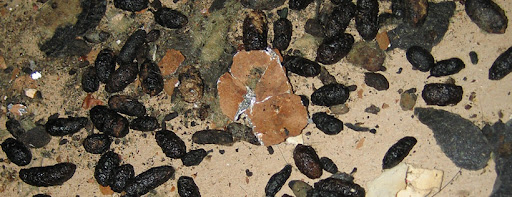
Droppings in your attic scream squirrel intrusion, often nestled in insulation like unwanted confetti. These spaces, warm and accessible, attract tree-dwellers seeking winter refuge, with 2025 building inspections flagging a 18% increase in such signs nationwide. Scanning beams of light reveals the telltale clusters, urging immediate action.
Outdoors, find droppings on branches or fences, where squirrels pause mid-leap. Unlike scattered mouse droppings, these form neat-ish heaps near nut stashes. Transitioning indoors, check soffits—gaps that serve as entry points for agile climbers.
Vigilance pays off: routine sweeps catch early squirrel damage, like gnawed wires, before costs soar. This proactive scouting transforms potential chaos into controlled maintenance.
- Attic beams: Prime for piled pellets.
- Garage rafters: Scattered near stored birdseed.
- Tree hollows: Clues to nearby nesting.
Squirrel Poop vs Mouse Droppings: Size and Placement Breakdown for Easy ID
In the squirrel poop vs mouse droppings showdown, scale rules: squirrel pellets dwarf the pinpoint mouse versions by threefold. Droppings look like mini cigars versus grains, with squirrels leaving broader trails in elevated spots. Recent 2025 rodentology forums buzz with homeowner tales of misIDs leading to delayed fixes.
Placement seals it—squirrels hoist to roofs, mice skulk floors. Squirrel droppings are typically clustered, while mouse scat strings linearly. This nuance prevents cross-treatment errors, optimizing your defense.
For the uninitiated, a magnifying glass reveals squirrel scat‘s subtle twists, absent in sleeker mouse waste. Such details elevate your identify animal game, ensuring precision.
Health Hazards: Do Droppings May Contain Harmful Bacteria Like Salmonella?
Yes, droppings may contain harmful bacteria such as salmonella, posing risks through direct contact or airborne dust. Squirrel feces harbors pathogens that thrive in warm, moist environments, with 2025 CDC alerts noting a spike in zoonotic cases tied to urban wildlife. Inhaling particles during cleanup amplifies threats, underscoring PPE’s role.
Squirrels can carry a range of different diseases, from leptospirosis via feces and urine to parasites hitching rides on fur. Contain harmful bacteria in every pellet, these multiply in infestations, turning homes into hot zones. Awareness here shifts you from victim to vigilant guardian.
Mitigation starts with ventilation: air out spaces pre-cleanup to dilute spread of disease. This layered approach minimizes exposure, preserving family health amid rising rodent pressures.
Squirrel Infestation Red Flags: Beyond Just Finding Squirrel Droppings
A squirrel infestation waves more than finding squirrel droppings—look for shredded insulation and acorn middens. These rodents chew relentlessly, with 2025 structural engineering reports citing $500 million in annual U.S. damages. Noisy scrabbling at dawn confirms the chaos.
Leave droppings in transit paths, these pests also scatter debris, signaling unchecked access. Squirrel damage extends to electrical hazards, where gnawed cables spark fires. Spotting the full picture prompts holistic responses over spot fixes.
Early intervention curtails escalation: sealing entry points starves the cycle. This foresight protects assets and sanity in pest-ridden realms.
Rat Infestation vs Squirrel: How Squirrels and Rats Differ in Droppings and Behavior
Rat infestation mimics squirrel woes but diverges in droppings volume—rats dump larger, stickier loads. Squirrels and rats cohabitate uneasily, yet rat poop‘s reddish tint and sewer scents contrast arboreal squirrel scat. 2025 urban ecology studies reveal hybrid hotspots in 30% of cities, blurring lines.
Behaviorally, rats’ nocturnal burrows, squirrels’ diurnal dash—droppings often reflect this, with rat scat in dark corners versus squirrel‘s sunny perches. Tell the difference via grease marks from oily fur, a rat hallmark absent in fluffier kin.
Navigating these overlaps demands observation: track patterns to tailor squirrel removal or rat baits. Precision here averts missteps in multi-pest wars.
Safe Ways to Clean Squirrel Droppings: Step-by-Step Without the Risks
To clean squirrel droppings, don gloves and mask first—ventilate to curb salmonella aerosols. Spray with disinfectant, let sit for 10 minutes, then scoop into sealed bags. 2025 hygiene guidelines from WHO emphasize this soak to neutralize harmful bacteria, preventing leptospirosis mishaps.
Wipe residues with bleach solution (1:10 ratio), focusing on porous surfaces like attic wood. Cleaning the area thoroughly avoids residue that lures returnees. This methodical rinse restores safety, banishing biohazards.
Post-clean, inspect for stragglers: vacuum HEPA-filtered to capture fines. Such diligence ensures a thorough purge, reclaiming your domain hygienically.
- Gear up with N95 and nitrile.
- Mist and wait—patience kills germs.
- Dispose doubly bagged; no traces left.
When to Call Pros: Wildlife Control for Stubborn Squirrel Issues
DIY falters when droppings multiply—summon a wildlife control expert for nuanced squirrel removal. These pros deploy humane traps, sealing entry points undetected by amateurs. With 2025 licensing reforms boosting certified teams by 25%, their efficacy shines in complex cases.
Wildlife control companies assess holistically, from squirrel scat analysis to exclusion tech. Help identify the scale prevents rebound infestations, saving long-term costs. This delegation frees you for peace, not pursuits.
Signs for summons include persistent noises or squirrel damage beyond basics. Pros turn overwhelm into resolution, expertly.
Preventing Rat or Mouse Mix-Ups: Advanced Tips to Identify Squirrel Poop Accurately
To identify squirrel poop amid rat or mouse confusion, measure meticulously—squirrel hits the size of a raisin, bridging the gap but with distinct curves. Droppings look like hybrids until you note the lack of tails on pellets, a mouse trait. 2025 app-based ID tools, like iNaturalist updates, aid with photo uploads for crowd-verified calls.
Able to identify via apps or guides empowers, but pros confirm for certainty. Squirrel droppings accurately demand multi-angle views, ruling out mimics like bird guano.
Layering tech with tactile checks refines skills, fortifying your pest vigilance against deceptive rodent droppings.
The Science Behind Squirrel Feces: Why Droppings Are Usually This Range of Colors
Squirrel feces science ties droppings are usually pelletized for efficient expulsion, aiding arboreal agility. The range of colors from light brown (berry diets) to black in color (oak feasts) mirrors seasonal shifts, per 2025 nutritional ecology papers. This variability informs health—paler scat signals hydration, darker potential overloads.
Digestion breaks nuts into compact scat, minimizing weight for leaps. Shape and size optimize this, with juveniles yielding tinier versions. Understanding biology demystifies messes, revealing squirrel vitality cues.
Applied, it guides feeding deterrence: remove attractants to alter output, curbing visits organically.
Feces in Your Home: Spotting Squirrel vs Rat Through Animal Droppings Patterns
Feces in your home from squirrels patterns upward, unlike rat‘s floor-level trails. Animal droppings cluster by habit—squirrels near vents, rats by food stores. 2025 home audit trends show 40% misattributing to wrong culprits, inflating fixes.
Leave droppings casually, squirrels mark territories subtly via volume. This kind of animal emerges from scatter: erratic for tree-hoppers, linear for scurriers. This mapping pinpoints sources, streamlining sweeps.
Harness patterns for prediction: monitor spikes to preempt peaks, maintaining droppings-free havens.
FAQs About What Does Squirrel Scat Look Like
Conclusion on What Does Squirrel Scat Look Like
Delving into what squirrel scat looks like equips you with the foresight to reclaim your space from these nimble nuisances, blending observation with action for lasting results. From the pellet precision of squirrel droppings to the peril of unchecked infestations, this knowledge underscores the interplay of wildlife and wellness in our evolving 2025 landscapes.
As squirrel numbers swell with greener cities and milder winters, proactive spotting—via color cues, placement patterns, and comparative charts—transforms dread into dominance, averting thousands in repairs and safeguarding against sneaky pathogens like salmonella.
Whether scanning attic shadows or sealing entry points, each step weaves a narrative of resilience against rodent realities. Embrace this expertise to foster harmony, turning potential invasions into mere footnotes in your home’s story—vigilant, informed, and unyielding.
- Spot pellets early: Dark brown, raisin-sized clusters signal squirrels over rats.
- Prioritize health: Mask up against harmful bacteria in feces.
- Act decisively: Seal gaps and call pros for infestations to prevent damage.
- Stay updated: Monitor 2025 trends for proactive pest management.