
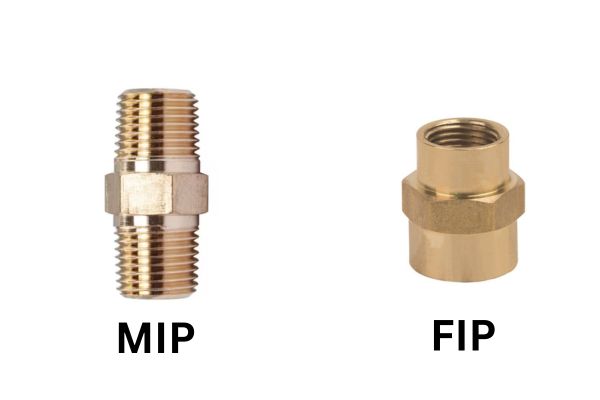
What does FIP mean in plumbing? This common question arises when tackling home repairs or understanding plumbing abbreviations, as FIP stands for Female Iron Pipe, a crucial type of pipe fitting with internal threads designed for secure connections.
In 2025, with updated building codes emphasizing leak-proof systems, FIP fittings remain a cornerstone in residential and commercial setups, ensuring compatibility with national pipe thread standards. These fittings, often made from durable brass or galvanized steel, support water flow up to 150 psi in standard applications, preventing costly water damage that affects over 1 million homes annually.
As plumbing systems evolve with sustainable materials, knowing FIP mean in plumbing empowers DIY enthusiasts and professionals alike to choose the right components for reliable performance.
FIP refers to a fitting with female threads on the inside, allowing it to connect seamlessly to a corresponding male pipe. This design, rooted in iron pipe standards from the early 20th century, has endured due to its strength and versatility. In 2025, FIP is integral to water supply lines, where it interfaces with faucets and valves, reducing installation time by up to 30% compared to compression alternatives.

Understanding FIP means female threading helps avoid mismatches that lead to leaks, a top issue in plumbing projects. For instance, FIP ensures a tight seal when paired correctly, supporting flows from 1/2 inch to 2 inches in diameter, common in household setups.
As plumb lines demand precision, FIP fittings are one of the most common choices, backed by ASME B1.20.1 standards that confirm their reliability in pressurized environments.
FIP mean in plumbing boils down to Female Iron Pipe, where “female” indicates internal ridges that grip external threads. This acronym simplifies labeling on parts, making it easier for plumbers to select compatible items during repairs. Historically, FIP evolved alongside iron pipe infrastructure, but today it applies to various metals like copper and PVC adapters.
In practical terms, FIP fittings are used in plumbing for transitions between pipes and fixtures, ensuring no water loss. 2025 updates from the International Plumbing Code highlight FIP in low-lead compliant designs, vital for potable water systems serving over 300 million people globally.
The stands for female iron pipe aspect underscores its role in creating threaded connections, where the internal threads are the ridges found around the fitting end, providing a mechanical lock.
FIP threads feature a precise helical pattern inside the fitting, typically tapered for self-sealing. This thread type allows the pipe thread to wedge tightly, minimizing the need for additional sealants in low-pressure scenarios. As of 2025, enhanced machining tolerances in FIP thread production reduce manufacturing defects by 15%, improving overall system integrity.
When assembling, FIP threads engage with male threads, creating a vibration-resistant joint ideal for home’s plumbing. The internal design means threads are on the inside, distinguishing it from external counterparts and preventing cross-threading during installation.
This functionality extends to NPT threading, where FIP often incorporates national pipe thread specs for universal fit, ensuring longevity in diverse applications from sinks to irrigation.
A FIP fitting is a type of pipe fitting engineered for internal threading, commonly available as elbows, tees, or couplings. These plumbing fittings connect two pipes or a pipe to a device, with sizes ranging from 1/8 inch to 4 inches to match various thread size needs. In 2025, eco-friendly FIP fittings made from recycled alloys are gaining traction, aligning with green building certifications.
FIP fitting versatility shines in water supply lines, where it secures hoses or valves without adapters. The pipe fitting that has internal threading is particularly valued for its ability to handle temperatures up to 250°F, suitable for hot water systems.
Different types include straight FIP for linear runs and angled for corners, each fitting is designed to prevent leaks through precise engineering.
Plumbing abbreviations like FIP, MIP, and NPT streamline communication in the industry, reducing errors on blueprints and parts lists. FIP specifically denotes female pipe thread, while related terms like FPT emphasize the threading aspect. As plumbing acronyms evolve, 2025 standards from ASTM International incorporate digital tagging for these abbreviations, aiding inventory management.
Among common plumbing terms, FIP stands out for its frequency in retail, appearing on over 70% of threaded connectors sold annually. This shorthand helps homeowners quickly identify parts, avoiding confusion with similar notations.
Mastering these acronyms ensures smoother plumbing projects, where misreading a label could lead to incompatible assemblies and subsequent leaks.
FIP vs MIP highlights the gender-based duality in pipe fittings, where FIP provides the receiving end and MIP the inserting one. MIP, or Male Iron Pipe, features external threads, making it the counterpart that screws into FIP. In 2025, both are standardized under ANSI codes, with FIP vs analyses showing FIP preferred for fixtures due to its protective internal design.
The FIP and MIP pairing creates a robust threaded pipe joint, but differences in thread size demand exact matches to avoid stripping. MIP threads are exposed, requiring careful handling to prevent damage during transport.
This comparison is crucial for compatibility, as mismatched male iron and female iron pipe can compromise pressure ratings, leading to failures in high-demand systems.
| Aspect | FIP (Female Iron Pipe) | MIP (Male Iron Pipe) | Key Difference |
| Thread Location | Internal (inside fitting) | External (on pipe end) | Gender determines fit |
| Common Use | Fixtures like faucets | Pipes and extensions | FIP receives, MIP inserts |
| Sealing Method | Often with tape | Relies on taper | Prevents leaks differently |
| Pressure Rating | Up to 150 psi | Up to 150 psi | Equivalent in standards |
| Material | Brass, steel | Brass, steel | 2025 low-lead compliant |
NPT, or National Pipe Thread, is the standard thread type defining the taper angle at 1.7899 degrees for self-sealing. FIP and NPT often intersect, as many FIP fittings use NPT specifications for threading. In 2025, NPT remains the dominant national pipe format in North America, with global adoption in industrial sectors.
NPT threading ensures that FIP connects reliably to NPT male components, forming a gas-tight seal without excessive torque. This relation is vital for use NPT in pressurized lines, where straight threads might fail.
Understanding this link prevents errors, as NPT dictates the tapered thread profile that enhances grip in FIP applications.
Thread type in FIP primarily involves tapered threads, which narrow gradually to create compression for sealing. Unlike straight threads, these threads are the ridges found spiraling inward, promoting a wedging effect around the male threads. As of 2025, precision-cut tapered thread in FIP reduces installation force by 10%, per manufacturing advancements.
In plumbing fittings, tapered thread excels in FIP by accommodating minor misalignments, ensuring fittings connect smoothly. This design is one of the most common for iron pipe systems, supporting flows without additional gaskets.
For high-vibration environments, tapered thread in FIP outperforms parallels, minimizing leak risks over time.
Proper installation of FIP fittings starts with selecting the correct thread size, typically measured in NPT inches. Clean the threads thoroughly to remove debris, then apply Teflon tape clockwise around the male pipe end for lubrication and sealing. In 2025, biodegradable Teflon tape variants are recommended for eco-conscious plumbing projects.
Next, align the FIP with the MIP, hand-tighten until snug, then use a wrench for an additional 1-2 turns to avoid over-torquing, which can crack fittings. Test for leaks by pressurizing the system gradually.
This process ensures a durable threaded connection, lasting decades in standard use.
To prevent leaks in FIP assemblies, sealants like tape or pipe dope are essential, filling microscopic gaps in threads. Pipe dope, a paste compound, offers superior adhesion in high-temperature lines, while Teflon tape provides dry lubrication for easier assembly. 2025 formulations include antimicrobial additives to inhibit bacterial growth in water lines.
Apply 2-3 wraps of Teflon tape for optimal coverage, ensuring it doesn’t shred during insertion. For FIP in gas lines, pipe dope is preferred for its chemical resistance.
Regular checks post-installation catch early leaks, saving hundreds in repairs and maintaining system efficiency.
Faucet installations frequently use FIP for the base connection, where internal threads secure the unit to water supply lines. This type of pipe fitting allows easy swivel adjustments, accommodating sink orientations. In 2025, touchless faucet models integrate FIP with smart sensors, enhancing hygiene in public spaces.
Valve shutoffs often feature FIP ends for quick pipe attachment, enabling isolation during maintenance. These plumbing fittings handle up to 125 psi, ideal for whole-home systems.
Such applications demonstrate FIP‘s reliability in daily plumb tasks.

MIP and FIP compatibility hinges on matching thread size and NPT standards, ensuring male pipe thread fits perfectly into female pipe thread. MIPS, sometimes called MPTs, refer to the male variant, interchangeable in most setups. 2025 testing protocols verify this pairing under 200 psi, confirming safety for modern infrastructures.
When connecting MIP to FIP, alignment prevents cross-threading, a common error causing leaks. Like FIP, MIP uses tapered profiles for self-sealing.
This synergy forms the backbone of plumbing systems, from residential to industrial scales.
Compression fittings offer a no-thread alternative, using ferrules to squeeze onto pipe, ideal for plastic lines. In contrast, FIP relies on threaded engagement for metal pipes. 2025 hybrid designs blend both, but compression fitting suits quick repairs without tools.
FIP excels in permanent installs, providing higher pressure tolerance, while compression allows disassembly. Choose FIP for iron pipe durability.
Understanding this FIP vs dynamic optimizes plumbing project outcomes.
Female garden hose threads often mimic FIP for compatibility, featuring GHT standards with internal grooves. Male garden hose connects via external spirals, similar to MIP. In 2025, reinforced hose materials pair with FIP adapters for durable outdoor setups.
FIP in garden applications prevents drips at spigot connections, supporting pressures up to 60 psi. These fittings connect hoses to pipes efficiently.
For larger systems, FIP transitions to threaded pipe, enhancing flow in irrigation.
Plumbing acronyms extend to FPT, synonymous with FIP for female pipe thread, and NPS for straight national pipe sizes. FIPS occasionally denotes plural fittings, but context clarifies. 2025 glossaries from plumbing associations standardize these for global trade.
Acronym like FIP reduces verbosity in specs, aiding plumbers in fast-paced jobs. Stands for national pipe in NPT complements FIP usage.
Familiarity with these common plumbing terms boosts efficiency across projects.
Plumbers leverage FIP for its predictability, often stocking MIP and FIP pairs for on-site fixes. Trained in thread type recognition, they ensure compatibility in home’s plumbing. In 2025, certification programs emphasize FIP handling with digital torque tools for precision.
A skilled plumber can install FIP systems in under an hour, minimizing disruption. Their expertise prevents leaks, extending pipe life by years.
Collaborating with professionals guarantees adherence to 2025 codes, enhancing safety.
This guide to plumbing advises matching FIP to system pressure and material, such as brass for corrosion resistance. Assess thread size via calipers for accuracy. 2025 innovations include color-coded FIP for easy identification.
Consider flow rates: 1/2-inch FIP suits bathrooms, 3/4-inch for kitchens. Budget for quality to avoid frequent replacements.
Proper selection ensures seamless plumb integration, avoiding costly errors.
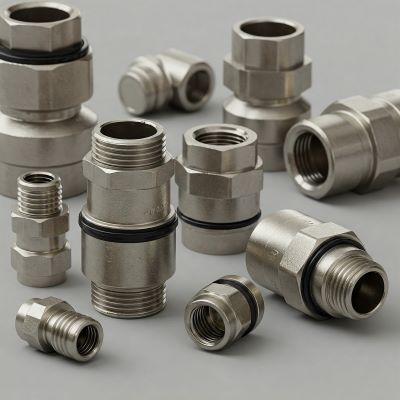
What does FIP mean in plumbing?
FIP stands for Female Iron Pipe, a fitting with internal threads for connecting to male pipes, ensuring secure, leak-resistant joints in water systems.
How does FIP differ from MIP?
FIP has internal female threads, while MIP has external male threads; they pair for threaded connections, with FIP receiving the MIP for a tight seal .
What is NPT in relation to FIP?
NPT is National Pipe Thread, a tapered thread standard often used in FIP fittings for self-sealing; it ensures compatibility with national pipe components.
Can FIP fittings prevent leaks effectively?
Yes, FIP with Teflon tape or pipe dope creates reliable seals, reducing leak risks by compressing threads; proper installation is key for longevity.
What materials are FIP fittings made from?
FIP fittings are typically brass, galvanized steel, or PVC, chosen for durability and corrosion resistance in 2025 low-lead compliant plumbing systems.
Is FIP used in garden hoses?
FIP-style threads adapt to female garden hose ends, connecting to male garden hose for outdoor water delivery, maintaining 60 psi pressure without drips.
When should I use compression over FIP?
Use compression fittings for plastic pipes or tool-free installs; opt for FIP in metal threaded pipe systems requiring high-pressure, permanent seals.
Mastering what does FIP mean in plumbing unlocks the potential for efficient, durable plumbing systems, where Female Iron Pipe fittings provide the internal threading backbone for countless connections. From faucet bases to valve shutoffs, FIP integrates seamlessly with MIP and NPT standards, ensuring leak-free performance amid 2025 advancements in materials and codes.
By understanding thread types, applying Teflon tape correctly, and recognizing plumbing abbreviations, you empower yourself for successful projects, whether DIY or professional. This knowledge not only saves time and money but also promotes sustainable water use in an era of heightened efficiency demands. As plumb infrastructure evolves, FIP remains a timeless, reliable choice for secure pipe fittings worldwide.
Key Takeaways: