
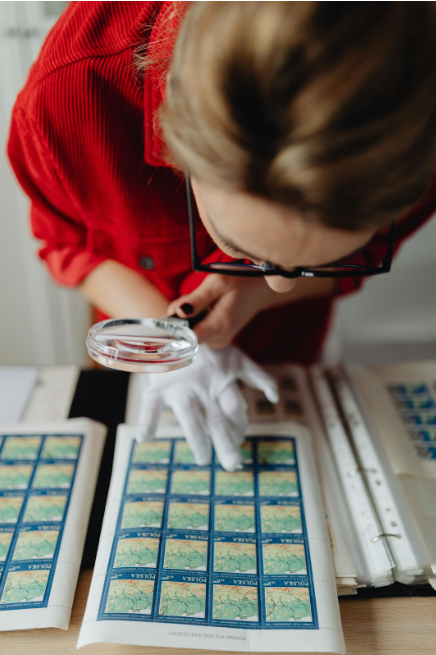
In an era where messages travel across the world in seconds, some people still spend hours with tweezers and albums, adding tiny squares of printed paper to their collections. It might seem outdated, but for many, the value of this pursuit lies precisely in its slowness. Some even stumble into the hobby while browsing online, perhaps looking for unrelated things like how to click here to try a game, and end up drawn into the quiet world of philately. There is something appealing about handling something tangible in a time when most communication leaves no physical trace.
A stamp is more than a tool for sending mail. It often carries a slice of history, politics, and design. Even a small stamp can reflect an era’s priorities, celebrate achievements, or memorialize events. Collectors see them as cultural snapshots, frozen in time.
Unlike an email that disappears into an inbox archive, a stamp stays visible. It has weight, texture, and ink that has been physically applied. The colors might fade, the paper might yellow, but these changes tell a story of time passing. This physical link to the past gives the hobby a depth that many digital interactions can’t match.
Stamp collecting is not a hobby for people in a rush. Finding a missing piece for a set can take years. Cataloguing a collection requires focus. This slow pace contrasts sharply with the quick results expected in modern life.
Collectors often say they enjoy the process more than the end result. Sorting through stamps, checking watermarks, or carefully mounting them in albums is meditative. It offers a pause from constant notifications and scrolling. For some, it’s the same kind of satisfaction as gardening or woodworking—time spent doing something steady and deliberate.
While it’s a solitary activity in practice, stamp collecting has a strong community element. Clubs, fairs, and exhibitions bring people together to trade, share, and learn. Online forums have expanded this network, allowing collectors to find rare stamps or discuss postal history with people on the other side of the world.
These communities thrive on shared knowledge. An experienced collector might help a beginner identify a stamp’s origin or explain how to store it properly. The slow pace of the hobby encourages longer conversations and deeper connections compared to the fleeting interactions common on social media.
In a time when many hobbies are tied to screens, stamp collecting offers a physical, unplugged experience. There’s no need for an internet connection, batteries, or software updates. The tools are simple—albums, tweezers, magnifiers. This simplicity is part of the attraction.
It’s a counterbalance to modern life. Handling something that has travelled physically across borders feels different from reading a message sent instantly. Each stamp has moved through real hands, real places, and perhaps survived decades before reaching the collector.
Some people collect stamps as an investment, hoping rare pieces will appreciate in value. Others have no interest in resale; the stamps are valuable to them for personal reasons. A letter from a relative, a first stamp bought as a child, or a complete set found after years of searching can all have meaning beyond money.
This personal attachment helps explain why the hobby persists even when fewer people use stamps for their original purpose. For many, the worth lies in the stories, not the price.
The shift to email and digital communication has reduced everyday contact with stamps. Younger generations may never send or receive physical letters regularly. Yet this scarcity can actually make stamps more appealing to collectors. What was once common becomes rare, and rarity often sparks interest.
Digital tools have also changed the way collectors engage with the hobby. Online marketplaces make it easier to find missing pieces. Digital catalogues and databases help with identification. But the core activity—handling and preserving physical stamps—remains unchanged.
Stamp collecting survives because it offers something modern life often lacks: slowness, tangibility, and focus. It’s an activity where small details matter, where the past is preserved in ink and paper, and where progress is measured in years, not minutes.
People still find satisfaction in the feel of a stamp between their fingers, the neat rows in an album, and the knowledge that they hold a fragment of history. In the end, the value of the hobby comes from what it asks of its participants—patience, curiosity, and a willingness to slow down.