
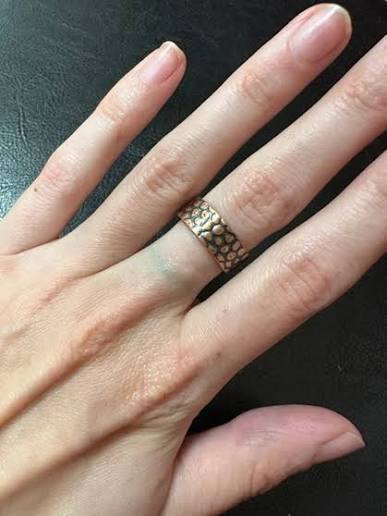
If you’ve ever pulled off a copper ring or bracelet and found a green smudge underneath, you already know the feeling of mild panic. It looks strange, it doesn’t wash off instantly, and it makes you wonder if something is wrong with your jewelry — or your body.
Why Does Copper Turn Your Skin Green? Copper turns your skin green because of a natural chemical reaction called oxidation, where copper reacts with sweat, air, and skin oils to form green copper salts. It is a cosmetic reaction, not a sign of poisoning, fake metal, or illness.
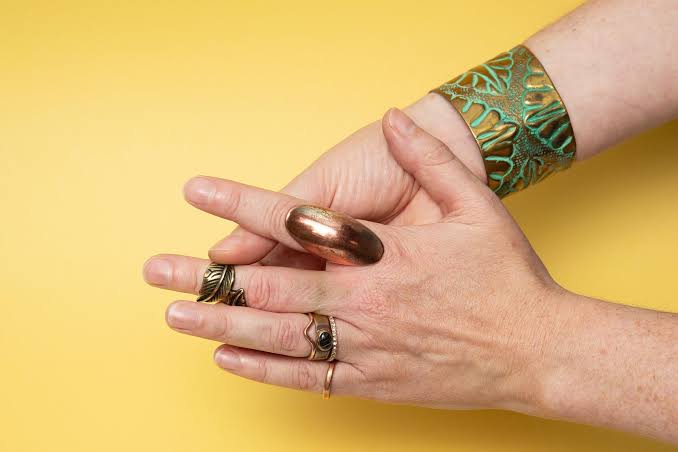
Copper is a reactive metal. The moment it touches air, moisture, and the natural acids in your sweat, it starts to oxidize.
Oxidation is a chemical reaction where copper atoms lose electrons and bond with oxygen and other elements. This forms new compounds sitting right on the surface of your skin.
The green color you see isn’t dirt or damage. It’s chelated copper — a mix of compounds like copper carbonate and copper chloride that rub off onto your skin as a stain.
This is the exact same natural process that turns copper roofs, old pennies, and the Statue of Liberty a soft blue-green over time. Your skin is just reacting faster because it’s warm, damp, and constantly moving.
No. For the vast majority of people, this is a completely harmless cosmetic reaction and not a health concern.
The amount of copper your skin actually absorbs from this contact is very small, especially compared to the copper you get from food every day. Copper toxicity from jewelry alone is extremely rare.
That said, a smooth green stain is different from a red, itchy rash. If you notice swelling, redness, or irritation instead of just green discoloration, that could point to a copper or nickel allergy, and it’s worth checking with a dermatologist.
Two people can wear the exact same copper ring, and only one of them ends up with a green stain. That’s not random. It comes down to individual body chemistry and environment.
Skin pH and sweat acidity People with more acidic sweat cause copper to oxidize faster. Diet, hormones, and stress levels can all shift how acidic your sweat becomes.
How much you sweat Hot climates, workouts, and naturally sweaty hands all speed up the reaction because moisture is what drives oxidation.
Skincare and cosmetics Lotions, perfumes, sunscreen, and hand sanitizer often contain ingredients that react with metal and accelerate discoloration.
Jewelry quality and coating Solid, uncoated copper reacts fastest. Pieces with a lacquer, resin, or protective plating react much more slowly, or not at all.
Humidity and climate Coastal areas, monsoon seasons, and generally humid environments push the reaction along faster than dry climates do.
Actually, it’s usually the opposite. Pure copper is the metal most likely to leave a green mark, because there’s nothing blocking the reaction.
Some people mistakenly assume a green stain means their jewelry is low-quality or fake. In reality, heavily plated or synthetic metals often react less, not more.
If you want proof your copper is genuine, a green mark is one of the more reliable (if inconvenient) signs.
Copper isn’t the only culprit. If a metal contains copper as part of its makeup, it can cause the same reaction.
| Metal | Turns Skin Green? | Why |
|---|---|---|
| Pure copper | Yes, most often | No barrier between metal and skin |
| Brass | Yes | Alloy of copper and zinc |
| Bronze | Yes | Alloy of copper and tin |
| Sterling silver | Sometimes, mildly | Contains about 7.5% copper |
| Gold-plated (copper base) | Yes, once plating wears | Copper is exposed underneath |
| Stainless steel | Rarely | Chromium content resists oxidation |
| Fine silver (99.9%) | No | Almost no copper content |
The good news is that the green mark is only a surface stain. It comes off easily with a few simple steps.
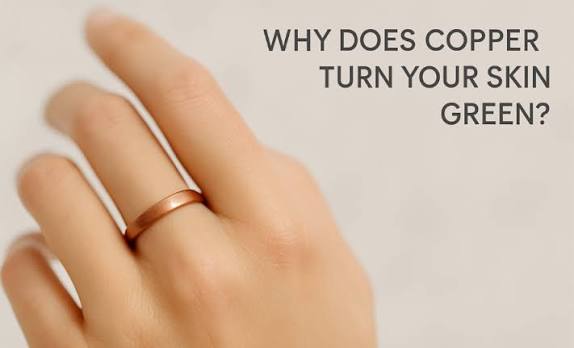
If you love wearing copper but not the green marks, prevention is easier than most people expect.
Many people intentionally wear copper jewelry for wellness reasons, even though scientific backing is limited.
Some believers associate copper with support for joint discomfort, circulation, and general well-being. Others see the green mark itself as a sign the copper is “working,” though there’s no strong clinical evidence behind that claim.
Medical and metallurgy sources are consistent on one point: the green stain itself is a chemical reaction, not proof of any health benefit or harm.
A plain green stain rarely needs medical attention. But a few signs suggest it’s time to get it checked.
Copper reacts with sweat, air, and skin oils through oxidation, forming green copper salts that transfer onto your skin as a stain.
No, it’s a harmless surface reaction. Only a tiny amount of copper is absorbed, far less than what you get from food.
No, it usually means the opposite. Pure, uncoated copper reacts the fastest, so a green mark often confirms genuine copper.
It depends on sweat acidity, humidity, activity level, and skincare products. Drier, less acidic skin reacts more slowly.
The green stain itself isn’t an allergy. But redness, itching, or a rash could indicate a separate copper or nickel sensitivity.
Wash the area with soap and warm water. For stubborn stains, try lemon juice with a pinch of salt.
It can, mildly. Sterling silver contains about 7.5% copper, which is enough to cause light discoloration in some people.
Fine silver (99.9% pure), stainless steel, and solid gold rarely cause green staining because they contain little to no reactive copper.
Some people believe copper supports joint comfort and circulation, though strong clinical evidence for these claims is limited.
Yes, a clear protective coating like nail polish or lacquer creates a barrier that stops the reaction from reaching your skin.
Yes, humid and coastal climates speed up oxidation because moisture is the main driver of the reaction.
It’s a good habit. Water, soap, and shampoo residue can speed up oxidation and make green marks appear faster.
Yes, in a general sense. Tarnish and the green stain are both results of the same oxidation process on copper’s surface.
Yes, many lotions, perfumes, and sunscreens contain acids or chemicals that accelerate the reaction between copper and skin.
Some people believe this, but there’s no strong scientific evidence linking the stain to deficiency. It’s mainly a chemistry reaction.
It’s mainly copper carbonate and copper chloride, sometimes referred to together as chelated copper.
No, it sits on the surface and washes off without lasting damage to healthy, intact skin.
Generally yes, since the reaction is cosmetic. Still, supervise young children to prevent swallowing small jewelry pieces.
It reduces direct skin contact and lowers staining risk, but the copper itself will still tarnish over time.
Cleaning it every one to two weeks with a proper metal polish helps reduce oxidation buildup and slows future staining.
So, why does copper turn your skin green? It comes down to a simple, natural chemical reaction between copper, sweat, air, and skin oils. It’s not a sign of fake jewelry, poor hygiene, or a health problem.
If you love the look of copper, a thin protective coating or a few small habit changes can keep the green marks away. And if you don’t mind it, that green tint is really just proof you’re wearing the real thing.