
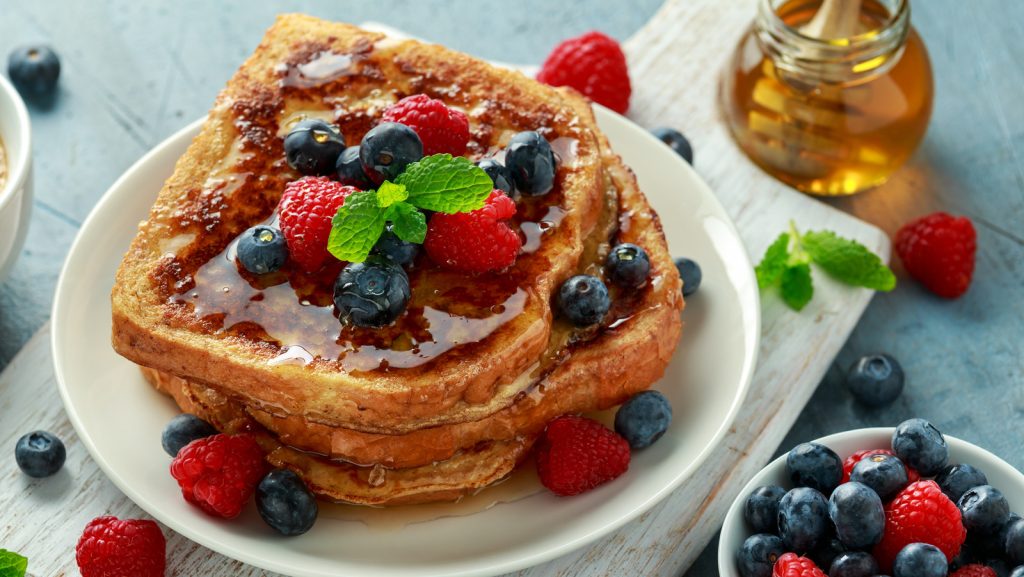
Why is French toast called French toast is a question that confuses almost everyone the moment they learn the dish is not actually from France.
The honest answer involves ancient Rome, a French phrase meaning “lost bread,” a possibly fake American innkeeper, and centuries of naming confusion across Europe.
There is no single confirmed origin story, but there are several strong theories backed by real historical records.
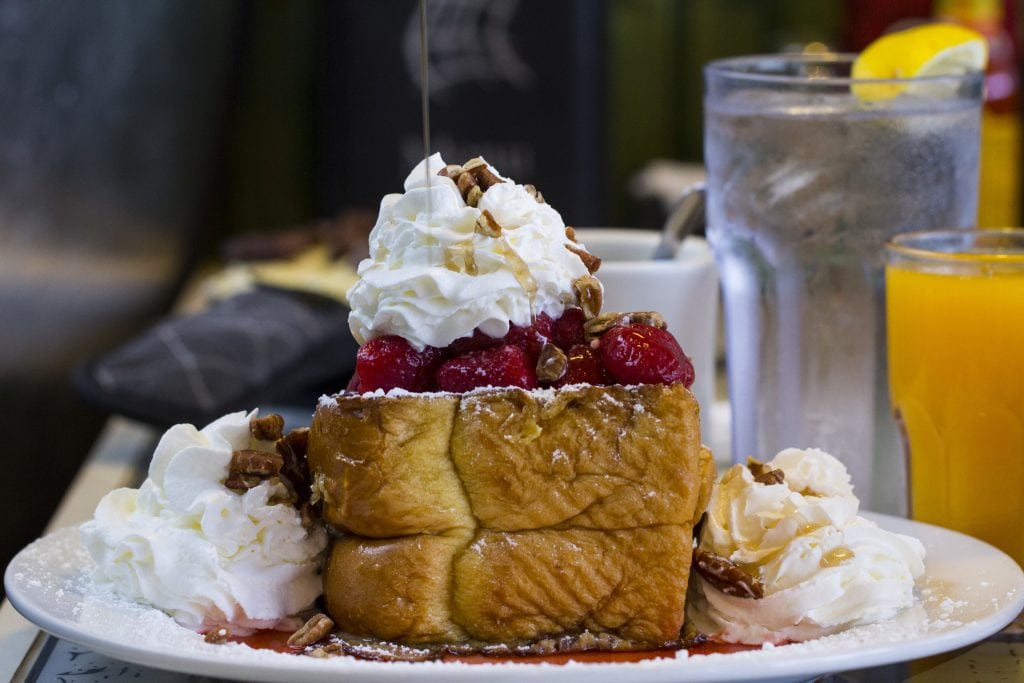
French toast did not start in France, and it did not start in America either. The earliest known version comes from ancient Rome.
A Roman cookbook called Apicius, dating back to around the 1st or 4th century, includes a recipe soaking bread in milk and eggs before frying it in oil.
This dish was sometimes called Pan Dulcis or aliter dulcia, and it was created mainly to use up bread that had gone stale rather than waste it.
The core idea, soaking old bread in a milk and egg mixture to soften and revive it, has stayed almost identical for close to two thousand years.
Pain perdu is the French name for this dish, and it translates directly to “lost bread.” The name refers to rescuing bread that would otherwise go to waste.
This phrase is important because it shows the French version of the dish was never called “French toast” in France itself.
Pain perdu is still used today in parts of Louisiana, Belgium, and other French-speaking regions, keeping the original naming tradition alive centuries later.
The irony is hard to miss. The country the dish is named after never actually called it “French” anything.
| French Term | Meaning | Still Used Today |
|---|---|---|
| Pain perdu | Lost bread | Yes, in France, Louisiana, Belgium |
| Pain a la Romaine | Roman bread | Historical name, rarely used now |
| Pain doré | Golden bread | Yes, in parts of Quebec and France |
The most popular explanation for the name traces back to a story about an innkeeper named Joseph French in Albany, New York.
According to the legend, French created his version of the dish in 1724 and named it after himself, intending to call it “French’s Toast.”
The story claims he simply forgot the apostrophe, turning “French’s toast” into “French toast” by accident, and the misspelling stuck permanently.
It is a charming story, and it explains the name in a simple, memorable way that many websites and cookbooks still repeat today.
Despite how often it gets repeated, most food historians agree the Joseph French story is very likely fictional rather than historical fact.
The primary evidence against it is timing. The phrase “French toast” appears in English print decades before 1724, which the Joseph French story cannot explain.
Historical cookbooks already used a version of the term “French toast” in the 1660s, describing a dish soaked in wine, sugar, and orange juice rather than eggs.
This means the name existed before Joseph French would have supposedly invented the dish, making the popular origin story a myth rather than documented history.
The earliest confirmed print appearance of “French toast” as a phrase dates to around 1660, inside an English cookbook called The Accomplisht Cook.
That early version was quite different from today’s recipe. Bread was soaked in wine, sugar, and orange juice instead of a milk and egg mixture.
By the 19th century in America, the dish had shifted closer to the modern egg-based recipe, and the name “French toast” became increasingly common in cookbooks.
One often-cited reference places the specific phrase “French toast” in the Encyclopedia of American Food and Drink by 1871, cementing it as a standard term.
Given its Roman origins, it seems odd the dish ended up with a French name rather than an Italian or Roman one.
One likely explanation is that French cuisine held major cultural prestige in Europe and America for centuries, making a French-sounding name feel more elegant and appealing.
Attaching the word “French” to a food was a common marketing tactic historically, since French cooking was widely viewed as sophisticated and high quality.
This same pattern shows up with other foods too, where a French label was used to elevate a dish regardless of its actual country of origin.
A separate and lesser-known theory claims the dish was actually called “German toast” in parts of America before World War II.
According to this theory, anti-German sentiment during the war led people to rename German-associated foods, shifting “German toast” to “French toast” since France was an ally at the time.
This mirrors a well-documented pattern seen with other foods, such as sauerkraut briefly being renamed “liberty cabbage” during periods of anti-German sentiment in America.
While this theory is plausible and matches historical wartime naming patterns, solid documented proof specific to French toast remains limited and debated among historians.

One of the most interesting facts about this dish is just how many different names it goes by internationally, despite being fundamentally the same recipe everywhere.
In Germany, it is called arme Ritter, meaning “poor knights.” In the Netherlands, it is called wentelteefjes. In Poland, it is chleb w jajku, or “bread in egg.”
In the UK and Ireland, the dish is commonly called eggy bread or, historically, gypsy toast. In Hungary, it is known as bundáskenyér.
| Country | Local Name | Literal Meaning |
|---|---|---|
| France | Pain perdu | Lost bread |
| Germany | Arme Ritter | Poor knights |
| Netherlands | Wentelteefjes | Reclaimed bread |
| Poland | Chleb w jajku | Bread in egg |
| Slovakia | Chlieb vo vajci | Bread in egg |
| UK / Ireland | Eggy bread | Egg-soaked bread |
| Hungary | Bundáskenyér | Coated bread |
| Denmark | Poor knights | Poor knights |
The core method, soaking bread in a liquid mixture and frying it, has stayed remarkably consistent from ancient Rome through today.
What changed most over time is the soaking liquid itself. Early versions used milk and honey, later versions used wine and orange juice, and modern versions settled on eggs and milk.
Sweet additions like sugar, cinnamon, and vanilla became common only in more recent centuries, giving rise to the dessert-like version most people know today.
Savory versions never fully disappeared either, and they remain popular in the UK, Scotland, and several other countries where eggy bread pairs with bacon or sausage.
Beyond the name, the way people prepare and serve French toast today varies dramatically depending on the region and local food culture.
In Hong Kong, thick slices are deep-fried and soaked in butter, then topped with condensed milk or syrup for a much richer dessert-style version.
In Canada, French toast is typically soaked in a cinnamon custard mixture and finished with real maple syrup, reflecting the country’s strong maple tradition.
In Morocco, flatbread is sliced, dusted with powdered sugar, and dipped in syrup instead of using the standard sliced loaf bread common elsewhere.
| Country | Style |
|---|---|
| Hong Kong | Deep-fried, condensed milk topping |
| Canada | Cinnamon custard, maple syrup |
| Morocco | Flatbread, powdered sugar, syrup |
| Scotland | Served as a sandwich with sausage |
| Singapore | Paired with kaya coconut jam |
French toast has its own unofficial holiday in the United States, celebrated every year on November 28th as National French Toast Day.
Nutritionally, French toast tends to be a solid source of protein, selenium, and riboflavin, largely thanks to the eggs used in the soaking mixture.
A packaged, mass-produced product labeled “French toast” also exists in some supermarkets, though it typically contains no egg at all and behaves more like sweetened Melba toast.
The dish appears under different names in cookbooks stretching back over 600 years, making it one of the more quietly ancient recipes still eaten daily worldwide.
The biggest myth is that French toast originated in France. Historical evidence points to ancient Rome as the true origin point instead.
Another myth claims Joseph French invented the dish in 1724 and accidentally created the name through a grammar mistake, which historical timing does not support.
Some assume the dish is a relatively modern invention. In reality, similar recipes have existed continuously for roughly two thousand years across multiple cultures.
A final myth suggests every culture’s version is basically identical. In practice, ingredients, soaking liquids, and toppings vary significantly from country to country.
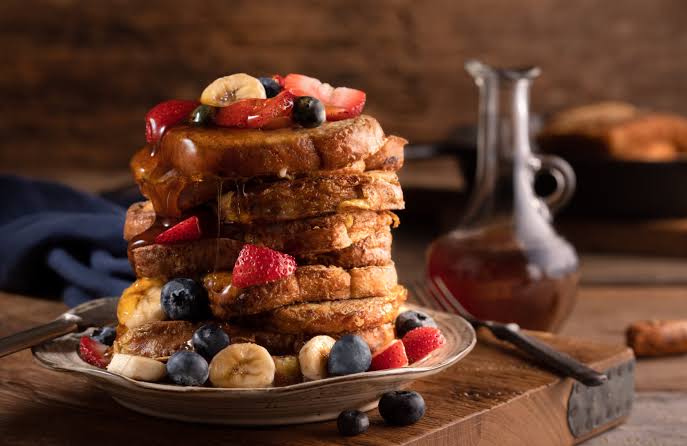
The Roman recipe found in Apicius did not include eggs in the earliest surviving text, which surprises many people who assume egg has always been essential.
Bread chunks were soaked in milk, then honey was poured over the finished, fried result, creating something closer to a milk-soaked sweet snack than modern French toast.
A separate Roman recipe called Aliter Dulcia did include eggs, but it lacked bread entirely, forming more of a custard rather than the toast we recognize today.
Some historians believe these two separate recipes eventually merged over centuries, combining the bread-soaking method with the egg-based custard to form the dish we know now.
By the Middle Ages, versions of this dish had spread widely across Europe, each region developing its own name and slight variation on the recipe.
In 14th century Germany, arme Ritter, or “poor knights,” described soaked and fried bread eaten by those who could not afford richer meals.
Around the same era in France, the term pain perdu appeared, referring specifically to using up bread that had gone stale and would otherwise be wasted.
This period explains why so many countries independently developed nearly identical recipes long before any single country could claim ownership of the dish.
One of the oldest documented French recipes resembling this dish appears in Le Viandier, a cookbook written around 1300 by French chef Guillaume Taillevent.
His recipe, called tostées dorées, meaning “golden toasts,” described bread fried until golden brown, closely resembling the browning process used in modern French toast today.
This record is significant because it shows France had its own distinct version and terminology centuries before the English phrase “French toast” ever appeared in print.
It also reinforces that the French were refining and documenting bread-soaking techniques independently, separate from whatever later gave the dish its English name.
Spain has its own historical connection to this dish as well, with early recipes published by Francisco Martínez Motiño appearing as far back as 1611.
In England, Hannah Woolley included a version of the recipe in her 1670s cookbook, The Queen-Like Closet, though notably she did not use the word “French” at all.
This detail matters because it shows English cooks were already familiar with the dish decades before the “French toast” name became commonly attached to it.
The gap between the recipe’s presence and its eventual French-associated name suggests the labeling happened separately from the dish’s actual culinary development.
The “poor knights” name deserves special attention because it appears across so many different countries, often independently of any French influence.
Germany’s arme Ritter, Denmark’s version, and Finland’s köyhät ritarit all translate to some variation of “poor knights,” describing a humble dish dressed up to look fancier.
The shape of the fried bread, especially when cut into triangles or rectangles, was sometimes compared to the shields carried by medieval knights, inspiring the name.
This shared naming pattern across unrelated languages suggests the dish, and the “poor knights” concept specifically, spread through cultural exchange across medieval Europe.
Before “French toast” became the dominant term in America, the dish went by several competing regional names throughout the 19th century.
Some American cookbooks referred to it simply as “egg toast,” focusing on the primary ingredient rather than any national association at all.
Other regional names included “Spanish toast” and “nun’s toast,” showing that Americans experimented with several different national and religious labels before French toast became standard.
This period of naming instability supports the idea that the eventual choice of “French” was more about branding appeal than historical accuracy.
Understanding why “French” became the winning label requires looking at how French cooking was perceived throughout the 18th and 19th centuries in both Europe and America.
French chefs and French culinary techniques were widely considered the gold standard of fine dining during this era, influencing menus far beyond France’s actual borders.
Restaurants and cookbook authors frequently added “French” to a dish name specifically to make it sound more refined, elegant, and worth a higher price.
This same branding pattern shows up in other foods entirely unrelated to France’s actual cuisine, reinforcing that the label was often a marketing choice rather than a factual claim.
Part of the reason this question keeps getting searched is that no single, universally agreed-upon explanation exists, even among serious food historians.
Multiple competing theories, the Roman origin, the French pain perdu tradition, the Joseph French legend, and the wartime renaming theory, all circulate online simultaneously.
Cookbooks, food blogs, and restaurants often repeat whichever version feels most entertaining rather than the version best supported by historical timing and documentation.
This layered history is exactly why the question “why is French toast called French toast” continues attracting curious readers year after year.
| Fact | Detail |
|---|---|
| True Origin | Ancient Rome, via the Apicius cookbook |
| French Name | Pain perdu, meaning “lost bread” |
| Earliest English Term | Appeared around 1660 in The Accomplisht Cook |
| Popular Legend | Joseph French, Albany, 1724 (likely myth) |
| Alternate Theory | Renamed from “German toast” around WWII |
| National Holiday | November 28th, National French Toast Day |
The name likely comes from French cultural prestige in cooking, not an actual French origin. The dish itself traces back to ancient Rome.
No single inventor is confirmed. The earliest known recipe appears in the Roman cookbook Apicius, long before France or America existed as we know them.
Most historians consider it a myth. The phrase “French toast” appears in print decades before his supposed 1724 invention date.
Pain perdu is French for “lost bread.” It refers to reviving stale bread by soaking it in milk and eggs.
Some sources claim it was, and that the name changed around World War II due to anti-German sentiment, though direct proof remains limited.
Names vary widely, including eggy bread in the UK, arme Ritter in Germany, and wentelteefjes in the Netherlands.
The earliest known print reference dates to around 1660, in an English cookbook called The Accomplisht Cook.
Yes. National French Toast Day is celebrated in the United States every year on November 28th.
Not specifically. The base recipe, bread soaked in egg and milk then fried, is common across many unrelated culinary traditions.
Soaking stale bread in milk or eggs to avoid waste was a practical solution discovered independently across many cultures throughout history.
French toast is far from the only dish carrying a national name that has little to do with its actual origin or invention.
Many foods get labeled with a country name simply because that country popularized, refined, or marketed the dish successfully at some point in history.
This pattern makes food naming history a useful reminder that a dish’s name often reflects branding and popularity rather than a factual record of invention.
Keeping this in mind makes it easier to enjoy the story behind French toast without needing a single definitive answer to feel satisfied.
So, why is French toast called French toast? The honest answer is that nobody has one single confirmed explanation, but the strongest evidence points away from France entirely.
The dish itself traces back roughly two thousand years to ancient Rome, was known in France as pain perdu, and appeared in English print as “French toast” as early as 1660, well before the popular Joseph French legend from 1724.
Whether the name came from French culinary prestige, wartime renaming, or simple historical accident, the result is the same dish enjoyed under dozens of names worldwide.
Understanding this tangled history makes the next bite of French toast a little more interesting, even if the true origin of its name may never be fully settled.