
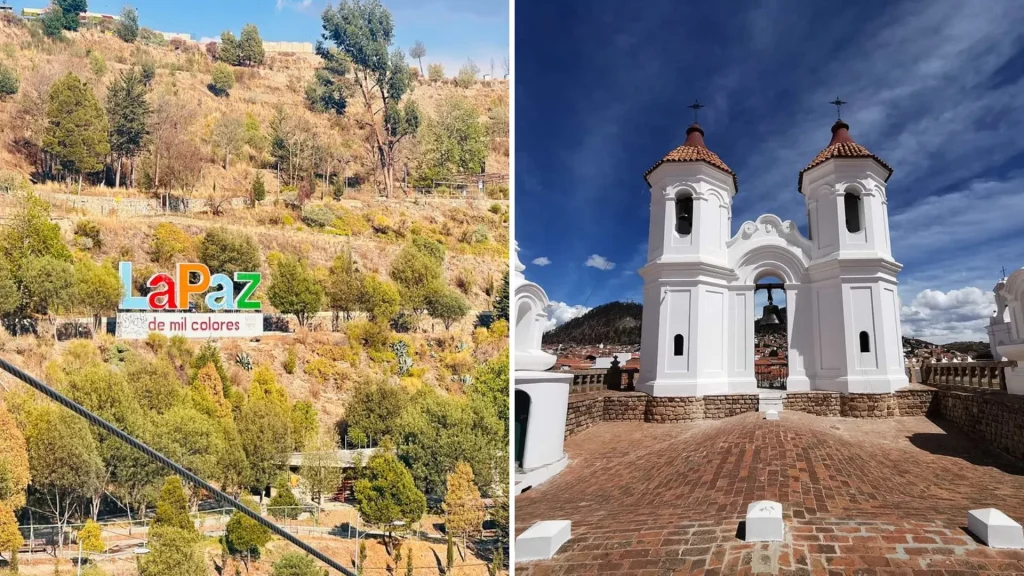
Why does Bolivia have two capitals is one of the most common questions travelers and geography fans ask once they realize the answer isn’t as simple as it seems.
Sucre holds the official title of constitutional capital, while La Paz functions as the actual seat of government where the president and legislature work. This unusual split traces back to a political compromise following a civil conflict in the late 1800s, and it still shapes the country’s identity today.
Understanding how this arrangement came to be reveals a fascinating mix of history, geography, and regional rivalry.
Here’s a fast comparison of Bolivia’s two capitals before diving into the full history behind them.
| Feature | Sucre | La Paz |
|---|---|---|
| Official title | Constitutional capital | Seat of government |
| Government branch | Judiciary (Supreme Court) | Executive and legislative |
| Founded | 1538 (as La Plata) | 1548 |
| Elevation | About 2,750 meters | About 3,650 meters |
| Known for | Colonial architecture, independence history | Andean setting, political and economic hub |
| UNESCO status | World Heritage Site | Not listed |
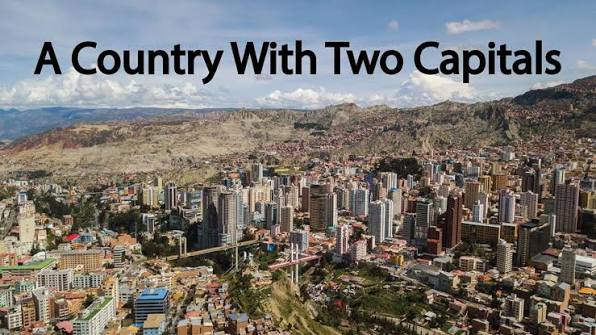
Bolivia’s two capitals exist because of a political compromise reached after a civil conflict known as the Federal War. Rather than moving the entire government to one city, the country split its functions between two.
Sucre kept its title as the constitutional capital, home to the judiciary. La Paz became the seat of government, hosting the executive and legislative branches instead.
Sucre began as a Spanish colonial settlement originally called La Plata. It grew into an important center for law, religion, and education during Spanish rule.
Its proximity to the silver-rich mines of Potosí made it a hub of colonial wealth and administration. This early prominence set the stage for its later role as Bolivia’s capital.
Bolivia’s Declaration of Independence was signed in Sucre on August 6, 1825. This event marked the formal creation of the Republic of Bolivia, named after revolutionary leader Simón Bolívar.
The signing took place at the Casa de la Libertad, a building that still stands as a symbol of the nation’s founding. Sucre itself was later renamed in honor of the country’s second president, Antonio José de Sucre.
The Bolivian Constitution names Sucre as the country’s official capital, a title tied directly to its role in the nation’s birth. This designation has never been formally changed, despite shifts in political power.
Sucre also remains home to the Supreme Court, preserving its judicial significance. Many Bolivians view the city as the symbolic and legal heart of the country.
Sucre is often called “La Ciudad Blanca,” or the White City, thanks to its whitewashed colonial buildings. Its architecture and layout have earned it recognition as a UNESCO World Heritage Site.
The city offers a relaxed pace of life compared to the chaos of La Paz. Its milder climate and lower altitude also make it a popular stop for travelers adjusting before heading deeper into the Andes.
La Paz was founded by Spanish colonizers in 1548, on a site with earlier Inca and Aymara presence. Its full name, Nuestra Señora de La Paz, translates to “Our Lady of Peace.”
The name commemorated the restoration of peace following an earlier colonial rebellion. Over time, the city grew into a major hub for trade and commerce in the region.
By the late 1800s, Bolivia’s economy began shifting away from southern mining regions toward La Paz. Growing trade connections and mineral wealth in the west gave the city increasing economic influence.
This economic rise gave La Paz the infrastructure, population, and financial power needed to challenge Sucre’s political dominance. These shifting fortunes set the stage for a major conflict.
Tensions between conservative elites in the south and rising liberal forces in the north led to the Federal War of 1899. The conflict pitted regional interests against each other over where true political power should reside.
When liberal forces won, government functions shifted from Sucre to La Paz. This transition marked the beginning of Bolivia’s modern dual-capital arrangement.
Even though La Paz was never formally named the constitutional capital, it now hosts the president, the legislature, and most government ministries. Most foreign embassies are also located there.
La Paz sits at an elevation of roughly 3,650 meters, making it one of the highest capitals in the world. Its dramatic canyon setting surrounded by snow-capped peaks makes it unlike any other city in South America.
The Federal War stemmed from deep regional rivalry between Bolivia’s conservative south and its increasingly powerful liberal north. Economic shifts toward La Paz fueled resentment and political maneuvering on both sides.
Sucre’s elites wanted to preserve their traditional dominance, while La Paz’s growing merchant class sought greater political influence. This clash of interests eventually erupted into open conflict.
The liberal faction, based in La Paz, ultimately won the conflict. Rather than stripping Sucre of its capital status entirely, a compromise was reached to divide government functions between the two cities.
This arrangement avoided a complete overhaul of the constitution while satisfying the practical demands of the victorious north. It has remained largely unchanged for more than a century.
The compromise created a permanent geographic and political divide that still shapes Bolivian identity. Movements have occasionally called for restoring full capital status to Sucre, but no formal change has taken hold.
La Paz has continued to resist any shift back to Sucre. This ongoing tension keeps Bolivia’s unique dual-capital system firmly in place.
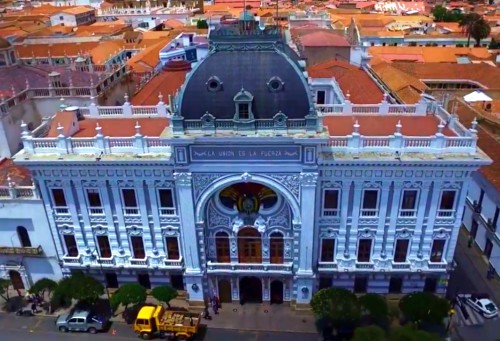
Bolivia’s dual-capital system reflects broader regional and cultural divides within the country. The Andean highlands and lowland regions have long maintained distinct economic and cultural identities.
Both Sucre and La Paz take pride in their respective roles. This regional identity has helped preserve the arrangement rather than push toward full centralization.
Changing the current arrangement would require significant constitutional and political effort. Given La Paz’s entrenched infrastructure and Sucre’s symbolic importance, neither side has strong incentive to give up its role.
This standoff has effectively frozen the situation in place. As a result, Bolivia remains one of the few countries in the world with two functioning capitals.
Bolivia isn’t entirely alone in splitting government functions across multiple cities. South Africa, for example, divides its capital roles among three different cities.
| Country | Capital Arrangement |
|---|---|
| Bolivia | Sucre (constitutional), La Paz (government) |
| South Africa | Pretoria, Cape Town, Bloemfontein |
| Netherlands | Amsterdam (official), The Hague (government) |
| Sri Lanka | Colombo (commercial), Sri Jayawardenepura Kotte (legislative) |
However, Bolivia remains one of the few nations where both capitals are still widely recognized and actively used today. This makes its arrangement especially distinctive.
Sucre sits at an elevation of about 2,750 meters, making it one of the highest capital cities in the world after La Paz and Quito. It is home to Bolivia’s Supreme Court and international airport.
The city’s full formal name is “La Ilustre y Heroica Sucre,” reflecting its historic pride. Its colonial core remains remarkably well preserved.
La Paz sits within a dramatic canyon, with much of the city built into steep surrounding slopes. It is the highest seat of government in the world by elevation.
The city is also known for its vibrant markets, including the famous Witches’ Market, where traditional healers sell herbal remedies and spiritual items. This blend of tradition and modern governance defines much of La Paz’s character today.
Interestingly, neither Sucre nor La Paz is Bolivia’s largest city. That title belongs to Santa Cruz de la Sierra, located in the eastern lowlands and serving as the country’s main industrial center.
Santa Cruz has grown rapidly in recent decades due to agriculture and trade. Despite its size, it holds no official capital status.
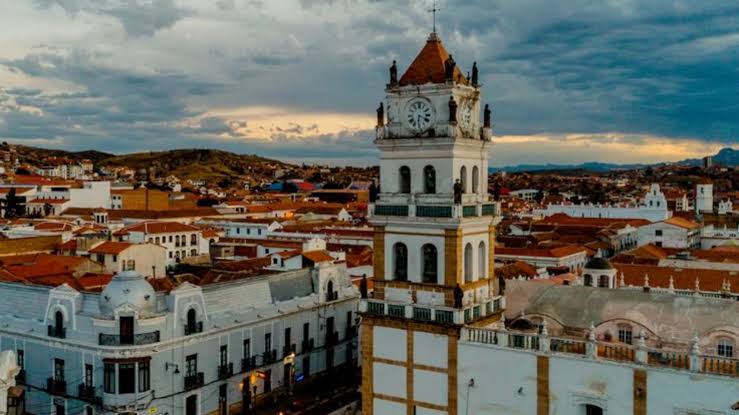
Many people assume La Paz is Bolivia’s official capital simply because it hosts the government. In reality, the constitution still names Sucre as the country’s official capital.
This mix-up is extremely common, even appearing on some maps and travel resources. The distinction between “official capital” and “seat of government” is key to understanding the confusion.
While La Paz handles most government activity, Sucre still plays an active role through its judiciary. The Supreme Court continues to operate from the city.
This means Sucre isn’t simply a historical relic. It remains a functioning part of Bolivia’s governmental structure today.
In practice, La Paz holds significantly more political and economic influence than Sucre. Most decision-making, diplomacy, and legislative activity happen there.
Sucre’s role, while symbolically important, is narrower in scope. This imbalance is part of why debates about restoring full capital status to Sucre continue.
A political compromise after the Federal War of 1899 split government functions between two cities. Sucre kept the constitutional title, while La Paz became the seat of government.
Sucre is the official constitutional capital of Bolivia. La Paz, however, functions as the practical seat of government.
Regional rivalry between conservative Sucre and the rising liberal north led to civil conflict. Economic shifts toward La Paz fueled the tension.
Yes, La Paz sits at roughly 3,650 meters, making it the highest seat of government in the world. Only Sucre and Quito come close in elevation among capital cities.
Yes, Sucre remains home to Bolivia’s Supreme Court. This preserves its role in the country’s judicial branch.
Sucre’s colonial buildings are almost entirely whitewashed, giving the city its nickname. This architectural style has been preserved for centuries.
No, Santa Cruz is Bolivia’s largest city, but it holds no official capital status. Sucre and La Paz remain the country’s two recognized capitals.
Sucre was the political and administrative center of the region at the time of independence in 1825. Its historical significance made it the natural choice.
Yes, countries like South Africa and the Netherlands also split capital functions across multiple cities. Bolivia’s arrangement is one of the most well-known examples.
It’s possible, but unlikely in the near term due to political and regional resistance. Both cities have strong incentives to maintain the current arrangement.
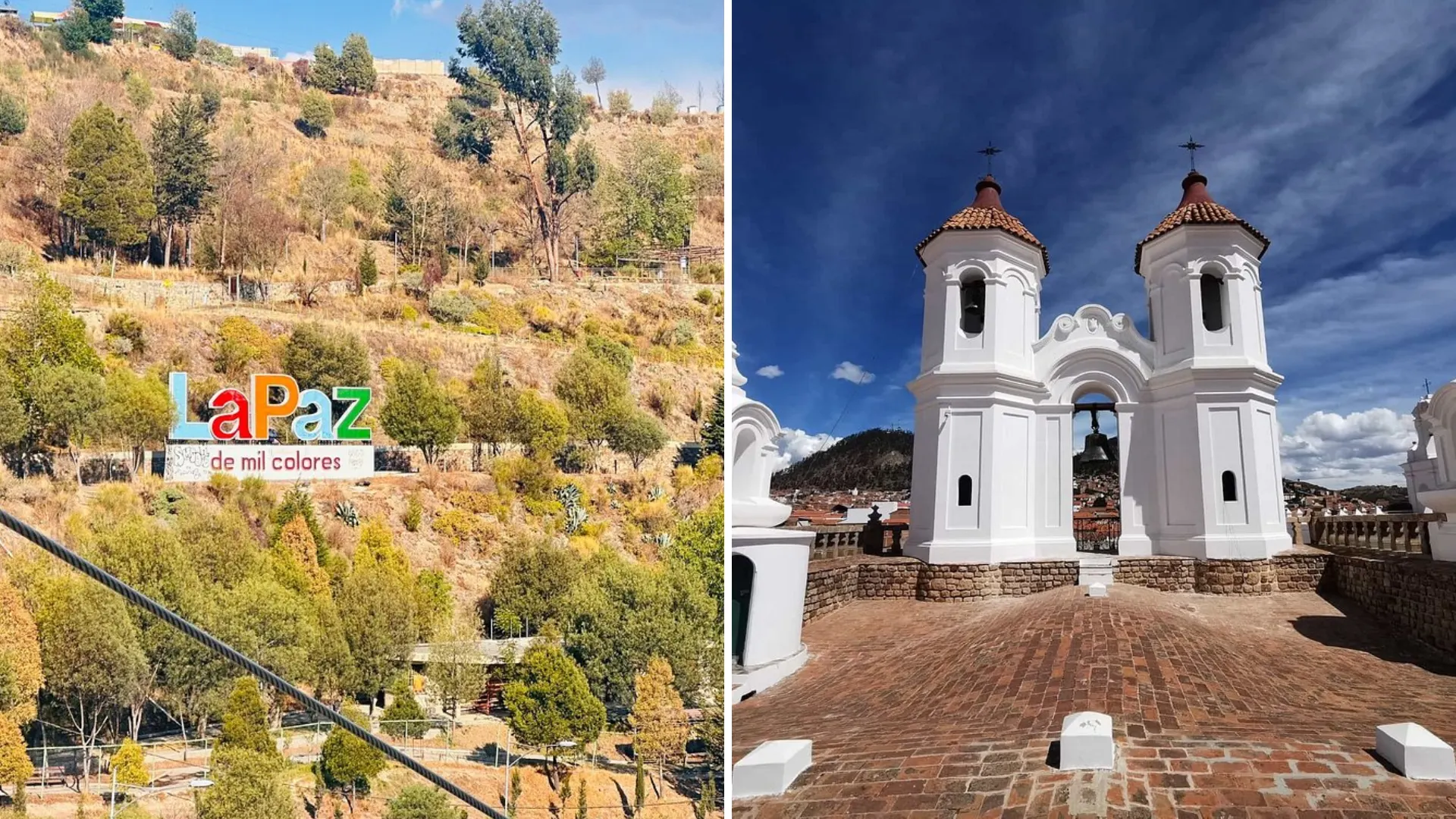
Bolivia’s two capitals exist because of a political compromise reached after the Federal War of 1899, when power shifted from Sucre to the rapidly growing city of La Paz.
Rather than relocating the entire government, the country split its functions, leaving Sucre as the constitutional capital and judicial seat while La Paz took over as the practical center of executive and legislative power.
This arrangement reflects deeper regional identities, economic history, and a long-standing rivalry that has never fully resolved. Today, both cities continue to play distinct roles, with Sucre preserving Bolivia’s colonial and judicial heritage and La Paz driving its modern political and economic life.
Understanding this dual-capital system offers valuable insight into Bolivia’s complex history and helps clear up one of the most common points of confusion about the country. Few nations share this unique setup, making Bolivia a genuinely distinctive case worldwide.