

Why does my tooth hurt when I drink something cold is one of the most searched dental questions online — and for good reason. That sudden, sharp jolt of pain when you sip ice water or bite into something frozen is not just annoying.
It is your mouth sending you a warning. Over 40 million adults in the United States deal with tooth sensitivity, yet most people wait far too long before seeking help.
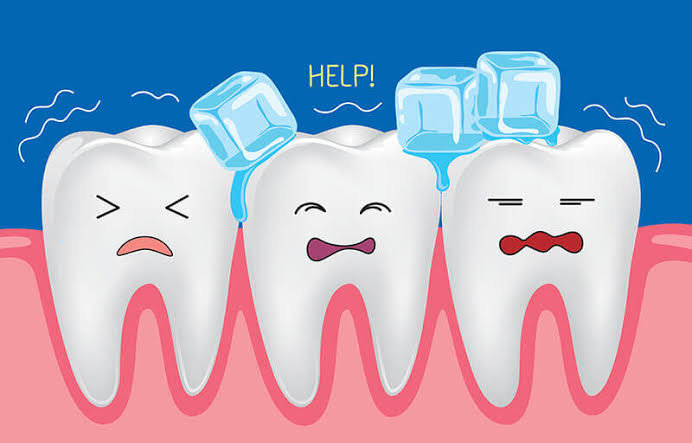
To understand the pain, you first need to understand the structure of your tooth. Every tooth has three main layers.
The outermost layer is called enamel. It is the hardest substance in the human body and acts as a full shield against temperature, pressure, and bacteria.
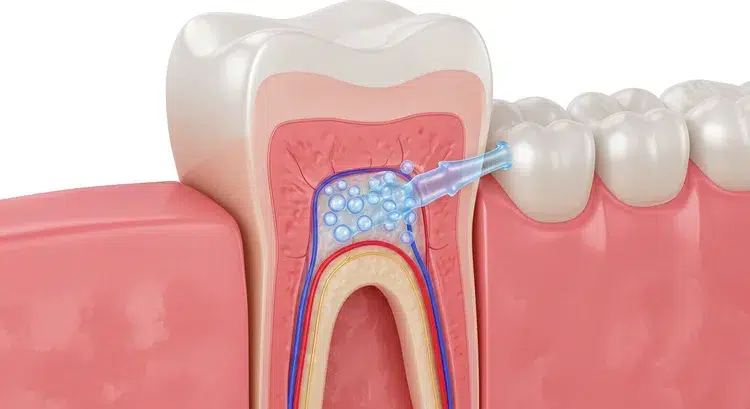
Beneath the enamel lies dentin. Dentin is a softer layer packed with thousands of microscopic channels called dentinal tubules. These tubules run straight from the outer surface of the tooth all the way down to the nerve at the center.
The innermost layer is the pulp. It contains the blood vessels and nerve fibers that keep the tooth alive. When cold temperatures reach the pulp via exposed dentinal tubules, your nerve fires an instant pain signal.
Dentin hypersensitivity is the clinical term for tooth sensitivity. It is defined as a short, sharp pain arising from exposed dentinal tubules in response to temperature, sweet, sour, or air stimuli.
When enamel wears down or gums pull back from the tooth, those microscopic tubules are left completely unprotected. Cold liquid hits them, fluid inside the tubules shifts, and your nerve responds with that unmistakable zap of pain.
The thinner your remaining enamel, the more intense that pain tends to be. This is why sensitivity often gets progressively worse if the underlying cause is not addressed.
There are multiple reasons your tooth can hurt when exposed to cold. Some are simple and easy to fix. Others require professional dental care immediately.
Enamel erosion happens when the hard outer layer of your tooth gradually wears away from acid or mechanical damage. Once enamel is gone, it cannot grow back — ever.
Acidic foods and drinks are the biggest dietary culprits. Sodas, citrus juices, sports drinks, wine, and coffee all contain acids that attack enamel with every sip.
Aggressive brushing with a hard-bristled toothbrush also physically scrapes enamel away over time. Many people believe brushing harder means cleaner teeth, but it actually causes accelerating damage.
As enamel thins, the dentinal tubules beneath become exposed. Cold beverages then travel directly through those tubules to the nerve — causing that sharp, familiar sting.
Gum recession occurs when the gum tissue pulls away from the base of the tooth, exposing the root surface. The root is covered not by enamel but by a much thinner material called cementum, which offers far less protection.
When roots are exposed, cold temperatures have a nearly direct route to the nerve inside. Sensitivity near the gumline — rather than at the tip of the tooth — is a classic sign that recession is the problem.
| Cause | How It Causes Recession |
|---|---|
| Brushing too hard | Physically wears away gum tissue |
| Gum disease (periodontitis) | Destroys the bone and tissue supporting teeth |
| Natural aging | Gums thin and recede gradually over decades |
| Misaligned teeth | Uneven pressure on gums |
| Hormonal changes | Gums become more sensitive and fragile |
| Tobacco use | Restricts blood flow, damaging gum tissue |
Like enamel, gum tissue that has receded cannot grow back on its own. However, a periodontist can perform a gum graft procedure to cover exposed roots and restore protection.
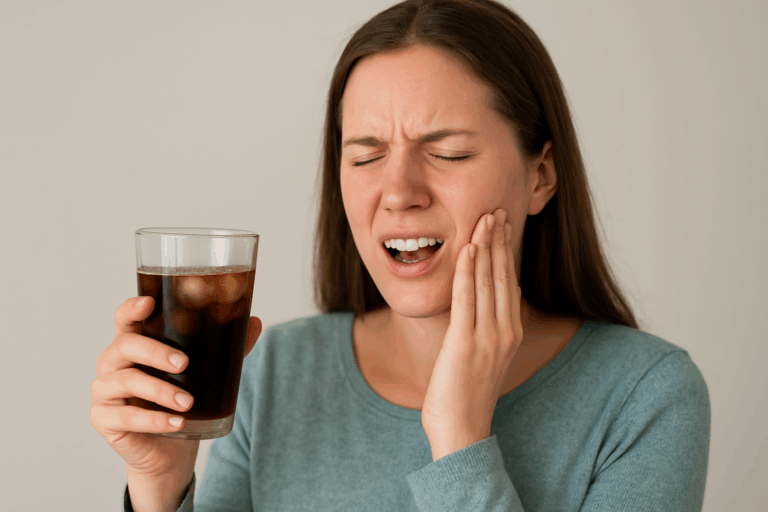
A cavity is simply a hole in your enamel created by bacteria. When bacteria in your mouth feed on sugars and starches, they produce acids that eat through enamel and eventually reach the dentin underneath.
Once decay breaks through the enamel barrier, cold beverages have a direct pathway to the sensitive inner layers of the tooth. If decay spreads deep enough to reach the pulp, pain can linger long after the cold stimulus is gone.
Cold sensitivity concentrated in one specific tooth — especially if accompanied by visible discoloration, a visible hole, or pain when chewing — strongly suggests an active cavity.
Early cavities are treated with a simple filling. Advanced decay that reaches the pulp typically requires root canal therapy to remove the infected tissue and save the tooth.
Even a hairline crack that is invisible to the naked eye can create a channel for cold temperatures to reach the nerve inside your tooth. Cracks are surprisingly common and notoriously difficult to detect without a thorough dental examination.
Cracked teeth often only cause pain under specific conditions — biting down at a certain angle, or drinking something cold. This inconsistency is what makes them so easy to dismiss and so easy to let worsen.
Trauma from an accident or impact is an obvious cause. But everyday habits are far more common culprits.
Chewing ice, biting fingernails, using teeth as tools, and eating hard foods like popcorn kernels all create micro-fractures over time. Teeth grinding (bruxism) places extreme stress on teeth and is one of the leading causes of cracking.
If a cracked tooth is not treated, the crack can extend deeper into the tooth and eventually reach the root — at which point the tooth may no longer be saveable.
Bruxism is the habit of clenching or grinding teeth, most often during sleep. Many people with bruxism are completely unaware they do it until a dentist points out the worn-down, flattened appearance of their teeth.
The constant pressure and friction of grinding wears away enamel at an accelerated rate. As the dentin and pulp layers become exposed, cold foods and drinks trigger sharp pain. Stress, anxiety, certain medications, and sleep disorders are common triggers.
The primary treatment for bruxism is a custom-fitted night guard — a protective dental appliance worn during sleep that prevents the upper and lower teeth from grinding against each other.
It is completely normal to experience tooth sensitivity after common dental procedures. Fillings, crowns, teeth whitening, deep cleanings, and even routine X-rays can leave teeth temporarily more sensitive to cold.
This happens because the dental procedure briefly irritates the nerve inside the tooth. The nerve needs time to calm down and return to its normal state.
Post-procedure sensitivity typically resolves on its own within a few days to a few weeks. If sensitivity from a filling or crown persists beyond 4 weeks or gets progressively worse, contact your dentist — the restoration may need to be adjusted.
Over-the-counter whitening kits and in-office bleaching treatments are extremely popular. But they are also one of the most overlooked causes of sudden cold sensitivity.
The hydrogen peroxide in whitening products penetrates the enamel and can temporarily inflame the nerve inside the tooth. This creates sensitivity that can last from a few hours to several days after whitening.
Using desensitizing toothpaste for one to two weeks before and after whitening significantly reduces this effect. If you have pre-existing sensitivity, discuss it with your dentist before starting any whitening treatment.
This one surprises many people. The roots of the upper back molars sit very close to the maxillary sinuses. When those sinuses become inflamed from a cold, allergy, or infection, the pressure they exert can mimic tooth pain.
This type of pain usually affects multiple upper teeth rather than one specific tooth. It often comes alongside other sinus symptoms — nasal congestion, facial pressure, or a headache above the eyes.
Treating the sinus infection typically eliminates the tooth pain completely. A dentist can help you distinguish sinus-related discomfort from a true dental issue.
Not all cold sensitivity is equal. The nature and duration of the pain tells your dentist a great deal about what is happening inside the tooth.
| Pain Type | Duration After Cold | Likely Cause |
|---|---|---|
| Short, sharp zing | Fades in 2–3 seconds | Enamel erosion, minor recession |
| Moderate ache | Lasts 10–30 seconds | Moderate decay, cracked tooth |
| Lingering, throbbing pain | Lasts over 30 seconds | Deep decay, pulpitis, abscess |
| Constant dull ache | Does not go away | Nerve damage, infection |
| Pain in multiple upper teeth | Present with congestion | Sinus infection |
Pain that lasts less than a few seconds after the cold is removed is typically a sign of enamel or gum issues — uncomfortable but not an emergency.
Pain that lingers for 30 seconds or more, throbs, or is getting progressively worse is a red flag for deeper damage to the nerve or pulp. This needs prompt dental attention.
Many mild to moderate cases of cold sensitivity can be significantly improved with consistent at-home care. The key word is consistent — these strategies work over weeks, not overnight.
Desensitizing toothpastes contain active ingredients like potassium nitrate or stannous fluoride. These compounds work by blocking the open dentinal tubules, preventing pain signals from reaching the nerve.
Allow at least two to three weeks of twice-daily use before evaluating results. Do not rinse your mouth immediately after brushing — letting the toothpaste sit on teeth longer improves effectiveness significantly.
Switch to a soft-bristled toothbrush immediately if you have not already. A hard or medium bristle brushes wears down enamel and damages gum tissue with every use.
Use gentle, circular motions rather than back-and-forth scrubbing. The goal is to clean the tooth surface and gumline, not to scrub them away.
Over-the-counter fluoride mouth rinses can help remineralize weakened enamel. Rinsing once daily, especially before bed, allows fluoride to sit on the teeth while you sleep and strengthen enamel from the outside.
Reduce how often you consume acidic foods and drinks. When you do consume acidic beverages, drink through a straw to minimize contact with teeth.
Wait at least 30 minutes after eating or drinking acidic foods before brushing. Brushing immediately after acid exposure scrubs the temporarily softened enamel away more easily.
Temporarily switching to room-temperature beverages gives inflamed nerves a chance to settle down. This is not a long-term solution but can reduce day-to-day discomfort while you address the underlying cause.
When at-home care is not enough, dentists have a wide range of effective professional treatments depending on the underlying cause.
A dentist can apply concentrated fluoride gel or varnish directly to sensitive areas. This high-dose fluoride seals the exposed dentinal tubules and provides relief that can last several months.
This is one of the first professional interventions for mild to moderate enamel erosion and is painless and quick.
Dental bonding uses a tooth-colored composite resin to cover exposed dentin or root surfaces. It creates a physical barrier between the sensitive surface and temperature stimuli.
Bonding is fast, painless, and can dramatically reduce sensitivity. It is especially useful for treating exposed root surfaces caused by gum recession.
When a cavity is causing cold sensitivity, removing the decay and placing a filling restores the protective layer over the dentin. For more extensive decay, a dental crown that covers the entire tooth provides full protection.
For advanced gum recession that is causing significant root exposure and sensitivity, a periodontist can perform a gum graft. Tissue taken from the roof of the mouth (or from a donor source) is attached over the exposed root, restoring coverage and dramatically reducing sensitivity.
When cold sensitivity is severe, lingering, and accompanied by deep ache or swelling, the pulp of the tooth may be infected or irreversibly damaged. Root canal therapy removes the infected nerve and pulp tissue from inside the tooth, eliminates the pain, and saves the tooth.
Root canals have an unfair reputation for being painful. In reality, they relieve the severe pain caused by an infected pulp and are no more uncomfortable than getting a filling.
A custom-fitted night guard made by your dentist provides far better protection than over-the-counter options. It absorbs the force of grinding and prevents further enamel loss while you sleep.

Preventing tooth sensitivity is far easier than treating it. These daily habits protect your enamel and gum tissue for the long term.
Use fluoride toothpaste every day — it is your enamel’s best friend. Brush twice daily with a soft-bristled brush using gentle pressure and circular motions.
Limit acidic beverages to mealtimes rather than sipping them all day. The frequency of acid exposure matters as much as the amount.
Wear a night guard if you grind your teeth. See your dentist every 6 months for a professional cleaning and examination — catching early erosion, recession, or decay before sensitivity develops is the ultimate prevention strategy.
Stay well hydrated. Saliva is your mouth’s natural defense system — it neutralizes acids and remineralizes enamel continuously throughout the day.
Some situations require professional evaluation without delay. Do not wait if you experience any of the following.
Pain that persists for more than 30 seconds after the cold is removed is a warning sign of pulp damage. Visible swelling, redness, or a pimple-like bump on the gum suggests a dental abscess that requires urgent treatment.
A cracked, chipped, or broken tooth needs prompt repair to prevent the damage from worsening. Sensitivity that is getting progressively worse despite home care needs a professional diagnosis.
Any cold sensitivity that is making it difficult to eat, drink, or function normally warrants a dental visit without delay.
It is important to distinguish between tooth sensitivity and a toothache, as they signal different levels of severity.
| Feature | Tooth Sensitivity | Toothache |
|---|---|---|
| Pain onset | Triggered by cold, heat, sweet | Spontaneous or constant |
| Duration | Seconds after trigger is removed | Lasts hours or days |
| Location | Often affects multiple teeth | Usually one specific tooth |
| Severity | Sharp but brief | Deep, throbbing, severe |
| Common cause | Enamel erosion, recession | Infection, deep decay, abscess |
Tooth sensitivity is usually a warning sign of a developing problem. A toothache is a sign that the problem has already become serious and often requires more extensive treatment.
| Cause | Main Symptom | Treatment |
|---|---|---|
| Enamel erosion | Generalized cold sensitivity | Desensitizing toothpaste, fluoride, diet changes |
| Gum recession | Sensitivity near gumline | Bonding, gum graft |
| Tooth decay (cavity) | Pain in one tooth with cold/chewing | Filling or crown |
| Cracked tooth | Sharp pain with specific biting angle | Bonding, crown, or extraction |
| Bruxism | Worn, flattened teeth, sensitivity | Night guard, enamel repair |
| Recent dental work | Sensitivity after procedure | Temporary; desensitizing toothpaste |
| Teeth whitening | Sensitivity after bleaching | Desensitizing toothpaste, pause whitening |
| Sinus infection | Multiple upper teeth affected | Treat sinus infection |
| Pulp damage or abscess | Severe, lingering, throbbing pain | Root canal therapy |
Cold sensitivity that spares heat usually indicates early-stage enamel erosion or gum recession rather than pulp damage, which tends to cause sensitivity to both temperatures.
Yes. A cavity that has penetrated the enamel but not yet reached the pulp often causes cold sensitivity without spontaneous pain — a classic early-to-moderate cavity symptom.
A very brief, mild twinge from extremely cold water can be normal. Frequent, sharp, or lingering pain from normal cold drinks is not normal and should be evaluated.
Sensitivity from a new filling is normal for up to 4 weeks. If sensitivity is severe, worsening, or persists beyond 4 weeks, contact your dentist to have the filling checked.
Yes. Overbrushing with a hard-bristled brush wears away enamel and causes gum recession, both of which expose sensitive dentin and trigger cold pain.
Look for toothpastes containing potassium nitrate or stannous fluoride. These block dentinal tubules and reduce pain signals reaching the nerve with consistent daily use.
Mild sensitivity from temporary causes like whitening or a new filling often resolves on its own. Sensitivity from enamel loss or gum recession requires treatment because enamel does not regenerate.
Yes. A root canal removes the nerve from inside the tooth, eliminating sensitivity to cold, heat, and pressure permanently. It is recommended only when the pulp is damaged or infected.
Indirectly, yes. Stress commonly triggers bruxism (teeth grinding), which wears down enamel and leads to cold sensitivity over time.
Temporarily reducing cold beverage consumption can ease discomfort, but it does not treat the cause. See a dentist to identify and address the underlying issue for lasting relief.
Why does my tooth hurt when I drink something cold comes down to one core issue: something is exposing the sensitive inner layers of your tooth to temperature.
Whether it is enamel erosion from years of acidic drinks, gum recession from aggressive brushing, an active cavity, a hidden crack, or nighttime grinding — the pain is your tooth’s way of telling you it needs attention.
The good news is that tooth sensitivity is one of the most treatable dental complaints in 2026. From desensitizing toothpaste and fluoride treatments to gum grafts and root canal therapy, there is a solution for every cause and every severity level.
Do not ignore the pain and hope it goes away. See your dentist, identify the cause, and take action — because the sooner you treat sensitivity, the simpler and less costly the solution will be. Your teeth can and should be pain-free.