
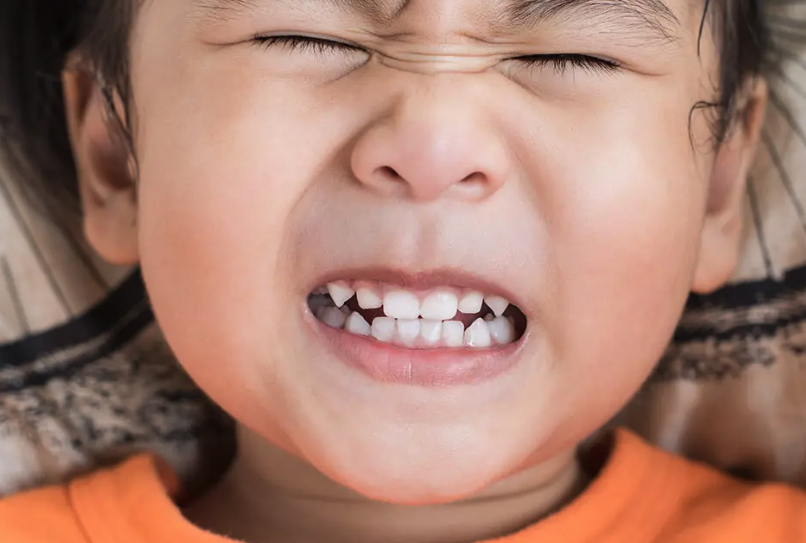
Why do kids grind their teeth at night is one of the most common questions parents ask their pediatric dentist. If you have heard that unsettling scraping or squeaking sound coming from your child’s bedroom, you are not alone.
This condition is called sleep bruxism, and it affects anywhere from 13 to 49 percent of children at some point during childhood. While it can be alarming to discover, most cases are temporary and harmless.
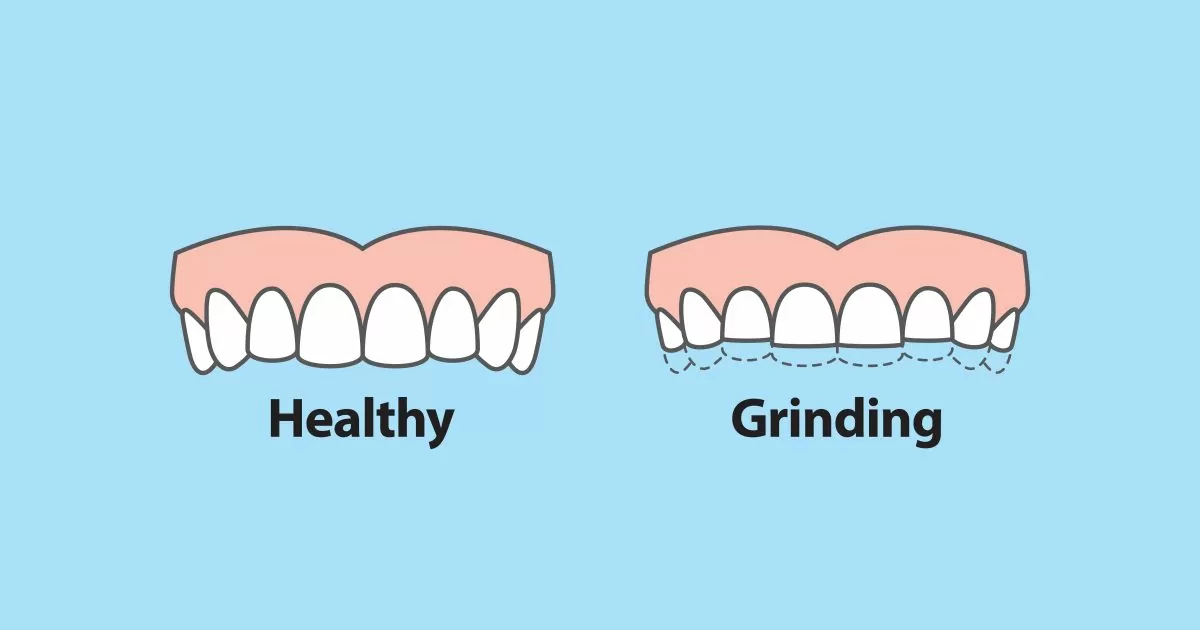
Teeth grinding, medically known as bruxism, is the repetitive and involuntary grinding, gnashing, or clenching of the teeth. It can happen during the day or at night, but sleep bruxism is the most commonly reported form in children.
Most children who grind their teeth at night are completely unaware it is happening. Parents and siblings sharing a room are often the first to notice the sound.
Sleep bruxism typically occurs during the lighter stages of the sleep cycle. It is not considered dangerous on its own, but frequent or intense grinding can lead to dental damage, jaw pain, and disrupted sleep over time.
Research estimates that between 15 and 49 percent of children experience bruxism at some point during childhood. Three out of every ten children have some form of teeth grinding or clenching.
Bruxism is more prevalent in children than adults, and it tends to peak between the ages of 5 and 7. Most children naturally grow out of the habit as their jaw develops and their permanent teeth come in fully.
More than 80 percent of people with sleep bruxism are unaware they do it. In children, this makes parental awareness especially critical for early detection and treatment.
| Statistic | Data |
|---|---|
| Estimated prevalence in children | 13% to 49% |
| Peak age range | 5 to 7 years old |
| Children unaware they grind | More than 80% |
| Children who outgrow it | Majority by teenage years |
| Adults with bruxism comparison | Less common than children |
Sleep bruxism is the most common type in children. It occurs during sleep, particularly in the lighter sleep stages, and produces the characteristic grinding noise that parents often hear through walls or open doors.
Children with sleep bruxism have no conscious control over the habit. Because it occurs during sleep, it is harder to monitor and address than daytime grinding.
Awake bruxism happens during waking hours and is often linked to concentration, stress, frustration, or habitual behaviour. It more commonly involves clenching rather than full grinding.
Children may clench their teeth while focusing on a task, feeling anxious, or reacting to emotional stress during the day. Awake bruxism is easier to catch but harder for young children to self-correct without guidance.
There is no single cause of bruxism in children. Research points to a combination of physical, psychological, and neurological factors working together to trigger the habit.
Understanding the root cause in your child’s specific case is the first step toward finding the right solution. Below are the most well-documented causes of nighttime teeth grinding in children.
Stress and emotional anxiety are among the most frequently cited causes of teeth grinding in children. Children experience stress just like adults, and their bodies can release that tension through unconscious jaw activity during sleep.
Common stress triggers in children include starting a new school, moving to a new home, family conflict, academic pressure, bullying, and changes in their daily routine. Even excitement about a positive event can trigger a stress response that leads to grinding.
Research suggests that children may unconsciously release daytime tension through nighttime teeth grinding. If your child seems anxious or worried before bedtime, stress is a likely contributing factor.
Malocclusion, or a misaligned bite, is another well-established cause of bruxism in children. When the upper and lower teeth do not fit together properly, the jaw muscles may compensate by grinding or clenching during sleep.
Overcrowded teeth, crossbites, overbites, and underbites can all create interference between the teeth that the jaw tries to correct unconsciously at night. A dentist can assess bite alignment during a routine check-up.
Orthodontic issues that are left untreated can make bruxism worse over time. Correcting the bite through orthodontic treatment sometimes resolves the grinding habit once the underlying physical cause is addressed.
Infants and toddlers often begin grinding as soon as their first teeth emerge. The unfamiliar sensation of new teeth and the pressure of teething can trigger the grinding reflex as a way to relieve discomfort.
As children grow and transition between baby teeth and permanent teeth, the changing bite and new sensations in the mouth can reactivate or worsen grinding. The most common period for this is between ages 5 and 7 when primary teeth are being lost.
Most children who grind during teething or dental transition phases grow out of it naturally once their permanent teeth are fully established. This is one reason why many dentists take a wait-and-see approach in young children.
There is a well-documented link between sleep bruxism in children and sleep-disordered breathing conditions such as sleep apnea, snoring, and restless sleep. Children who experience disrupted sleep are significantly more likely to grind their teeth.
Sleep apnea causes repeated pauses in breathing during sleep, which disrupt the normal sleep cycle. The body’s response to these micro-arousals can trigger jaw clenching and grinding as the child partially wakes to restore normal breathing.
If your child snores loudly, breathes through their mouth at night, or seems excessively tired during the day despite getting enough sleep time, it is worth discussing both sleep apnea and bruxism with their doctor or dentist.
Children with certain neurological conditions and developmental disorders are more likely to experience bruxism. Research consistently shows higher rates of teeth grinding in children with ADHD, cerebral palsy, Down syndrome, and autism spectrum disorder.
The relationship between the nervous system and jaw muscle control plays a significant role in bruxism. In children with neurological differences, the regulation of muscle activity during sleep may be less controlled, leading to more frequent grinding episodes.
Certain medications used to treat ADHD and other developmental conditions, particularly stimulant medications, have also been linked to increased bruxism as a side effect.
Bruxism has a strong genetic component. Children who have a parent or close family member with a history of teeth grinding are significantly more likely to develop the condition themselves.
Studies suggest that the tendency toward bruxism can be inherited. If you grind your teeth at night, there is a reasonable chance your child may too, regardless of other environmental or psychological factors.
Family history is an important piece of information to share with your child’s dentist. It helps create a more complete picture of the child’s risk profile and informs the approach to monitoring and treatment.
Allergies and nasal congestion can contribute to nighttime teeth grinding in children. When a child’s airway is partially blocked by swollen nasal passages, they may unconsciously compensate with changes in jaw positioning during sleep.
Enlarged adenoids and tonsils are common causes of airway obstruction in children and are closely linked to both snoring and bruxism. Addressing the airway issue sometimes eliminates or significantly reduces the grinding.
If your child has seasonal allergies, chronic congestion, or a history of frequent ear and throat infections, these physical factors should be discussed with a doctor in the context of their bruxism.
Some research suggests a link between nutritional deficiencies and bruxism in children. Low levels of magnesium, calcium, and certain B vitamins may affect muscle relaxation and jaw function during sleep.
Magnesium in particular plays a role in muscle and nerve function. A deficiency can lead to increased muscle tension, which may manifest as grinding during sleep. However, the evidence for nutrition as a direct cause of bruxism is still developing.
A balanced diet rich in leafy greens, nuts, dairy, and whole grains supports overall muscle health and sleep quality. If you suspect nutritional deficiencies, a paediatrician can recommend appropriate testing.
Physical discomfort, particularly earaches and ear infections, is a known trigger for bruxism in younger children. The proximity of the jaw joint to the ear means that ear pain can stimulate jaw activity during sleep.
Young children who cannot clearly communicate where they hurt may express physical discomfort through unconscious habits like teeth grinding. If your toddler suddenly starts grinding around the same time they seem uncomfortable or pulls at their ear, an ear infection may be the cause.
Once the underlying pain is treated, the grinding typically resolves on its own without any dental intervention required.
Knowing the warning signs helps parents identify bruxism early before it causes significant dental damage or discomfort.
| Symptom | What to Watch For |
|---|---|
| Audible grinding sounds | Scraping or squeaking noises during sleep |
| Jaw pain or stiffness | Child complains of sore jaw in the morning |
| Morning headaches | Frequent headaches upon waking |
| Tooth sensitivity | Pain or sensitivity when eating hot or cold foods |
| Tooth wear | Flattened, chipped, or worn-down tooth surfaces |
| Ear pain | Discomfort near the ear or jaw joint area |
| Sleep disruption | Restless sleep, frequent waking |
| Facial muscle soreness | Tenderness in cheeks or temples |
| Clicking jaw | Popping or clicking sound when opening the mouth |

In the short term, nighttime teeth grinding in children most commonly causes headaches and pain near the ear or jaw joint. Children may wake up with a sore face or complain of a tired jaw.
Tooth sensitivity is another early sign. When the enamel starts to wear, hot, cold, or sweet foods may cause sudden sharp pain. This is often the first symptom that prompts a dentist visit.
Sleep disruption is a significant short-term effect for both the child and anyone else in the room. The sounds of grinding can wake siblings, parents, and the child themselves during the night.
When bruxism is left untreated and severe, the long-term consequences can be more serious. Chronic grinding wears down tooth enamel, which cannot naturally regenerate once lost.
Severe enamel erosion can expose the inner layers of the tooth, leading to deep sensitivity, cavities, and in serious cases the need for crowns, caps, or other dental restorations. Baby teeth have softer enamel than permanent teeth, making them particularly vulnerable.
Persistent bruxism can also cause temporomandibular joint dysfunction, or TMJ disorder, which results in chronic jaw pain, limited jaw movement, and long-term facial muscle discomfort. Catching and managing bruxism early significantly reduces the risk of these complications.
| Severity Level | Potential Effects |
|---|---|
| Mild | Occasional soreness, minor enamel wear |
| Moderate | Tooth sensitivity, frequent headaches, jaw fatigue |
| Severe | Significant enamel loss, TMJ disorder, need for crowns or restorations |
Not every child who grinds their teeth needs urgent dental attention. However, certain signs should prompt a timely visit to a pediatric dentist.
You should schedule a dental check-up if the grinding has been going on for more than a few weeks without improvement. Visible damage to the teeth, frequent morning headaches, jaw soreness, or tooth sensitivity are all reasons to seek professional evaluation sooner rather than later.
If your child also snores, seems excessively tired during the day, or shows signs of sleep apnea alongside the grinding, bring this to the attention of both their dentist and their primary care doctor.
A pediatric dentist diagnoses bruxism by examining the teeth for signs of unusual wear, chipping, and enamel erosion. They may spray air and water on the teeth to check for unusual sensitivity.
The dentist will also ask about the child’s symptoms, sleep habits, stress levels, and family history of grinding. Parent reports of nighttime grinding sounds are a critical part of the diagnostic process since the child is asleep when it occurs.
In rare or complex cases, a dentist may refer the child for polysomnography, which is an overnight sleep study that can detect sleep bruxism and other sleep disorders simultaneously.
For many young children, the most appropriate initial response is reassurance combined with active monitoring. Many cases of childhood bruxism resolve on their own as the child grows and their permanent teeth develop.
A pediatric dentist will typically recommend a watch-and-wait approach for mild cases, particularly in children under age 7. Regular dental check-ups allow the dentist to monitor tooth wear and catch any escalation early.
For moderate to severe cases, a dentist may prescribe a custom-fitted night guard. The guard is a retainer-like plastic device that fits over either the top or bottom teeth and cushions them from the force of grinding.
Night guards do not stop the grinding itself but prevent dental damage from occurring during grinding episodes. They are similar to the mouthguards athletes wear but are specifically designed for sleep.
Custom-fitted night guards from a dentist are preferred over store-bought versions because they are designed to fit the specific shape of your child’s growing mouth and do not interfere with proper dental development.
When stress or anxiety is identified as a contributing cause, addressing the emotional root of the issue is one of the most effective long-term strategies. Talking to your child about what is bothering them, maintaining calm bedtime routines, and reducing sources of pressure before sleep can make a meaningful difference.
For children with significant anxiety, working with a school counsellor, child psychologist, or therapist may be beneficial. Cognitive behavioural techniques designed for children can help them develop healthier ways to process and release stress.
Better sleep quality often reduces the frequency of grinding episodes. Establishing a consistent, calming bedtime routine helps the child’s nervous system wind down before sleep.
Avoiding screen time, sugar, and caffeine in the hours before bed is recommended. A warm bath, gentle stretching, reading, or quiet activities help prepare the body and mind for deeper, more restful sleep.
Good sleep hygiene benefits both bruxism management and the child’s overall physical and emotional health. Many parents notice an improvement in grinding within a few weeks of improving evening routines.
Ensuring your child has adequate magnesium and calcium through a balanced diet supports muscle relaxation and healthy jaw function. Foods like leafy greens, bananas, nuts, dairy products, and whole grains are all good sources.
If your child is a picky eater or shows signs of nutritional gaps, speak to a paediatrician about whether supplementation is appropriate. Never introduce supplements for children without professional guidance.
Cutting down on processed foods and sugary snacks in the evening also supports more stable blood sugar, which contributes to calmer sleep and reduced muscle tension overnight.
When bruxism is linked to an underlying condition such as sleep apnea, allergies, or an ear infection, treating that condition is the most direct route to resolving the grinding.
Enlarged tonsils or adenoids causing airway obstruction may need evaluation by an ear, nose, and throat specialist. Treating nasal allergies with appropriate medication or environmental changes can reduce congestion-related grinding.
If the child’s bruxism is a side effect of medication, a doctor may discuss adjusting the dosage or exploring alternative treatments. Never change a child’s medication without medical supervision.
When bite misalignment is the identified cause of bruxism, orthodontic treatment may be recommended to correct the underlying dental structure. Properly aligned teeth reduce the physical interference that triggers compensatory grinding.
A pediatric orthodontist can assess the bite and recommend a treatment plan appropriate for the child’s age and dental development stage. In some cases, early orthodontic intervention prevents bruxism from worsening during the period of mixed dentition.
Orthodontic devices may also be used alongside a night guard in cases where both bite correction and immediate tooth protection are needed simultaneously.
Parents can take several practical steps at home to support their child’s dental health and reduce grinding without requiring immediate professional intervention.
A warm bath before bedtime helps relax the jaw and facial muscles after a stressful day. Adding a few drops of chamomile essential oil to the bathwater can further promote relaxation and sleep readiness.
Gentle face and jaw massage before sleep loosens tight muscles and reduces tension that might otherwise manifest as grinding during the night. Make it a part of the evening routine so it becomes something the child looks forward to.
Encourage quiet, low-stimulation activities in the final hour before bed. Turn off screens, lower lighting, and create a calm, predictable environment that signals to the child’s body that it is time to wind down and sleep.
| Age Group | Common Cause | Usual Outcome |
|---|---|---|
| Infants and Toddlers | Teething discomfort | Usually resolves as teeth settle |
| Ages 3 to 5 | Dental development, stress | Often self-resolving |
| Ages 5 to 7 | Mixed dentition, peak bruxism age | May need monitoring |
| Ages 8 to 11 | Stress, sleep disorders, misalignment | May need night guard if severe |
| Ages 12 and older | Stress, bite issues, ongoing habit | Closer to adult bruxism management |
Start by observing your child’s sleep for a few nights to document the frequency and intensity of the grinding. Note whether it seems to happen on particular nights, such as before school or after stressful events.
Schedule a routine dental check-up and mention the grinding specifically so the dentist examines the teeth for wear. Bring notes about your observations, including when it started, how often it occurs, and any other symptoms your child has mentioned.
Review your child’s daily routine and identify any stress triggers. Small changes to their schedule, bedtime routine, and emotional support can produce noticeable improvements in bruxism within just a few weeks.
Kids grind their teeth at night due to a combination of stress, misaligned teeth, teething, sleep disorders, genetics, and airway issues. Sleep bruxism is the body’s involuntary response to these physical and psychological triggers during sleep.
Mild grinding is usually not dangerous and often resolves on its own. However, frequent or intense grinding can damage tooth enamel, cause jaw pain, headaches, and disrupt sleep quality over time.
Most children naturally stop grinding their teeth by their teenage years. Many outgrow the habit around ages 9 to 10 once their permanent teeth are fully established and bite alignment improves.
Yes, if grinding is frequent, prolonged, or accompanied by jaw pain, headaches, or tooth sensitivity. A pediatric dentist can assess damage and recommend appropriate treatment or a monitoring plan.
Yes. Stress and anxiety are among the most common causes of bruxism in children. Changes at school, home, or social environment can all trigger nighttime grinding as the body releases tension during sleep.
Not always. Mild cases are monitored without intervention. A custom night guard is recommended for moderate to severe cases where grinding is causing significant enamel wear, jaw pain, or sleep disruption.
Yes, baby teeth have softer enamel than permanent teeth and are more vulnerable to wear. Severe grinding can flatten the surfaces of baby teeth and in rare cases may require crowns or caps to restore function.
Yes, bruxism has a genetic component. Children with a parent or close family member who grinds their teeth are more likely to develop the condition. Family history is an important factor to share with your dentist.
Yes. Sleep apnea is closely linked to bruxism in children. When breathing is disrupted during sleep, the body may respond with jaw clenching and grinding. If your child snores heavily, both conditions should be evaluated together.
Warm baths before bed, gentle jaw massage, reducing screen time and sugar before sleep, and calming bedtime routines are all effective at reducing grinding frequency. Ensuring a balanced diet with adequate magnesium and calcium also supports muscle relaxation.
Why do kids grind their teeth at night is a question with many possible answers, and the right approach for your child depends on identifying the specific cause driving their bruxism. From stress and anxiety to misaligned teeth, teething, sleep disorders, genetics, and airway issues, there are numerous factors that can trigger sleep bruxism in children of all ages. The reassuring truth is that most children outgrow teeth grinding naturally, particularly when it begins in the toddler and early childhood years. However, when grinding is frequent, intense, or causing visible tooth damage or pain, professional evaluation by a pediatric dentist is essential. With the right combination of monitoring, stress management, improved sleep habits, and when needed, dental treatment such as a custom night guard, bruxism can be effectively managed to protect your child’s dental health and ensure restful sleep for the whole family.