

Why Do People Throw Rice at Weddings is one of the most commonly asked questions about wedding customs, especially among couples planning their own ceremony.
This small, simple gesture carries centuries of symbolism tied to fertility, prosperity, and good fortune. Many guests toss rice without ever questioning where the tradition actually began.
| Detail | Information |
|---|---|
| Origin | Ancient Rome (originally wheat and oats) |
| Main Symbolism | Fertility, prosperity, abundance |
| When Rice Replaced Wheat | Middle Ages onward |
| Popularized In The West | 19th century |
| Common Myth | Rice harms birds (proven false) |
| Modern Alternatives | Confetti, petals, bubbles, lavender |
| Still Practiced Today | Yes, though many venues restrict it |

Throwing rice at a wedding is a symbolic gesture meant to bless the newlywed couple with fertility, prosperity, and good fortune.
It is traditionally done as the couple exits the ceremony, with guests showering them in a joyful, celebratory moment.
The act represents collective good wishes from the community for the couple’s future together.
The practice of throwing grain at newlyweds predates Christianity and is believed to trace back to ancient Roman and Celtic customs.
Long before rice was used, communities tossed whatever grain was locally available as a blessing for the couple’s future household.
This early version of the tradition was deeply tied to agricultural societies, where grain represented survival and continued life.
In Ancient Rome, wedding guests commonly threw wheat or oats over newlyweds as a symbolic wish for fertility and abundance.
Grain was closely associated with sustenance, so showering a couple with it was seen as wishing them a prosperous, well-fed household.
Sweets made with honey, fruit, and wheat were also sometimes crumbled over the bride as an additional sign of abundance.
As trade routes expanded and rice became more accessible across Europe, it gradually replaced wheat and oats in wedding rituals.
Rice was initially a luxury item, but its growing availability made it a practical substitute for older grain-throwing customs.
By the time rice became common in many regions, its symbolism aligned naturally with the older European fertility traditions.
Rice has long been associated with fertility because of how it grows in abundance, with each plant producing many grains.
This natural abundance made rice a fitting symbol for couples hoping for a large, prosperous family.
In several cultures, rice was specifically linked to wishes for children and a fruitful marriage.
Beyond fertility, rice also represented general prosperity, since having full grain stores historically meant a family was financially secure.
Showering a couple with rice was essentially a wish for continued abundance throughout their married life.
This dual symbolism of fertility and prosperity is part of why the tradition spread so widely across different cultures.
Some historical accounts suggest rice throwing was also meant to ward off evil spirits during the vulnerable transition into married life.
This belief tied the tradition to broader folk customs where loud noises, grains, or symbolic objects were used for protection.
While this superstition is less emphasized today, it adds another layer to the tradition’s deep historical roots.
Rice usage in European wedding ceremonies became more common during the Middle Ages as trade made the grain more widely available.
During this period, wedding customs in general became more elaborate, including the early development of tiered wedding cakes.
Rice throwing fit naturally into this growing culture of symbolic wedding rituals.
As European customs traveled and blended with other regional practices, rice throwing became a recognizable part of Western wedding tradition.
The symbolism of fertility and prosperity translated easily across different cultures, helping the custom spread further over time.
By combining older fertility rituals with newer grain availability, rice throwing became a lasting wedding custom.
By the 19th century, throwing rice at weddings had become a widespread and beloved tradition across much of Western culture.
It was seen as a charming way to honor older fertility symbols while celebrating the couple in a lighthearted, festive manner.
This period helped cement rice throwing as one of the most recognizable wedding exit traditions.
| Country/Region | Tradition Used Instead of or Alongside Rice |
|---|---|
| Italy | Candy and sugared almonds for sweetness |
| Morocco | Figs, dates, and raisins for a fruitful union |
| Moldova | Wheat instead of rice |
| Czech Republic | Peas thrown near the bride’s feet |
| India | Rice thrown backward by the bride during farewell rituals |
| Japan | Sake toasting rather than grain throwing |
In many Indian weddings, the bride performs a ritual of throwing rice backward over her shoulder as she leaves her family home.
This act symbolizes the bride wishing prosperity upon her family as she begins a new chapter in her married life.
It is a distinct variation of rice symbolism, focused more on blessing the family being left behind than the couple themselves.
A long-standing rumor claims that birds eating thrown rice can become sick or even die from internal complications.
This myth became widespread enough that a U.S. state legislator once introduced a bill to ban rice throwing at weddings.
Organizations including the USA Rice Federation publicly addressed the rumor, confirming there is no credible evidence that rice harms birds.
Fact-checking sites have also repeatedly debunked this claim, noting birds regularly eat rice and grains in the wild without harm.
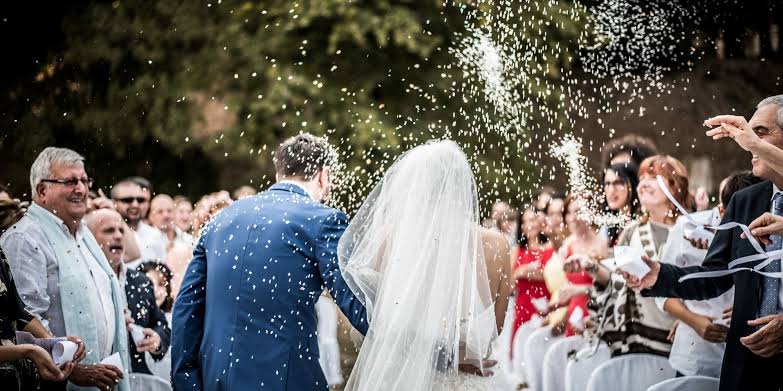
Despite the bird myth being debunked, many wedding venues still restrict rice throwing for practical reasons.
Rice can create a slipping hazard on hard floors, making cleanup and guest safety a genuine concern for venues.
Some locations simply prefer alternatives that are easier to clean up after the ceremony ends.
Couples today often choose alternatives such as confetti, flower petals, bubbles, or lavender for their wedding exit.
These options offer a similar visual and celebratory effect while reducing cleanup difficulty and safety concerns.
Sparklers and ribbon wands have also become popular choices for couples wanting a more dramatic send-off.
Despite modern alternatives, some couples still choose rice specifically because of its deep historical and symbolic meaning.
For couples interested in tradition, rice throwing offers a direct connection to centuries-old wedding customs.
Many venues that allow rice now offer designated outdoor areas specifically for this purpose.
Originally, rice throwing was tied closely to genuine superstition, including fertility magic and protection from evil spirits.
Over time, the practice shifted from being taken literally to being viewed mainly as a symbolic, celebratory gesture.
Today, most couples and guests understand rice throwing as a fun tradition rather than a literal spiritual practice.
The custom of throwing rice predates Christianity, with roots tracing back to both Roman and Celtic practices.
In some historical accounts, thrown grain was eaten afterward as a gesture of blessing toward the bride.
The rice and bird myth became so popular that it sparked formal statements from agricultural organizations to correct public misunderstanding.
Italy’s sugared almond tradition and Morocco’s dried fruit tradition both serve the same symbolic purpose as rice in other cultures.
Even with modern alternatives available, rice throwing remains a recognizable symbol of celebration at weddings around the world.
Its long history connects modern couples to centuries of shared human customs around marriage, fertility, and prosperity.
For many families, continuing the tradition is less about superstition and more about honoring cultural heritage.
Even within Western culture, rice throwing has never been completely uniform across every country or region.
In parts of the United Kingdom, confetti made from paper or petals has long competed with rice as the preferred send-off tradition.
In Greece, guests have historically combined grain-throwing customs with other symbolic gestures involving sugared almonds, similar to Italian practices.
These regional differences show how a single core symbol, grain or rice, was adapted differently depending on local customs and available resources.
Within India itself, rice-related customs differ depending on religious and regional traditions, rather than following one single national practice.
In many Hindu weddings, rice is used in multiple rituals beyond the farewell toss, including ceremonies performed earlier during the wedding itself.
In some Christian Indian wedding traditions, Western-style rice throwing at the ceremony exit has also been adopted alongside older regional customs.
This blending shows how global and local traditions often merge rather than fully replacing one another.
References to grain-throwing rituals appear in various historical and literary texts describing European wedding customs over the centuries.
Some historians point to these references as evidence that the symbolism of fertility and abundance remained consistent even as the specific grain changed.
This consistency across centuries is part of why historians consider rice throwing one of the more well-documented wedding traditions.

Sociologists often note that wedding traditions endure because they create a shared sense of ritual and continuity across generations.
Rice throwing offers guests an active role in the celebration, rather than simply observing the couple from a distance.
This participatory element is part of why the tradition has remained popular even as its original superstitious meaning has faded.
Guests planning to throw rice should always check with the couple or venue beforehand, since some locations strictly prohibit it.
It is considered good etiquette to aim gently and avoid throwing rice directly at the couple’s faces during the toss.
Bringing small, pre-packaged rice favors can also make the moment feel more organized and intentional during the send-off.
Couples interested in tradition should confirm their venue’s policy early in the planning process, since rules vary significantly between locations.
If rice is not allowed, choosing a thematically similar alternative, such as petals, can preserve the spirit of the tradition.
Many couples also choose to include a brief explanation card or note for guests about the meaning behind the rice toss.
As sustainability becomes a bigger priority for many couples, biodegradable rice and natural grain options have grown in popularity.
These options allow couples to honor the traditional symbolism of rice while reducing environmental impact compared to synthetic confetti.
Some venues that previously banned rice entirely have started allowing biodegradable versions as a compromise solution.
| Exit Option | Symbolism | Common Concern |
|---|---|---|
| Rice | Fertility, prosperity | Cleanup, slipping hazard |
| Confetti | Celebration, joy | Non-biodegradable versions |
| Flower petals | Romance, beauty | Seasonal availability |
| Bubbles | Lightness, fun | Can stain clothing slightly |
| Sparklers | Drama, excitement | Fire safety regulations |
Many people assume rice throwing has always been the original wedding custom, when in fact wheat and oats came first historically, long before rice was widely traded into Europe.
Another common misconception is that the tradition is purely decorative, when its original purpose was deeply tied to fertility and protection beliefs rather than aesthetics alone.
Some also assume all cultures throw rice the same way, but as shown earlier, the specific grain and method vary significantly worldwide depending on local resources and customs.
Wedding photographers often favor the rice toss moment because it creates dynamic, joyful images as guests celebrate the couple’s exit together.
Planners frequently coordinate timing carefully so that the toss happens at a clear, well-lit moment for the best photographic results possible.
Some planners now suggest combining a small rice toss with a larger confetti moment to balance tradition with visual impact for photos and video.
Rituals like the rice toss give guests a meaningful, hands-on way to participate in celebrating the couple rather than just watching.
Psychologists studying ritual behavior note that shared physical actions, like tossing rice together, can strengthen a sense of communal celebration.
This shared participation is part of why couples often describe the moment as one of the most memorable parts of their wedding day.
Ultimately, whether a couple chooses rice, confetti, or another alternative depends on personal preference, venue rules, and practical considerations.
Understanding the history behind rice throwing can help couples decide if the tradition feels meaningful enough to include in their own celebration.
Regardless of the specific choice, the underlying intention remains the same: celebrating the couple’s transition into married life with joy and good wishes.
Even in an era of minimalist weddings, symbolic gestures like the rice toss still appeal to couples who value connection to the past.
The act of being showered with good wishes, in whatever form, taps into a universal human desire for blessing and celebration at major life transitions.
This is likely why, despite practical objections, some version of a “shower” moment, whether rice, petals, or confetti, remains nearly universal at weddings today.
Before deciding on a rice toss or any alternative, couples should weigh personal meaning against practical factors like venue rules and guest comfort.
It can help to ask the venue directly about their policy rather than assuming rice is automatically allowed or banned.
Many couples find that even a small, symbolic nod to the tradition, such as a single jar of rice kept as a keepsake, satisfies their desire to honor the custom without a full toss.
Ultimately, the rice toss is one small detail in a much larger day, and there is no wrong choice as long as it reflects what feels meaningful to the couple themselves.
Looking back at its long journey from ancient grain fields to modern wedding aisles, this little tradition has proven remarkably adaptable across centuries and cultures.
People throw rice to symbolically wish the couple fertility, prosperity, and good fortune as they begin married life.
It originated in Ancient Rome, where guests originally threw wheat and oats instead of rice.
No, this is a debunked myth that has been publicly addressed by agricultural organizations and fact-checking sites.
Rice symbolizes fertility, abundance, and prosperity due to its association with grain and continued life.
Many venues restrict it due to slipping hazards and cleanup difficulties rather than the debunked bird myth.
Romans originally threw wheat and oats as a symbol of fertility and abundance.
Common alternatives include confetti, flower petals, bubbles, lavender, and sparklers.
No, some cultures use alternatives like candy in Italy, dried fruit in Morocco, or wheat in Moldova.
Yes, though many couples now choose modern alternatives for practical or aesthetic reasons.
In many Indian weddings, the bride throws rice backward over her shoulder to bless her family as she departs.
Throwing rice at weddings is a tradition rooted in centuries of symbolism tied to fertility, prosperity, and collective good wishes for newlyweds.
From its origins in Ancient Rome, where wheat and oats were used instead, to its widespread adoption across Western culture by the 19th century, this small gesture carries a surprisingly rich history.
While myths about rice harming birds have long been debunked, practical concerns like safety and cleanup have led many couples to choose modern alternatives such as confetti or petals.
Different cultures, from Italy’s sugared almonds to India’s farewell rice toss, have shaped their own versions of this same underlying wish for abundance.
Still, for couples drawn to tradition, rice throwing remains a meaningful way to connect their celebration to centuries of shared human customs.
Whether continued in its original form or replaced with something new, the spirit behind the gesture remains the same: a heartfelt wish for happiness, abundance, and a flourishing life together.