
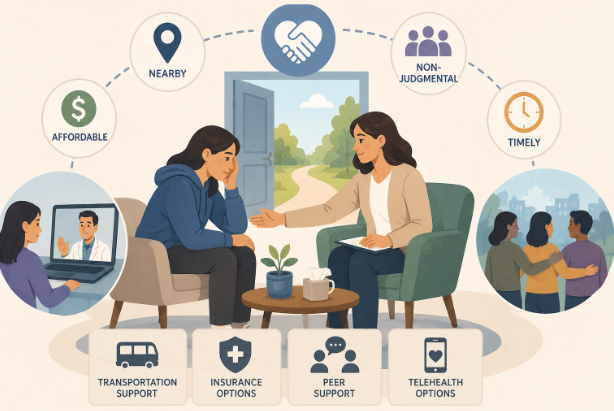
Substance use challenges rarely unfold in isolation. They are often shaped by a mix of personal circumstances, environmental stressors, mental health struggles, and the availability—or lack—of timely support. In this context, accessible care becomes more than just a healthcare ideal; it becomes a determining factor in whether someone finds a path toward stability or continues to cycle through periods of crisis.
When care is easy to reach, non-judgmental, and responsive to real-life barriers, it creates a meaningful difference in how people engage with recovery support systems. On the other hand, when treatment feels distant—geographically, financially, or emotionally—many individuals delay or avoid seeking help altogether. This gap between need and access remains one of the most persistent challenges in addressing substance use at a community level.
Accessible care goes beyond having treatment facilities available. It refers to how easily individuals can recognize, reach, afford, and remain engaged in support services when they need them most. Accessibility includes several layers:
Each of these factors can either open the door to recovery support or quietly keep it closed.
For example, someone may recognize the need for help but delay reaching out because services are too far away or too expensive. Others may hesitate due to fear of judgment or previous negative experiences with healthcare systems. These barriers, while not always visible, significantly shape outcomes.
One of the strongest arguments for improving access to care is the impact of early intervention. Substance use patterns often develop gradually, and early support can prevent escalation into more severe dependency or related health complications.
When individuals can easily connect with support services, they are more likely to seek help during the early stages of concern rather than waiting for a crisis. This can reduce the likelihood of emergency situations, hospitalization, or legal issues. Early intervention also tends to support more flexible and less intensive forms of care, which may feel more manageable for individuals balancing work, family, or other responsibilities.
In many cases, communities that prioritize accessible care see improved long-term recovery outcomes because people are not forced to wait until conditions become severe before receiving attention.
Despite growing awareness, several barriers continue to limit access to effective support:
Geographic limitations remain a significant issue, particularly in rural or underserved areas where services may be limited or concentrated in distant urban centers. Even when care exists, transportation challenges can make consistent attendance difficult.
Financial strain is another major factor. Without adequate insurance coverage or affordable care options, individuals may postpone treatment due to cost concerns. This delay can worsen both physical and psychological conditions over time.
Stigma and fear of judgment also play a critical role. Many individuals hesitate to seek help because they worry about being labeled or misunderstood. This emotional barrier can be just as limiting as financial or logistical ones.
System complexity adds another layer. Complicated intake processes, long waiting lists, and unclear pathways to care can discourage people who are already in a vulnerable state.
Addressing these barriers requires more than expanding services—it requires rethinking how care is structured and delivered.
Recovery is not a single event; it is a continuous process that often requires multiple forms of support over time. Accessible care helps ensure that individuals can stay connected to resources throughout this journey.
When support systems are easy to navigate, people are more likely to maintain engagement, attend follow-ups, and seek help during setbacks. Consistency matters. Even small disruptions in access can lead to gaps in care, which may increase the risk of relapse or disengagement.
There is also a psychological component. When individuals feel that help is within reach, it can foster a sense of hope and agency. Conversely, difficulty accessing care may reinforce feelings of isolation or resignation.
In many discussions about recovery systems, including contexts like Drug and Alcohol Rehab in MA, accessibility is often recognized as a foundational factor that influences whether individuals can realistically engage with available support structures.
Community involvement plays a key role in improving accessibility. Local support networks, outreach programs, and public health initiatives can bridge the gap between formal treatment systems and individuals who are not yet ready or able to enter structured programs.
Community-based care can take many forms, such as peer support groups, mobile health services, or integrated mental health resources within primary care settings. These approaches help normalize help-seeking behavior and reduce the distance—both literal and psychological—between individuals and support systems.
When care is embedded within the community, it becomes part of everyday life rather than something distant or difficult to reach.
In recent years, technology has also begun to reshape how people connect with care. Telehealth services, online counseling, and digital support tools have expanded options for those who might otherwise face barriers related to transportation, scheduling, or privacy concerns.
While digital tools are not a complete substitute for in-person care, they can serve as an important entry point or supplemental resource. For individuals who are hesitant to seek help face-to-face, virtual options can provide a less intimidating first step.
However, it is important to recognize that digital access itself can be uneven. Reliable internet, privacy at home, and digital literacy all influence how effectively these tools can be used.
Improving accessibility requires a shift in how care systems are designed and evaluated. It is not enough for services to exist; they must be reachable and usable by the people who need them most.
This includes simplifying intake processes, expanding affordable care options, reducing stigma within healthcare settings, and integrating services across mental health and substance use support systems.
It also involves listening to lived experiences. Individuals who have navigated substance use challenges often provide valuable insight into what makes care accessible—or inaccessible—in real-world settings.
Accessible care is not just a structural feature of healthcare systems; it is a central factor in shaping recovery journeys. When support is easy to reach, compassionate, and responsive to real-life barriers, individuals are more likely to seek help early, remain engaged, and experience sustained progress.
Substance use challenges are complex, but access to care should not be. Strengthening accessibility helps ensure that support is available not only in theory, but in practice—when and where it is needed most.