
Why are veterans important? Because almost every freedom Americans use every day, from voting to speaking freely, traces back to someone who once wore a uniform and chose to serve. In 2026, around 17 million living veterans still shape this country long after they hang up that uniform.
They influence our economy, our communities, and how the next generation learns duty and sacrifice.
A veteran is anyone who served in the armed forces and was discharged under conditions other than dishonorable. That includes someone who served two years stateside and someone who completed three combat deployments overseas.
Both wore the uniform. Both took the same oath. Both count.
Veterans come from every branch, including the Army, Navy, Air Force, Marine Corps, Coast Guard, and the newer Space Force. They range from 19-year-old recent service members to 100-year-old World War II veterans.
This diversity is part of why answering “why are veterans important” requires looking at more than combat stories alone. It means looking at the full range of service, sacrifice, and what comes after.
The veteran population also spans several distinct eras. Post-9/11 veterans now make up the largest single group, at roughly 28% of all living veterans. Korean War veterans make up about 4%, and fewer than 1% of living veterans today served in World War II.
Each era brought a different kind of service, from massive troop mobilizations in the 1940s to smaller, highly specialized deployments today. Understanding that range matters when we ask why veterans are important, because the answer looks slightly different for every generation.
Table: Veteran Population Snapshot (2026)
| Metric | 2026 Data |
|---|---|
| Living U.S. veterans | About 17 million |
| Share of U.S. adult population | Roughly 6% |
| Post-9/11 veterans | 28.1% of all veterans |
| Veterans transitioning to civilian life yearly | About 200,000 |
| VA budget request, FY2026 | $441.2 billion |
| States with the largest veteran populations | Texas, California, Florida |
These numbers show veterans are not a small, fading group. They remain a meaningful share of the population and a direct line item in national budgeting and policy decisions.
The tradition of veteran service goes back to the founding of the country itself. Soldiers in the Continental Army gave up farms, trades, and families to fight for independence from Great Britain.
The Civil War created the first large-scale need for organized veteran care, as wounded soldiers from both the Union and Confederate sides returned home needing support. This era also gave rise to early veteran organizations like the Grand Army of the Republic.
World War I introduced Armistice Day in 1919, which later became Veterans Day. World War II then changed everything, with about 16 million Americans serving and the 1944 GI Bill reshaping higher education, homeownership, and the American middle class for decades.
Vietnam veterans came home to a far more divided country, which led to lasting changes in how the nation talks about PTSD, mental health, and the treatment of returning service members. The Gulf War and the post-9/11 conflicts in Iraq and Afghanistan then defined the modern veteran experience.
This history matters because it shows that the importance of veterans has never been a single, fixed idea. It has evolved with every generation, and it continues evolving today.
This is the core question, and it has several answers. Veterans matter because they protect the systems the rest of us rely on without ever thinking about them.
They matter because they bring skills, leadership, and resilience back into civilian life. They also matter because their presence in our communities reminds everyone what real service and sacrifice look like.
Below are the specific reasons veterans remain so important to the United States right now, supported by current 2026 data.
It helps to think of this importance in three layers: what veterans gave up, what they bring back, and what they continue to do for the country long after their service ends. Each section below speaks to one of those layers.
Every right written into the Constitution exists because someone was willing to defend it. Veterans are the people who answered that call, often before they fully understood the cost.
Free elections, free speech, and a free press all depend on a stable, protected nation. Veterans provided that stability and continue to provide it today.
This is the most basic answer to why veterans are important: without their service, the democratic systems Americans take for granted would not be guaranteed.
Even the peaceful transfer of power after every election depends on a military that answers to civilian leadership rather than the other way around. Veterans helped build and protect that norm, and it remains one of the clearest markers of a healthy democracy.
Combat is only part of the sacrifice. Veterans also give up years with their families, milestones at home, and a sense of normal life civilians rarely have to question.
Long deployments mean missed birthdays, graduations, and anniversaries. Many return home carrying physical injuries, invisible wounds, or both.
These sacrifices continue long after the uniform comes off. That is exactly why ongoing support for veterans matters as much as wartime gratitude.
Repeated deployment cycles add another layer most civilians never see. A service member might spend a year overseas, return home for a short reset period, then deploy again within months, which makes stable routines at home almost impossible to maintain.
Military spouses and children live through deployments, frequent moves, and the uncertainty of a loved one in harm’s way. Their sacrifice rarely gets named, but it is real and ongoing.
When we ask why veterans are important, we are also talking about the families who held households together during deployments and supported recovery afterward.
Programs that support military families, not just veterans themselves, are part of a complete answer to this question.
Military spouses also face their own career disruptions, since frequent relocations make it difficult to hold onto licenses, seniority, or steady employment. Recognizing that cost is part of fully understanding what military service actually requires from a household.
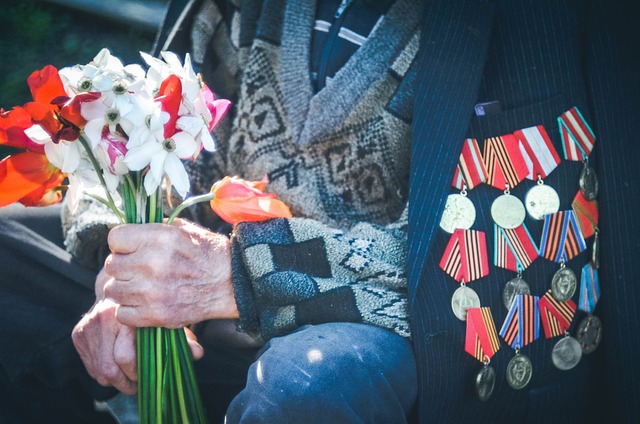
Military service builds leadership under pressure that is hard to replicate anywhere else. Veterans learn to make fast decisions, manage teams, and stay calm when things go wrong.
These skills transfer directly into law enforcement, healthcare, logistics, and emergency response. Many police and fire departments actively recruit veterans for exactly this reason.
Employers who hire veterans often report stronger discipline, reliability, and problem-solving across their teams.
Specific military roles also translate cleanly into civilian careers. Logistics specialists move into supply chain management, communications technicians move into cybersecurity, and combat medics often move directly into nursing or emergency medical services.
Veterans are not just former service members. They are entrepreneurs, employees, and taxpayers who continue contributing long after discharge.
Veteran-owned businesses are a measurable part of the U.S. economy, not just a talking point used every November.
Table: Veterans and the Economy (2026)
| Metric | Figure |
|---|---|
| Veteran-owned businesses | About 1.6 million |
| Annual revenue generated | Over $1 trillion |
| Americans employed by veteran-owned firms | More than 4 million |
| Veteran unemployment rate, March 2026 | 3.8% |
| Non-veteran unemployment rate, March 2026 | 4.1% |
These numbers show veterans contribute economic value long after their service ends, often building the kind of stable, community-rooted businesses that create local jobs.
Programs through the Small Business Administration, including fee reductions on veteran loans, have helped fuel this entrepreneurship. Many veterans also choose to hire other veterans, which extends the economic and cultural impact of their service well beyond their own company.
Young people learn what discipline and commitment look like by watching veterans in their own families and communities. A grandparent’s service story can shape a teenager’s sense of purpose for years.
Veterans who mentor youth, coach sports teams, or speak at schools pass on values that go beyond patriotism. They model what it means to keep a promise.
This mentorship effect is one of the quieter, longer-lasting reasons veterans matter to American culture.
Veteran-led youth programs, such as ROTC chapters and veteran-run scouting troops, give this mentorship a formal structure. Many participants say a veteran mentor was the first adult who held them to a clear standard and then helped them meet it.
Service rarely stops at discharge. Many veterans move directly into second careers as teachers, nurses, firefighters, and first responders.
Others volunteer with nonprofits, mentor younger veterans, or help organize community events like Memorial Day ceremonies. This continued service is a direct extension of values learned in the military.
It also explains why so many local leaders, coaches, and volunteers happen to be veterans.
Veteran service organizations like the American Legion and VFW chapters often anchor small towns, running everything from food drives to scholarship funds. Their consistent, year-round presence is part of what makes a community feel stable.
Veterans are living connections to events most Americans only read about in textbooks. A Vietnam veteran can describe history in a way no documentary fully captures.
As World War II and Korean War veterans pass away, the responsibility to record and honor their stories grows more urgent. Fewer than 1% of living veterans today served in World War II.
This makes preserving veteran history, through interviews, archives, and family conversations, an important part of why veterans remain culturally significant.
Oral history projects, like the Library of Congress Veterans History Project, now exist specifically to capture these firsthand accounts before they are lost. Once a veteran’s story goes untold, that specific piece of national memory is gone for good.
Many veterans transition from military leadership into civic leadership. They serve in Congress, run for local office, lead nonprofits, and sit on city councils across the country.
Their firsthand understanding of service, sacrifice, and risk often shapes more grounded policy decisions, especially on defense, healthcare, and veteran affairs.
This continued public service is one more reason veterans stay relevant well beyond their time in uniform.
Veterans currently serve in both chambers of Congress and in governor’s offices across multiple states, often citing their military service as the reason they first considered public office at all.
A strong veteran community supports military readiness in ways that go beyond active-duty numbers alone. Veterans serve in the National Guard and Reserves, train new recruits, and work in defense and intelligence roles.
Their experience also shapes smarter policy. Veterans in government and advocacy roles bring firsthand knowledge that influences decisions about both national defense and veteran care.
Veteran instructors also train the next generation of recruits, passing down hard-won lessons that no classroom manual can fully replace. This cycle of experienced veterans shaping newer service members is part of what keeps military readiness strong over time.
One of the clearest examples of why veterans matter to the country’s long-term growth is the GI Bill. Signed in 1944, it sent millions of returning veterans to college and trade schools at a time when higher education was out of reach for most working families.
That single policy helped build the modern American middle class, expanded homeownership through VA-backed loans, and changed expectations around what education could do for an ordinary family. Versions of the GI Bill still operate today, helping post-9/11 veterans pay for degrees, certifications, and housing while they study.
This is a case where supporting veterans directly strengthened the entire country’s economy and workforce, not just the individuals who served.
Understanding why veterans are important also means understanding what many still struggle with after service. Transitioning to civilian life is not automatic, even after decades of honorable service.
Mental health, employment, and housing remain the three biggest hurdles. The table below summarizes where things stand in 2026.
Conditions like PTSD, depression, and traumatic brain injury are common after deployment, and they do not disappear simply because someone is no longer in uniform. Combined with the stress of finding a job or a place to live, these challenges can compound quickly without the right support in place.
Table: Veteran Wellbeing & Support Needs (2026)
| Issue | Data Point |
|---|---|
| Veterans with a service-connected disability | About 4.9 million |
| Veterans experiencing homelessness (2024 count) | 32,882, about 5% of all homeless adults |
| Drop in veteran homelessness since 2009 | About 50% |
| Veterans receiving at least one VA benefit | Nearly half |
Progress has been real. Veteran homelessness has dropped by roughly half since 2009, but the work is far from finished. Each number in that table represents real people, not just statistics.
Asking why veterans are important naturally leads to a second question: what can we actually do about it? Support works best when it is specific and consistent, not just symbolic.
Veterans need fast, stigma-free access to mental health support, not just a hotline number. Community-based programs alongside VA care can close gaps for veterans living in rural areas.
Peer-support models, where veterans counsel other veterans, have also shown strong results. Shared experience often breaks down the hesitation many feel about seeking help in the first place.
Hiring a veteran should mean more than a job posting with a flag on it. Companies that offer mentorship, skills translation, and clear advancement paths see the strongest retention results.
Skills-translation programs that help veterans turn military job titles into civilian resume language make a measurable difference. Many qualified veterans get overlooked simply because hiring managers don’t recognize the civilian equivalent of their training.
Programs like HUD-VASH have already cut veteran homelessness significantly. Continued funding and faster housing placement keep that progress moving instead of stalling.
Local partnerships between VA medical centers and community housing organizations tend to move faster than large federal programs alone. Speed matters most in the weeks right after a veteran becomes housing-insecure.
Not every form of support requires policy change. Checking in on a veteran neighbor, supporting veteran-owned businesses, or simply listening without judgment all matter.
These small actions add up, especially for veterans who feel isolated after leaving a highly structured military life. Consistency tends to matter more than grand gestures, since trust usually builds slowly over repeated, ordinary moments of support.
Veterans protect the freedoms, stability, and democratic systems every American relies on daily. They also bring leadership, skills, and community service back into civilian life long after their time in uniform ends.
A veteran is anyone who served in the U.S. Armed Forces and was discharged under conditions other than dishonorable. This includes both combat veterans and those who served stateside or during peacetime.
There are roughly 17 million living veterans in the U.S. in 2026, making up about 6% of the adult population. Post-9/11 veterans now account for over a quarter of that total.
Mental health concerns like PTSD, finding stable employment, and housing security are the three most common challenges. Many also struggle simply adjusting to a less structured civilian routine.
Veteran-owned businesses generate over $1 trillion in annual revenue and employ millions of Americans. Veterans also have a lower unemployment rate than non-veterans as of early 2026.
Veterans Day honors everyone who has served in the military, living or deceased, in war or peacetime. It began as Armistice Day in 1919 and was renamed in 1954.
Veterans Day honors everyone who has served, while Memorial Day specifically honors service members who died during military service. One celebrates service; the other mourns sacrifice.
Hiring veterans, supporting veteran-owned businesses, and volunteering with veteran organizations all make a real difference. Even simple gestures, like checking in on a veteran neighbor, matter.
Their discipline, leadership, and commitment to something larger than themselves set an example many people admire. Veterans who mentor youth or coach teams pass these values directly to the next generation.
Veterans may qualify for healthcare, disability compensation, education benefits through the GI Bill, and home loan assistance. Eligibility depends on service history, discharge status, and specific VA program rules.
So, why are veterans important? Because the freedoms, safety, and stability most Americans never have to think about exist largely because veterans were willing to serve, sacrifice, and sometimes suffer for them. In 2026, roughly 17 million living veterans continue that impact, not through dramatic gestures, but through steady leadership, economic contribution, and quiet community service.
They run businesses, mentor teenagers, coach little league, and show up at city council meetings. They also carry real challenges, including PTSD, job transitions, and housing insecurity, that deserve more than a single day of recognition each November.
Real appreciation looks like consistent action: supporting veteran-owned businesses, hiring veterans intentionally, and pushing for better mental health and housing resources. Veterans gave years of their lives to protect a country; the least that country can do is keep showing up for them, every single day, not just on Veterans Day.