
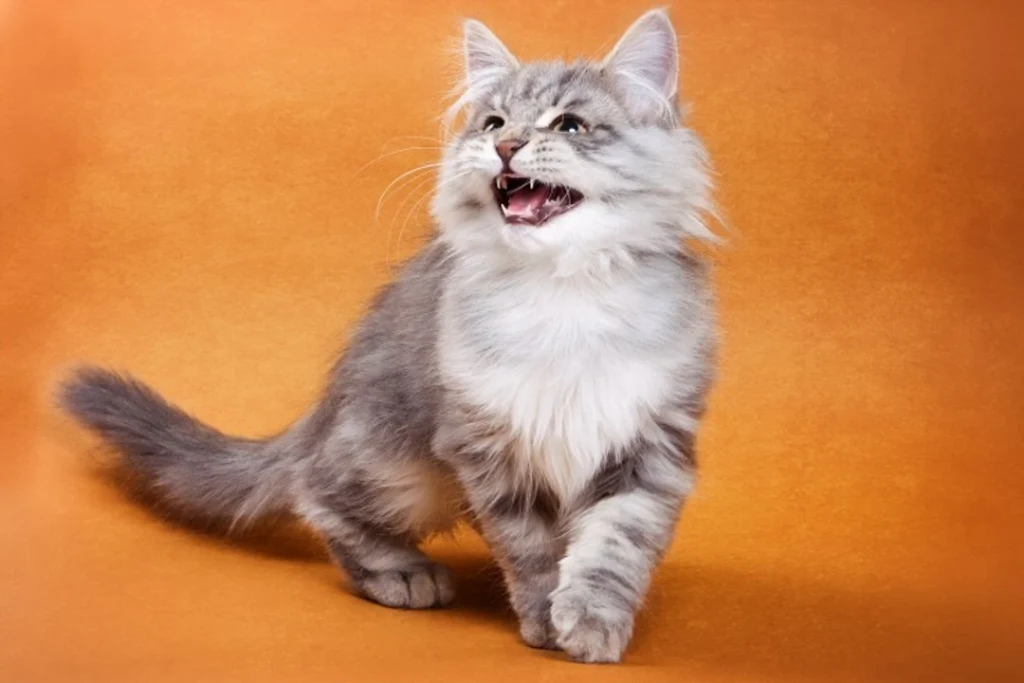
Why is my cat so vocal all of a sudden — and should you be worried? Cats are natural communicators, but when the meowing ramps up, it can leave even experienced pet owners scratching their heads.
Some cats are chatty by nature, while others only speak up when something is genuinely wrong. The key is knowing the difference.
You will also learn exactly which warning signs mean it is time to call your vet.
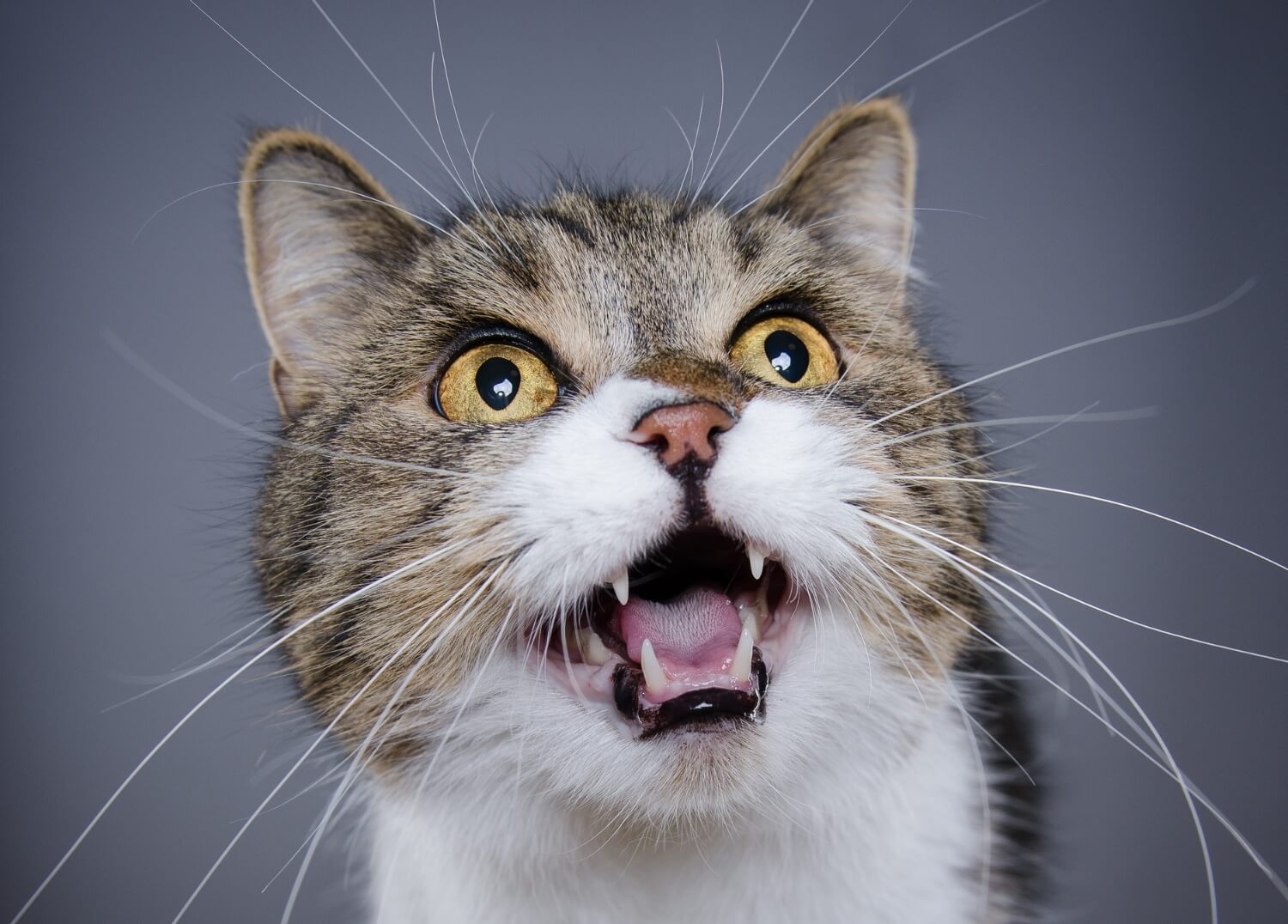
Cats have a unique vocal system. Unlike most animals, adult cats primarily meow to communicate with humans — not with other cats.
Kittens meow to get attention from their mothers. But as they grow, cats develop a personalized vocal language specifically for the humans they live with. They learn which sounds get which responses and adjust accordingly.
The key point: if your cat is vocal with you, they are actively trying to communicate something. Your job is to figure out what.
Every cat has a baseline. Some cats are naturally chatty and will narrate their entire day. Others barely make a sound unless it is feeding time.
Normal vocalization includes short greeting meows, food-request calls, and gentle chirps when watching birds. These are all healthy, everyday sounds.
A problem arises when the pattern changes — when a quiet cat suddenly becomes loud, or a vocal cat shifts to a more urgent or distressed tone. That shift matters more than the volume itself.
The number one reason cats become vocal is hunger. Food-motivated cats will meow persistently at feeding time and may try to lead you toward their bowl.
Some cats on calorie-restricted diets vocalize constantly out of frustration. If your cat meows mostly around mealtimes and stops once fed, hunger is almost certainly the cause.
Cats that are bored, lonely, or craving affection will meow to get your attention. Indoor cats especially can become vocal when they lack mental stimulation or playtime.
The more you respond to attention-seeking meows, the more your cat learns that vocalization works. It becomes a reinforced habit over time.
Many cats meow when their owner walks through the door. These vocalizations are typically short, upbeat, and stop quickly once the cat has acknowledged you.
This is one of the most endearing forms of feline communication. It is completely normal and usually no cause for concern.
Unspayed female cats in heat are notoriously vocal. The sounds they make — loud, drawn-out yowls — are specifically designed to attract male cats and can go on for hours.
Intact males also vocalize when they detect a female in heat nearby. Spaying or neutering your cat eliminates this type of excessive vocalization entirely.
Cats are creatures of habit. A new home, a new baby, a new pet, furniture being rearranged, or even a change in your schedule can trigger a stress response.
Stressed cats often meow more, sometimes combining it with hiding, reduced appetite, or over-grooming. Identifying and addressing the stressor is the most effective solution.
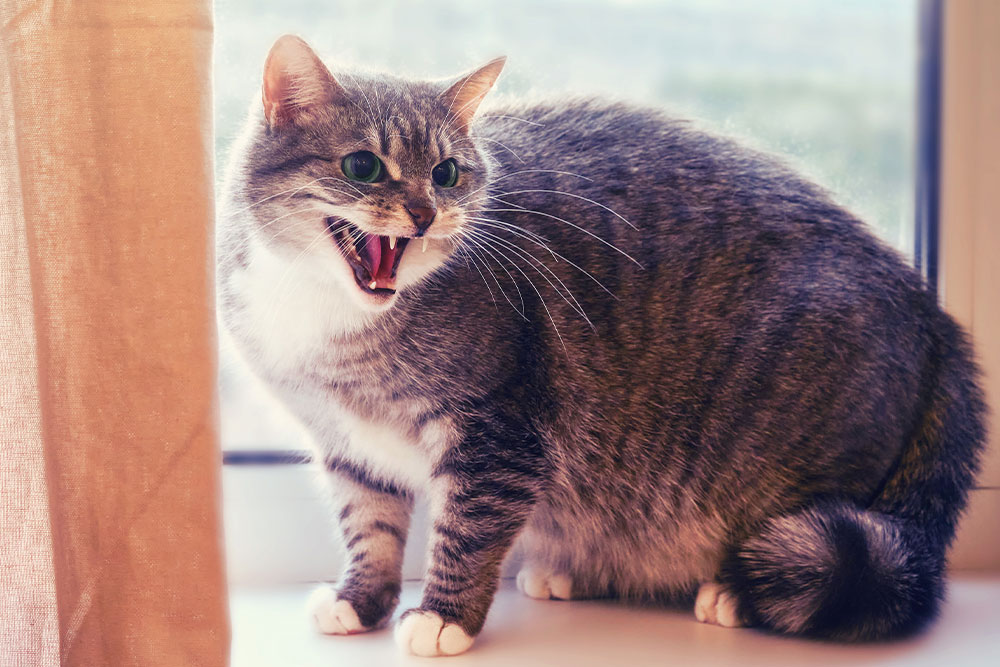
Cats may vocalize when they see another cat through a window, smell an unfamiliar animal, or feel that their space is being encroached upon. This includes hissing, yowling, and aggressive meowing.
Multi-cat households can trigger inter-cat tension that expresses itself through persistent vocalization. Proper introduction techniques and enough space reduce this significantly.
Cats are smart. If meowing has consistently produced results — food, attention, a door being opened — they will keep doing it. It becomes a trained habit.
This is not manipulation; it is simply your cat doing what works. The fix is to stop rewarding the behavior and instead respond only when the cat is quiet.
When vocalization is sudden, persistent, or accompanied by other symptoms, a medical cause must be ruled out first.
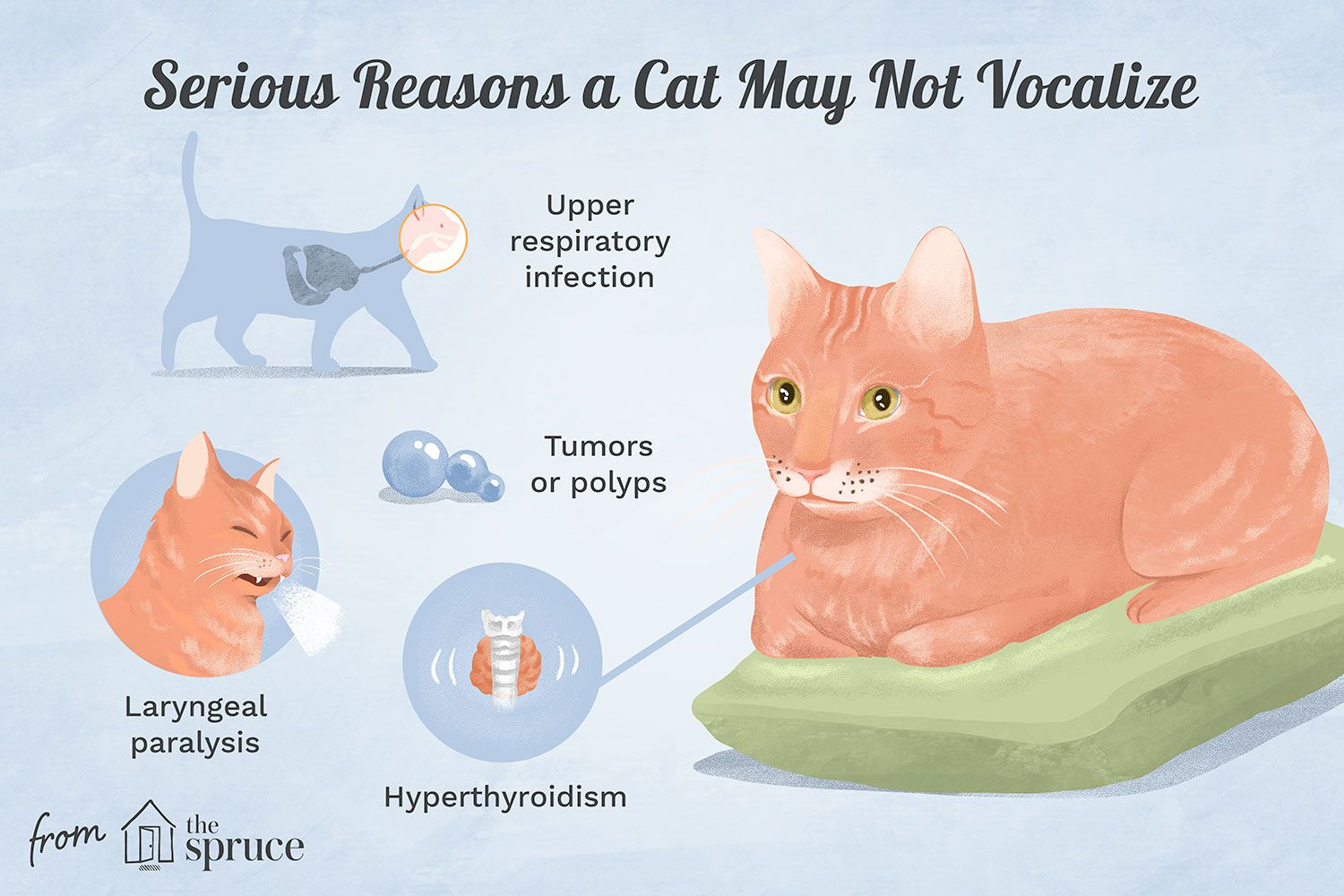
Hyperthyroidism is one of the most common medical causes of excessive vocalization in cats over 10 years old. The overactive thyroid gland accelerates metabolism, causing anxiety, restlessness, and frequent loud meowing — especially at night.
Other signs include weight loss despite a ravenous appetite, increased thirst, unkempt coat, and hyperactivity. A simple blood test confirms the diagnosis, and treatment with medication, diet, or radioactive iodine therapy is very effective.
Cats in pain meow differently — the sounds are often lower-pitched, more urgent, or distressed. Common painful conditions include dental disease, arthritis, urinary tract infections, and injuries.
Watch for hiding, limping, changes in posture, reluctance to jump, or hissing when touched. Any new vocalization paired with these signs warrants an immediate vet visit.
A male cat crying loudly in or near the litter box, especially if straining without producing urine, is a life-threatening emergency. A urethral blockage can be fatal within 24–48 hours if untreated.
Do not wait to see if it resolves. Get to an emergency vet immediately if your male cat is yowling in the litter box and not urinating.
Cognitive Dysfunction Syndrome (CDS) is the feline equivalent of dementia and is common in cats over 15 years old. Affected cats experience confusion, altered sleep cycles, disorientation, and aimless wandering — all of which produce distinctive nighttime yowling.
Research shows the main causes of vocalizing in CDS cats are disorientation and attention-seeking, followed by resource-seeking like food or water. Environmental stability and veterinary support significantly improve quality of life.
Chronic kidney disease is extremely common in older cats. As kidney function declines, cats may feel persistently unwell — nauseous, uncomfortable, and confused — leading to increased vocalization.
Signs alongside meowing include increased thirst and urination, weight loss, reduced appetite, and lethargy. Regular senior bloodwork catches kidney disease early when it is most manageable.
Hypertension in cats often develops secondary to kidney disease or hyperthyroidism. Elevated blood pressure causes neurological symptoms including anxiety, restlessness, and loud, unexplained meowing.
In severe cases, hypertension causes sudden blindness. If your senior cat starts yowling and seems disoriented or bumps into things, see a vet that same day.
Deaf cats lose the ability to regulate their own volume. They often meow loudly simply because they cannot hear themselves. Blind cats become disoriented, especially in the dark, and call out for reassurance.
Both hearing and vision loss are common in senior cats. A vet can assess sensory function and recommend environmental adaptations to help your cat feel more secure.
Dental disease affects the majority of cats over age three. An infected tooth, inflamed gums, or oral ulcers cause significant pain that cats express through meowing, drooling, pawing at the mouth, or avoiding hard food.
Dental pain is frequently underdiagnosed because cats hide discomfort well. A veterinary dental exam under anesthesia is the only reliable way to assess the mouth fully.
Some cats are simply born talkers. Breed plays a significant role in baseline vocalization level.
| Breed | Vocal Level | Notes |
|---|---|---|
| Siamese | Very High | Famous for loud, demanding meows |
| Bengal | High | Active and highly communicative |
| Oriental Shorthair | Very High | Close relative of Siamese, equally chatty |
| Burmese | High | Affectionate and persistently vocal |
| Sphynx | High | Social and attention-seeking |
| Tonkinese | High | Curious and vocal by nature |
| Japanese Bobtail | Moderate-High | Chirpy and expressive |
| Maine Coon | Moderate | Chirps and trills more than meows |
| Russian Blue | Low | Reserved and quiet |
| British Shorthair | Low | Calm and generally quiet |
If you have a naturally vocal breed, your cat’s chattiness may simply be genetic. The concern arises when even a vocal breed suddenly changes its pattern or tone.
Knowing when to relax and when to act is the most practical skill a cat owner can have.
| Normal Vocalization | Concerning Vocalization |
|---|---|
| Meows at mealtimes | Loud crying at night with no clear cause |
| Short greeting when you come home | Yowling in or near the litter box |
| Chirping at birds through the window | Persistent meowing with weight loss |
| Vocal after play session | Meowing combined with hiding or lethargy |
| Breed-typical chattiness | Sudden change in pitch, tone, or frequency |
| Asking to be let into a room | Disoriented crying, especially in older cats |
Nighttime vocalization deserves its own section because it is one of the most disruptive and misunderstood behaviors in cats.
In young cats, nighttime meowing is usually behavioral — boredom, hunger, or excess energy from being cooped up indoors all day. Scheduled play sessions before bed and puzzle feeders at night solve most cases.
In senior cats, nighttime yowling is almost always medical until proven otherwise. Hyperthyroidism, hypertension, cognitive dysfunction, pain, and sensory loss all cause nighttime crying. Never dismiss it as just a behavioral phase in an older cat.
A sudden increase in vocalization — especially in a cat that was previously quiet — is a significant signal.
It almost always means something has changed: the cat’s health, environment, or emotional state. Sudden vocalization in a senior cat is especially important and should prompt a vet visit within a few days, not weeks.
In younger cats, sudden meowing often has a clear trigger: a new pet, a move, a change in schedule, or simply being in heat. Once the trigger is identified, the behavior usually settles.
Moving is one of the biggest stressors a cat can experience. New smells, new sounds, and loss of familiar territory all combine to produce anxiety-driven meowing that can last days to weeks.
Give your cat time to adjust gradually. Set up a dedicated safe room with familiar items — their bed, litter box, and toys. Do not force exploration. Most cats settle into a new home within 2–4 weeks.
Feeding your cat at the same times each day reduces food-related meowing significantly. Automatic feeders are especially useful for early morning demand meowing.
Never reward persistent meowing by giving food — this reinforces the behavior immediately.
Interactive play sessions of 10–15 minutes twice a day reduce boredom-driven vocalization. Wand toys, laser pointers, and puzzle feeders keep cats mentally engaged.
Window perches where cats can watch birds and outdoor activity provide hours of passive stimulation and reduce restlessness.
If your cat is healthy and their needs are met, and they are still meowing for attention, the most effective solution is to not respond. Wait for a moment of quiet before giving attention or food.
This feels counterintuitive but works. Cats quickly learn that silence — not meowing — gets results.
Feliway plug-ins and sprays release synthetic cat pheromones that mimic the calming facial pheromones cats produce naturally. They are clinically shown to reduce anxiety-related behaviors including excessive vocalization.
These are especially helpful during environmental changes like moves, new pets, or renovations.
If your cat is not already spayed or neutered, this is the single most effective intervention for mating-related vocalization. Heat cycles and territorial calling stop almost completely after the procedure.
It also significantly reduces the risk of several serious health conditions.
For cats that vocalize at night, a structured evening routine helps. A play session before bed burns off energy. A small meal right before lights out satisfies hunger. Nightlights help disoriented senior cats navigate more confidently.
If nighttime yowling persists despite all of this, see your vet to rule out medical causes.
See a vet promptly if:
Your cat’s meowing is new and has no obvious cause. The vocalization is accompanied by weight loss, increased thirst, or reduced appetite. Your senior cat is yowling at night, even occasionally. Your cat cries out when touched, when moving, or when using the litter box. The meowing sounds distressed, pained, or confused rather than communicative.
See a vet immediately (emergency) if:
Your cat is yowling and straining in the litter box without producing urine. The cat seems disoriented, collapses, or cannot walk straight. The cat suddenly seems to have lost vision — bumping into furniture, pupils enlarged. Any vocalization paired with labored breathing or open-mouth panting.
A vet evaluating excessive vocalization will typically run the following depending on your cat’s age and symptoms:
| Test | What It Detects |
|---|---|
| Blood panel | Hyperthyroidism, kidney disease, diabetes, infection |
| Urinalysis | Kidney disease, UTI, diabetes |
| Blood pressure measurement | Hypertension |
| Physical and dental exam | Pain sources, dental disease, lumps |
| Neurological assessment | Cognitive dysfunction, sensory decline |
| Eye examination | Retinal damage from hypertension, vision loss |
Do not skip diagnostics based on cost alone. Most causes of excessive vocalization in cats — hyperthyroidism, kidney disease, hypertension — are very treatable when caught early.
Understanding the type of sound your cat makes gives important clues about their emotional state.
| Sound | Meaning |
|---|---|
| Short meow | Greeting or general request |
| Multiple meows in a row | Excitement or urgent request |
| Low-pitched meow | Complaint or dissatisfaction |
| Mid-pitched meow | Request for food or attention |
| High-pitched meow or yowl | Pain, distress, or fear |
| Trill or chirp | Friendly greeting, often mother-to-kitten |
| Chattering | Excitement watching prey (birds, insects) |
| Hiss | Fear or aggression warning |
| Caterwauling | Heat cycle or territorial conflict |
| Loud repetitive yowl (senior cat) | Medical issue — vet visit needed |
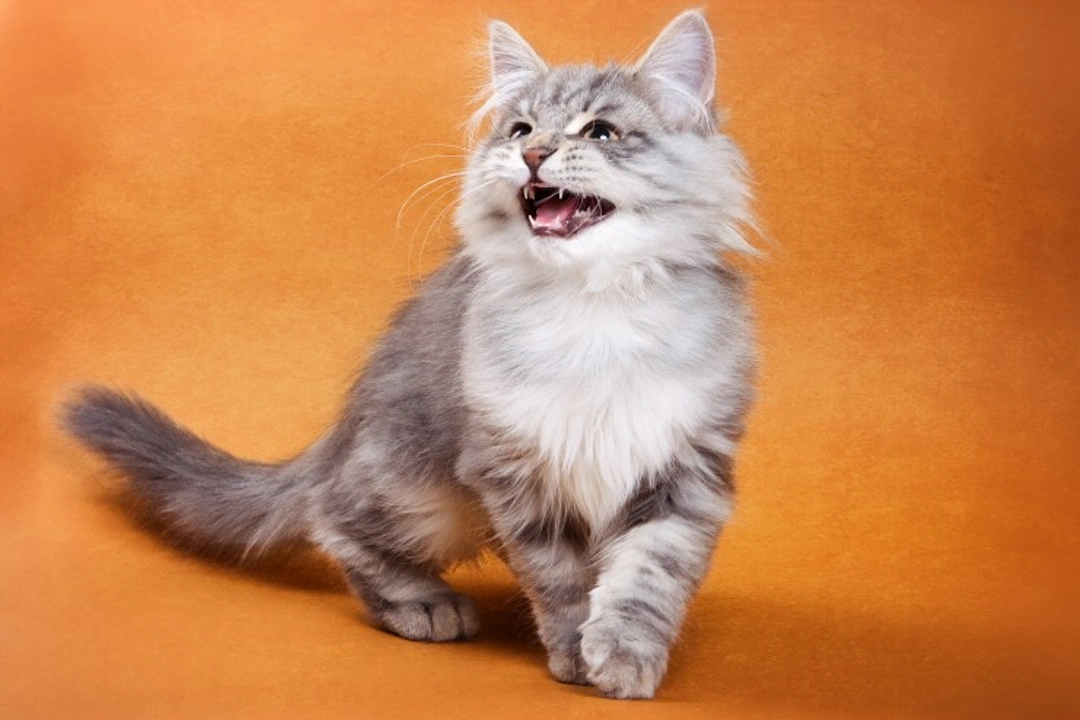
Senior cats (over 10 years old) need special consideration when it comes to vocalization.
Do not assume an older cat’s sudden chattiness is just personality or aging. It is almost always a signal of a medical condition that can be treated. Early intervention dramatically improves quality of life.
Keep the environment as stable and predictable as possible. Avoid rearranging furniture, as disoriented cats rely on spatial memory. Use nightlights in hallways and near litter boxes.
Regular senior wellness exams — at least twice a year — are the single best investment you can make in a vocal senior cat’s health.
A sudden increase in meowing usually signals a change in health, environment, or emotional state. See a vet if the change is unexplained or lasts more than a few days.
Yes, some cats are naturally chatty, especially certain breeds like Siamese and Bengals. It becomes a concern when the pattern, pitch, or frequency suddenly changes.
In young cats, nighttime meowing is usually boredom or hunger. In older cats, it is often a medical issue like hyperthyroidism, hypertension, pain, or cognitive dysfunction.
Senior cats that suddenly become vocal often have a medical cause such as hyperthyroidism, kidney disease, hypertension, or cognitive dysfunction. A vet visit with blood work is strongly recommended.
Yes, stress from environmental changes, new pets, loud noises, or schedule disruptions commonly triggers increased meowing. Identifying and reducing the stressor is the most effective solution.
This is attention-seeking behavior. Your cat has learned that meowing gets your attention and stops once the goal is achieved. It is normal learned communication.
If your vet has ruled out medical causes and the meowing is behavioral, selectively ignoring attention-seeking meows while meeting your cat’s core needs is the recommended approach.
Pacing combined with meowing suggests restlessness from anxiety, hyperthyroidism, or cognitive dysfunction. This combination in a senior cat particularly warrants prompt veterinary evaluation.
Yes, significantly. Mating-related vocalization from heat cycles and territorial calling stops almost entirely after spaying or neutering. It is one of the most effective interventions available.
Call an emergency vet immediately if your cat is yowling in the litter box without producing urine, seems suddenly blind, is disoriented and falling, or is meowing with labored breathing.
Why is my cat so vocal comes down to one of three categories: normal communication, behavioral habits, or a medical issue that needs attention.
Most cats meow for perfectly understandable reasons — they are hungry, bored, seeking attention, or simply wired by their breed to be chatty.
The real skill is recognizing when the vocalization shifts in a way that signals something deeper.
Any sudden change in your cat’s vocal pattern, especially in a senior cat, deserves a proper veterinary evaluation.
Hyperthyroidism, kidney disease, cognitive dysfunction, hypertension, and pain are all treatable — but only when caught.
Stay tuned to your cat’s baseline, respond to genuine needs, and never dismiss new or unusual meowing as just a quirk.
Your cat is talking to you for a reason.