
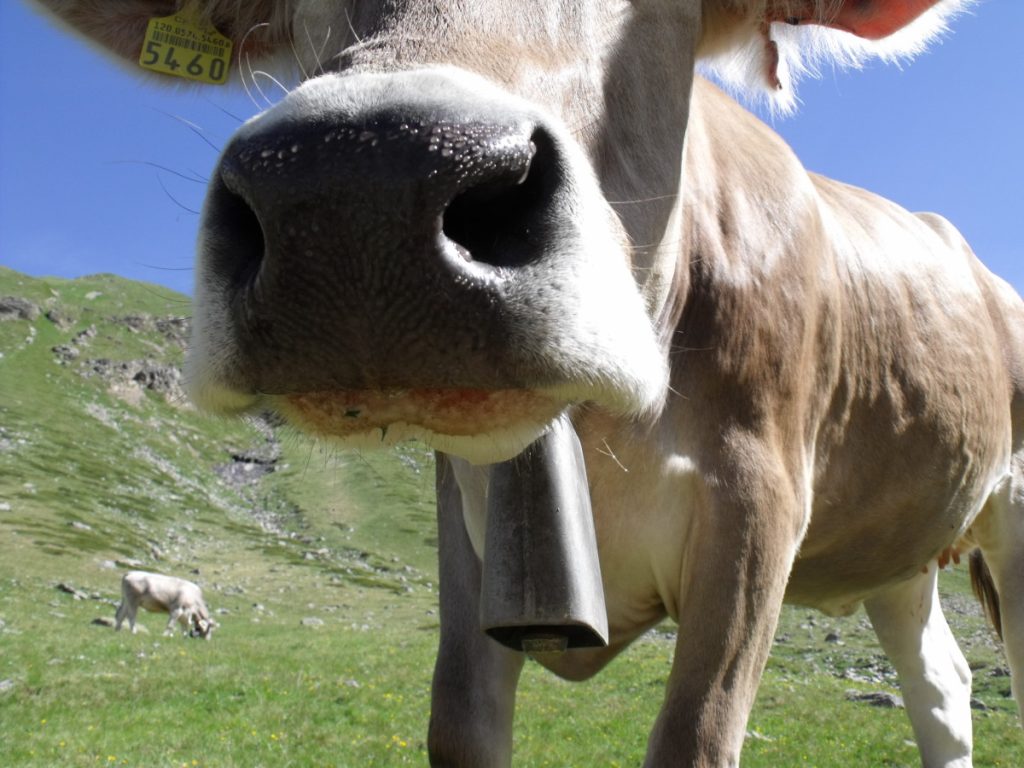
Why do cows wear bells is a question farmers, travelers, and curious minds have asked for centuries.
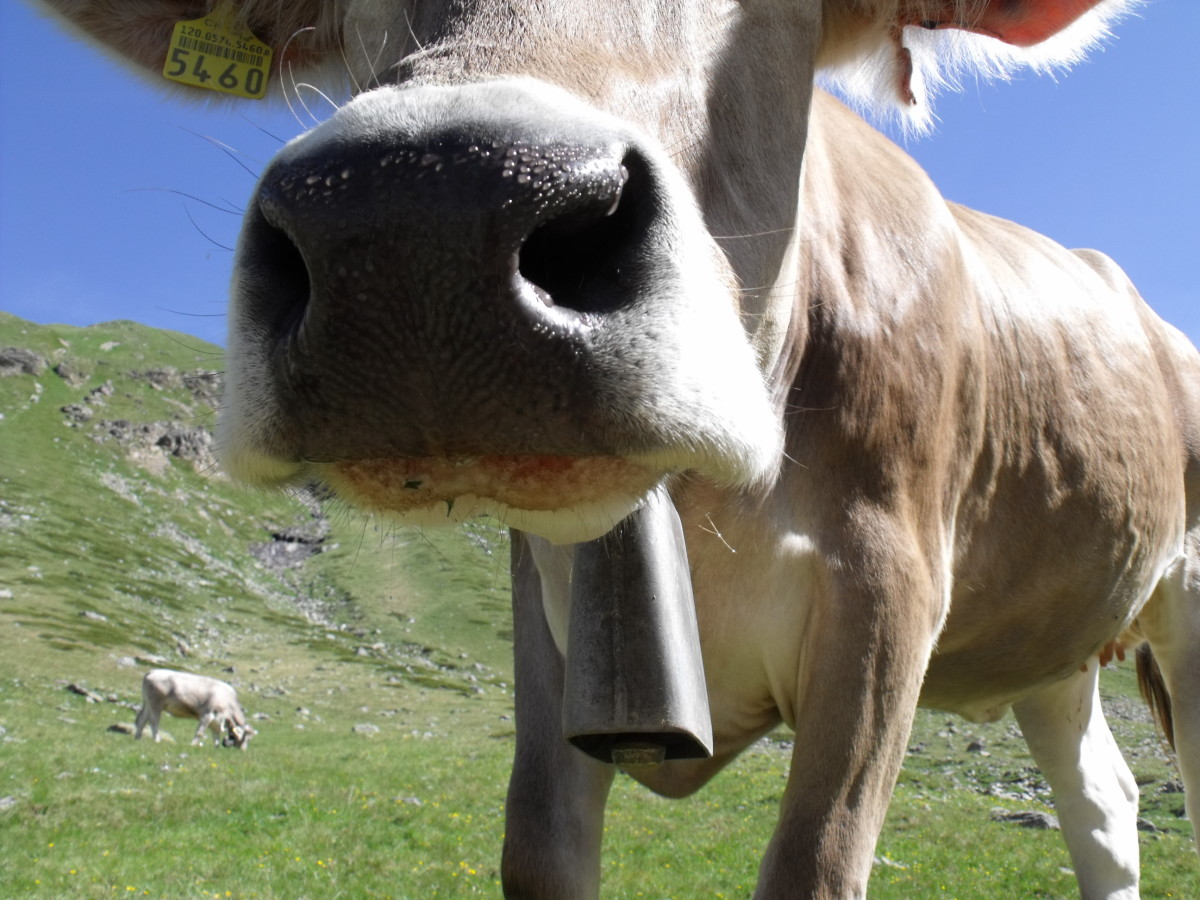
The short answer is practical: bells help farmers locate their cattle while they graze across large, open pastures and rugged mountain terrain.
But the full story runs much deeper than simple tracking. Cowbells carry centuries of history, cultural tradition, animal behavior science, and even spiritual meaning.
From the Swiss Alps to the farms of Latin America and Asia, this simple metal tool has played a surprisingly powerful role in livestock management across the globe.
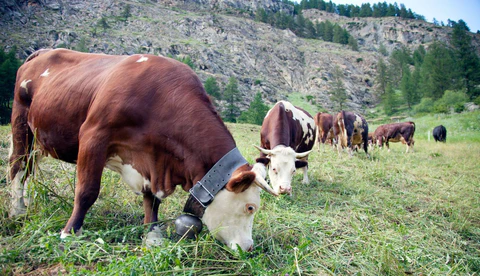
Cows wear bells — and the practice is far older than most people realize. Some of the earliest evidence of cattle bells comes from 5,000-year-old pottery cowbell remains discovered in China.
In Europe, metal cowbells appeared in Germany by the 1300s. By the 15th century, the practice was well established across Alpine farming communities in Switzerland, Austria, and France.
The tradition became deeply embedded in Swiss culture, where cowbell-making evolved into a specialized craft starting in the 18th century. Today it remains one of the most recognizable symbols of Swiss identity worldwide.
There is not one single reason cows wear bells — there are many. Each reason reflects a different need farmers have had throughout history.
Here is a breakdown of the main reasons:
| Reason | Description |
|---|---|
| Herd Tracking | Locate cattle grazing across large or hilly terrain |
| Predator Deterrent | Loud noise can discourage wolves, coyotes, and bobcats |
| Herd Hierarchy | The largest bell identifies the dominant “queen” cow |
| Individual Identification | Each bell has a unique tone that identifies a specific cow |
| Safety Warning | Alerts farmhands of an approaching cow |
| Cultural Tradition | Part of Swiss and European Alpine heritage |
| Ownership Marker | Shows a cow belongs to a specific farmer |
| Spiritual Protection | Historically used to ward off evil spirits and cattle rustlers |
The most practical reason cows wear bells is simple: farmers need to know where their animals are at all times.
Cows can roam up to 10 miles in a single day when searching for food. In hilly or mountainous regions where visibility is limited by fog, trees, or terrain, a bell is often the only way to know a herd’s location.
This is especially true in Switzerland, where cattle spend summer months high in the Alps. The sound of the bell carries far across open mountain air, allowing farmers to monitor their herd even without line of sight.
Wild predators including wolves, coyotes, bobcats, and dogs are among a cow’s natural threats. The constant ringing of a cowbell provides a layer of audible protection.
The sound signals to predators that humans are nearby, which discourages attacks. However, some research has raised questions about this — suggesting bells may actually attract rather than deter predators by announcing the location of prey.
Despite the debate, many farmers in rural areas continue to use bells as part of a broader predator management strategy alongside electric fencing.
Not every cow in a herd wears a bell of the same size. Bell size often reflects an animal’s status within the group.
The largest, most ornate bell is traditionally worn by the dominant female — often called the “queen of the herd.” Her deeper, louder bell serves as an audible guide for the rest of the herd to follow during movement.
Younger calves and juveniles wear smaller bells with higher-pitched tones. This makes it easier to locate a stray calf quickly among a larger group.
Experienced farmers can identify each of their cows simply by the sound of their bell. Every bell has a slightly different tone, pitch, and resonance.
This ability becomes especially valuable on large farms where hundreds of animals graze across many acres. Rather than visually spotting each cow, a farmer can listen and know exactly which animals are where.
Older Swiss farmers are known to say they can recognize each of their cows individually just by the sound of its bell alone.
Cows are large, heavy animals that do not make much noise when moving. A farmhand distracted by daily chores might not notice a cow approaching from behind.
The rapid clanging of a bell when a cow moves quickly gives people time to react and step out of the way. This is especially useful when cows feel threatened, are in pain, or are protecting young calves — situations when even gentle animals may behave unpredictably.
The bell acts as an early warning system that has likely prevented countless injuries on working farms.
In Switzerland, cowbells are far more than a farming tool. They are a national symbol embedded in culture, festivals, music, and tourism.
Swiss cowbells are called Treicheln or Glocken in German. The craft of making them has been passed down through generations. Today only about six artisanal cowbell makers remain in Switzerland, each using traditional hand-crafting methods.
Cowbell recordings play at Swiss airports and train stations. Souvenir cowbells are sold worldwide as symbols of Alpine culture. Political debates have even erupted in Switzerland over proposals to restrict cowbell use — a sign of how deeply the tradition runs.
One of the most famous cowbell traditions is the Almabtrieb (also called Alpabzug) — the annual autumn festival marking the return of cattle from summer mountain pastures to winter barns.
During this celebration, cows are decorated with floral garlands woven onto their horns and fitted with the largest, most ornate bells available. Farmers dress in traditional clothing and lead their herds down mountain paths to the villages below.
The event draws visitors from across Switzerland and abroad. It represents the deep bond between Swiss farming communities and their cattle — and the cowbell sits at the center of that tradition.
In some parts of the world, a bell around a cow’s neck signals that the animal belongs to someone. This was especially important in areas where cattle roamed unfenced land shared among multiple farming families.
The bell effectively announced “this animal is owned.” It discouraged theft and made it easier for communities to sort out which animals belonged to which farmer after a day of shared grazing.
In some ancient cultures, the most valuable cows in a herd wore the most elaborate bells as a direct reflection of a farmer’s wealth and status.
In many historic cultures, cowbells carried spiritual meaning. The sound of the bell was believed to ward off evil spirits, bad luck, and cattle rustlers.
In Switzerland, bells are still sometimes engraved with religious motifs and symbols. The act of placing a bell on a cow carried an element of blessing — a hope for protection over the animal through faith.
Swiss folklore even contains a legend about a young cowherd who, when offered a choice between gold, a golden cowbell, or a beautiful fairy, chose the cowbell — a story that speaks to how deeply valued these objects were in Alpine tradition.
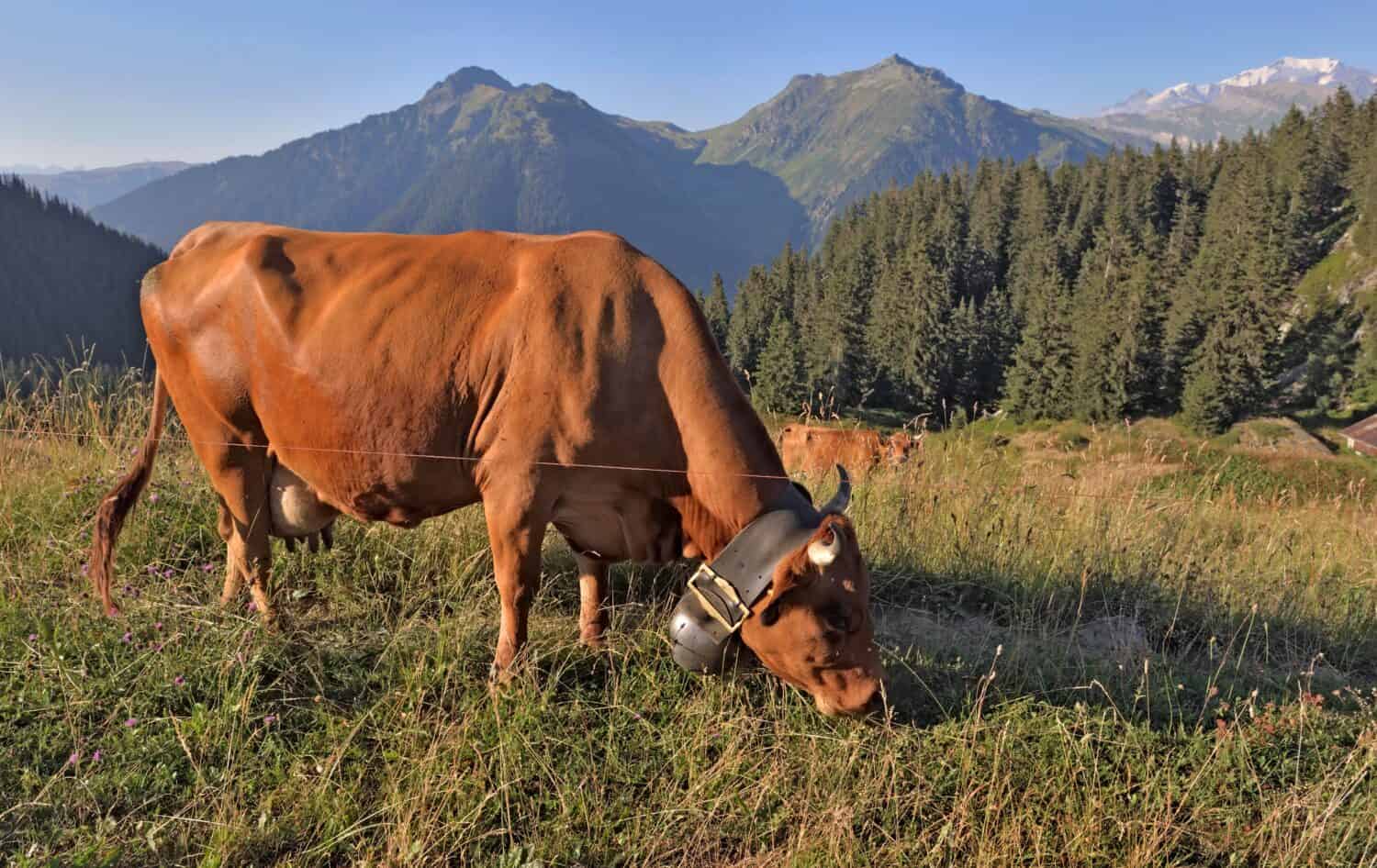
The craftsmanship behind a cowbell is more complex than most people expect. Traditional Swiss cowbells are handmade using bronze — an alloy of roughly 80% copper and 20% tin — which produces the resonant, melodious tone associated with the Alps.
Originally, bells were made from iron. By the 19th century, brass and bronze became the preferred materials because they produced a louder, richer sound that carried further across mountain terrain.
Each bell is hand-hammered and shaped by skilled artisans. The process involves heating, shaping, and finishing the metal over many hours. High-quality bells can last for decades and are sometimes passed down as family heirlooms.
Bell size varies significantly depending on the purpose, the animal’s age, and its rank in the herd.
Ceremonial bells used during festivals like Almabtrieb can weigh up to 12 pounds and measure over a foot in height. These are impressive but are only worn for short periods during celebrations.
Everyday working bells are lighter and smaller, typically weighing around 5 to 6 pounds. Calves and juvenile cattle wear the smallest bells with the highest-pitched sounds.
The weight and size of a bell has become part of the welfare debate, which is discussed further below.
A cowbell is fastened to a cow’s neck using a collar. Leather collars are most commonly used because they are durable, adjustable, and relatively gentle against the animal’s skin.
Nylon and vinyl collars are also used depending on the farm and region. The key requirement is that the collar fits comfortably, does not cause sores, and cannot be easily removed by the cow scratching against a fence or tree.
Farmers must check the fit of the collar regularly, especially as animals grow or gain weight. A collar that is too tight causes injury, while one that is too loose can result in the bell being lost.
Calves are almost never fitted with bells, and the reason is straightforward. Young calves stay close to their mothers almost all of the time.
Because the mother cow wears a bell, her location is always known — and wherever she is, her calf is likely nearby. There is no practical need to add the weight or noise of a bell to a young, growing animal.
As calves grow and begin to range further from their mothers, some farms will fit them with smaller, lighter bells appropriate for their size and stage of development.
This is one of the most important and debated questions surrounding cowbell use today. Research has raised genuine concerns about the impact of bells on animal health.
A study conducted at the Swiss Federal Institute of Technology in Zurich fitted more than 100 cows with 12-pound ceremonial bells at 25 farms across Switzerland. Researchers measured the cows’ activity, heart rate, head movements, and feeding behavior.
The findings were concerning:
The bells produced noise levels of up to 113 decibels — roughly the sound level of a chainsaw and nearly 30 decibels above the threshold that causes hearing damage in humans. Cows’ hearing is more sensitive than that of humans, making the exposure even more significant.
Cows wearing the bells also chewed their food for less time than cows without bells. This suggests that the constant noise disrupts normal feeding behavior, which could affect digestion and nutrition over time.
A separate 2017 study published in a peer-reviewed journal tested 96 cows across 24 farms and found behavioral changes associated with bell exposure, though it concluded there was no severe long-term hearing impairment from everyday working bells.
The consensus so far is that large ceremonial bells pose the greatest risk when worn for extended periods. Lighter, smaller everyday bells appear to have less significant welfare impacts, though ongoing research continues.
Modern farming technology now offers alternatives to the traditional cowbell for tracking cattle. GPS trackers can pinpoint a cow’s exact location in real time, transmit data to a smartphone, and even monitor health indicators like temperature and activity levels.
Some farmers in Switzerland and across Europe have begun adopting GPS collars alongside or instead of bells. These devices are especially useful for very large herds spread across expansive terrain.
However, GPS adoption has been met with cultural resistance in Switzerland. Many farmers argue that replacing the cowbell with a GPS device would erase a centuries-old tradition and harm Switzerland’s cultural identity and tourism appeal.
For now, both tools coexist — GPS for precision, bells for tradition.
Cowbells are used in livestock farming across the world, but the tradition is most deeply embedded in certain regions.
| Country / Region | Tradition Strength | Notes |
|---|---|---|
| Switzerland | Extremely strong | National cultural symbol, Almabtrieb festivals |
| Austria | Very strong | Alpine tradition, similar to Switzerland |
| Germany (Bavaria) | Strong | Almabtrieb celebrations in southern regions |
| France (Alps) | Moderate to strong | Desalpe festival in autumn |
| Latin America | Common | Practical tracking use, widespread |
| Sub-Saharan Africa | Common | Practical tracking and ownership marking |
| Asia | Common | Used in India, Southeast Asia for tracking |
| USA | Less common | Occasional use, not a cultural tradition |
Cows are not the only animals fitted with bells. The practice extends across several species of grazing livestock, particularly in regions where free-range herding is common.
Goats, sheep, reindeer, and even some dogs wear bells for similar reasons. Goat and sheep bells tend to be smaller and higher-pitched than cattle bells.
In some parts of the Himalayas, yaks wear bells for the same tracking and identification purposes as Alpine cattle in Europe. The logic is universal — wherever animals roam freely across difficult terrain, a bell provides an audible connection between animal and farmer.
The Swiss cowbell is one of the most recognizable symbols of an entire nation. It appears on postcards, souvenirs, advertisements, and tourist branding across the country.
Swiss airports and train stations play recordings of cowbell sounds to evoke the Alpine heritage of the country. The bell has become shorthand for Switzerland itself — a single sound that communicates mountains, green meadows, clean air, and dairy tradition.
Political debates in Switzerland over proposals to regulate cowbell noise — driven by urban residents moving into rural areas — have attracted national and international media attention. This shows just how emotionally and culturally loaded the cowbell remains.
The Alpabzug, also known as Almabtrieb in German, is the annual celebration of cattle returning from summer Alpine pastures to their winter homes in the valley.
During this event, cows are adorned with flower garlands and large ornate bells. Farmers dress in traditional regional clothing. Villages fill with the sound of bells as herds descend the mountain paths, drawing crowds of locals and tourists.
The festival reinforces communal bonds, celebrates the farming year, and honors the deep relationship between Swiss alpine culture and its cattle. It is one of the most visually and acoustically striking traditions in all of Europe.
Behind every cowbell is a skilled craftsperson. The production of high-quality cowbells is an artisanal industry rooted in specific Swiss regions, particularly the Appenzell area of northeastern Switzerland.
Traditional cowbell production involves hand-hammering hot metal into shape — a process that has changed very little in 250 years. The result is a product of genuine craftsmanship that can last for generations.
Some ceremonial bells are engraved with significant dates, family names, religious motifs, or regional symbols. These bells can exceed the monetary value of the cow wearing them and are treated as family treasures passed from one generation to the next.
Even as agriculture modernizes rapidly, the cowbell has not disappeared. Its blend of practical utility, cultural meaning, and simple reliability continues to give it relevance on farms around the world.
In regions without reliable cellular coverage — many mountain areas included — GPS devices are not always practical. A cowbell works with no battery, no signal, and no subscription fee.
Farmers who have managed their herds with bells for decades also argue that the familiarity and reliability of the sound creates a communication shorthand between farmer and animal that technology cannot fully replicate.
Not all cowbells are the same. Farmers and craftspeople evaluate bells based on several key qualities.
The tone and resonance matter most — a good bell produces a clear, carrying sound that travels across open land without becoming shrill or flat. Bronze and brass are preferred materials for their acoustic qualities.
Durability is also critical. A working cowbell must withstand constant movement, weather exposure, and the physical demands of a large animal’s daily activity. Well-made bells can last 30–50 years or more with minimal maintenance.
Weight is the third factor — especially given the welfare concerns discussed earlier. Lighter bells appropriate to the animal’s size reduce the physical burden without sacrificing sound quality.
The cowbell has made surprising appearances in popular culture far beyond farming contexts. The most famous is the Saturday Night Live sketch featuring Christopher Walken insisting on “more cowbell” during a recording session — a sketch that has become one of the most quoted comedy moments in television history.
This cultural moment introduced the cowbell to millions of people with no connection to farming. Today, cowbells are used as musical instruments, sports cheering tools, and novelty items across the world — all stemming from their original role as livestock management tools.
The honest answer is: it depends. In regions with modern fencing, GPS technology, and small enclosed herds, cowbells are no longer strictly necessary as tracking tools.
But for alpine farmers managing large herds on unfenced mountain pastures — particularly in Switzerland, Austria, and parts of France — cowbells remain genuinely useful in environments where technology can be unreliable.
And for the cultural communities where cowbells carry deep historical significance, they remain necessary in a different way entirely. They connect generations, mark seasons, celebrate harvests, and express identity in ways that a GPS coordinate never could.
Cows wear bells primarily so farmers can track their location while they graze across large or hilly terrain. The sound travels far, making it easy to locate cattle even when they are out of sight.
Swiss cows wear bells for both practical tracking purposes in the Alps and as part of a centuries-old cultural tradition. In Switzerland, the cowbell is a national symbol used in festivals, tourism, and daily farming life.
Large ceremonial bells can cause hearing sensitivity and disrupted feeding behavior based on Swiss research. Everyday working bells are lighter and appear to have less severe effects, though animal welfare remains an ongoing area of study.
Bell-wearing often reflects herd hierarchy, with dominant cows wearing the largest bells. In modern farming, only one or two lead animals may wear bells to guide the rest of the herd.
Traditional Swiss cowbells are made from bronze, an alloy of copper and tin. Iron was used historically, but bronze and brass became preferred in the 19th century for their louder, more resonant tone.
Everyday working bells typically weigh around 5 to 6 pounds. Large ceremonial bells used at festivals like Almabtrieb can weigh up to 12 pounds and are only worn for short periods.
Calves generally do not wear bells because they stay close to their mothers, who already wear a bell. As they grow and roam further, smaller bells appropriate to their size may be fitted.
GPS trackers can replicate the tracking function of cowbells with greater precision. However, many farmers — especially in Switzerland — resist replacing bells with GPS due to cultural significance, reliability in low-signal areas, and farming tradition.
It is the annual Swiss and Alpine festival celebrating the return of cattle from summer mountain pastures to winter barns. Cows are decorated with flower garlands and large ornate bells, and farmers parade them down through villages.
Yes. Goats, sheep, reindeer, yaks, and sometimes dogs are also fitted with bells for tracking, identification, and safety purposes in many countries across Europe, Asia, Africa, and Latin America.
Why do cows wear bells is a question with a richer answer than most people expect.
From the practical need to track freely grazing cattle across Alpine terrain, to herd hierarchy, predator deterrence, safety warnings, and deep cultural tradition, the cowbell serves many roles that have kept it relevant for thousands of years.
Switzerland’s enduring relationship with the cowbell shows that some tools outlast their original purpose and become part of a people’s identity.
The debate around animal welfare adds important nuance — reminding us that tradition must be balanced with responsibility.
Whether you see a cowbell hanging in a Swiss mountain meadow, displayed as a souvenir, or ringing at an Almabtrieb festival, you are looking at one of agriculture’s oldest and most enduring innovations.
Simple in design, rich in meaning, and still doing its job in 2026 — the cowbell is a quiet reminder that the best solutions are often the ones that have stood the test of time.