
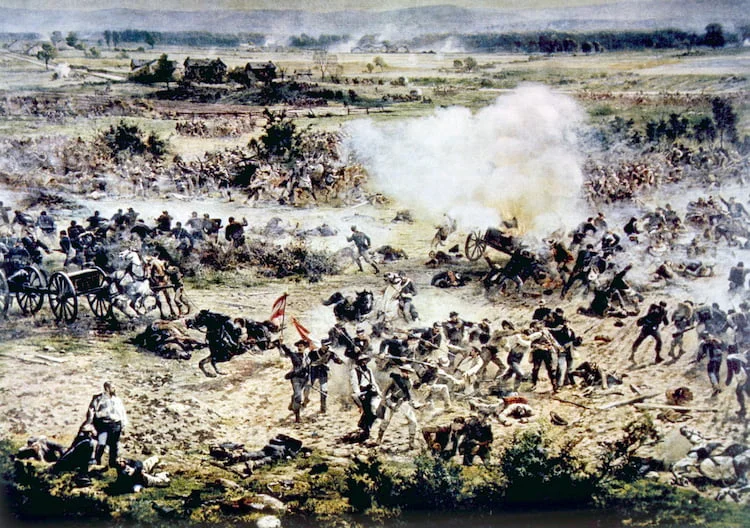
Why was the Battle of Gettysburg important? Simply put, it was the turning point of the American Civil War.
Fought from July 1 to July 3, 1863, in the small Pennsylvania town of Gettysburg, this three-day clash between Union and Confederate forces produced more than 50,000 casualties and changed the course of American history.
The Union victory stopped General Robert E. Lee’s most ambitious invasion of the North, crushed Confederate hopes of foreign recognition, and gave President Abraham Lincoln the political strength to push forward his vision of a unified, free nation.
No single battle shaped the United States more profoundly.
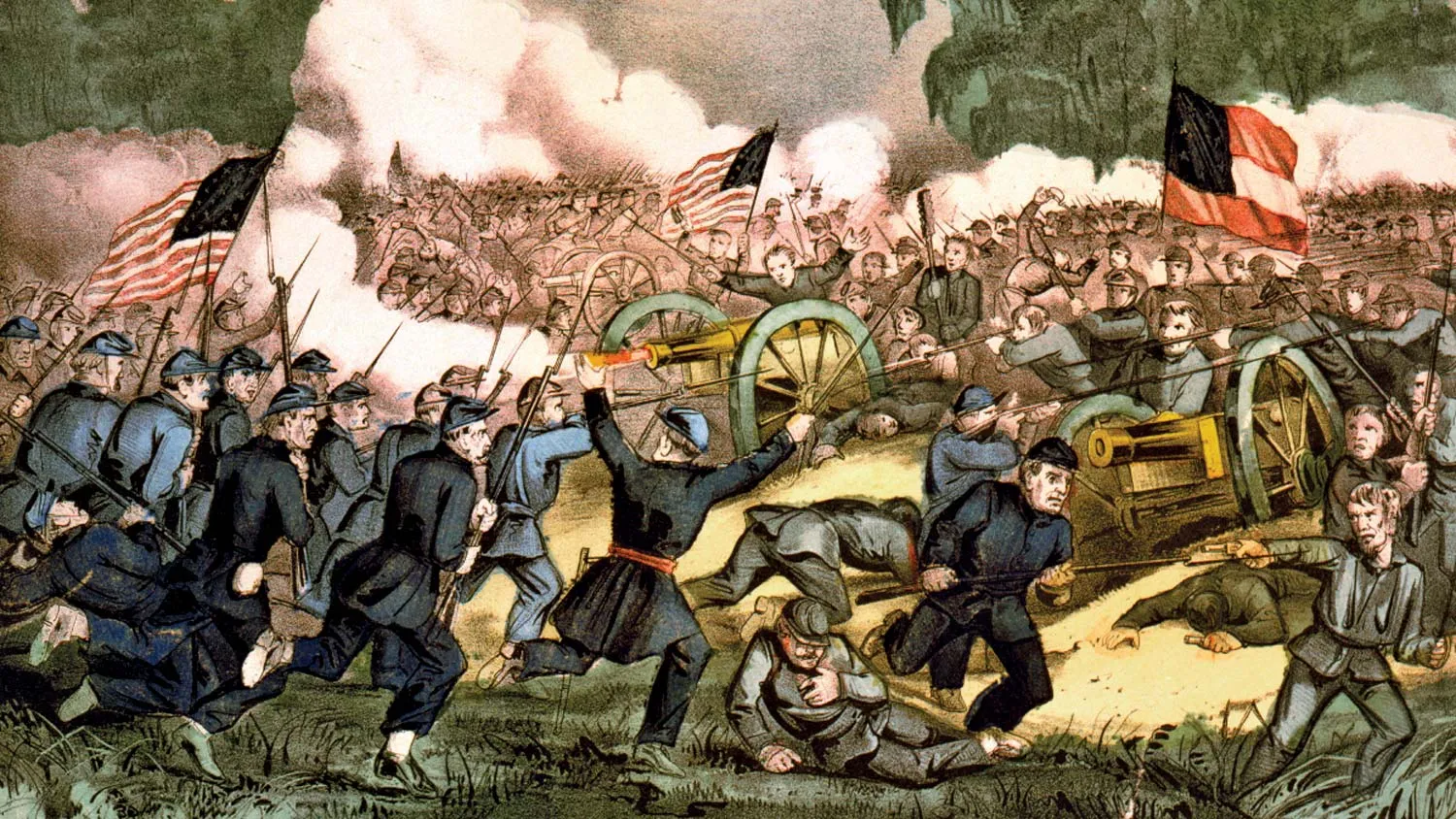
To understand why the Battle of Gettysburg was important, you first need to understand why it was fought at all. By the summer of 1863, the war had been raging for over two years.
Lee’s Confederate Army of Northern Virginia had just scored a major victory at the Battle of Chancellorsville in May 1863. Riding high on that momentum, Lee convinced Confederate leaders to approve a bold second invasion of the North.
His goals were multiple. He wanted to relieve war-torn Virginia of the constant burden of hosting battles, threaten major Northern cities, fuel the Northern peace movement, and most critically, win a decisive battle on Union soil that might force European nations like Britain and France to recognize the Confederacy as a legitimate nation.
Gettysburg was not a planned battlefield. The two armies stumbled into each other at this crossroads town of roughly 2,400 residents.
The town’s geography made it strategically vital. As many as twelve major roads converged at Gettysburg, making it an important hub for troop movement and supply lines throughout the region.
Once the fighting began on July 1, both sides rushed reinforcements to the area. What started as a skirmish rapidly escalated into the largest and bloodiest battle ever fought on American soil.
The battle opened west of town when Confederate forces under General A.P. Hill clashed with Union cavalry under General John Buford. Union General John Reynolds rushed infantry forward to hold the line but was killed early in the fighting.
Despite early Confederate success, Union forces managed to retreat to strong defensive positions on Cemetery Hill and Culp’s Hill south of town. These elevated positions would prove critical in the days ahead.
By nightfall, the Union held the high ground. General George Meade arrived to take overall Union command and decided to hold and defend rather than retreat.
The second day saw some of the most intense combat of the entire war. Lee ordered attacks on both Union flanks simultaneously, hoping to overwhelm Meade’s position along Cemetery Ridge.
The fighting raged through iconic locations including Little Round Top, the Wheatfield, Devil’s Den, and the Peach Orchard. Union Colonel Joshua Chamberlain’s famous defense of Little Round Top with the 20th Maine regiment became one of the most celebrated stands in American military history.
Despite fierce Confederate assaults, Union defensive lines held. By the end of July 2, the Union still controlled the high ground, and Lee had failed to break through on either flank.
On the final day, Lee made his most fateful decision. He ordered a massive frontal assault on the center of the Union line at Cemetery Ridge with approximately 12,500 to 15,000 Confederate troops.
This assault, known forever as Pickett’s Charge, began with a massive two-hour artillery bombardment. Then thousands of Confederate soldiers marched across nearly a mile of open ground directly into Union rifle and artillery fire.
The charge was catastrophic. Confederate casualties during the assault alone approached 60 percent. Only one Confederate brigade briefly reached the top of Cemetery Ridge, the moment later called the “High Water Mark of the Confederacy.” Within an hour, the charge collapsed.
When General Lee asked General Pickett to rally his division for defense, Pickett reportedly replied: “General, I have no division.” Lee withdrew his shattered army toward Virginia on July 4, 1863.
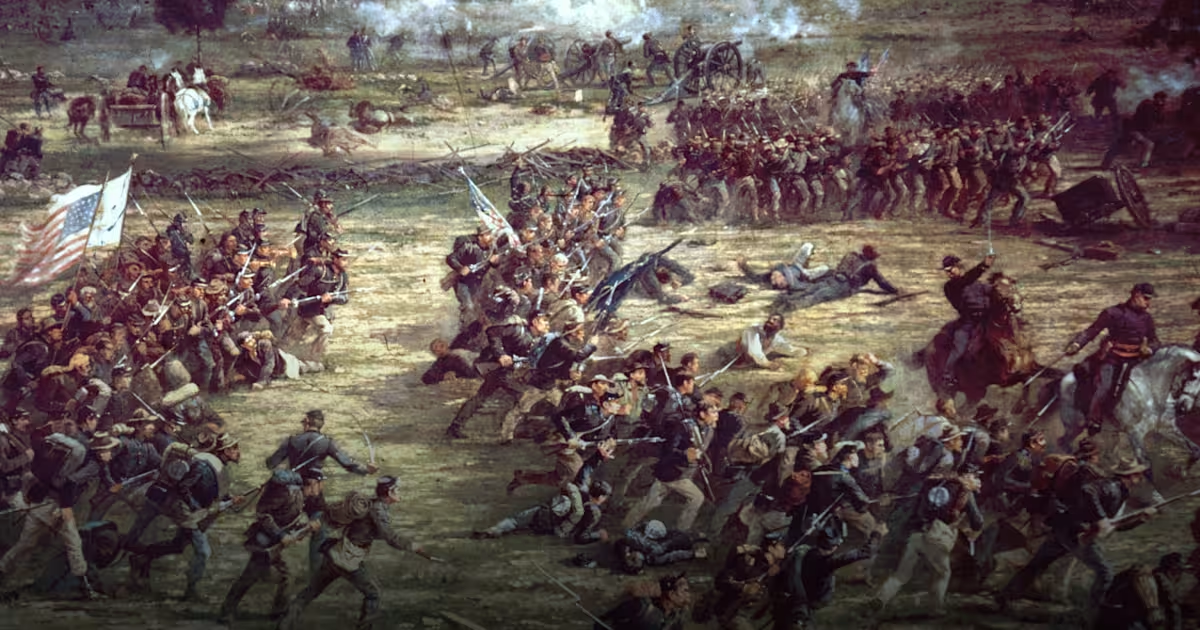
The human cost of the Battle of Gettysburg was staggering and unlike anything the nation had ever witnessed.
| Side | Troops Engaged | Estimated Casualties | Casualty Rate |
|---|---|---|---|
| Union (Army of the Potomac) | ~88,000 | ~23,000 | ~26% |
| Confederate (Army of Northern Virginia) | ~75,000 | ~28,000 | ~37% |
| Combined | ~163,000 | ~51,000 | ~31% |
More than 7,000 soldiers died outright over three days. The remaining casualties included the wounded, captured, and missing.
These numbers made Gettysburg the single deadliest battle of the Civil War and the bloodiest battle ever fought on American soil.
The most immediate importance of Gettysburg was that it stopped the Confederacy’s most ambitious offensive operation of the entire war. Lee had hoped to win a decisive battle north of the Mason-Dixon Line.
His defeat meant the Confederate Army of Northern Virginia would never again attempt a full-scale invasion of the North. From Gettysburg onward, Lee was permanently on the defensive, fighting to hold territory rather than expand it.
Military historians widely regard Gettysburg as the turning point of the Civil War, particularly in the Eastern Theater. Before Gettysburg, Lee’s army appeared nearly invincible, having defeated Union forces repeatedly in Virginia.
After Gettysburg, the strategic momentum shifted decisively to the Union. Combined with the fall of Vicksburg on July 4, 1863, the same day Lee retreated from Pennsylvania, the Confederacy found itself on the defensive on all fronts simultaneously.
Before July 1863, Lee’s Army of Northern Virginia had won major victories at Fredericksburg, Second Bull Run, and Chancellorsville. Northern morale was crumbling, and many in the Union believed Lee’s forces were unstoppable.
Gettysburg shattered that myth completely. The Union Army proved it could defeat Lee’s forces in open battle, and Northern public opinion swung dramatically in favor of continuing the war.
One of Lee’s primary strategic goals was to use a dramatic Northern victory to convince Britain and France to officially recognize the Confederacy as a legitimate nation. Southern leaders desperately needed European diplomatic and financial support to sustain a long war.
The defeat at Gettysburg ended those hopes permanently. European governments, which had been cautiously watching events unfold, saw no reason to recognize a Confederacy that could not win on its own soil. The Confederacy never secured the foreign recognition it sought.
By mid-1863, a growing faction in the North, called Copperheads or Peace Democrats, was pushing for a negotiated end to the war that would have effectively granted Confederate independence. Public war weariness was a serious political threat to Lincoln.
Lee’s invasion of Pennsylvania was partly designed to energize this peace movement and pressure Lincoln into negotiations. The Union victory at Gettysburg undercut the peace movement’s arguments and renewed Northern determination to fight on.
Lee’s campaign aimed to threaten and potentially capture major Northern cities including Harrisburg, Philadelphia, and even Washington D.C. These cities held enormous practical and symbolic value.
The fall of any major Northern city to Confederate forces would have been a devastating psychological and political blow. The Union victory at Gettysburg ensured none of these cities were ever threatened again.
Before Gettysburg, Lincoln faced enormous political pressure. Union defeats at Fredericksburg and Chancellorsville had damaged Republican standing, and Lincoln’s Emancipation Proclamation had faced criticism even within his own party.
The victory at Gettysburg dramatically strengthened Lincoln’s political position. He could now pursue emancipation more vigorously and frame the entire war as a struggle for human freedom, which helped attract moral support both domestically and internationally.
On November 19, 1863, President Lincoln traveled to Gettysburg to dedicate the new National Cemetery at the battlefield. He delivered a brief speech of only 272 words, but those words became the most famous speech in American political history.
The Gettysburg Address transformed the purpose of the Civil War in the public consciousness. Lincoln redefined the conflict not just as a war to preserve the Union, but as a struggle to ensure that the promise of equality in the Declaration of Independence applied to all Americans. That reframing had a permanent effect on how Americans understood their nation and its founding principles.
Understanding the individuals who fought at Gettysburg helps explain how the battle unfolded.
| Commander | Side | Role | Outcome |
|---|---|---|---|
| Gen. Robert E. Lee | Confederate | Overall Confederate commander | Defeated; retreated to Virginia |
| Gen. George G. Meade | Union | Overall Union commander | Victory; held high ground |
| Gen. James Longstreet | Confederate | Corps commander; opposed Pickett’s Charge | Overruled by Lee; charge failed |
| Gen. George Pickett | Confederate | Led Day 3 assault | Charge destroyed; division decimated |
| Col. Joshua Chamberlain | Union | Defended Little Round Top with 20th Maine | Held the flank; became hero |
| Gen. John Buford | Union | Union cavalry commander on Day 1 | Held ground for infantry arrival |
| Gen. Winfield Hancock | Union | Commanded key Union positions | Wounded; decisive in Union defense |
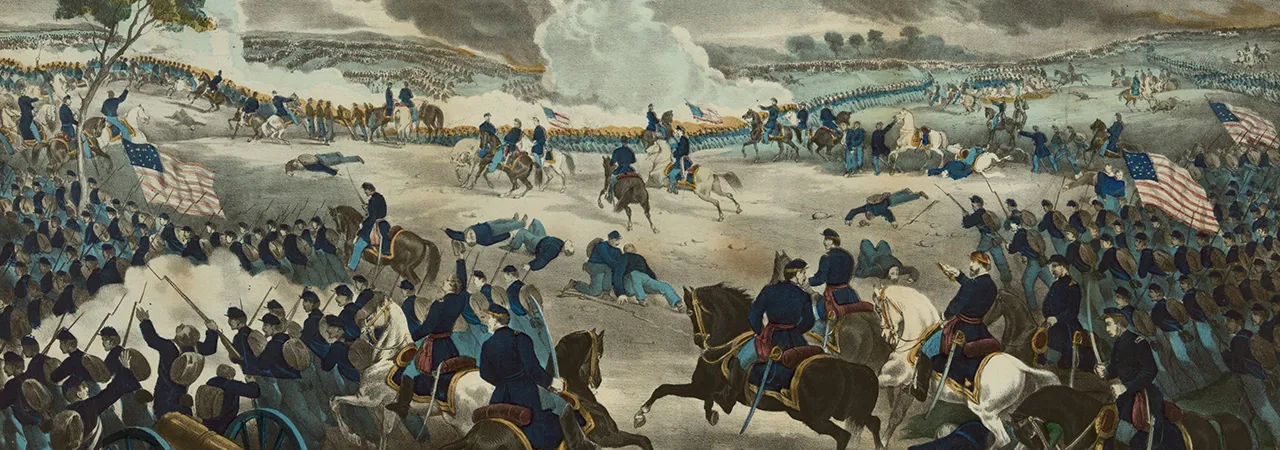
The term “High Water Mark of the Confederacy” refers to the furthest point Pickett’s Charge reached before being driven back: a small clump of trees on Cemetery Ridge.
This phrase captured something deeper than just a geographic point. It symbolized the moment the Confederacy came closest to achieving its goals and then fell irreversibly back.
From that moment forward, the Confederacy could not sustain an offensive. It lacked the manpower, supplies, and diplomatic support to do so. Gettysburg was where the tide of Confederate power crested and then began its slow but irreversible decline.
Lincoln’s speech at Gettysburg was not the main address that day. Edward Everett, one of the most celebrated orators of the era, spoke for over two hours before Lincoln stood to speak his 272 words.
Yet it is Lincoln’s address that every American student knows today. The speech accomplished something remarkable: it connected the Civil War directly to the founding ideals of the Declaration of Independence and argued that the nation was engaged in a test of whether democratic government could survive at all.
Lincoln declared that the soldiers’ sacrifice had given the nation “a new birth of freedom.” That phrase linked the war to the abolition of slavery in a way that permanently reshaped how Americans understood what the war was for.
A remarkable historical coincidence deepened the significance of Gettysburg’s timing. On July 4, 1863, the very day Lee began his retreat from Pennsylvania, Union General Ulysses S. Grant accepted the surrender of the Confederate garrison at Vicksburg, Mississippi.
Vicksburg’s fall gave the Union complete control of the Mississippi River, splitting the Confederacy in two and cutting off Texas, Arkansas, and Louisiana from the rest of the Confederate states.
The two victories arriving within 24 hours of each other produced a double turning point that transformed the strategic situation of the war all at once.
| Event | Date | Significance |
|---|---|---|
| Union victory at Gettysburg | July 1-3, 1863 | Ended Lee’s Northern invasion; Eastern turning point |
| Lee’s retreat to Virginia | July 4, 1863 | Confederacy permanently on defensive in East |
| Fall of Vicksburg | July 4, 1863 | Union controls Mississippi; Confederacy split |
| Combined impact | July 1863 | War’s strategic momentum shifts entirely to the Union |
The Gettysburg battlefield was quickly recognized as sacred ground. The Soldiers’ National Cemetery was established there in the fall of 1863, and it became one of the first federally protected military cemeteries in American history.
Today, Gettysburg National Military Park preserves more than 6,000 acres of the original battlefield. Millions of visitors walk the same ground where Pickett’s Charge unfolded and where Joshua Chamberlain held Little Round Top.
The battle has inspired hundreds of books, films, and documentaries. Its lessons about leadership, sacrifice, strategy, and the cost of war are studied in military academies around the world.
After Gettysburg, the Confederacy could no longer launch major offensive operations. Lee spent the final two years of the war fighting a grinding defensive campaign in Virginia against General Grant’s relentless pressure.
Confederate resources were stretched to the breaking point. Without the possibility of European recognition or a dramatic Northern victory, the Confederate cause depended entirely on Northern war weariness outlasting Union military pressure.
Gettysburg proved that would not happen. The Union had shown it could win, and Lincoln’s political position was strong enough to press the war to its conclusion.
Some historians have argued that Gettysburg’s importance has been overstated, noting that the war lasted nearly two more years after the battle. They point to Vicksburg, Sherman’s March, or Grant’s Overland Campaign as equally decisive moments.
Others emphasize that while Gettysburg did not end the war, it fundamentally and permanently altered the strategic possibilities available to both sides. Before Gettysburg, a Confederate military victory was plausible. After it, the only realistic path to Confederate survival was a Northern political collapse, and Gettysburg made that far less likely.
The consensus among most military historians remains that the summer of 1863, and specifically the week of July 1 to 4, represents the true turning point of the conflict.
Gettysburg ended Lee’s invasion of the North and shifted the war’s momentum permanently to the Union. Combined with the fall of Vicksburg the same week, the Confederacy was placed on the defensive for the remainder of the war.
Approximately 51,000 soldiers were killed, wounded, captured, or missing across both sides, making it the bloodiest single battle of the Civil War and in all of American history.
Pickett’s Charge was Lee’s final gamble to break the Union center and win the battle. Its catastrophic failure, with Confederate casualties approaching 60 percent, effectively ended any Confederate hope of winning a decisive battle in the North.
Lee invaded to relieve pressure on Virginia, threaten Northern cities, fuel the Northern peace movement, and secure European recognition of the Confederacy. His defeat at Gettysburg meant none of these goals were achieved.
The Gettysburg Address was Lincoln’s 272-word dedication speech at the soldiers’ cemetery in November 1863. It redefined the war as a struggle for equality and human freedom, giving new moral purpose to the Union cause.
General George G. Meade commanded the Army of the Potomac at Gettysburg, having taken command only three days before the battle began. His decision to hold the high ground proved decisive.
No. Gettysburg did not end the war, which continued until April 1865. However, it permanently shifted the strategic advantage to the Union and made a Confederate military victory essentially impossible.
The High Water Mark refers to the furthest point reached by Confederate troops during Pickett’s Charge, a clump of trees on Cemetery Ridge. It symbolizes the closest the Confederacy ever came to achieving its goals before being turned back.
The Confederate defeat removed any remaining possibility of British or French recognition. European governments had been waiting to see if the Confederacy could prove its viability, and Gettysburg demonstrated it could not.
Gettysburg offers timeless lessons in leadership, terrain use, command decisions under pressure, logistics, and the relationship between military outcomes and political consequences. It remains one of the most documented and analyzed battles in military history.
Why was the Battle of Gettysburg important? Because it changed everything.
In three days of fighting, the Union halted the Confederacy’s most dangerous offensive, destroyed Lee’s army as a strategic threat, and ended any realistic hope of Southern independence through foreign recognition or Northern political collapse.
The battle produced more than 50,000 casualties, a number so vast it shocked the entire nation and forced both sides to reckon with what this war truly cost.
It strengthened Lincoln politically and gave him the platform to deliver the Gettysburg Address, one of the most consequential speeches in the history of democracy.
Nearly 163 years later, the rolling fields of southern Pennsylvania still carry the weight of what was decided there.
Gettysburg was not just a battle. It was the moment America chose what kind of nation it would become.