
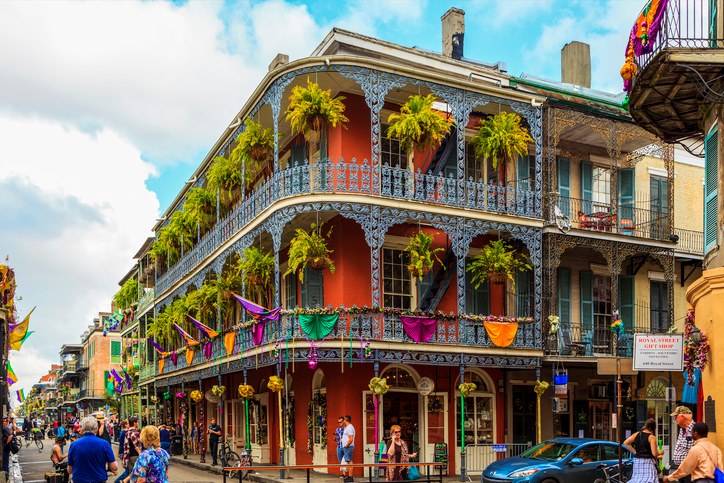
Why is New Orleans called the Big Easy? It is one of the most searched questions about this iconic Louisiana city.
New Orleans earned this beloved nickname through a rich blend of jazz culture, African American history, a rebellious spirit during Prohibition, and a legendary slow-paced lifestyle unlike any other American city.
The origins are debated by historians, but every theory points back to the same truth — New Orleans has always been a place where life flows easy.
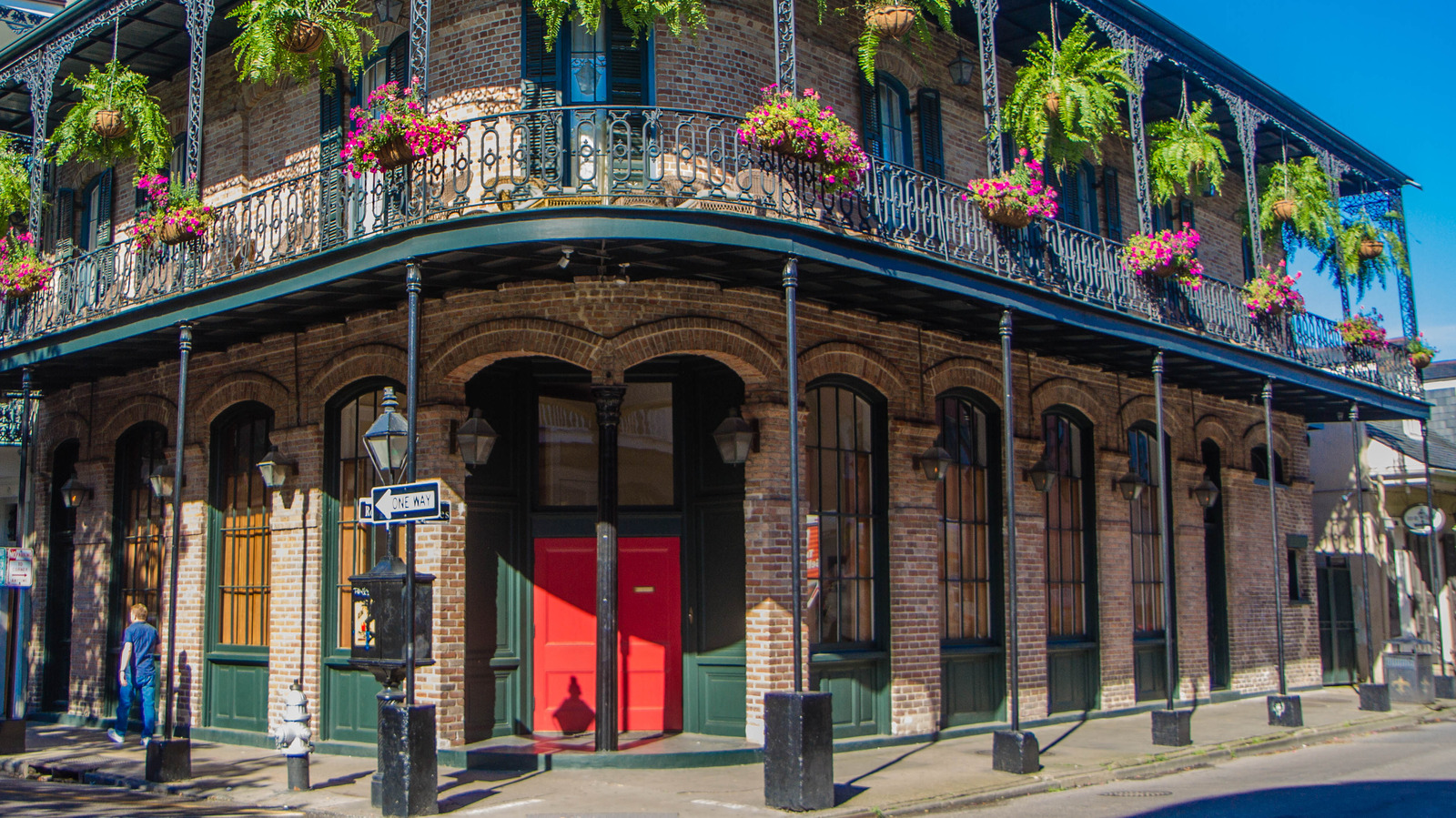
The phrase “The Big Easy” is more than just a catchy label. It captures an entire way of life — relaxed, joyful, and unhurried.
New Orleans sits along the Mississippi River in Louisiana. It is famous for jazz, Creole cuisine, Mardi Gras, and a cultural richness that is unlike anything else in the United States.
The nickname contrasts sharply with New York City’s “Big Apple,” which stands for ambition, hustle, and non-stop energy. The Big Easy, by comparison, is a celebration of pleasure, music, and community.
Historians and locals have debated the true origin of the nickname for over a century. Here are the four most widely accepted theories.
| Theory | Key Figure / Source | Approximate Date |
|---|---|---|
| The Big Easy Dance Hall | Buddy Bolden, Gretna hall | ~1900–1911 |
| Jazz Musicians’ Slang | African American musicians | Early 1900s |
| Betty Guillaud’s Column | Times-Picayune columnist | Late 1960s–1970s |
| James Conaway’s Novel | Crime novel & film | 1970 / 1987 |
The most historically grounded theory traces the nickname to a real place — a dance hall in Gretna, Louisiana, just across the Mississippi River from New Orleans.
A 1911 article in the Times-Democrat reported on a fire that destroyed a building “known as ‘The Big Easy'” in Gretna. This is considered one of the earliest printed uses of the phrase.
The legendary cornet player Buddy Bolden, widely regarded as one of the founding fathers of jazz, used to perform at this venue. Many historians believe the name of this popular dance hall eventually spread and attached itself to the city itself.
This theory is supported by the fact that the phrase was already in use among African American communities long before columnists or novelists picked it up.
The dance hall burned down in 1911, but the name lingered in the cultural memory of New Orleans’ Black community. Decades later, when journalists and writers needed a nickname for the city, “Big Easy” was already a phrase people recognized.
During the early 20th century, New Orleans was the undisputed center of the jazz world. For Black musicians in the South, finding steady, well-paying gigs was nearly impossible in most American cities.
New Orleans was different. The city had more music venues, more appreciative audiences, and more cultural tolerance than almost anywhere else in the country at that time.
Musicians found it genuinely “easy” to make a living here — playing in clubs, at private events, on street corners, and at parties. No other city offered so many paths to a musical career.
Black jazz and blues musicians particularly valued New Orleans because they could find work more easily than in other Southern cities. The city had a reputation for relative racial tolerance in the context of the music scene.
This “easy” access to gigs and income became shorthand for the city itself. The phrase naturally evolved from musician slang into a broader cultural label.
The theory most cited by mainstream sources credits Times-Picayune columnist Betty Guillaud with popularizing the nickname in the late 1960s and into the 1970s.
Guillaud was looking for a catchy phrase to describe New Orleans’ unique lifestyle. She found her answer by contrasting the city with New York’s famous nickname, the “Big Apple.”
Where New York was the Big Apple — ambitious, fast, and relentless — New Orleans was the Big Easy. Slow, warm, joyful, and unhurried.
Here is a fascinating twist in the story. The “Big Apple” nickname for New York is actually believed to have originated in New Orleans, too.
A New Orleans stable hand reportedly used the phrase “big apple” in reference to New York’s famous racetracks in the 1920s. A New York journalist picked it up and brought it back to New York. So, in a way, both major American city nicknames trace their roots to New Orleans.
Research by Big Easy Magazine found that Guillaud was hired by the States-Item in the 1960s but took a long pregnancy leave and only returned to writing in the 1970s. She took over the “Lagniappe” column in 1978.
This means her use of “Big Easy” came later than many sources claim, suggesting the phrase was already circulating among African American communities before she ever published it.
Around 1965–1966, crime reporter James Conaway was walking to the criminal courthouse on Claiborne Avenue when he overheard two African American men using the phrase “the big easy.” He did not know exactly what they were referring to, but the phrase stayed with him.
In 1970, he published a crime novel titled The Big Easy, set in New Orleans. The book brought the phrase to a wider literary audience.
The 1987 film adaptation of the novel, starring Dennis Quaid and Ellen Barkin, introduced the nickname to a truly national audience. Suddenly, millions of Americans who had never been to New Orleans knew it as “The Big Easy.”
The film’s success made the nickname essentially permanent. It cemented the romantic, laid-back image of New Orleans in popular culture and tourism marketing.
Between 1920 and 1933, the United States was under Prohibition — a federal ban on the production and sale of alcohol. Most American cities attempted, at least officially, to comply.
New Orleans essentially ignored the ban entirely. The city’s nightlife, jazz clubs, and social scene continued with barely any interruption. Residents could enjoy everything from homemade spirits to fine wine throughout the Prohibition era.
This defiant attitude toward federal law became part of New Orleans’ identity. The city was “easy” in the sense that enjoyment of life was never restricted — not by law, not by social convention, not by the pressures of the outside world.
Some historians argue this Prohibition-era attitude is a major reason the phrase stuck. New Orleans was the one American city where life remained truly easy even in hard times.
Another lesser-discussed theory suggests “The Big Easy” referred to the affordable cost of living in New Orleans compared to other major American cities.
In the early 20th century, rent was low, fresh food was abundant, and even a musician’s modest income could stretch far. For artists, drifters, and free spirits, New Orleans was genuinely easy to live in.
This economic angle reinforced the city’s reputation as a place where anyone could build a comfortable life without the grinding financial pressure of cities like New York or Chicago.
New Orleans is a city of many names. Understanding them all gives context to why “The Big Easy” became the most iconic.
| Nickname | Origin / Reason |
|---|---|
| Crescent City | Built along a crescent-shaped curve of the Mississippi River |
| Birthplace of Jazz | Jazz music originated here in the late 1890s |
| The City That Care Forgot | Reflects the city’s carefree, celebratory attitude |
| Paris of the South | French colonial history and European-influenced architecture |
| NOLA | Simple abbreviation of New Orleans, Louisiana |
| N’awlins | Popularized by TV personality Frank Davis; rarely used by locals |
| Voodoo City | Rich history of Creole spirituality and voodoo culture |
| Crawfish Town | Early 1900s tradition of children catching crawfish in street gutters |
Here is something interesting: most New Orleans residents do not actually call their city “The Big Easy.” Locals prefer to say “New Orleans,” “NOLA,” or simply reference neighborhoods and streets.
The phrase “Nawlins” — often used by tourists — is actually considered somewhat inaccurate and is not appreciated by longtime residents.
“The Big Easy” is largely a label used by outsiders, the media, tourism boards, and national marketing campaigns. It is a nickname that defines the city’s image to the world, even if locals rarely say it themselves.
Despite its debated origins and limited local use, “The Big Easy” has endured because it captures something genuinely true about New Orleans.
The city does operate at a different pace. Music does pour out of bars and streets at all hours. Festivals happen constantly. Food is taken seriously. Community and celebration are core values.
The nickname resonates because it reflects a real cultural identity — one built over centuries by African American musicians, French and Spanish colonists, Creole families, and generations of people who chose pleasure and community over ambition and speed.
The 1987 film, countless travel articles, tourism campaigns, and national media coverage have all reinforced the nickname across decades.
Today, “The Big Easy” is recognized by almost every American — and many people worldwide — as a shorthand for New Orleans, its culture, its music, and its spirit.
| Year | Event |
|---|---|
| ~1900 | Big Easy Dance Hall operating in Gretna, Louisiana |
| 1911 | Times-Democrat reports the dance hall burned down |
| Early 1900s | Jazz musicians use “big easy” as informal slang for New Orleans |
| 1965 | Clinton James Scott Jr. uses “Big Easy” in Inside New Orleans magazine |
| ~1965–1966 | James Conaway overhears the phrase on Claiborne Avenue |
| 1970 | Conaway publishes the novel The Big Easy |
| 1970s–1980s | Betty Guillaud popularizes the phrase in her Times-Picayune column |
| 1987 | Film The Big Easy releases nationally, cementing the nickname |
| Today | Widely used in tourism, media, and pop culture worldwide |
New Orleans remains a global destination for jazz lovers, food enthusiasts, and festival-goers. The Big Easy identity is stronger than ever in tourism and branding.
Jazz Fest, Mardi Gras, French Quarter Fest, and dozens of other events draw millions of visitors each year. The city’s culinary scene — blending French, Spanish, African, and Creole traditions — continues to earn international acclaim.
Hurricane Katrina in 2005 tested the spirit of New Orleans profoundly. The city lost lives, neighborhoods, and billions of dollars in damage.
Yet New Orleans rebuilt. The culture survived. The music came back. In many ways, the post-Katrina recovery reinforced the Big Easy identity — a city that refuses to be broken, that finds joy even in hardship.
The nickname is not just about one city. It represents a broader cultural value in American life — the desire to slow down, enjoy community, and prioritize human connection over productivity.
In a country that often celebrates hustle and ambition, New Orleans has always offered an alternative vision. Life can be savored. Music matters. Food is worth taking time over. Celebration is not a reward for hard work — it is the point.
That is what “The Big Easy” truly means. And that is why, more than a century after the phrase first appeared in a New Orleans newspaper, it still resonates with millions of people around the world.
New Orleans is called the Big Easy because of its laid-back lifestyle, thriving jazz scene, and a culture that always made life seem effortless compared to other American cities.
The name likely originated from a Gretna dance hall called “The Big Easy Hall” around 1900 and was further spread by African American jazz musicians as informal slang.
Times-Picayune columnist Betty Guillaud is most often credited with popularizing the phrase in the late 1970s by contrasting New Orleans’ easy lifestyle with New York’s “Big Apple.”
Yes, the 1987 film The Big Easy starring Dennis Quaid and Ellen Barkin introduced the nickname to a massive national audience and helped cement it permanently in pop culture.
No, most New Orleans residents do not actually use “The Big Easy” in daily conversation. It is primarily used by tourists, the media, and national marketing campaigns.
Yes, jazz legend Buddy Bolden performed at the Big Easy Dance Hall in Gretna around 1900, connecting the early jazz scene directly to the origin of the nickname.
Partly yes. New Orleans’ refusal to enforce Prohibition between 1920 and 1933 reinforced its reputation as a city where life was “easy” — free from rigid rules and restrictions.
New Orleans is also called the Crescent City, Birthplace of Jazz, The City That Care Forgot, NOLA, Paris of the South, and Voodoo City, among others.
One of the earliest printed references appeared in a 1911 Times-Democrat article about a fire at the Big Easy Dance Hall in Gretna, Louisiana.
It reflects the city’s deep values — community, music, celebration, slow living, and a refusal to let the pressures of modern life override the joy of simply being alive.
Why is New Orleans called the Big Easy? The answer is not simple — and that is fitting for a city as layered and rich as New Orleans.
The nickname grew from African American musical culture, a legendary dance hall, a rebellious Prohibition spirit, the pen of a newspaper columnist, and the screen of a Hollywood film.
Each theory adds another piece to the picture of a city that has always operated by its own rules.
New Orleans is a place where music lives on every street corner, where food is a form of art, and where the calendar is always full of celebration.
The Big Easy is not just a nickname — it is a philosophy. It is the belief that life is meant to be enjoyed, not just endured.
Whether you are a first-time visitor or a lifelong resident, New Orleans invites you into that philosophy the moment you arrive.
And once the city gets into your blood, it is very easy to understand why it earned that name.