

Why is my snot yellow is one of the most common health questions people search — and it makes sense to be concerned when you spot that color on a tissue.
Yellow nasal discharge is your body’s way of signaling that your immune system is actively fighting something. In most cases, it is nothing dangerous. But sometimes it points to a bacterial infection, chronic sinusitis, or another condition that needs attention.
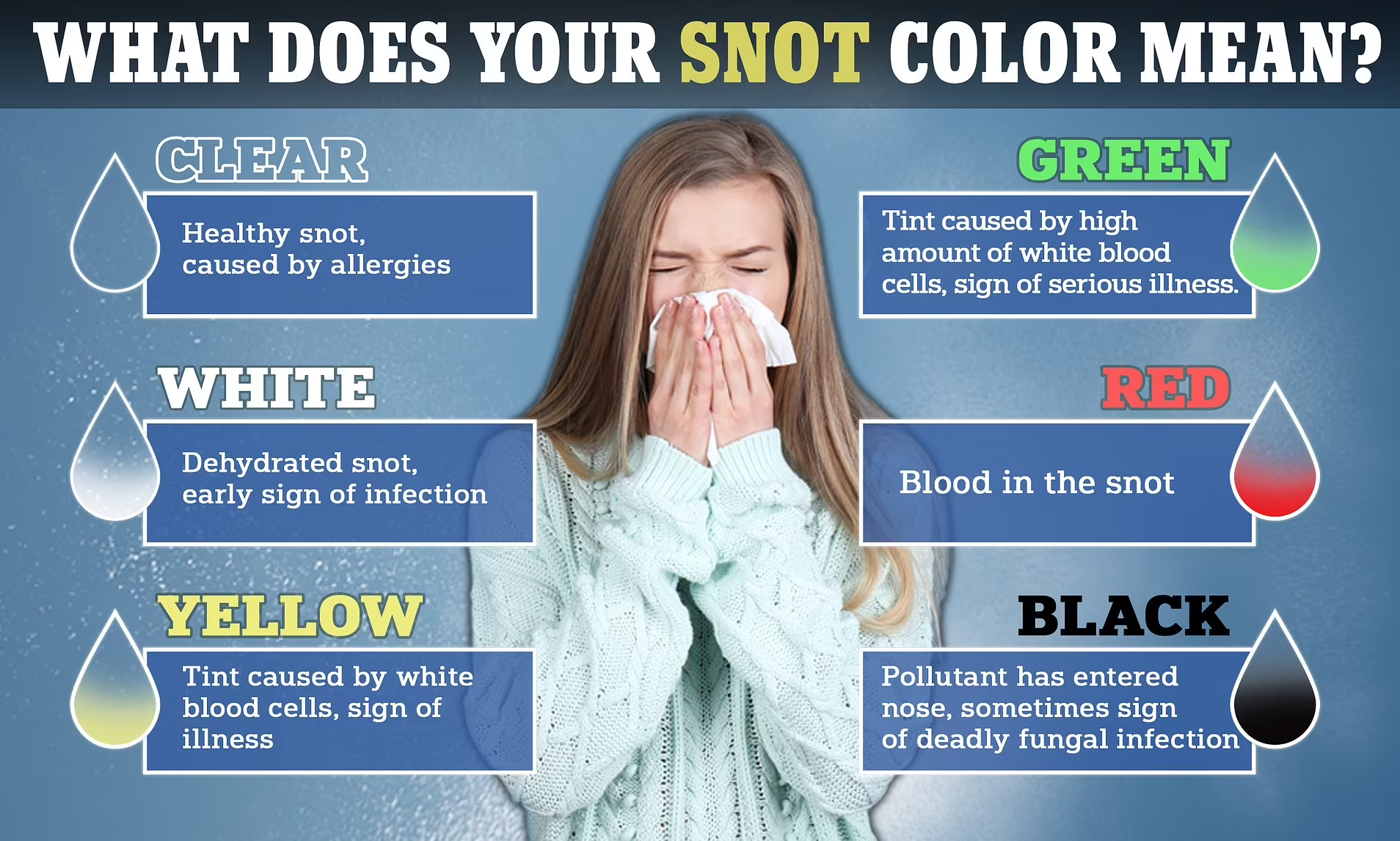
Snot, also called nasal mucus, is a gel-like substance produced by the mucous membranes lining your nasal passages and sinuses. Your body makes roughly 1–2 liters of mucus every single day — even when you feel perfectly healthy.
Mucus acts as a frontline defense. It traps dust, bacteria, allergens, and viruses before they can reach deeper tissues. Most of the time, it is clear and barely noticeable.
When your immune system detects a threat, mucus production increases and its composition changes. White blood cells rush to the area to attack invaders. As those white blood cells die off and mix with the mucus, they release enzymes and proteins that turn the mucus yellow — and eventually green as the infection progresses.
The yellow color in your snot comes primarily from dead white blood cells, specifically neutrophils. These immune cells flood the nasal passages during an infection or inflammatory response.
As neutrophils die after battling pathogens, they release a yellow-green enzyme called myeloperoxidase. This enzyme accumulates in the mucus and produces that distinct yellow — or deeper greenish — tint you see on your tissue.
Yellow snot is essentially visual proof that your immune system is doing its job. The color alone does not tell you whether the cause is viral or bacterial. It must be read alongside your other symptoms, how long they have lasted, and how they are progressing.
The common cold is the most frequent reason people develop yellow nasal discharge. When a virus enters the nasal passages, the immune system immediately sends white blood cells to fight it off.
Mucus usually starts clear and runny during the first 1–3 days of a cold. It then thickens and turns yellow or white as the immune response ramps up. Most colds resolve fully within 7–10 days without any prescription treatment.
Sinusitis occurs when the sinus cavities — air-filled spaces behind your forehead, cheeks, and eyes — become inflamed and blocked. Trapped mucus inside those cavities becomes a breeding ground for bacteria or viruses.
The result is thick yellow or green nasal discharge, facial pressure, headache, and congestion that may last well beyond a typical cold. Acute sinusitis lasts up to 4 weeks. Symptoms lasting longer than 10 days, or worsening after initially improving, often signal a bacterial sinus infection.
If yellow nasal discharge and sinus symptoms persist for 12 weeks or more, the condition is classified as chronic sinusitis. This is a more serious, ongoing inflammatory condition that does not resolve on its own without targeted treatment.
People with chronic sinusitis often experience constant congestion, post-nasal drip, fatigue, reduced sense of smell, and recurring facial pressure. Underlying causes include nasal polyps, a deviated septum, ongoing allergies, or repeated bacterial infections.
Allergies typically produce clear, watery nasal discharge. However, when nasal passages are already inflamed from allergen exposure, a secondary bacterial or viral infection can develop — turning that clear mucus yellow.
Pollen, dust mites, pet dander, and mold are the most common allergy triggers. Seasonal allergy sufferers are more vulnerable to developing sinus infections and yellow snot, especially during peak pollen seasons in spring and fall.
Unlike viral infections that improve on their own, a bacterial sinus infection often requires antibiotic treatment. Key signs that your yellow snot may be bacterial in origin include:
Symptoms persisting beyond 10 days without improvement, thick dark yellow or green discharge, severe facial pain or pressure around the forehead and cheeks, fever above 38°C (100.4°F), and a feeling of significant facial fullness or tooth pain in the upper jaw.
It is important to note that yellow or green mucus alone does not confirm a bacterial infection — color is not a reliable standalone diagnostic tool. Doctors assess duration, severity, and symptom pattern together.
The flu is a more aggressive viral infection than the common cold. It frequently causes yellow nasal discharge along with high fever, body aches, chills, extreme fatigue, and a dry or productive cough.
Yellow snot from the flu is caused by the same mechanism as a cold — immune cell activity — but symptoms are typically more intense and arrive more suddenly. The flu can also predispose you to secondary bacterial sinus or lung infections.
Post-nasal drip occurs when excess mucus drains down the back of the throat instead of out of the nose. When that mucus is yellow due to an infection or inflammation, you may experience a persistent cough, sore throat, bad breath, and a constant need to clear your throat.
Post-nasal drip from yellow mucus is common with both sinusitis and allergies. Treating the underlying cause — whether with antihistamines, nasal rinses, or antibiotics — resolves the drip.
Smoking directly damages the cilia — tiny hair-like structures in the nasal passages responsible for moving mucus. When cilia are damaged, mucus builds up, stagnates, and darkens to yellow or brown.
Chronic smokers often experience persistent yellow or brown nasal discharge and phlegm even without any infection. Exposure to heavy air pollution, workplace dust, chemicals, or smoke from fires can produce similar effects.
Nasal polyps are soft, non-cancerous growths inside the nasal passages or sinuses. They block normal mucus drainage, causing mucus to pool and change color.
A deviated septum — where the cartilage wall between the nostrils sits off-center — similarly impairs drainage on one side of the nose. Both conditions create environments where yellow mucus from recurring infections becomes a chronic problem.
Very dry indoor air — common in winter with central heating — can thicken nasal mucus. When mucus becomes too concentrated due to low humidity or poor hydration, it darkens and can appear pale yellow even without an infection.
Using a humidifier and increasing daily water intake usually resolves this type of yellow snot quickly, as it has no infectious cause.
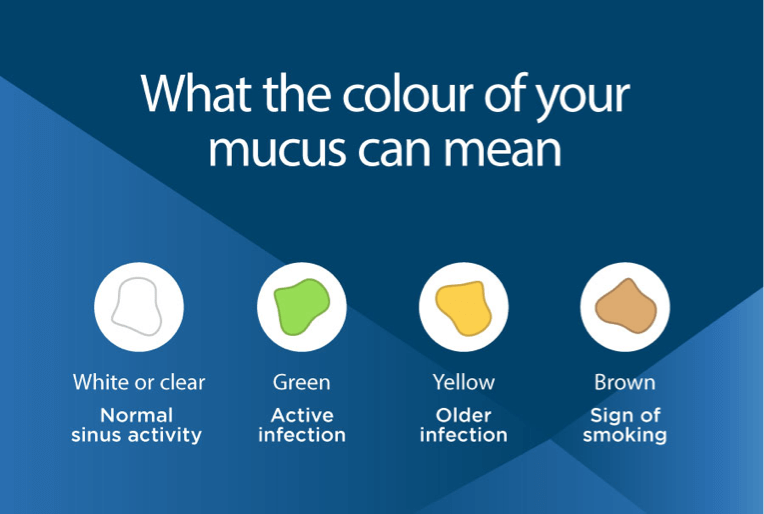
| Mucus Color | Most Likely Cause | Action Needed |
|---|---|---|
| Clear | Normal, allergies, early cold | None usually needed |
| White | Congestion, early cold, dehydration | Rest, fluids, monitor |
| Yellow | Viral or bacterial infection, allergies | Monitor — see doctor if 10+ days |
| Green | Progressing infection, possible bacterial | See doctor if 10+ days |
| Dark Yellow / Brown | Smoking, dry air, old mucus | Quit smoking; see doctor if persists |
| Pink / Red | Dry nasal passages, minor bleeding | Humidify; see doctor if heavy |
| Black | Fungal infection, heavy pollution, drug use | See doctor promptly |

Yellow and green snot are closely related and both result from immune cell activity in the nasal passages. Here is what distinguishes them:
Yellow snot tends to appear earlier in an infection when white blood cell activity is ramping up. Green snot often develops later in an infection as more immune cells die off and cellular debris accumulates in the mucus.
Historically, green snot was believed to reliably indicate a bacterial infection requiring antibiotics. Current medical evidence shows this is not accurate — both yellow and green mucus can occur in viral infections that resolve on their own. Duration, severity, and symptom pattern matter far more than color when deciding whether antibiotics are needed.
Yellow snot without fever is very common and usually not a cause for alarm. Most viral upper respiratory infections cause yellow mucus without a significant temperature rise.
Allergic reactions can also produce yellow-tinged discharge without any fever. The absence of fever generally suggests the cause is viral or allergy-related rather than bacterial.
Monitor the duration and whether symptoms are improving or worsening. If yellow snot without fever persists beyond 10 days or is accompanied by significant facial pressure, tooth pain, or fatigue, see a doctor to rule out a bacterial sinus infection.
Children develop more colds per year than adults — typically 6–8 colds annually in early childhood. Yellow nasal discharge is extremely common in kids and usually means their immune system is working normally.
In infants and toddlers, yellow snot that makes feeding difficult or causes breathing problems should be evaluated by a pediatrician. For older children, see a doctor if yellow nasal discharge is accompanied by fever above 38.5°C, ear pain, significant facial pain, or symptoms that last beyond 10 days.
Never give young children over-the-counter decongestants unless directed by a doctor. Saline drops and a bulb syringe are safe, effective tools for clearing yellow nasal congestion in infants.
| Feature | Viral Infection | Bacterial Infection |
|---|---|---|
| Onset | Gradual, builds over 1–3 days | Often follows a cold that gets worse |
| Mucus color | Clear turning yellow | Thick yellow or yellow-green |
| Duration | Improves in 7–10 days | Persists beyond 10 days or worsens |
| Fever | Low-grade or absent | Moderate to high fever possible |
| Facial pain | Mild | Significant facial pressure |
| Antibiotics needed | No | Sometimes — only if confirmed bacterial |
| Smell of mucus | Normal | May have foul odor |
Most cases of yellow snot caused by viral infections resolve on their own. The goal of home treatment is to relieve symptoms, thin the mucus, and support your body’s immune response.
Drinking 8–10 glasses of water daily is one of the most effective ways to thin yellow nasal mucus. Thin mucus drains more easily, reducing congestion and the pressure that builds up in blocked sinuses.
Warm liquids like herbal tea, clear broth, and warm water with honey and lemon are especially helpful. They provide hydration while also soothing an irritated throat and nasal lining.
A saline nasal rinse — using a neti pot, squeeze bottle, or pre-filled saline spray — flushes yellow mucus, allergens, and debris directly out of the nasal passages. This is one of the most evidence-backed home remedies for yellow snot and sinus congestion.
Use sterile, distilled, or previously boiled water to prepare saline rinses — never tap water directly. Rinsing once or twice daily during illness significantly reduces symptoms and speeds recovery.
Breathing warm steam from a bowl of hot water (with a towel draped over your head) or a hot shower loosens thick yellow mucus and makes it easier to blow out. Steam reduces nasal inflammation and provides temporary but immediate relief.
Adding a few drops of eucalyptus oil to the hot water can enhance the decongestant effect. Be careful to avoid burns from hot steam or water.
Running a cool-mist humidifier in your bedroom adds moisture to dry indoor air. This prevents nasal mucus from drying out and thickening, which reduces congestion and helps yellow snot drain more easily.
Clean the humidifier regularly to prevent mold growth inside the unit, which would worsen respiratory symptoms rather than help them.
Over-the-counter decongestants like pseudoephedrine (Sudafed) or oxymetazoline nasal spray reduce swelling in nasal tissues, improving airflow and helping yellow mucus drain.
Nasal decongestant sprays should not be used for more than 3 consecutive days — prolonged use causes rebound congestion (rhinitis medicamentosa), which worsens symptoms when you stop.
If allergies are causing your yellow nasal discharge, antihistamines like cetirizine (Zyrtec), loratadine (Claritin), or fexofenadine (Allegra) reduce the allergic inflammatory response and decrease mucus production.
Second-generation antihistamines are preferred because they cause less drowsiness. They work best when taken consistently during allergy season rather than only when symptoms flare.
Corticosteroid nasal sprays like fluticasone (Flonase) or mometasone (Nasonex) reduce nasal inflammation effectively over time. They are particularly useful for chronic yellow snot driven by allergies or recurring sinus issues.
These sprays take 1–2 weeks to reach full effectiveness. They are safe for daily long-term use and are available over the counter in many countries.
Your immune system does its best repair work during sleep. Getting 7–9 hours of sleep nightly during illness allows your body to produce more white blood cells and recover faster.
Eating foods rich in vitamin C (citrus fruits, bell peppers, strawberries), zinc (pumpkin seeds, legumes, lean meat), and antioxidants supports immune function and helps your body clear yellow snot more efficiently.

Antibiotics are only effective against bacterial infections. They have no effect on viruses — which cause the majority of yellow snot cases. Overusing antibiotics contributes to antibiotic resistance and causes side effects.
A doctor may prescribe antibiotics if symptoms persist beyond 10 days without improvement, worsen significantly after initially improving, or are accompanied by high fever and severe facial pain. The most commonly prescribed antibiotics for bacterial sinusitis are amoxicillin-clavulanate, doxycycline, or trimethoprim-sulfamethoxazole.
For chronic sinusitis or allergy-driven yellow mucus that does not respond to OTC options, doctors may prescribe stronger corticosteroid sprays or combination antihistamine-corticosteroid sprays.
These prescription-strength options reduce mucosal inflammation more powerfully and can break the cycle of recurring yellow nasal discharge.
If recurring yellow snot is driven by uncontrolled allergies, allergy testing identifies specific triggers. Allergen immunotherapy (allergy shots or sublingual drops) gradually desensitizes the immune system to those triggers over time.
This approach offers long-term relief for people whose yellow snot constantly recurs during allergy season or year-round.
When nasal polyps, a deviated septum, or other structural problems are the root cause of recurring yellow snot and chronic sinusitis, surgery may be recommended. Functional endoscopic sinus surgery (FESS) opens blocked sinus drainage pathways.
Septoplasty corrects a deviated septum. Both procedures significantly reduce the frequency of sinus infections and yellow nasal discharge in appropriate candidates.
Most yellow snot does not require a doctor visit. However, certain signs indicate that medical evaluation is necessary:
| Warning Sign | Action |
|---|---|
| Yellow snot lasting more than 10 days | See a doctor — may be bacterial |
| Symptoms improve then suddenly worsen | See a doctor — possible secondary infection |
| Fever above 38°C (100.4°F) for 3+ days | See a doctor |
| Severe facial pain or pressure | See a doctor — rule out sinusitis |
| Tooth pain in upper jaw alongside yellow snot | See a doctor |
| Yellow snot with vision changes or eye swelling | Seek urgent care immediately |
| Yellow snot with stiff neck or severe headache | Seek emergency care |
| Yellow snot and shortness of breath | Seek emergency care |
| Recurring yellow snot (3+ times per year) | See an ENT or allergist |
Prevention focuses on keeping the nasal passages healthy, reducing infection risk, and managing underlying triggers.
Wash hands frequently. Most viral infections that cause yellow snot are spread through hand-to-face contact. Regular handwashing with soap and water for at least 20 seconds is the single most effective prevention measure.
Stay vaccinated. Annual flu vaccination reduces your risk of influenza-related yellow snot. Staying current with other recommended vaccines supports overall respiratory immunity.
Manage allergies proactively. Treating allergic rhinitis before it progresses to a secondary infection prevents much of the yellow snot that allergy sufferers experience. Use nasal steroid sprays consistently throughout allergy season.
Humidify dry indoor air. Maintaining indoor humidity between 40–50% prevents nasal mucus from drying out and thickening. This keeps the nasal passages healthy and less susceptible to infection.
Quit smoking. Tobacco smoke paralyzes nasal cilia, preventing the natural clearance of mucus. Quitting smoking restores normal mucociliary function and dramatically reduces yellow nasal discharge.
Stay hydrated daily. Consistent hydration keeps mucus thin and flowing. This prevents the stagnation inside sinus cavities where bacteria can multiply and cause yellow-mucus-producing infections.
Yellow snot without other symptoms often means your immune system is finishing off a mild viral infection. It can also result from dry air, mild allergies, or residual mucus from a recent cold. Monitor it for 7–10 days.
No. Yellow snot is usually caused by a viral infection, which antibiotics cannot treat. Antibiotics are only needed when a bacterial infection is confirmed or strongly suspected based on symptoms lasting beyond 10 days.
Yellow snot from a viral cold typically lasts 7–10 days. If it persists beyond 10 days, worsens after initial improvement, or is paired with fever and facial pain, it may indicate a bacterial infection needing treatment.
Yes, indirectly. Allergies typically produce clear mucus, but the inflammation they cause can lead to secondary viral or bacterial sinus infections, which then produce yellow nasal discharge.
The yellow snot itself is not contagious, but the underlying infection causing it — such as a cold or flu — is. Avoid close contact with others, cover coughs and sneezes, and wash hands regularly when you have a respiratory infection.
Saline nasal rinses, staying well hydrated, steam inhalation, and OTC decongestants are the fastest home remedies. If a bacterial infection is confirmed, antibiotics prescribed by a doctor clear yellow snot most effectively.
Yes. Yellow snot often progresses to green as the infection advances and more immune cells die off. Green snot does not automatically mean you need antibiotics — duration and other symptoms are more important indicators.
Mucus pools and thickens overnight because you are lying still and producing less saliva. Yellow-tinted snot only in the morning is often dried or concentrated mucus from mild congestion or dry air rather than a sign of significant infection.
Yes. Dehydration concentrates nasal mucus, causing it to thicken and appear yellow or pale yellow. Increasing daily water intake usually clears up dehydration-related yellow snot within a day or two.
Go to the emergency room if yellow snot is accompanied by vision changes, significant eye swelling, a stiff neck, a very high fever, severe headache, or difficulty breathing. These symptoms may indicate a serious complication like orbital cellulitis or meningitis.
Why is my snot yellow is a question with a reassuring answer most of the time — your immune system is doing exactly what it should. Yellow nasal mucus signals that white blood cells are fighting off a virus, bacterial irritant, or allergen inside your nasal passages.
In the majority of cases, yellow snot clears up on its own within 7–10 days with simple home care: staying hydrated, using saline rinses, breathing steam, and resting. The color alone does not determine whether you need antibiotics.
What matters is how long symptoms last, whether they are getting worse, and whether they come with fever or severe facial pain.
If yellow snot persists beyond 10 days, keep recurring throughout the year, or comes with warning signs, see a doctor promptly. With the right understanding and timely care, yellow snot is a manageable, temporary symptom — not something to lose sleep over.