
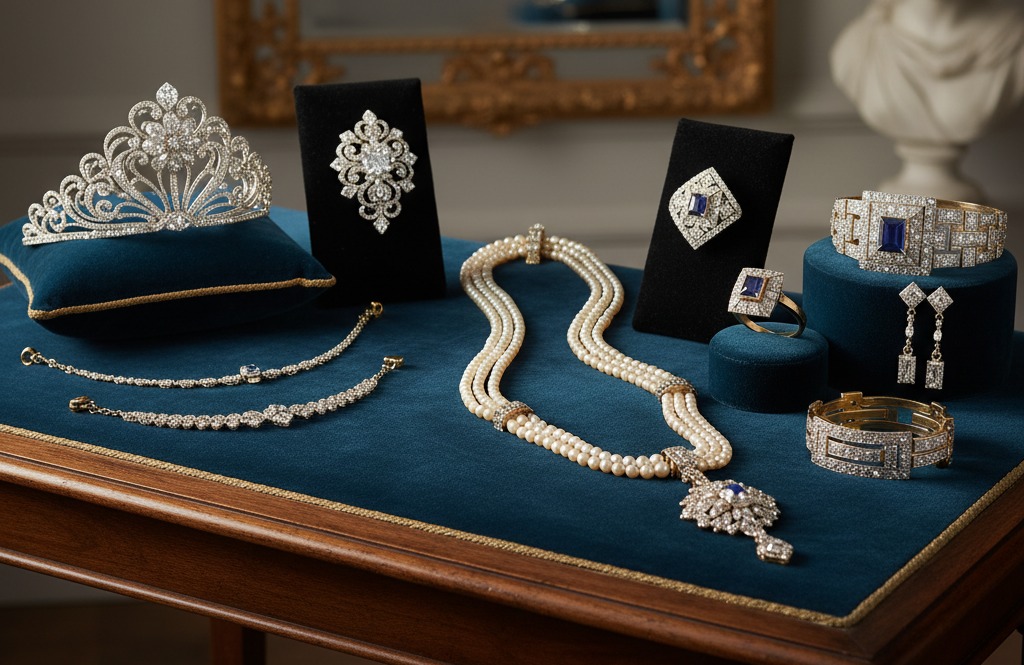
In a crowded luxury market, recognition is everything. Many brands use high-quality materials and skilled craftsmanship, but only a few manage to create a visual identity strong enough to be recognized at a glance.
This is what separates ordinary luxury from iconic design.
Recognizable jewelry is not just about beauty—it’s about consistency. It’s about creating elements that people associate with a brand immediately, even without seeing a logo.
Signature design elements are small but intentional features that define a brand’s identity.
These may include:
Over time, these elements become a visual language.
They allow a brand to communicate its identity without relying on branding or marketing.
Consistency is one of the most important factors in building recognition.
When design elements are used repeatedly across collections, they create familiarity. This familiarity leads to trust and, eventually, loyalty.
Consumers begin to recognize:
Even when new designs are introduced, they still feel connected to the brand.
Collections like roberto coin jewelry demonstrate how consistent design language can evolve over time while maintaining a clear identity.
A common challenge for luxury brands is balancing innovation with consistency.
If a brand changes too much, it loses its identity.
If it changes too little, it risks becoming outdated.
Successful designers find a middle ground.
They introduce new ideas while keeping core elements intact. This allows the brand to evolve without losing recognition.
Recognition is not only visual—it’s also emotional.
When people recognize a design, they associate it with:
This creates a deeper connection than a purely aesthetic response.
Over time, this emotional connection becomes one of the strongest drivers of brand loyalty.
Interestingly, the most effective signature elements are often subtle.
They are not designed to be obvious or overpowering. Instead, they integrate naturally into the design.
This subtlety makes them:
Rather than relying on bold branding, they allow the craftsmanship to speak for itself.
Modern consumers are increasingly looking for jewelry that can be worn daily.
This means that recognizable design must also be practical.
Well-designed pieces:
This balance between identity and usability is key to long-term success.
Design alone is not enough to create recognition. Craftsmanship plays an equally important role.
High-quality execution ensures that:
This reinforces the brand’s identity through experience, not just visuals.
For many people, jewelry is not just about appearance—it’s about meaning.
Recognizable designs often become part of personal identity. They are worn regularly, associated with specific moments, and remembered over time.
This transforms jewelry from an accessory into something more personal.
Recognizable design adds value in several ways:
It stands out without being excessive.
It creates familiarity and connection.
It integrates easily into daily wear.
It remains relevant even as trends change.
This combination makes recognizable jewelry a stronger investment.
Many of the most recognizable jewelry designs are rooted in heritage.
Historical influences provide:
This connection to the past strengthens the overall identity of the brand.
While heritage is important, modern consumers also expect relevance.
This means adapting design elements to:
The ability to evolve without losing identity is what keeps a brand competitive.
Signature design elements create a foundation that supports long-term growth.
They allow brands to:
This stability is rare in an industry driven by constant change.
In luxury jewelry, recognition is not achieved through branding alone—it is built through design.
By focusing on:
brands can create pieces that are instantly recognizable and deeply valued.
In a world full of options, this level of clarity and identity is what truly sets exceptional jewelry apart.