
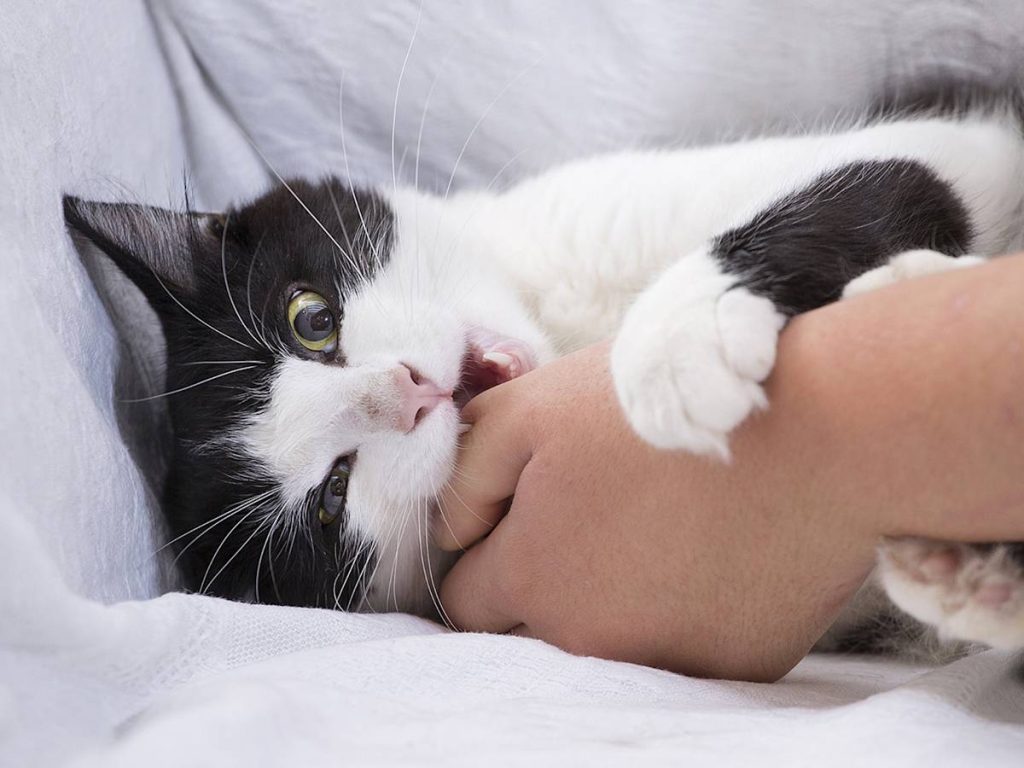
Why does my cat bite me — this is one of the most searched questions by cat owners in 2026. If your cat bites you out of nowhere, during petting, or even while purring, you are not alone.
Cat biting is a normal feline behavior that can signal many things — from love and playfulness to stress and pain. Understanding the real reason behind the bite is the first step to solving it.
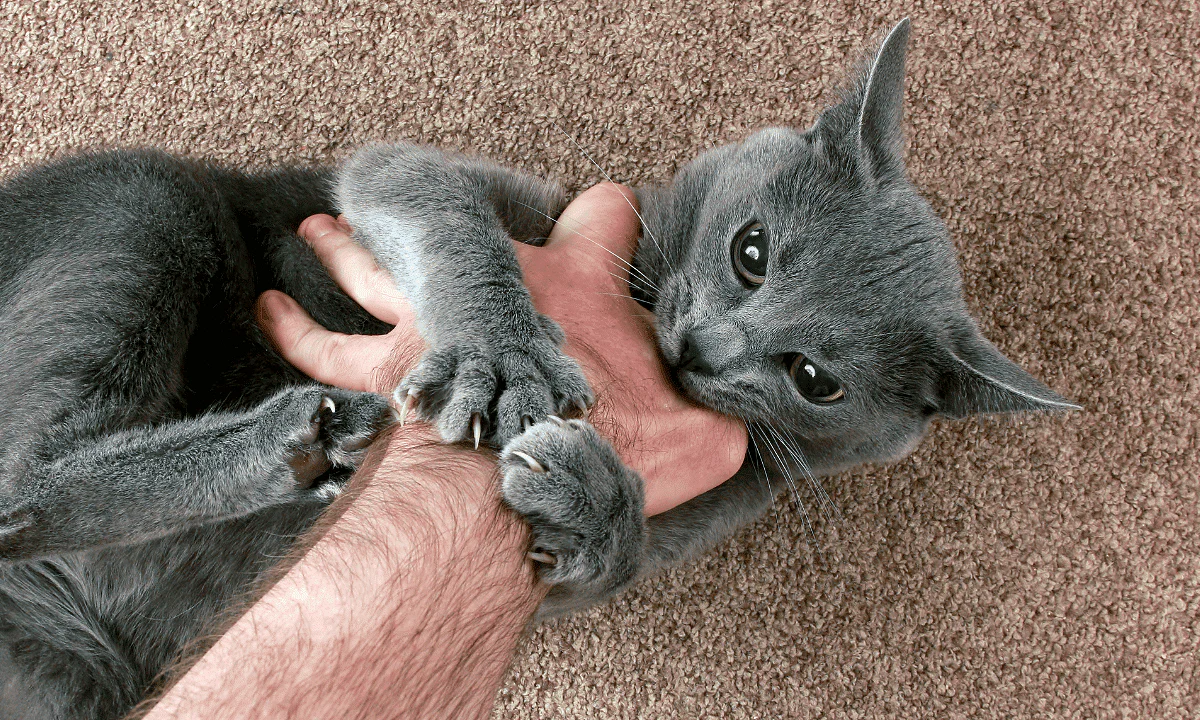
Cats are natural predators. Even indoor cats carry strong hunting instincts that drive them to stalk, pounce, and bite.
When your cat bites your hand or ankle, they are often treating you like prey. This is especially common in kittens and young adults.
The fix is simple — give them toys they can chase and bite instead of using your hands during play.
You are stroking your cat and everything seems fine — then suddenly they bite. This is called petting-induced aggression.
Cats enjoy petting only up to a point. When touch becomes too much, their nervous system goes into overload and they bite to make it stop.
Watch for warning signs: skin twitching, a swishing tail, dilated pupils, or sudden stillness before the bite.
Not all bites mean your cat is angry. Love bites are gentle nips that cats give as a sign of bonding and affection.
These bites usually do not break the skin. They often happen during calm moments when your cat is relaxed, purring, or grooming you.
If the bite is soft and your cat’s body language is relaxed, it is a love bite — a feline term of endearment.
Sometimes your cat gets worked up by something they cannot reach — a bird outside the window, another cat in the yard — and bites you instead.
This is called redirected aggression. Your cat is not angry at you personally; they are just overexcited and you happen to be nearby.
Give your cat space after these moments and avoid touching them until they calm down completely.
A scared cat will bite as a last resort when they feel trapped and unable to escape.
Loud noises, unfamiliar people, vet visits, or sudden handling can all trigger this response. Before biting, they usually give clear body language warnings: flat ears, arched back, puffed fur, hissing.
If you see those signs, back off immediately. Never corner a frightened cat.
If your cat suddenly starts biting when they never did before, pain may be the cause.
Arthritis, dental pain, skin infections, or internal discomfort can make your cat bite when you touch a sensitive spot. The bite is their way of saying “that hurts, stop.”
A sudden change in biting behavior always warrants a vet visit to rule out medical causes.
Kittens between 3 and 6 months old go through a teething phase, and their gums are sore.
Biting and chewing help relieve that discomfort. If you have a young kitten constantly gnawing on your fingers, teething is likely the reason.
Provide kitten-safe chew toys and redirect them away from your hands.
Kittens that were weaned too early or raised without siblings often miss a critical socialization window.
They never learned from other cats that biting humans is not acceptable. If you encouraged your kitten to play with your fingers and toes when they were small, they will continue doing it as adults.
The habit can be unlearned — but it takes consistency and patience.
Some cats bite simply to get your attention. If they are bored, hungry, or want you to play, a nip on the ankle is their way of saying “hey, look at me.”
This usually happens when you are distracted — working, watching TV, or on your phone. The cat wants engagement and biting works.
Do not reward this behavior with immediate attention. Instead, establish scheduled play sessions every day.
Moving to a new home, a new baby, a new pet, or even changes in your daily schedule can stress your cat out.
A stressed cat is more reactive and more likely to bite. They feel less in control of their environment and may lash out as a coping response.
Maintaining a stable routine, enriching their environment with cat trees and hiding spots, and keeping life predictable helps reduce stress-based biting significantly.
Learning to read your cat’s body language is the single most effective way to prevent bites. These are the signals that a bite is coming:
| Warning Sign | What It Means |
|---|---|
| Tail lashing or thumping | Irritation building up |
| Skin twitching on the back | Overstimulation starting |
| Ears flattening sideways | Discomfort or fear |
| Dilated pupils | High arousal state |
| Sudden stillness while being petted | About to bite |
| Crouching low with puffed fur | Defensive/fearful state |
| Hissing or growling | Strong warning — back off now |
| Whiskers pinned back | Aggression or fear |
Never ignore these signals. Your cat is communicating clearly — they just do not use words.
This is one of the most common questions cat owners ask. Here is a simple comparison:
| Feature | Love Bite | Aggressive Bite |
|---|---|---|
| Pressure | Gentle, holding | Hard, painful |
| Skin broken? | Rarely | Often |
| Body language | Relaxed, soft eyes | Tense, flat ears |
| Context | During calm petting or grooming | During fear, stress, or play overstimulation |
| Sound | Often silent or purring | May be preceded by hissing |
| Intent | Affection or communication | Self-defense or overstimulation |
If the bite draws blood and your cat looked scared or tense beforehand, it was an aggressive bite. If it was gentle and your cat seems happy — it is probably affection.
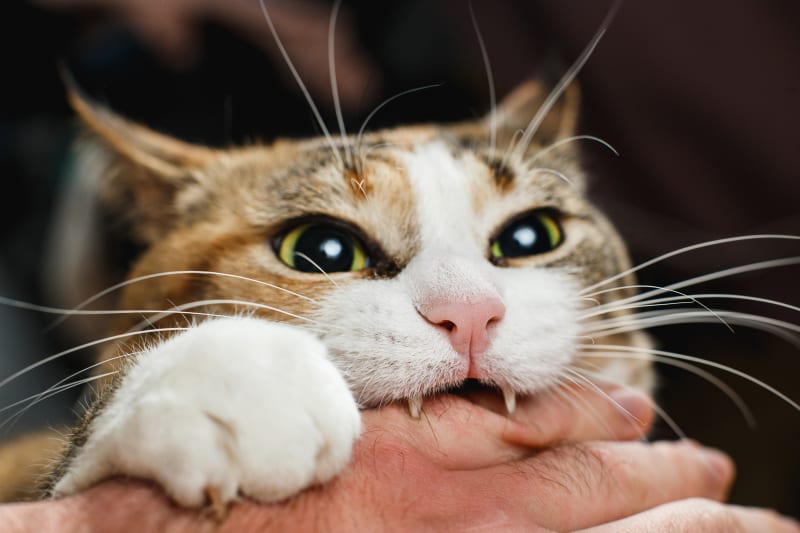
This is the most important rule. If you let your kitten bite your fingers during play, they will do it as adults — with much stronger teeth.
Always use wand toys, feather teasers, or stuffed kicker toys instead of your hands. Make this a household rule for everyone.
Keep petting sessions short. Watch your cat’s body language and stop petting before they reach their limit.
Most cats prefer 3–5 minutes of petting rather than long continuous sessions. Leave them wanting more — do not push their tolerance.
The moment your cat looks like they are about to bite, toss a toy across the room or dangle a feather wand.
Redirecting channels their hunting energy onto something appropriate. Do this consistently and your cat will learn that toys — not you — are for biting.
Play aggression is often rooted in boredom and excess energy. Two 15-minute play sessions every day — morning and evening — can dramatically reduce biting.
Use interactive toys that simulate real prey movement. A tired cat is a non-biting cat.
Never punish your cat for biting. Scruffing, yelling, squirting with water, or flicking their nose creates fear and anxiety — and makes the biting worse over time.
Reward calm, gentle behavior with treats and praise. Ignore or calmly disengage from biting behavior without reacting dramatically.
If your cat bites during play, freeze immediately. Do not pull away sharply — this triggers their hunting instinct and makes them hold on harder.
Go still, wait for them to release, then calmly walk away. This teaches them that biting ends playtime.
If your cat bites during stressful situations, work on reducing those triggers. Use Feliway plug-in diffusers, provide hiding spots, and maintain a consistent daily routine.
Identify what changes in the environment are causing the stress and address those root causes directly.
A cat that starts biting with no prior history may be in pain. Do not guess — get a vet checkup.
Conditions like dental disease, arthritis, hyperthyroidism, or skin irritation can all cause sudden aggression. Medical treatment often resolves the biting completely.
If you adopted a poorly socialized or previously abused cat, go slow. Work with a certified cat behavior consultant if biting is severe.
Build trust gradually — short, positive interactions daily, never forcing contact. Some cats take weeks or months to fully open up.
Boredom is a major driver of biting. Rotate your cat’s toys every few days to keep things interesting.
Add cat trees, window perches, food puzzles, and cardboard boxes to create a stimulating home environment. A mentally engaged cat bites people far less.
Cat bites can be surprisingly dangerous due to bacteria in their mouths. Here is what to do immediately:
Step 1: Wash the wound thoroughly with soap and water for at least 5 minutes.
Step 2: Apply an antiseptic and cover with a clean bandage.
Step 3: Monitor for signs of infection over the next 24–48 hours: redness, swelling, warmth, or pus.
Step 4: If the bite is deep, you do not know the cat’s vaccination status, or you see infection signs — seek medical attention promptly. Cat bites have a high infection rate and can lead to serious complications if untreated.
Never ignore a deep cat bite. Pasteurella bacteria from cat mouths can cause rapid infections.
Not every biting issue can be solved at home. Contact your vet if:
A vet can rule out medical causes and may refer you to a certified cat behaviorist for more complex cases.
It usually means they were overstimulated or saw something that triggered redirected aggression. Watch for subtle body language signs like tail flicking or skin twitching right before the bite.
Gentle bites are typically love bites — a sign of affection and bonding. If your cat’s body is relaxed and they are purring, consider it a compliment.
This is petting-induced aggression from overstimulation. Keep petting sessions short, avoid sensitive areas like the belly, and stop before warning signs appear.
This is normal grooming behavior. Cats bite and lick their littermates when grooming, and they extend this behavior to their favorite humans too.
Morning biting is usually attention-seeking behavior. Your cat is hungry or wants play and biting is the fastest way to wake you up. Set a feeding schedule to reduce this.
Kittens bite because they are teething, exploring their world, and learning play behavior. Redirect them to toys consistently and they will outgrow it with proper guidance.
Yes, it is very common. Biting is a natural feline communication tool. The goal is not to eliminate it entirely but to redirect it and understand what your cat is trying to tell you.
Never use your hands as toys, keep petting sessions short, redirect to toys immediately, and use structured daily playtime to burn off energy. Consistency is key.
Yes. Cat bites have a high infection rate due to Pasteurella bacteria. Always wash any bite wound immediately with soap and water and seek medical attention for deep punctures.
No. Punishment creates fear and anxiety and makes biting worse over time. Use redirection, positive reinforcement, and calm disengagement instead.
Why does my cat bite me — the answer is almost never simple anger or spite. Cats bite to communicate pain, playfulness, overstimulation, fear, affection, and stress. Each bite carries a message and your job as a cat owner is to learn how to read it.
The good news is that most biting behavior can be significantly reduced or eliminated with the right approach. Start by watching your cat’s body language carefully, keeping play sessions structured, and never using your hands as toys. Address stress triggers in the environment and visit your vet if biting appears suddenly.
With patience, consistency, and the strategies outlined in this guide, you can build a calmer, safer, and stronger relationship with your feline companion. Understanding your cat does not just stop the biting — it makes you a better pet parent and gives your cat the life they deserve.