
Why do my burps smell like rotten eggs is one of the most searched digestive health questions online and for good reason. That foul, sulfur-like odor coming out of your mouth is not just embarrassing, it can also be a signal your body is sending you.
In most cases, it is caused by hydrogen sulfide gas produced during digestion. Sometimes it is linked to what you ate. Other times, it points to a deeper gastrointestinal issue.
When your burps smell like rotten eggs, they are called sulfur burps or eggy burps. The smell comes from hydrogen sulfide gas, also written as H2S, which is produced inside your digestive tract.
Hydrogen sulfide is a natural byproduct of digestion. In small amounts, it is completely normal. But when it builds up excessively, it escapes through your mouth as a burp with that distinct, awful rotten egg odor.
Normal burping happens up to 30 times a day and is usually odorless. The moment that rotten egg smell appears, something has shifted in your gut chemistry, and it is worth paying attention to.
There is no single cause of sulfur burps. The reasons range from what you ate for dinner to a serious bacterial infection. Below is a breakdown of every possible cause.
The most common reason your burps smell like rotten eggs is diet. Certain foods are naturally high in sulfur compounds, and when bacteria in your gut break them down, they produce hydrogen sulfide gas.
The more sulfur-rich food you eat, the more H2S your gut produces. This gas has to go somewhere, and it often comes out as a foul-smelling burp.
Common sulfur-rich foods that trigger eggy burps:
| Food Category | Specific Foods |
|---|---|
| Vegetables | Broccoli, cauliflower, Brussels sprouts, cabbage, onions, garlic |
| Proteins | Eggs, red meat, chicken, fish, seafood |
| Dairy | Milk, cheese, butter |
| Beverages | Beer, certain wines |
| Other | Legumes, dried fruits |
When you eat fast, you swallow extra air along with your food. That air gets trapped in the stomach and has to be released through burping.
Combine this with sulfur-containing foods and the result is both frequent and foul-smelling burps. Habits like chewing gum, drinking through straws, smoking, and drinking carbonated beverages also increase the air you swallow.
Helicobacter pylori, commonly called H. pylori, is a type of bacteria that lives in the stomach lining. It is one of the most well-known medical causes of sulfur burps.
H. pylori disrupts the normal digestive process, causes excess gas production, and leads to symptoms like bloating, heartburn, nausea, and rotten egg smelling burps. It often requires antibiotics to treat properly.
Gastroesophageal reflux disease, or GERD, causes partially digested food and stomach acid to flow back up the esophagus. This reflux action pushes foul-smelling stomach gases upward and out through the mouth as burps.
GERD is very common and can be triggered by fatty foods, caffeine, alcohol, and lying down after eating. People with GERD often experience heartburn alongside their smelly burps.
IBS is a chronic digestive condition that affects the large intestine. Research has linked IBS to higher levels of hydrogen sulfide in the digestive tract, which is why sulfur burps are a common complaint among IBS sufferers.
People with IBS often also experience bloating, cramping, diarrhea, and constipation alongside their eggy burps. Managing IBS often helps reduce the frequency of sulfur burps significantly.
IBD includes conditions like Crohn’s disease and ulcerative colitis. Both involve chronic inflammation of the gastrointestinal tract and are associated with increased hydrogen sulfide production.
Sulfur burps in people with IBD are often accompanied by abdominal pain, diarrhea, blood in the stool, and fatigue. These are serious symptoms that always require medical evaluation.
Giardia is an intestinal infection caused by a microscopic parasite. It is commonly acquired through contaminated water or poor sanitation. The parasite sets up in the small intestine and causes significant digestive disruption.
Sulfur burps combined with diarrhea, poor appetite, bloating, and weight loss are classic signs of a Giardia infection. This condition requires antiparasitic medication to clear up.
SIBO occurs when bacteria that normally live in the large intestine migrate into and overpopulate the small intestine. These bacteria produce excess gas, including hydrogen sulfide.
Symptoms of SIBO include bloating, abdominal pain, diarrhea, and sulfuric burps. A breath test is typically used to diagnose SIBO, and treatment usually involves antibiotics and dietary changes.
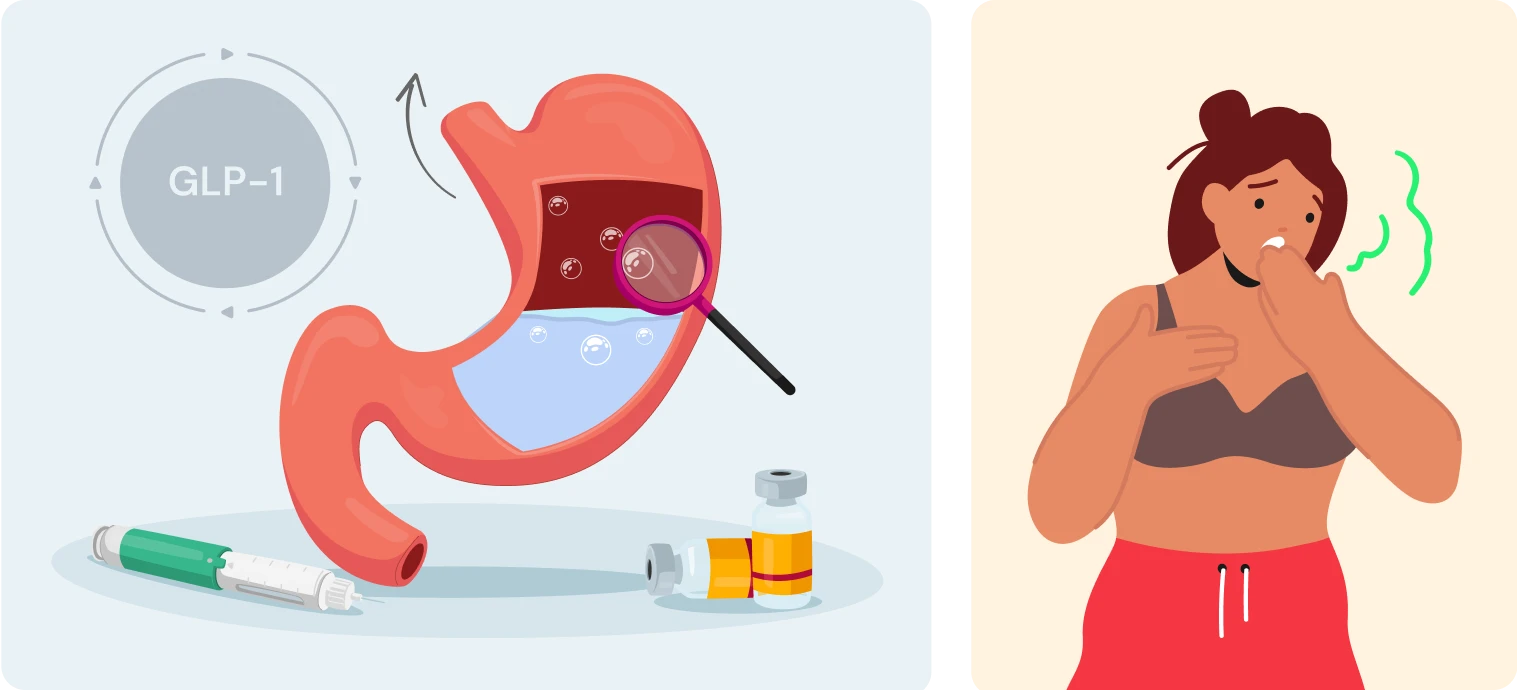
A growing cause of sulfur burps in recent years is GLP-1 receptor agonist medications like Ozempic, Wegovy, and Mounjaro. These drugs slow down how quickly food leaves the stomach.
When food sits in the stomach longer, it has more time to ferment and produce sulfur gas. This is why sulfur burps are a frequently reported side effect of these popular weight loss and diabetes medications.
Certain antibiotics disrupt the balance of gut bacteria, which can trigger increased hydrogen sulfide production and sulfur burps. Some over-the-counter supplements, including protein powders and certain vitamins, can also contribute to eggy burps.
Always check the side effects of any new medication you start, especially if smelly burps appear shortly after starting it.
Celiac disease is an autoimmune condition triggered by gluten. When someone with celiac disease eats gluten-containing foods, it damages the small intestine and severely disrupts digestion.
This disruption can lead to increased gas production, bloating, and sulfur burps. Many people with celiac disease experience significant relief from digestive symptoms, including eggy burps, once they adopt a strict gluten-free diet.
Stress and anxiety have a direct impact on gut function. The gut-brain axis means that emotional stress can physically alter how your digestive system works, often causing increased gas production and changes in gut bacteria.
People who experience chronic stress often report more frequent digestive complaints, including sulfur burps. Managing stress through exercise, therapy, or mindfulness can sometimes reduce these symptoms.

When sulfur burps come alongside diarrhea, it is a stronger signal that something is wrong. This combination is often associated with a gastrointestinal infection, either bacterial, viral, or parasitic.
Possible causes of sulfur burps and diarrhea together include Giardia infection, H. pylori infection, norovirus, food poisoning, IBS flare-ups, and IBD. If both symptoms are present and persistent, see a doctor without delay.
The presence of blood in the stool, severe abdominal pain, high fever, or signs of dehydration alongside sulfur burps and diarrhea makes a medical visit urgent.
Nausea combined with sulfur burps is another sign that an underlying condition may be at play. This combination frequently appears with H. pylori infection, GERD, gastroparesis, and medication side effects.
Gastroparesis is a condition where the stomach empties too slowly. Food stays in the stomach much longer than it should, fermenting and producing sulfur gas. This is particularly common in people with diabetes or those taking GLP-1 medications.
Pregnant women commonly experience sulfur burps due to hormonal changes that slow digestion. The growing uterus also puts pressure on the stomach and digestive tract, which can worsen gas and burping.
Dietary changes, eating smaller meals, staying hydrated, and avoiding sulfur-heavy foods are the safest management strategies during pregnancy. Always consult your doctor before taking any medication or supplement while pregnant.
Getting rid of rotten egg smelling burps depends entirely on the cause. Here is a full breakdown of what works.
The first and most accessible fix is changing what you eat. Reducing sulfur-rich foods like eggs, red meat, garlic, onions, and cruciferous vegetables can significantly cut down hydrogen sulfide production in the gut.
Keep a food diary for one to two weeks and note when your eggy burps occur. This often reveals specific trigger foods. Remove them one at a time to identify the exact culprits.
Eating slowly reduces the amount of air you swallow with your food. Taking smaller, more frequent meals throughout the day rather than three large ones also helps by keeping your digestive system moving more efficiently.
Avoid lying down right after eating. Stay upright for at least 30 minutes to allow gravity to help food move through the stomach properly.
Drinking enough water throughout the day supports healthy digestion and helps flush out excess bacteria. Aim for at least 8 glasses of water daily.
Water also helps the digestive system break down heavy proteins and sulfur-containing foods more effectively, reducing the amount of H2S gas produced.
Several herbs and natural remedies have been shown to support digestion and reduce sulfur burp frequency.
| Remedy | How It Helps |
|---|---|
| Ginger tea | Reduces gas and supports stomach emptying |
| Peppermint tea | Relaxes digestive muscles and reduces bloating |
| Chamomile tea | Soothes the gut lining and reduces gas |
| Fennel seeds | Breaks down gas bubbles in the digestive tract |
| Turmeric | Has anti-inflammatory effects on the gut |
| Manuka honey | Kills harmful gut bacteria that cause bad-smelling burps |
| Apple cider vinegar | Regulates gut bacteria growth and supports digestion |
| Baking soda water | Neutralizes stomach acid and reduces gas pressure |
Probiotic supplements and probiotic-rich foods like yogurt, kefir, kimchi, and sauerkraut can help restore healthy gut bacteria balance. A balanced gut microbiome produces less hydrogen sulfide and fewer sulfur burps.
Talk to your doctor before starting probiotics, especially if you have IBS, IBD, or SIBO, as some strains may not be appropriate for every condition.

Simethicone, sold under brand names like Gas-X, helps break down gas bubbles in the stomach and intestines. It can provide quick relief from bloating and excessive burping.
Antacids can help if GERD is the underlying cause. Bismuth subsalicylate, the active ingredient in Pepto-Bismol, can also neutralize sulfur gases in the gut and reduce rotten egg smelling burps temporarily.
If your sulfur burps are caused by an underlying medical condition, your doctor will prescribe targeted treatment. H. pylori infection is treated with a combination of antibiotics and proton pump inhibitors.
Giardia requires antiparasitic medication. IBS, IBD, and GERD all have specific prescription options. Never self-diagnose. A proper diagnosis from a gastroenterologist is essential for effective treatment.
| Foods to Avoid | Reason |
|---|---|
| Eggs and red meat | Very high in sulfur compounds |
| Broccoli, cabbage, cauliflower | Top sulfur-rich vegetables |
| Garlic and onions | Strong sulfur content, hard to digest |
| Beer and wine | Fermented, increases gut gas |
| Dairy products | High protein, slow to digest |
| Carbonated drinks | Adds excess air to the stomach |
| Processed foods | Often contain preservatives that upset the gut |
| Helpful Foods | Benefit |
|---|---|
| Yogurt and kefir | Restore healthy gut bacteria |
| Ginger | Natural digestive aid |
| Oats and whole grains | Gentle on the digestive system |
| Leafy greens (non-cruciferous) | Nutritious without high sulfur content |
| Bananas | Easy to digest, soothing to the gut |
| Herbal teas | Support digestion and reduce gas |
| Water | Flushes bacteria and supports digestion |
Occasional eggy burps after a sulfur-heavy meal are nothing to worry about. But frequent or worsening sulfur burps deserve medical attention, especially when paired with other symptoms.
See a doctor right away if you have sulfur burps plus any of the following:
A gastroenterologist can run tests including breath tests, stool analysis, endoscopy, and blood tests to identify the exact cause and create a targeted treatment plan.
Doctors use several diagnostic tools depending on your symptoms and medical history. A detailed food and symptom diary you bring to your appointment can be extremely helpful.
Common diagnostic approaches include a breath test for H. pylori and SIBO, stool tests for infections and parasites, blood tests for celiac disease and inflammatory markers, upper endoscopy to examine the esophagus and stomach, and colonoscopy if IBD is suspected.
Early diagnosis leads to faster, more effective treatment and prevents minor issues from becoming serious ones.
Children can also experience rotten egg smelling burps. In kids, the most common causes are sulfur-rich foods, eating too fast, constipation, and occasional stomach infections.
If a child has persistent sulfur burps along with stomach pain, fever, or diarrhea, a pediatrician should evaluate them. Giardia infection from contaminated water is a common culprit in young children who play outdoors.
The gut microbiome plays a central role in how much hydrogen sulfide your digestive tract produces. A healthy, balanced gut microbiome keeps H2S production at normal, manageable levels.
When gut bacteria are disrupted by antibiotics, poor diet, stress, or infections, certain sulfur-reducing bacteria can overgrow. This leads to excess H2S and more frequent sulfur burps.
Supporting gut microbiome health through a diverse diet, regular exercise, adequate sleep, and probiotic foods is one of the best long-term strategies for preventing eggy burps.
Burps that smell like rotten eggs are caused by hydrogen sulfide gas produced when gut bacteria break down sulfur-containing foods. Medical conditions like H. pylori, GERD, and IBS can also cause this smell.
Occasional sulfur burps are not dangerous and are usually caused by diet. Frequent sulfur burps accompanied by diarrhea, pain, or fever can indicate an underlying medical condition that needs treatment.
High-sulfur foods like eggs, red meat, garlic, onions, broccoli, cabbage, cauliflower, and dairy products are the most common dietary triggers for sulfur burps.
Drinking water, taking simethicone or Pepto-Bismol, sipping ginger or peppermint tea, and avoiding sulfur-rich foods can provide quick relief from eggy burps at home.
Yes. GLP-1 medications like Ozempic and Wegovy, certain antibiotics, and some supplements can cause sulfur burps by slowing digestion or disrupting gut bacteria balance.
See a doctor if your sulfur burps are happening more than three times per week, or if they come with diarrhea, abdominal pain, blood in stool, fever, nausea, or unexplained weight loss.
Yes. Chronic stress disrupts gut function and alters gut bacteria through the gut-brain axis, which can increase hydrogen sulfide production and lead to more frequent eggy burps.
Yes, H. pylori infection is a well-known cause of sulfur burps. Other symptoms include bloating, heartburn, nausea, and stomach pain. A doctor can confirm H. pylori with a breath or stool test.
Yes. Hormonal changes during pregnancy slow digestion, and uterine pressure on the stomach worsens gas. Sulfur burps during pregnancy are common and usually manageable with diet adjustments.
Ginger tea, peppermint tea, apple cider vinegar, manuka honey, chamomile tea, baking soda water, and fennel seeds are all effective natural remedies that support digestion and reduce sulfur burp frequency.
If you have been asking yourself why do my burps smell like rotten eggs, now you have a complete answer. In most cases the cause is dietary, linked to sulfur-rich foods like eggs, garlic, meat, and cruciferous vegetables. Eating more slowly, staying hydrated, and adjusting your diet can make a significant difference quickly.
However, when rotten egg burps are frequent, persistent, or paired with other symptoms like diarrhea, pain, nausea, or fever, they are your body’s way of telling you something deeper is going on. Conditions like H. pylori infection, GERD, IBS, IBD, Giardia, and SIBO all require proper medical diagnosis and targeted treatment.
Do not ignore what your digestive system is telling you. Track your symptoms, adjust your diet, try the home remedies listed in this guide, and book an appointment with a gastroenterologist if things do not improve. Your gut health directly impacts your overall health, energy, and quality of life. Take those rotten egg burps seriously and take action today.