
10 reasons why voting is important is a topic every eligible citizen deserves to understand deeply, especially in 2026 when elections at every level continue to shape daily life.
Voting is not just a legal right. It is the most direct tool available to ordinary people to influence government decisions on healthcare, education, taxes, housing, and public safety.
Many people skip elections believing their single vote cannot change anything. The facts tell a very different story.
Voting is the process through which citizens select their representatives and weigh in on laws, policies, and ballot measures. It is the foundation of democratic government.
When more people vote, elected officials are forced to represent a broader cross-section of society. When fewer people vote, power concentrates in the hands of a smaller, often less representative group.
Every election, from a local school board race to a presidential contest, shapes how public money is spent, which laws are enforced, and who holds authority over your community’s future.
Every policy that affects your daily life, healthcare access, minimum wage, tax rates, education funding, infrastructure spending, and environmental rules, is decided by elected officials. Those officials are chosen by voters.
When you vote, you choose who gets to make those decisions. When you stay home, you leave that choice entirely to others.
Elected representatives pay close attention to who voted and which issues voters care about. Communities with higher turnout consistently receive more attention and more resources from politicians at every level.
Many people believe one vote cannot change an election. History proves otherwise, and the evidence is striking.
In 1974, a New Hampshire Senate race was decided by just two votes out of more than 223,000 cast. In 2008, an Alaskan congressional race was decided by a single vote out of 10,035 cast. A New Mexico State Representative seat was once flipped by two votes out of 14,000.
Local elections are especially vulnerable to extremely thin margins. A Portland State University study found that fewer than 15 percent of eligible voters turn out for mayoral and council races, meaning a handful of motivated voters can swing the entire outcome.
Democracy does not sustain itself automatically. It requires active participation from citizens to remain healthy and functional.
When large portions of the population stop voting, elected officials become accountable only to a narrow base. Policies shift to favor those who show up, and the rest of the population loses its leverage.
Healthy voter turnout keeps democracy responsive and representative. Countries with consistently high participation rates tend to produce governments that are more accountable, less corrupt, and more likely to invest in public services.
One of the most powerful functions of voting is accountability. Politicians who break promises, abuse power, or fail their constituents can be removed at the ballot box.
Without regular, competitive elections, leaders face no meaningful consequences for poor performance or dishonesty. The fear of losing an election is one of the strongest motivators for elected officials to keep their commitments.
When voters stay engaged between elections, track their representatives’ records, and show up to vote, they create a culture of accountability that benefits the entire political system.
Every working person pays taxes. Voting is the primary way citizens have a say in where that money goes.
Elected officials at every level decide whether tax revenue funds schools or stadiums, roads or corporate subsidies, public health or defense. School board members set education budgets. City councils decide on emergency services funding. Governors and legislators shape state spending priorities.
Without your vote, people you never chose decide how your money is used. Participating in elections is one of the most direct ways to ensure government spending reflects community priorities.
Many people save their voting energy for presidential elections and ignore local races. This is one of the most consequential mistakes a citizen can make.
Local officials control the services that touch everyday life most directly. School board members decide curriculum and library resources. City councils regulate zoning and housing. County commissioners oversee emergency services and road maintenance. Sheriffs and local judges shape how laws are enforced in your neighborhood.
In New York City’s 2023 city council primary election, turnout was only 7.2 percent. In races that small, a few dozen or a few hundred votes can determine the winner. Your individual vote carries far more mathematical weight in these contests than in any national election.
The right to vote is the foundation from which all other rights flow. When voting rights are strong and accessible, communities can protect and expand their other civil liberties.
When voting rights erode, discrimination, unequal policing, restricted healthcare access, and reduced educational opportunity follow. Elected officials who rely on suppressed turnout have no incentive to serve marginalized communities.
Throughout American history, the expansion of voting rights to women, people of color, and other groups directly produced stronger civil rights protections. The connection runs in both directions: protecting voting rights protects all other rights.
Politicians respond to voters. When a community votes in high numbers, its issues rise on the political agenda. When a community stays home, its concerns get ignored.
Research consistently shows that elected officials give more resources and attention to communities with higher turnout. Lower-income communities, young people, and communities of color have historically faced both suppression of their voting rights and lower participation rates, which compounds their political disadvantage.
Increased participation by historically underrepresented groups shifts policy outcomes in their favor. Voting together as a community creates political leverage that no individual action can match.
Courts shape society in ways that last for generations. Judges at many levels are either elected directly or appointed by elected officials.
Supreme Court justices serve lifetime appointments. Their decisions on reproductive rights, voting access, immigration, healthcare, and free speech affect hundreds of millions of people for decades. Those justices are nominated by the president and confirmed by the Senate, both of which are determined by voters.
At the state level, many judges are directly elected by voters. Prosecutors and attorneys general, who decide which laws to enforce and how, are also elected in most jurisdictions. Voting is how citizens shape the justice system from top to bottom.
Every policy adopted today creates conditions that the next generation inherits. Climate legislation, national debt decisions, educational investment, infrastructure planning, and social security funding all have consequences that stretch decades into the future.
Young voters have a particularly powerful stake in elections because they will live with the outcomes the longest. Yet youth voter turnout consistently lags behind older age groups, allowing older generations to disproportionately shape policies that younger people will bear for most of their lives.
Voting now is an investment in the world future generations will grow up in. The decisions made in 2026 elections will still be producing effects in 2046 and beyond.
Understanding the numbers behind voter turnout makes the stakes far clearer.
| Statistic | Data |
|---|---|
| U.S. voter turnout in 2020 presidential election | Approximately 67% of eligible voters |
| Local election average turnout | Often below 15% of eligible voters |
| New York City 2023 primary turnout | 7.2% of eligible voters |
| Percentage of ballots left incomplete | Estimated over 30% in down-ballot races |
| Uncontested elections in 2024 (Ballotpedia data) | Nearly 70% of 76,902 elections tracked |
| Countries with compulsory voting | 26 countries including Australia and Belgium |
| Closest U.S. election margin example | 1 vote out of 10,035 in 2008 Alaska race |
These numbers illustrate both the power and the fragility of democratic participation. Low turnout means a small group of voters makes decisions for everyone.
Many citizens prioritize national elections and ignore local races. Both levels matter enormously, but in different ways.
| Election Level | What It Controls | Typical Turnout |
|---|---|---|
| Presidential | National policy, Supreme Court nominees, foreign policy | 55–67% |
| Midterm (Congress) | Legislative agenda, federal spending | 40–50% |
| State (Governor, Legislature) | State laws, redistricting, education, healthcare | 30–45% |
| Local (City Council, School Board) | Daily services, local budgets, zoning, policing | 7–20% |
| Primary Elections | Who appears on the general election ballot | Often below 20% |
Because local elections see the lowest turnout, individual votes carry the most weight there. Winning a city council seat or school board position with a few hundred votes is common in many jurisdictions.
Understanding why voting matters today requires understanding how recently and how painfully the right to vote was won by many Americans.
At the founding of the United States, voting was restricted to landowning white men. It took more than a century of advocacy, protest, and legislation to expand that right to others.
Women were denied the right to vote until the 19th Amendment in 1920. Black Americans faced systematic disenfranchisement through Jim Crow laws, poll taxes, and literacy tests until the Voting Rights Act of 1965. Native Americans, people with disabilities, and non-English speakers all faced barriers that were slowly dismantled through legal battles and social movements.
Millions of people sacrificed enormously for the right to vote. Treating that right as optional dishonors their struggle and weakens the democracy they helped build.
Voter abstention does not affect everyone equally. When certain groups consistently underparticipate, those groups lose political power while others gain it.
| Group | Turnout Pattern | Political Effect |
|---|---|---|
| Young voters (18–29) | Consistently lowest turnout | Issues like student debt, climate, and housing are underprioritized |
| Low-income voters | Below-average participation | Policies tend to favor wealthier constituents |
| Communities of color | Historically suppressed, improving | Policies affecting these communities reflect whiter, wealthier voter base |
| Rural voters | Often high engagement | Rural policy concerns receive significant attention |
| Seniors (65+) | Consistently highest turnout | Social security, Medicare, and senior programs are robustly protected |
Politicians follow voters. The groups that show up receive more attention, more funding, and more favorable policy outcomes. The groups that stay home are politically invisible.
Many people have reasons they tell themselves for not voting. Most of those reasons do not survive close examination.
“My vote doesn’t matter.” Dozens of elections have been decided by a single vote or a handful of votes. In local races with 7 to 15 percent turnout, your vote carries enormous mathematical weight.
“All politicians are the same.” Even when candidates seem similar, their specific policy positions, appointments, and priorities differ in ways that produce measurably different outcomes for their constituents.
“I don’t know enough to vote.” Researching candidates and ballot measures before an election is part of the civic process. Voter guides, nonpartisan resources, and candidate debates make informed voting accessible for everyone.
“My candidate can’t win.” Vote share affects political parties’ future decisions about where to invest resources, which candidates to recruit, and which policy positions to adopt. Even a losing candidate’s vote total shapes future politics.
“I’m too busy.” Most states offer early voting, mail-in ballots, and flexible polling hours. The logistical barrier to voting has never been lower in American history.
Being registered is not enough. A few key steps help ensure your vote is cast and counted correctly.
Check your voter registration status well before election day, as registration deadlines vary by state from 7 to 30 days before the election. Confirm your polling location, as polling places can change between elections.
Know what ID is required in your state, as requirements differ significantly. Research the candidates and ballot measures before you go, since many voters leave portions of their ballot blank when they encounter down-ballot races they are unfamiliar with.
If your state offers it, request an absentee or mail-in ballot early. This removes many day-of logistical barriers and ensures you have time to complete your full ballot carefully.
The 2026 elections will determine control of Congress, dozens of governorships, hundreds of state legislative chambers, and thousands of local offices. The policies set by these races will shape the next decade.
Young voters have the most at stake in these outcomes. Climate policy, student loan programs, housing affordability, reproductive rights, and the national debt are all issues where the decisions made in the next few years will have their greatest impact on people who are currently in their twenties and thirties.
In 2012, young voters aged 18 to 29 accounted for 19 percent of all votes cast. When that share rises, candidates must compete for youth support by adopting positions that serve young people’s interests. When it falls, those issues drop off the political agenda.
Voting behavior is socially contagious in a positive way. Research shows that when individuals vote, they are significantly more likely to influence people in their social networks to vote as well.
Telling a friend or family member that you voted, sharing information about registration deadlines, offering to drive someone to the polls, or simply discussing the issues on the ballot all contribute to higher community turnout.
Every voter who participates creates a small ripple effect. When those ripples overlap across a community, they produce the kind of surge in turnout that reshapes political outcomes.
The link between who votes and what policies get adopted is well documented.
Communities with high voter turnout receive more federal and state funding per capita. Politicians running in high-turnout districts invest more in constituent services. School districts in high-participation communities tend to receive stronger funding protections.
Conversely, communities with chronically low turnout are often targeted with policies that reduce their services, tax their residents more heavily, and cut programs they rely on, precisely because their residents have demonstrated they will not mobilize to vote out the officials responsible.
The most direct way to change bad policy is to change the people making it. The most direct way to change those people is to vote.
Voting is how citizens choose their representatives and shape government policy. Without regular participation, democracy becomes unresponsive and power concentrates among a small group of active voters.
Yes. Dozens of elections at every level have been decided by one or two votes. In local elections with very low turnout, a single vote can represent a measurable percentage of the total result.
Young people will live with the consequences of today’s policy decisions for the longest time. Issues like climate change, student debt, housing, and economic opportunity are directly shaped by elections that young voters can influence.
Voting is both a legal right and a broadly recognized civic responsibility. Many democratic theorists argue that the right to vote only remains strong when large numbers of citizens actively exercise it.
Local officials control schools, policing, housing, roads, and emergency services. Local races often see turnout below 15 percent, which means individual votes carry enormous weight in determining who holds these powerful positions.
Low turnout concentrates political power in the hands of a smaller, less representative group of voters. Policies shift to serve that group’s interests, often at the expense of those who stayed home.
Elected officials at every level control budget decisions. Your vote determines who makes decisions about how tax revenue is allocated, which programs receive funding, and who bears what tax burden.
Yes. Elected officials and the judges they appoint shape civil rights law. Voting determines who holds these positions and therefore which rights are expanded, protected, or restricted.
Primary elections determine which candidates appear on the general election ballot. Primaries often see turnout below 20 percent, giving highly motivated voters an outsized role in selecting the candidates everyone else votes on later.
Contact your state’s secretary of state office or nonpartisan voter assistance organizations for guidance. Most states offer absentee voting, early voting options, and voter assistance programs designed to help eligible citizens overcome logistical obstacles.
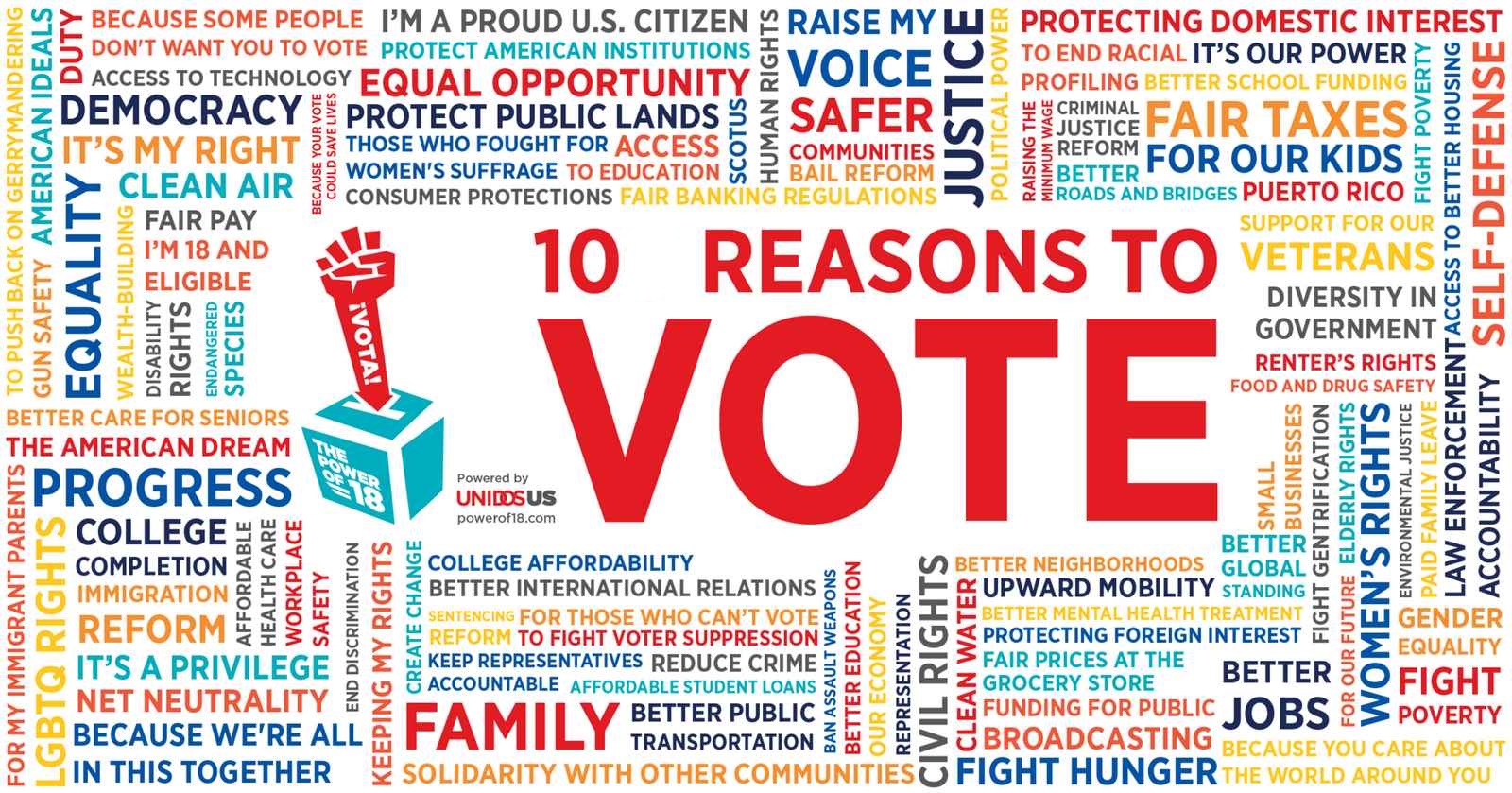
10 reasons why voting is important for everyone in 2026 comes down to one simple truth: every decision that affects your life is made by people who were chosen by voters.
Healthcare policy, school funding, tax rates, housing regulations, civil rights protections, judicial appointments, and environmental rules all flow from elections.
When you vote, you have a real say in those decisions. When you don’t, others make those choices on your behalf, and they may not share your values, priorities, or concerns.
History shows repeatedly that elections are decided by thin margins, that local races are often decided by dozens of votes, and that communities with high turnout consistently receive better representation and more resources.
Voting is not a guarantee of perfect outcomes. It is the most effective, accessible, and peaceful tool available to every eligible citizen to shape the society they live in. Use it in 2026.