
Why does my dog snore — and should you be worried? Most dog owners hear it eventually: that low, rumbling sound coming from their peacefully sleeping pup. Sometimes it is adorable.
Sometimes it is loud enough to wake you up. Dog snoring happens when something interrupts the smooth flow of air through the nose or throat, causing soft tissues to vibrate.
The cause can be as simple as a funny sleeping position or as serious as a blocked airway.
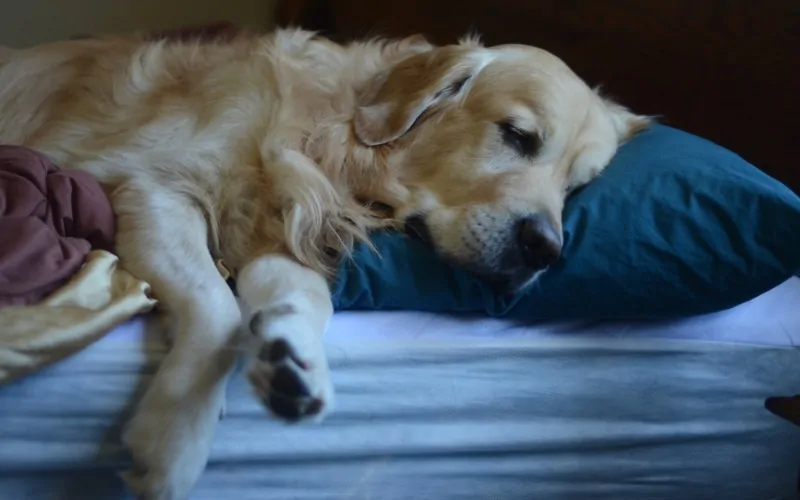
Dog snoring is the noisy sound produced when air meets resistance while passing through the nose, throat, or mouth during sleep.
The medical term for this low-pitched snoring sound is stertor. It happens when the soft tissues in the upper airway — the soft palate, throat lining, or nasal passages — partially block or narrow the path air travels through.
When those tissues vibrate from the restricted airflow, you hear the characteristic rumbling or rattling snore. The louder the snore, the more restricted the airway usually is.
Some snoring is completely normal, especially in certain breeds. A dog that occasionally snores when sleeping in an unusual position is not a cause for concern.
However, snoring that is new, getting louder, happening while the dog is awake, or paired with other symptoms is not normal. It signals something is wrong and deserves veterinary attention.
The key question is not just does my dog snore but when did it start, how often, and how loud is it.
The most common reason dogs snore is breed anatomy. Dogs with flat faces and short noses — called brachycephalic breeds — are physically built in a way that restricts airflow.
Their skulls are compressed, but the amount of soft tissue in the nose and throat is the same as a long-nosed dog. That extra tissue folds and wrinkles inside a smaller space, creating permanent airway narrowing.
Structural problems in brachycephalic dogs include:
Together, these features make up Brachycephalic Obstructive Airway Syndrome (BOAS), a progressive condition that causes snoring, labored breathing, and reduced exercise tolerance.
A dog sleeping on its back is one of the most harmless reasons for snoring.
When a dog lies flat on its back, the tongue relaxes and falls toward the back of the throat. This partially blocks the airway and causes the classic snoring sound.
The same thing can happen if a dog is resting its neck or head on a raised object like a stuffed toy, which bends the neck at an angle and puts pressure on the throat.
This type of snoring stops as soon as the dog shifts position. It is not a health concern.
Overweight dogs snore significantly more than dogs at a healthy weight.
Extra body fat deposits around the neck and chest press inward on the airway, narrowing it from the outside. The heavier the dog, the more pressure on the throat tissues during sleep.
Obese dogs often snore loudly at night and may pant heavily or tire quickly during daytime walks. Weight loss — even a modest reduction — can dramatically reduce or eliminate snoring in overweight dogs.
Environmental allergens cause the tissues lining the nasal passages and throat to swell and become inflamed.
That inflammation narrows the airway and produces snoring. Common dog allergens include pollen, dust mites, mold spores, pet dander, cleaning product residue, and cigarette smoke.
If your dog snores more during certain seasons, sneezes often, has itchy skin, or rubs their face frequently, allergies are a likely contributing factor.
Dogs get respiratory infections just like people. A bacterial or viral upper respiratory infection causes nasal congestion, mucus buildup, and swollen airway tissues.
All of that restricts airflow and turns a normally quiet sleeper into a snorer overnight. Other signs of a respiratory infection include nasal discharge, sneezing, coughing, watery eyes, and mild lethargy.
This type of snoring typically resolves on its own once the infection clears, usually within 1 to 2 weeks.
Dogs explore the world with their noses and mouths, which means foreign objects — a blade of grass, a seed, a small piece of food, or a fragment of a toy — can get lodged inside the nasal passage.
Even a partial blockage causes the dog to snore, snort, or repeatedly sneeze trying to dislodge the object. You may also notice the dog pawing at their face or rubbing their nose along the floor.
A foreign object that cannot be sneezed out needs veterinary removal. Do not attempt to remove it at home.
A severe tooth abscess — a pocket of infection forming at the root of a tooth — can spread inflammation to the surrounding tissues, including those near the airway.
The swelling caused by a nearby abscess can partially obstruct the nasal passage or throat and produce snoring. Other signs include bad breath, drooling, face pawing, reduced appetite, and visible swelling on the face or jaw.
Dental infections require antibiotic treatment and often tooth extraction to fully resolve.
Hypothyroidism is an underactive thyroid gland that does not produce enough thyroid hormone to regulate metabolism properly.
It causes weight gain, which then puts pressure on the airway. It can also cause general tissue swelling in the neck area. Dogs with hypothyroidism typically also show signs like a dull coat, dry or flaky skin, low energy, cold intolerance, and ear infections.
Once treated with thyroid medication, the weight-related and tissue-related snoring usually improves.
Abnormal tissue growths — including benign polyps, cysts, or malignant tumors — inside the nasal passages, throat, or larynx physically block the flow of air.
Growths cause progressive snoring that gets louder over weeks or months as the mass grows. Other signs may include one-sided nasal discharge, nosebleeds, facial swelling, or difficulty eating.
This is more common in older dogs. Any dog with worsening snoring that has no other obvious cause should be examined by a vet, particularly to rule out nasal or throat masses.
Laryngeal paralysis is a condition where the nerves that control the flaps (arytenoids) at the entrance to the windpipe stop working correctly.
The flaps fail to open fully when the dog breathes in, causing a snoring or high-pitched wheezing sound even when the dog is awake. It is most common in large, older dogs, particularly Labrador Retrievers, Golden Retrievers, and Irish Setters.
Signs include a changed bark, noisy breathing at rest, exercise intolerance, and episodes of choking or gagging.
Dog sleep apnea is less common but does occur, particularly in overweight and brachycephalic dogs.
It causes breathing to pause completely during sleep, then restart with a loud snort or gasp. Dogs with sleep apnea may wake frequently during the night, seem restless, and appear unusually tired and groggy during the day.
If you notice your dog repeatedly stopping breathing during sleep and jolting awake, speak to your vet promptly.
Cigarette smoke, strong air fresheners, scented candles, and chemical cleaning sprays all irritate the delicate lining of a dog’s nasal passages and throat.
Chronic exposure causes persistent inflammation and mucus buildup, which narrows the airway and causes snoring. Dogs living in smoky households are also at higher risk of respiratory infections and lung disease.
Removing the irritant source is the most effective treatment in these cases.
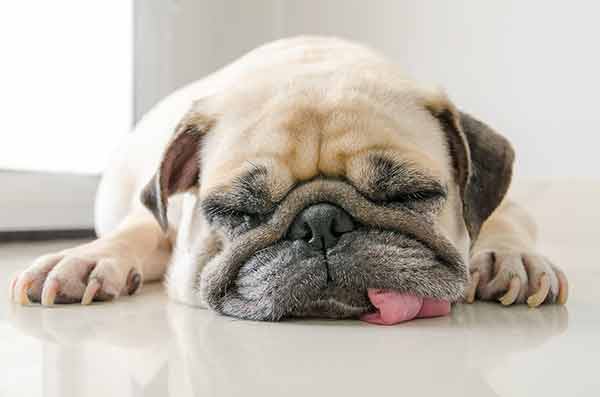
These breeds have significant anatomical snoring risk due to BOAS:
| Breed | Main Anatomical Issue |
|---|---|
| English Bulldog | Elongated soft palate, stenotic nares |
| French Bulldog | Narrow nostrils, narrow trachea |
| Pug | Elongated palate, everted saccules |
| Boston Terrier | Stenotic nares, narrow trachea |
| Shih Tzu | Soft palate obstruction |
| Pekingese | Multiple BOAS features |
| Boxer | Elongated soft palate |
| Cavalier King Charles Spaniel | Elongated soft palate |
| Chow Chow | Narrow airways, thick tongue |
| Lhasa Apso | Soft palate, narrow nares |
| Breed | Why They Snore |
|---|---|
| Saint Bernard | Body weight presses on airway |
| Mastiff | Heavy neck and throat tissue |
| Labrador Retriever | Prone to weight gain; laryngeal paralysis in older dogs |
| Golden Retriever | Laryngeal paralysis risk in seniors |
| Basset Hound | Long, loose throat tissues |
Use this quick guide to assess your dog’s snoring:
| Snoring Type | Likely Normal? | Action |
|---|---|---|
| Only snores on their back | Yes | No action needed |
| Always snored (flat-faced breed) | Partly | Monitor; vet check if worsening |
| Suddenly started snoring | No | Schedule vet visit |
| Getting louder over time | No | Schedule vet visit |
| Snores while awake | No | Urgent vet visit |
| Snoring with nasal discharge | No | Vet visit soon |
| Snoring with coughing or gagging | No | Urgent vet visit |
| Snoring with breathing pauses | No | Urgent vet visit |
| Snoring with facial swelling | No | Emergency vet visit |
| Snoring with gum color change | No | Emergency — call vet now |
Some snoring scenarios go beyond a routine vet check. These require emergency care.
Call your vet or go to an emergency clinic immediately if your dog has:
These signs indicate a respiratory crisis. They are most common in brachycephalic dogs during hot weather, after exercise, or under stress.
When you bring a snoring dog to the vet, they follow a systematic approach to find the cause.
Physical examination is always the starting point. The vet checks the nostrils, feels the throat, assesses the dog’s weight, listens to breathing, and examines the mouth and gums under mild sedation if needed.
Blood tests can reveal hypothyroidism, infection markers, or signs of systemic disease.
X-rays of the chest and neck show the trachea size, airway shape, and any masses in the throat area.
CT scan or endoscopy gives detailed views of the nasal passages, soft palate, and larynx to identify polyps, tumors, or structural abnormalities.
Rhinoscopy allows a vet to look directly inside the nasal cavity using a small camera and remove foreign objects if present.
Giving your vet a short video of your dog snoring — especially if it happens mainly at night — is one of the most helpful things you can bring to the appointment.
Treatment depends entirely on the cause. Here is a breakdown by condition:
Surgery is the most effective long-term treatment for dogs with structural airway problems.
Soft palate resection (staphylectomy): A surgeon removes the excess tissue from an elongated soft palate to open the airway.
Nares widening (alaplasty): Surgical widening of narrow nostrils allows more air in with each breath.
Laryngeal sacculectomy: Removal of everted laryngeal saccules that have been sucked into the airway.
These procedures are most effective when performed early, before secondary damage occurs to the larynx.
Weight management is the treatment. Work with your vet to calculate your dog’s ideal calorie intake and build a structured exercise plan.
Even losing 10 to 15% of body weight can noticeably reduce snoring by relieving airway compression. Measured meals, reduced treats, and consistent daily walks are the foundation.
Reduce allergen exposure at home. Wash your dog’s bedding weekly in hot water. Use an air purifier with a HEPA filter in the room where your dog sleeps.
Wipe your dog down with a damp cloth after outdoor walks to remove pollen from their coat. Your vet may prescribe antihistamines, medicated shampoos, or immunotherapy for persistent allergic cases.
Most mild infections resolve with rest, hydration, and time. Your vet may prescribe antibiotics for bacterial infections or anti-inflammatories to reduce airway swelling.
Keep your dog away from other dogs while sick to prevent spread. The snoring should resolve once the infection clears.
A vet will use rhinoscopy or forceps under sedation to remove a lodged object from the nasal passage or throat. Do not attempt to remove it yourself — you risk pushing it deeper.
The infected tooth typically requires extraction combined with a full course of antibiotics. Anti-inflammatories may be prescribed to reduce swelling around the airway. Snoring linked to dental disease usually resolves within days of treatment.
Daily oral thyroid hormone replacement medication is the standard treatment. Once hormone levels normalize, weight-related snoring and tissue swelling generally improve over several weeks.
Mild cases may be managed with activity restriction and avoiding heat and excitement. Severe cases require surgery — a procedure called an arytenoid lateralization (tieback surgery) opens the larynx permanently.
Benign polyps are removed surgically or by laser. Malignant tumors are managed with surgery, radiation, chemotherapy, or a combination, depending on the type and location.
If your vet has ruled out a serious cause, these practical steps can help manage everyday snoring.
Change the sleeping position. If your dog snores only when on their back, gently roll them onto their side. Many dogs stop snoring immediately once repositioned.
Elevate the head. Provide a pillow or bolster bed that keeps your dog’s head slightly raised during sleep. This helps keep the airway more open through the night.
Use an air purifier. A HEPA air purifier in your dog’s sleeping area removes dust, pollen, dander, and other airborne irritants that trigger nasal inflammation.
Run a humidifier. Dry air causes the nasal passages to become dry and irritated. A humidifier adds moisture to the air and keeps nasal tissues from drying out, especially in winter.
Keep the home smoke-free. Cigarette smoke is a major respiratory irritant for dogs. Keeping your home smoke-free reduces chronic nasal and throat inflammation.
Wash bedding frequently. Dog bedding collects dust, mold spores, and dander. Washing it in hot water at least once a week reduces allergen buildup where your dog sleeps.
Avoid air fresheners and chemical sprays. Scented plug-ins, aerosol sprays, and heavy cleaning products irritate sensitive dog airways. Switch to unscented, pet-safe alternatives.
Manage your dog’s weight. If your dog is above ideal body weight, work with your vet on a safe calorie reduction and exercise plan. Even modest weight loss helps.
Keep brachycephalic dogs cool. Flat-faced breeds overheat quickly, and heat makes airway swelling and snoring significantly worse. Keep them indoors during hot weather and avoid exercise in the hottest part of the day.
| Tip | Best For | Expected Benefit |
|---|---|---|
| Change sleep position | Back-sleepers | Immediate reduction |
| Elevate head while sleeping | Most dogs | Reduces airway compression |
| HEPA air purifier | Allergy sufferers | Reduces airborne irritants |
| Humidifier | Dry air environments | Moistens nasal passages |
| Smoke-free household | All dogs | Reduces chronic inflammation |
| Weekly bedding wash | Allergy sufferers | Lowers allergen load |
| Avoid aerosol sprays | All dogs | Reduces airway irritation |
| Weight management | Overweight dogs | Long-term snoring reduction |
| Keep brachycephalics cool | Flat-faced breeds | Prevents breathing crisis |
Puppies that snore from birth or early puppyhood in flat-faced breeds are showing early signs of BOAS.
Early intervention — including surgery before one year of age — produces the best results and prevents the progressive worsening that comes with untreated BOAS.
Puppies of other breeds that snore constantly from birth should be checked for congenital abnormalities.
An adult dog that suddenly starts snoring when they never did before is the most important scenario to investigate.
New snoring in an adult dog signals a change — weight gain, an infection, a developing growth, an allergen, or a systemic condition like hypothyroidism. A vet visit is always the right call.
Older dogs often snore more as throat muscles naturally weaken and relax with age.
Laryngeal paralysis, common in older large breeds, is a frequent and serious cause of new snoring in senior dogs. Nasal tumors and polyps also become more common with age. Regular senior wellness checks (every 6 to 12 months) help catch these issues early.
Many dog owners confuse snoring with reverse sneezing, but they are different.
Snoring occurs during sleep and involves a continuous, low rumbling sound from restricted airflow.
Reverse sneezing happens while awake and looks like rapid, forceful inward sneezing. The dog extends its neck, makes a loud honking or snorting sound, and seems briefly distressed. It usually passes within 30 to 60 seconds.
Reverse sneezing is caused by irritation of the soft palate and nasopharynx, often from allergens, eating too fast, or excitement. It is usually harmless but worth mentioning to your vet if it is frequent.
Yes. Dogs with chronic airway restriction from BOAS or obesity do not sleep as deeply or as restfully as healthy dogs.
Disrupted, poor-quality sleep affects mood, energy level, and immune function. Dogs with sleep apnea are often noticeably tired, grumpy, and less playful during the day.
Treating the underlying cause of snoring — especially in brachycephalic breeds — dramatically improves sleep quality and overall quality of life.
Sudden loud snoring usually means something has changed in the airway — an infection, an allergen, weight gain, a foreign object, or a growing mass. If it came on suddenly, schedule a vet visit within a few days to identify the cause.
It depends on the breed. Flat-faced breeds like Pugs and Bulldogs snore most nights due to anatomy, but even then it should be monitored. For non-brachycephalic dogs, nightly snoring is not considered normal and warrants a vet check.
Snoring while awake is never normal. It suggests the airway is significantly restricted even during relaxed breathing, which can indicate BOAS, laryngeal paralysis, or a growth. This needs a vet evaluation promptly.
Yes. Allergens like pollen, dust mites, and mold cause nasal inflammation that narrows the airway and triggers snoring. Seasonal snoring that comes and goes with pollen counts is a strong sign of environmental allergies.
Absolutely. Extra fat around the neck and chest presses on the airway from outside, narrowing it during sleep. Overweight dogs that snore almost always improve with guided weight loss.
Encouraging your dog to sleep on their side rather than their back, using a HEPA air purifier, and keeping bedding clean are the most effective at-home measures. For overweight dogs, a vet-guided weight loss plan makes the biggest difference long-term.
Puppies of flat-faced breeds snore due to anatomy and should be evaluated for BOAS, since early surgery gives the best results. Puppies of other breeds that snore heavily from birth should be checked by a vet for congenital airway abnormalities.
Yes. An underactive thyroid leads to weight gain and tissue changes that narrow the airway. Dogs with hypothyroidism often snore alongside symptoms like low energy, weight gain, a dull coat, and frequent ear infections.
Take your dog to the vet if snoring started suddenly, is getting progressively louder, happens while they are awake, is paired with nasal discharge or coughing, or if your dog seems tired and breathless during the day.
Yes, in many cases. Surgery to widen the nostrils, trim an elongated soft palate, or remove obstructive tissue is highly effective for brachycephalic breeds. Laryngeal paralysis is also treated surgically with excellent outcomes when caught early.
Why does my dog snore comes down to one simple thing: something is making it harder for air to move freely through your dog’s nose or throat. For flat-faced breeds like Pugs, Bulldogs, and French Bulldogs, snoring is built into their anatomy through BOAS — but that does not mean it should be ignored.
For other dogs, snoring is a signal worth investigating, especially when it starts suddenly, grows louder, or shows up during waking hours. The good news is that most causes of dog snoring are treatable, whether through weight management, allergy control, medication, or surgery.
Start by observing the pattern — when it happens, how loud it is, and what other symptoms come with it — and share that information with your vet. With the right diagnosis and care, most dogs breathe easier, sleep better, and live more comfortably. Your snoring dog is counting on you to notice the difference.