
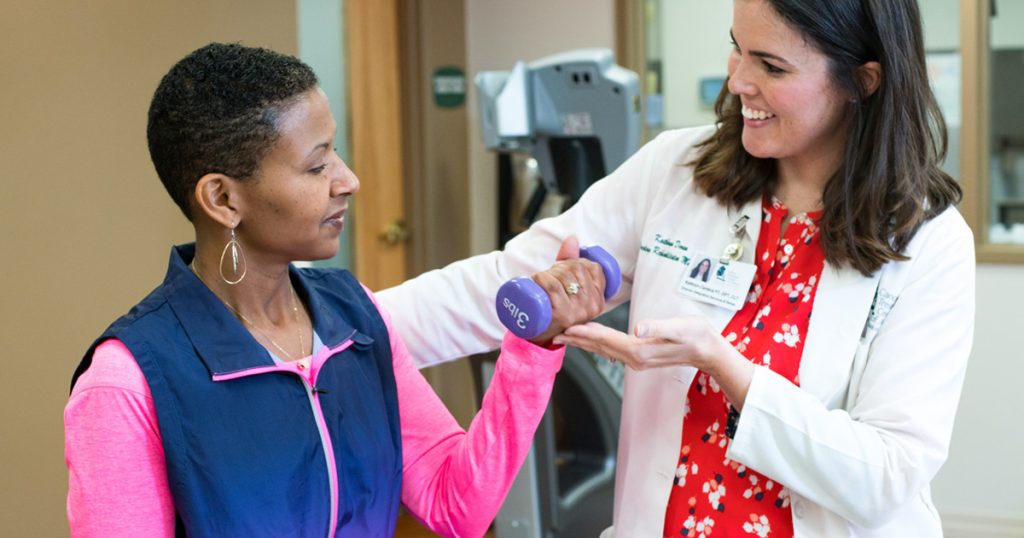
Nobody talks about how strange it feels to have a body that has betrayed you and then ask it to move. After breast cancer surgery, after chemotherapy, after radiation that leaves the skin tight and the arm heavy, movement sounds almost absurd. And yet, increasingly, physical therapies are showing up in the clinical literature as some of the most evidence-backed supportive tools available to breast cancer patients. Not marginal benefits. Measurable ones.
This isn’t a story about miracle cures. It’s a story about what happens when we take the body seriously as part of the treatment, not just as a vehicle for delivering drugs to a tumour.
Breast cancer treatment is effective in ways that previous generations couldn’t have imagined. Survival rates for early-stage disease now exceed 90%. But the treatment leaves a physical record. Surgery disrupts tissue planes and severs nerves. Chemotherapy causes peripheral neuropathy, joint pain, and a particular kind of cognitive fog that patients call ‘chemo brain’ and that researchers are only beginning to quantify. Radiation causes fibrosis in soft tissue, sometimes years after treatment ends. Hormone therapy, used for years in oestrogen-receptor-positive breast cancer, causes joint stiffness, bone density loss, and early menopause symptoms.
These aren’t rare complications. They’re standard outcomes that the majority of breast cancer patients navigate quietly, often without formal support. Physical therapy as part of breast cancer alternative treatment addresses exactly this gap: the space between ‘treatment is complete’ and ‘I feel like myself again,’ which can stretch on for years.
Ask any breast cancer patient what they wish they’d known before surgery, and lymphoedema comes up constantly. When axillary lymph nodes are removed or irradiated, the lymphatic drainage system in the arm is disrupted. Fluid accumulates. The arm swells. It can be uncomfortable, it can be permanent, and it significantly affects quality of life and ability to work. It’s also, critically, manageable when caught and treated early.
Complete Decongestive Therapy (CDT) is the gold-standard physical intervention for lymphoedema. It combines manual lymphatic drainage (a specific form of gentle massage that redirects lymph fluid through healthy vessels), compression bandaging, therapeutic exercise, and skin care. Studies consistently show that CDT reduces limb volume, decreases heaviness and discomfort, and improves functional capacity. It requires a trained lymphoedema therapist, and access remains uneven depending on where a patient receives care. But the evidence is solid enough that it should be standard rather than optional.
Exercise oncology is a young field with a rapidly growing evidence base, and its findings for breast cancer are striking. Multiple large randomised controlled trials have found that structured exercise during and after breast cancer treatment produces measurable benefits across multiple systems simultaneously: reduced fatigue (consistently the most debilitating symptom during chemotherapy), improved cardiovascular fitness, better insulin sensitivity, preserved bone density during hormone therapy, reduced anxiety and depression, and improved cognitive function.
The mechanisms aren’t fully understood yet, but they include reduced inflammation, improved mitochondrial function, better lymphatic circulation, and modulation of sex hormones including oestrogen, which is directly relevant in hormone-positive breast cancer. Some researchers are investigating whether exercise influences cancer biology directly. The findings are preliminary but compelling enough that exercise oncology programmes are now being offered at major cancer centres as part of comprehensive breast cancer care.
What kinds of exercise? The most studied interventions combine aerobic training (walking, cycling, swimming) with resistance training (weights or resistance bands). Resistance training is particularly important because it preserves and rebuilds muscle mass lost during chemotherapy, improves bone density compromised by hormone therapy, and reduces lymphoedema risk in the arm. Yoga, tai chi, and aquatic exercise have also been studied, with evidence for fatigue reduction, balance improvement, and psychological benefits.
Physical therapies extend beyond structured exercise. Oncology massage, performed by therapists trained specifically to work with cancer patients, addresses the musculoskeletal pain, scar tissue adhesions, and postural changes that follow breast surgery. It’s a different discipline from standard massage: pressure is adapted, specific areas are avoided depending on surgical history and treatment status, and the therapist understands how to work safely around ports, irradiated tissue, and lymphoedema risk zones.
Acupuncture has accumulated enough evidence in breast cancer specifically to have moved from ‘alternative’ to ‘integrative’ in the clinical lexicon. Joint pain caused by aromatase inhibitors, which is the primary reason women discontinue hormone therapy early and which significantly affects recurrence outcomes, has been addressed in multiple randomised trials comparing acupuncture to sham acupuncture and to medication.
The results are meaningful: acupuncture reduces aromatase inhibitor-induced arthralgia in a clinically significant proportion of patients. That’s not a small finding. Aromatase inhibitor discontinuation is a real clinical problem, and acupuncture offers a low-risk tool for keeping more patients on the medication that protects them.
Myofascial release and scar tissue mobilisation address the physical legacy of surgery and radiation. Post-mastectomy pain syndrome, chest wall tightness, restricted shoulder mobility, and the tight, thick feeling of irradiated skin all respond to skilled manual therapy. Many women describe the first session of thorough scar tissue work as revelatory, feeling movement in areas that had felt frozen for months.
There’s a word that gets used a lot in cancer rehabilitation: recovery. It implies returning to a previous state. But many breast cancer patients, particularly those who’ve gone through mastectomy, reconstruction, prolonged hormone therapy, or multiple treatment lines, aren’t returning to a previous state. They’re building a new one.
Physical therapy in that context is less about recovery and more about rebuilding: strength that was never there before, body awareness that chemotherapy disrupted, confidence in a body that has changed shape, posture, and function. The goal shifts from restoring what was lost to constructing something functional and liveable going forward.
This is where alternative cancer treatment, in its most useful form, becomes integrative care: a physical therapist who understands oncology, an exercise programme adapted to a patient’s current capacity, acupuncture for the joint pain making hormone therapy feel impossible to continue, manual therapy for the shoulder that hasn’t fully lifted since the axillary clearance. Not a rejection of conventional medicine but a serious, evidence-based addition to it.
If you’re a breast cancer patient who hasn’t been referred to a physical therapist, lymphoedema specialist, or exercise oncology programme, that’s worth raising with your oncology team. These referrals don’t always happen automatically. Evidence supports them. You’re allowed to ask for them.
And if you’ve finished treatment and still don’t feel right, physically or in terms of energy or strength, that’s also worth raising. ‘Treatment is over’ doesn’t mean ‘physical support is no longer appropriate.’ For many patients, the real work of rebuilding begins exactly there.