
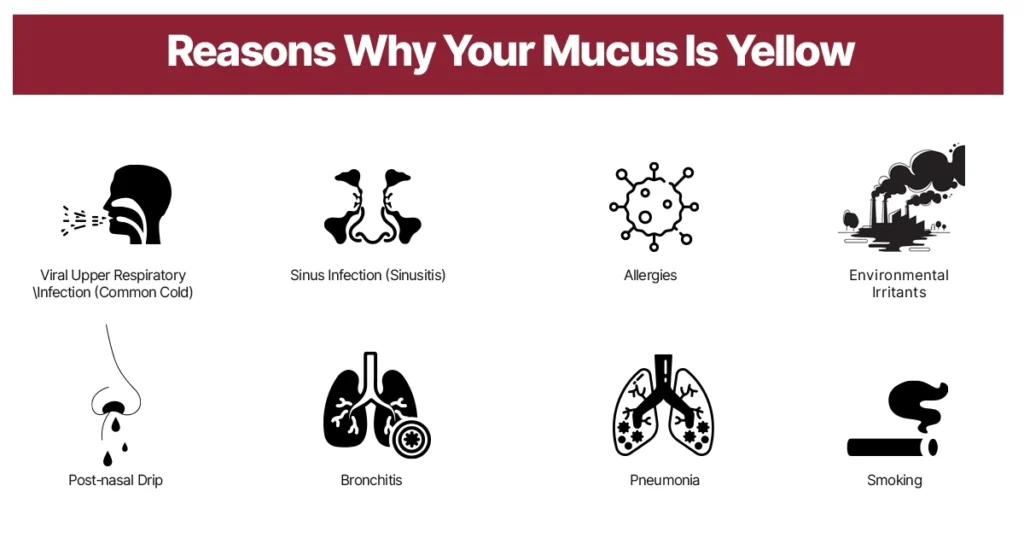
Why is my mucus yellow is one of the most common health questions people search online, and the answer is more nuanced than most expect.
Yellow mucus is your body’s visible signal that your immune system is actively responding to something, whether that is a common cold, a sinus infection, bronchitis, allergies, or a more serious bacterial condition.
In most cases it is not dangerous and clears up within a week or two. But sometimes yellow mucus points to something that needs medical attention.
Mucus is a clear, slippery gel-like fluid that lines your respiratory, digestive, urinary, and reproductive tracts. Its main job is to trap dust, bacteria, viruses, and other harmful particles before they can reach your lungs or bloodstream.
When you are healthy, mucus is thin, clear, and largely invisible. You produce roughly one to one and a half liters of it every single day without even noticing.
When your immune system detects an infection or irritant, it sends white blood cells called neutrophils to the scene. As these cells fight and die, they release an enzyme called myeloperoxidase. That enzyme contains iron and turns yellow or green, which is what gives infected mucus its distinctive color.
Yellow mucus gets its color from dead white blood cells mixed into the secretion. When you develop a cold or a respiratory infection, your immune system floods the area with neutrophils to destroy the invading germs.
Once those neutrophils finish their work and die, they are swept into the mucus. The more neutrophils present, the yellower the mucus becomes.
This is actually a sign your immune system is working correctly. Yellow mucus is not automatically an emergency, but its duration, thickness, and accompanying symptoms are what tell you how serious the situation is.
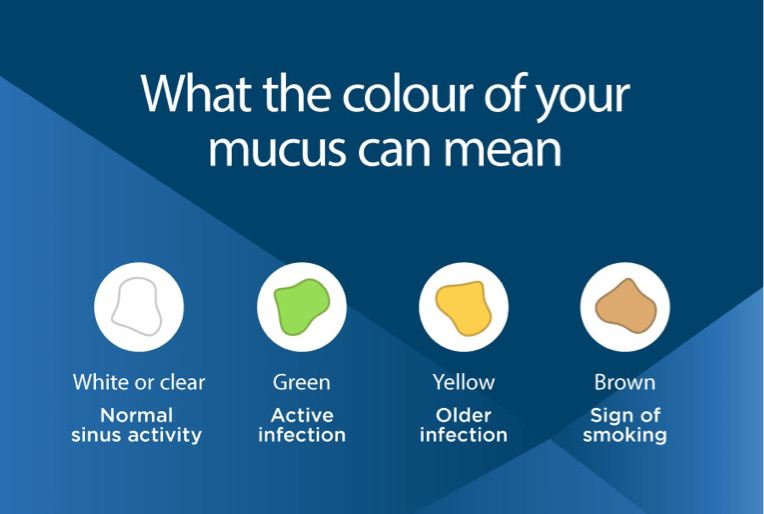
| Mucus Color | What It Usually Means | Action Needed |
|---|---|---|
| Clear | Normal, healthy, or mild allergy | Usually none |
| White | Congestion, beginning of cold | Monitor |
| Yellow | Immune response, viral or bacterial infection | Monitor, treat if persisting |
| Green | Active infection, heavy immune activity | See doctor if over 10 days |
| Brown | Old blood, environmental toxins, smoking | See doctor if persistent |
| Red or Pink | Fresh blood in nasal tissue | See doctor |
| Black | Heavy pollution, smoking, or rare fungal infection | See doctor promptly |
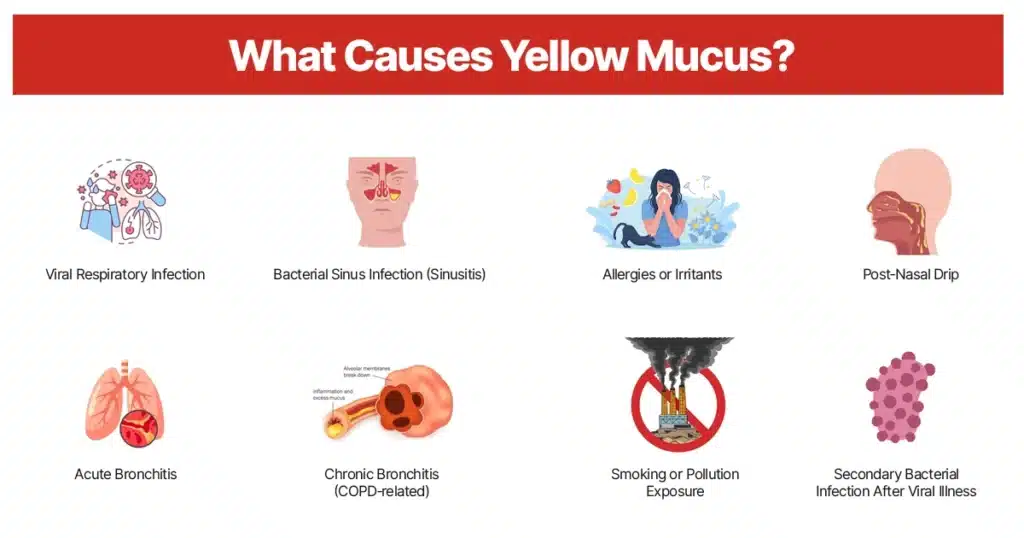
There are several reasons your mucus turns yellow, ranging from completely harmless to conditions requiring treatment. Understanding which cause applies to you helps you choose the right response.
| Cause | Yellow Mucus Location | Typical Duration |
|---|---|---|
| Common cold (viral) | Nose and throat | 7 to 10 days |
| Acute sinusitis | Nose, face pressure | Up to 4 weeks |
| Chronic sinusitis | Nose, persistent | More than 12 weeks |
| Seasonal allergies | Nose, watery eyes | Seasonal |
| Acute bronchitis | Chest, cough | 2 to 3 weeks |
| Pneumonia | Chest, deep cough | Needs antibiotics |
| Influenza (flu) | Nose and chest | 1 to 2 weeks |
| Environmental irritants | Nose | Clears when exposure stops |
| Smoking | Nose and chest | Chronic |
| Nasal polyps or deviated septum | Nose | Ongoing until treated |
The common cold is the single most frequent reason why mucus turns yellow. A cold begins with a viral infection, usually rhinovirus, and your immune system immediately responds.
In the first one to three days, nasal discharge is clear and watery. As the infection progresses and neutrophils rush to the area, mucus thickens and turns yellow.
This color change does not automatically mean a bacterial infection has developed. A 2001 study published in the Archives of Internal Medicine found that colored nasal discharge during a cold is largely caused by the normal immune response to the virus, not necessarily bacteria.
Acute sinusitis happens when sinus cavities become inflamed and blocked, usually following a cold. Trapped mucus creates a warm, moist environment where bacteria multiply rapidly.
The result is thick yellow or yellow-green discharge, significant facial pressure around the forehead, cheeks, and eyes, and a reduced ability to smell. Acute sinusitis typically lasts up to four weeks.
Viral sinusitis will usually resolve on its own. Bacterial sinusitis that persists beyond 10 days or worsens after initial improvement is more likely to need antibiotic treatment.
Chronic sinusitis is diagnosed when sinus inflammation and yellow mucus symptoms persist for 12 weeks or more. It can be caused by recurrent infections, allergies, nasal polyps, or structural issues like a deviated septum.
Symptoms include persistent yellow nasal discharge, ongoing congestion, reduced sense of smell, post-nasal drip, and fatigue. Unlike acute sinusitis, chronic cases often require a specialist evaluation.
An ENT doctor may recommend nasal corticosteroids, long-term antibiotics, saline irrigation, or surgical correction of structural blockages.
Allergies are a less obvious but very common cause of yellow mucus. When your immune system overreacts to allergens like pollen, dust mites, or pet dander, it triggers significant inflammation in nasal passages.
This inflammation increases mucus production. Mucus from allergies starts out thin and clear, but as the inflammatory response intensifies, it can thicken and take on a yellow hue.
Managing allergens through antihistamines, nasal corticosteroids, and regular saline rinses typically restores normal mucus color within days.
The flu causes a more aggressive immune response than a typical cold. Yellow mucus is common with influenza and is often accompanied by high fever, body aches, fatigue, and a persistent cough.
Influenza spreads rapidly and can lead to complications including bacterial pneumonia, especially in young children, older adults, and people with compromised immune systems.
Antiviral medications like oseltamivir (Tamiflu) are most effective when started within 48 hours of symptom onset. Rest, hydration, and fever management are also essential.
Acute bronchitis develops when the bronchial tubes, the airways that carry air to your lungs, become inflamed and produce excess mucus. This produces a persistent wet cough that brings up yellow or yellow-green phlegm.
It is usually caused by a viral infection and follows an upper respiratory illness like a cold or flu. Most cases resolve within two to three weeks without antibiotics.
If the mucus turns green and the cough persists beyond three weeks with fever, a bacterial infection may have set in. At that point, a doctor should evaluate whether antibiotics are needed.
Pneumonia is a more serious respiratory infection where air sacs in the lungs fill with fluid and pus. It produces a deep, wet cough with yellow, green, or rust-colored phlegm, chest pain, high fever, and significant difficulty breathing.
Bacterial pneumonia requires prompt antibiotic treatment. Viral pneumonia is managed with rest, hydration, and supportive care, and may require hospitalization in severe cases.
If you suspect pneumonia, do not wait more than 24 to 48 hours to seek medical care. It can worsen rapidly, especially in vulnerable populations.
Exposure to smoke, dust, chemicals, or heavily polluted air causes the nasal passages to inflame and produce more mucus as a defense response. This can result in yellow-tinted discharge without any infection being present.
People who work in dusty environments, construction sites, or areas with heavy air pollution are particularly prone to this. Using an air purifier indoors and wearing a mask in polluted areas reduces the frequency of this reaction.
Mucus typically clears up once the irritant exposure stops. Persistent symptoms despite removing the trigger should be evaluated by a doctor.
Smoking is one of the most consistent causes of chronic yellow mucus. Tobacco smoke paralyzes the cilia, the tiny hair-like structures in the airways that sweep mucus out of the respiratory tract.
Without functioning cilia, mucus stagnates in the airways. It thickens, discolors, and creates a chronic productive cough commonly called smoker’s cough.
The yellow or brown mucus in smokers is loaded with trapped toxins, dead cells, and debris. Quitting smoking is the only effective long-term solution, and many former smokers notice a temporary increase in mucus production for several weeks after quitting as the cilia begin to recover.
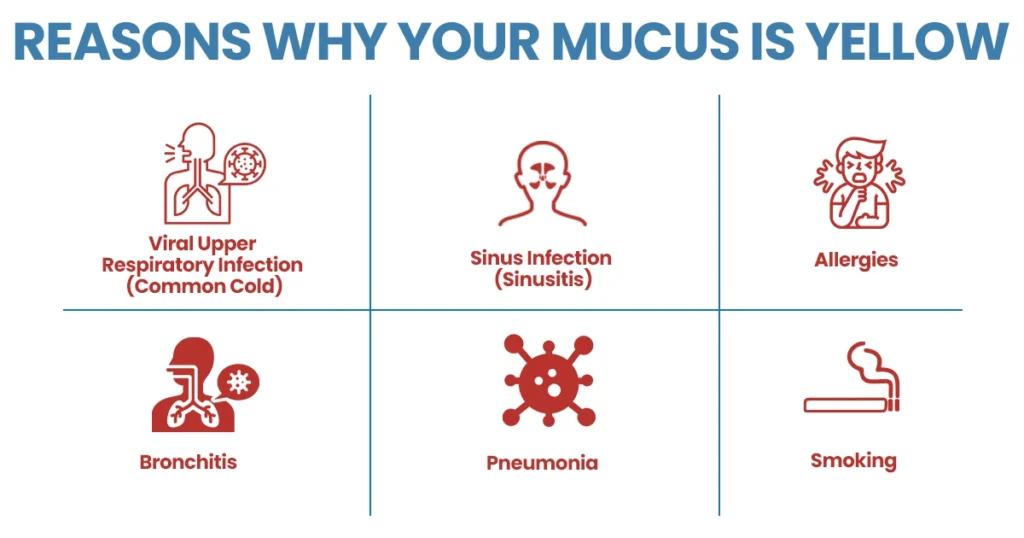
Nasal polyps are soft, painless growths inside the nasal passages or sinuses. A deviated septum, where the wall between the two nostrils is off-center, can also block normal drainage.
Both conditions cause mucus to pool rather than drain properly. Stagnant mucus thickens and discolors, turning yellow over time even without an active infection.
Treatment options include nasal corticosteroids to shrink polyps, biologic medications for severe cases, or surgical correction of the structural problem.
Many people wonder whether yellow or green mucus is more serious. The distinction matters because it can indicate the stage of an infection.
| Feature | Yellow Mucus | Green Mucus |
|---|---|---|
| Immune stage | Early to mid-stage response | Late-stage or heavy infection |
| White blood cells | Moderate number | High number |
| Infection likelihood | Viral or early bacterial | More likely bacterial |
| Typical timing | Days 3 to 7 of illness | Days 7 and beyond |
| Antibiotic need | Usually not yet | Consider if lasting over 10 days |
Yellow mucus progressing to green over several days is a normal part of the immune cycle. Green mucus that does not improve after 10 to 12 days, especially with fever, facial pain, or worsening symptoms, is worth discussing with a doctor.
Yellow mucus can originate from two different locations, and the source affects both what it means and how to treat it.
Yellow nasal mucus is almost always related to sinus activity: a cold, sinusitis, allergies, or nasal irritation. It drains out through the nostrils or post-nasally down the back of the throat.
Yellow mucus from the throat, also called yellow phlegm, typically comes from the lower respiratory tract. This points to bronchitis, pneumonia, or a chest infection rather than a nasal issue.
Coughing up thick yellow phlegm from the chest, especially with shortness of breath or chest pain, is more concerning than nasal yellow mucus and should be evaluated sooner.
No, and this is one of the most common misconceptions in medicine. Both viral and bacterial infections can produce yellow or green mucus, and color alone cannot tell them apart.
Mayo Clinic has clearly stated that yellowish or greenish mucus is not a reliable sign of bacterial infection. Antibiotics do nothing against viruses, and prescribing them unnecessarily contributes to antibiotic resistance.
The more reliable indicators of a bacterial infection requiring antibiotics include symptoms lasting more than 10 days without improvement, a second worsening after initial recovery, high fever above 39°C or 102°F, severe facial pain or headache, and symptoms that continue to worsen rather than plateau.
Post-nasal drip happens when excess mucus runs from the nasal passages down the back of the throat. When that mucus is yellow, it causes a constant throat-clearing sensation, a persistent cough, bad breath, and a sore or scratchy throat.
It is one of the most common complaints associated with sinusitis, allergies, and colds. Saline nasal rinses, staying well hydrated, using a humidifier, and treating the underlying cause all help reduce post-nasal drip significantly.
Sleeping with your head elevated can also reduce the pooling of mucus at the back of the throat overnight.
Children produce yellow mucus very commonly during cold and flu seasons because their immune systems are still developing. A child experiencing yellow nasal discharge with no fever, no ear pain, and no difficulty breathing is usually just fighting a normal viral infection.
However, children should be seen by a doctor if yellow mucus persists beyond 10 days, if they develop a fever above 38.5°C or 101.3°F, if they complain of ear pain, if they show signs of difficulty breathing, or if they appear unusually lethargic.
Never give aspirin to children. For fever and discomfort, pediatric acetaminophen or ibuprofen (for children over six months) is appropriate.
For most viral causes, home treatment is both effective and appropriate. These remedies thin mucus, support drainage, and reduce discomfort while your immune system does its work.
Stay Well Hydrated
Drinking 8 to 12 glasses of water per day is the single most effective home strategy for managing yellow mucus. Water thins thick, sticky secretions and makes them easier to expel through blowing your nose or coughing.
Warm liquids like herbal teas, warm broths, and hot water with honey and lemon are particularly effective because the steam and warmth also help loosen congestion.
Use a Saline Nasal Rinse
Saline irrigation flushes allergens, bacteria, and excess mucus directly from the nasal passages. Neti pots and saline squeeze bottles are available over the counter and can provide significant relief within minutes.
Use only sterile or previously boiled water for nasal irrigation to prevent introducing new pathogens into the sinuses.
Inhale Steam
Breathing in steam from a bowl of hot water, a warm shower, or a humidifier adds moisture to the nasal passages and airways. This loosens thick yellow mucus and makes it easier to drain and expel.
Adding a few drops of eucalyptus oil to a steam bowl may provide additional decongestant benefit, as eucalyptus contains a natural compound called cineole that helps open airways.
Use a Humidifier
Dry indoor air thickens mucus and slows drainage. Running a cool-mist or warm-mist humidifier in your bedroom, especially at night, keeps mucus thinner and easier to clear.
Clean your humidifier regularly according to the manufacturer’s instructions to prevent mold and bacteria from growing inside the water reservoir.
Eat Honey
Honey has well-documented antimicrobial and anti-inflammatory properties. Research, including a 2018 meta-analysis, confirms that honey is more effective than no treatment or placebo for relieving coughs, which often accompany yellow mucus.
Add a tablespoon of honey to warm tea or water, or take it directly off the spoon. Do not give honey to children under one year of age due to the risk of infant botulism.
Try Garlic, Ginger, and Turmeric
These three ingredients have strong anti-inflammatory and antimicrobial properties that support immune function. Adding them generously to soups, broths, and teas can ease throat irritation and support faster recovery.
Turmeric contains curcumin, which research suggests may help reduce airway inflammation. Ginger and garlic both have broad antimicrobial properties and are used across many traditional medicine systems for respiratory health.
Elevate Your Head at Night
Lying flat allows mucus to pool at the back of your throat, increasing post-nasal drip, coughing, and discomfort at night. Propping your head up with an extra pillow or two uses gravity to keep mucus draining forward and down.
This simple adjustment dramatically improves sleep quality when you are dealing with a cold or sinus infection with yellow mucus.
Several OTC products offer meaningful relief from yellow mucus and its associated symptoms.
| Medication Type | Examples | How It Helps |
|---|---|---|
| Expectorant | Mucinex (guaifenesin) | Thins and loosens mucus |
| Decongestant | Sudafed (pseudoephedrine) | Reduces nasal swelling and congestion |
| Antihistamine | Claritin, Zyrtec, Benadryl | Reduces mucus from allergic causes |
| Saline nasal spray | Simply Saline, Ocean Spray | Flushes nasal passages |
| Nasal corticosteroid | Flonase, Nasacort | Reduces sinus inflammation |
| Pain reliever | Ibuprofen, acetaminophen | Relieves fever and facial pain |
Guaifenesin (the active ingredient in Mucinex) is specifically designed to thin mucus so that it drains more easily. It is one of the most useful OTC tools for managing yellow mucus from a cold or bronchitis.
Most cases of yellow mucus resolve on their own within a week to ten days. However, certain signs indicate that home care is no longer enough and a doctor should be seen promptly.
| Warning Sign | Why It Matters |
|---|---|
| Symptoms lasting more than 10 days | Possible bacterial sinusitis or chest infection |
| Symptoms that worsen after initial improvement | Possible secondary bacterial infection |
| High fever above 39°C (102°F) | Immune system under significant stress |
| Severe facial pain or headache | Possible bacterial sinusitis |
| Chest pain or difficulty breathing | Possible pneumonia |
| Yellow mucus with blood | Requires investigation |
| Yellow mucus in an infant under 3 months | Always consult a doctor |
| Yellow mucus during pregnancy | Warrants prompt evaluation |
| Symptoms in an immunocompromised person | Higher risk of complications |
If you visit a doctor with persistent yellow mucus, they will begin with a thorough symptom history including how long you have had the symptoms, whether they are improving or worsening, associated symptoms like fever or facial pain, and whether you have allergies or chronic conditions.
They may physically examine the inside of your nose using a nasal speculum or endoscope. Throat swabs, sputum cultures, blood tests, or imaging such as a sinus X-ray or CT scan may be ordered for complex or persistent cases.
This helps distinguish between viral and bacterial causes and guides the treatment decision, particularly around whether antibiotics are appropriate.
| Cause | First-Line Treatment |
|---|---|
| Viral cold | Rest, fluids, saline rinse, OTC symptom relief |
| Bacterial sinusitis | Amoxicillin or amoxicillin-clavulanate (10–14 days) |
| Chronic sinusitis | Nasal corticosteroids, long-course antibiotics, possible surgery |
| Allergic rhinitis | Antihistamines, nasal corticosteroids, allergen avoidance |
| Influenza | Antivirals (oseltamivir), rest, fluids |
| Acute bronchitis (viral) | Rest, fluids, expectorants, cough management |
| Acute bronchitis (bacterial) | Antibiotics if confirmed |
| Pneumonia | Antibiotics (bacterial), antivirals (viral), possible hospitalization |
| Environmental irritation | Remove trigger, saline rinse, antihistamines |
| Nasal polyps | Nasal corticosteroids, biologics, or surgery |
Prevention is always more comfortable than treatment. Several habits consistently reduce the frequency of yellow mucus-producing illnesses.
Wash Your Hands Frequently
Most viral respiratory infections are transmitted by touch. Regular handwashing with soap and water for at least 20 seconds dramatically reduces the risk of catching a cold, flu, or other respiratory virus.
Avoid touching your face, especially your nose, mouth, and eyes, after being in public spaces or touching shared surfaces.
Stay Up to Date With Vaccinations
Annual flu vaccinations are the most important preventive step for avoiding influenza, one of the most common causes of yellow mucus. Other relevant vaccines include the COVID-19 vaccine and the pneumococcal vaccine for at-risk individuals.
Vaccines reduce not only your personal risk of severe infection but also the likelihood of you spreading the illness to others.
Use a Humidifier in Dry Conditions
Dry indoor air during winter or in air-conditioned environments dries out the mucous membranes, making it easier for pathogens to take hold. Keeping indoor humidity between 40 and 60 percent supports healthy mucosal function.
Manage Allergies Proactively
If you have known seasonal or environmental allergies, starting your antihistamine or nasal corticosteroid treatment before allergy season begins prevents the inflammatory cascade that leads to yellow mucus.
Talk to your doctor or an allergy specialist about long-term options like allergen immunotherapy if your allergies are severe or year-round.
Avoid Smoke and Pollutants
Cigarette smoke, secondhand smoke, and heavy air pollution all impair the mucociliary clearance system in the respiratory tract. This leads to chronic yellow mucus production and dramatically increases vulnerability to respiratory infections.
If you smoke, every step toward quitting improves your respiratory health. Air purifiers with HEPA filters are effective for reducing indoor pollutants and allergens.
COVID-19 can produce yellow nasal mucus during the course of infection, particularly as the illness progresses past the first few days. This follows the same mechanism as a cold: the immune response produces neutrophils that color the mucus yellow.
However, COVID-19 is specifically associated with loss of smell and taste, which differentiates it from many other causes of yellow mucus. If you develop yellow mucus along with sudden loss of smell, fever, and fatigue, testing for COVID-19 is advisable.
Yellow mucus can appear even with a mild immune response to a minor viral infection, allergen exposure, or environmental irritant. Your immune cells still produce the enzyme that colors mucus yellow even when the infection is not severe.
No. Yellow mucus is most commonly caused by viral infections, which antibiotics cannot treat. Antibiotics are only appropriate when a bacterial infection is confirmed or strongly suspected based on duration and symptoms.
Yellow mucus from a typical cold usually lasts five to seven days. If it persists beyond 10 days without improvement, or worsens after initial recovery, a bacterial infection may have developed and a doctor should be consulted.
The mucus color itself is not contagious, but the underlying viral or bacterial infection causing the color change often is. You can spread respiratory infections through coughing, sneezing, and touching shared surfaces.
Yes. Severe or prolonged allergic inflammation can cause mucus to thicken and turn yellow, especially if secondary congestion allows bacteria to multiply. Managing the allergy typically restores clear mucus.
Mucus concentrates and dries slightly overnight when you are not drinking fluids. The thicker, more discolored appearance in the morning reflects overnight pooling. As you hydrate and move around during the day, mucus thins and clears.
Dehydration thickens mucus significantly, which can make it appear darker and more discolored. Staying well hydrated is one of the simplest ways to keep mucus thin, clear, and easy to drain.
Gentle nose blowing helps clear mucus and reduces the bacterial load in the nasal passages. Avoid forceful blowing, which can push mucus and bacteria up into the sinus cavities and worsen congestion.
A child should see a doctor if yellow mucus lasts more than 10 days, is accompanied by fever above 38.5°C (101.3°F), ear pain, difficulty breathing, extreme irritability, or a significant reduction in fluid intake.
Chronic stress weakens immune function, making you more susceptible to the viral infections that cause yellow mucus. Stress does not directly turn mucus yellow, but it increases how often and how severely you get sick.
Why is my mucus yellow is a question with a reassuring answer most of the time: your immune system is simply doing its job. White blood cells rushing to fight a viral infection release enzymes that color your mucus yellow, and this is a normal, healthy response.
The vast majority of yellow mucus cases resolve within one to two weeks with proper hydration, rest, saline rinses, and over-the-counter support. The important thing is recognizing when yellow mucus is telling you something more serious.
Symptoms lasting beyond 10 days, worsening after initial recovery, high fever, chest pain, or difficulty breathing are all signals to seek medical attention promptly.
Preventing respiratory infections through handwashing, vaccination, allergen management, and quitting smoking gives you the best long-term defense against the cycle of yellow mucus and illness. Your body is always communicating with you, and yellow mucus is simply one of the clearest messages it sends.