
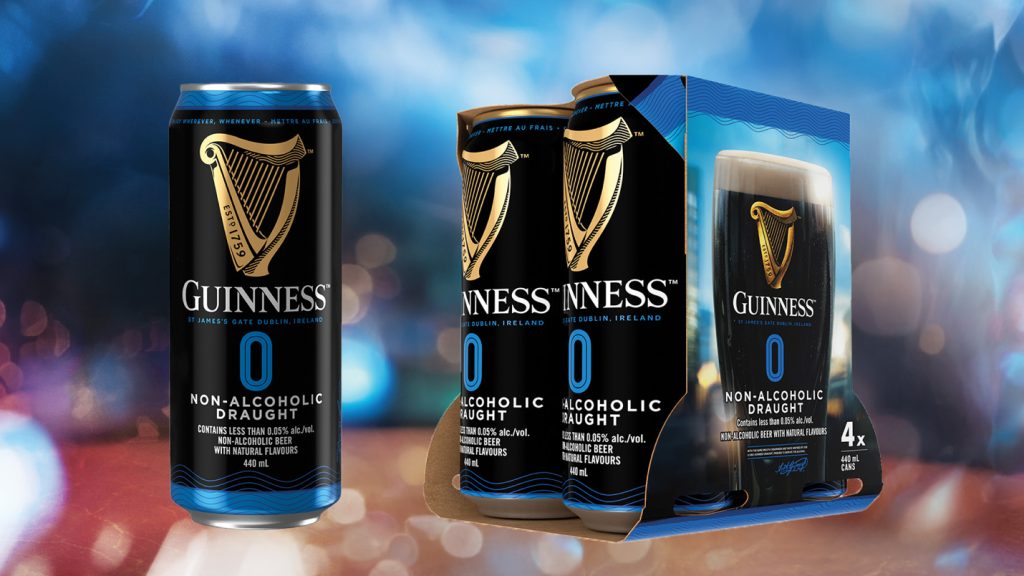
0 Guinness calories is one of the most searched beer nutrition questions in 2026 — and the answer surprises almost everyone.
Guinness 0, also called Guinness 0.0 or Guinness Zero, is not a zero-calorie drink. The “0” in the name refers to alcohol, not calories.
A standard 440ml can contains approximately 75 calories, while a full pint contains around 97 calories. This is still less than half the calories of regular Guinness Draught.
If you drink Guinness and care about what you are putting into your body, this complete nutrition guide covers everything you need to know in 2026.
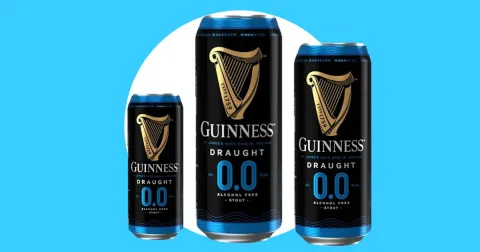
Guinness 0, officially called Guinness 0.0, is the non-alcoholic version of the world-famous Irish dry stout.
It was developed over four years by the brewing team at St. James’s Gate in Dublin, Ireland. The name “0.0” refers to alcohol content — not calories.
Guinness 0 was first launched in 2020 but was recalled for quality improvements. It relaunched successfully in 2021–2022 and has grown rapidly in popularity since then.
The calorie count changes depending on the serving size you are drinking. Here is a breakdown of every standard format.
| Serving Size | Volume | Calories |
|---|---|---|
| Per 100ml | 100ml | 17 kcal |
| Standard US Can | 355ml (12 fl oz) | ~57–60 kcal |
| UK/Ireland Can | 440ml (14.9 fl oz) | ~75 kcal |
| Full Pint Glass | 568ml (20 fl oz) | ~97 kcal |
This is why there is so much confusion about “0 Guinness calories.” Different sources quote different numbers because they are quoting different serving sizes, not different products.
Here is the complete nutritional profile of Guinness 0 per 100ml, taken directly from official product labelling.
| Nutrient | Per 100ml | Per 440ml Can |
|---|---|---|
| Energy | 71kJ / 17kcal | 313kJ / 75kcal |
| Carbohydrates | 3.8g | 16.7g |
| of which Sugars | 0.7g | 3.1g |
| Fat | 0g | 0g |
| Protein | ~0.4g | ~1.7g |
| Alcohol | <0.05% ABV | <0.05% ABV |
| Fibre | 0g | 0g |
Guinness 0 is completely fat-free. It is very low in sugar. The protein content is minimal but comes naturally from the malted barley used in brewing.
This is the most important comparison for anyone tracking their calorie intake.
| Metric | Guinness 0 | Regular Guinness Draught |
|---|---|---|
| Calories per 100ml | 17 kcal | 35 kcal |
| Carbs per 100ml | 3.8g | 2.7g |
| Sugar per 100ml | 0.7g | 0.2g |
| Fat per 100ml | 0g | 0g |
| Alcohol (ABV) | <0.05% | 4.1–4.2% |
| Calories per pint | ~97 kcal | ~210 kcal |
| Calorie saving per pint | — | ~113 kcal saved |
The calorie saving is substantial. Switching from regular Guinness to Guinness 0 saves you around 113 calories per pint.
If you typically have two pints, that is a saving of 226 calories per session. If you do that twice a week, that adds up to over 450 calories saved per week.
This confuses a lot of people looking at the nutrition label.
Guinness 0 has 3.8g of carbs per 100ml, compared to 2.7g in regular Guinness. More carbs but fewer calories — how is that possible?
When alcohol is removed from beer, it takes away a significant source of flavour, body, and mouthfeel. Brewers add a small amount of natural fructose to Guinness 0 to compensate and preserve the taste profile.
Here is the key fact: Alcohol contains 7 calories per gram — almost as calorie-dense as fat. When cold filtration removes the alcohol, all those calories disappear. The small addition of fructose adds back a little sugar and carbs but far fewer calories than the alcohol it replaces.
The result: more carbs per 100ml but dramatically fewer total calories.
Cold filtration is the process Guinness uses to remove alcohol from Guinness 0.
The beer is first brewed exactly like regular Guinness — same ingredients, same process, same quality standards. Once brewing is complete, the alcohol is filtered out through a cold filtration method.
Cold filtration removes alcohol without applying heat. Heat would damage the delicate flavour compounds — the notes of roasted coffee, dark chocolate, and creamy malt that make Guinness iconic.
By keeping the process cold, the brewers protect the volatile aromatic compounds and preserve the characteristic taste and texture of Guinness.
This four-year development process is why Guinness 0 tastes so remarkably close to the original.
The official ingredient list for Guinness 0 is:
Water, Malted Barley, Barley, Roasted Barley, Fructose, Natural Flavourings, Hops, Yeast, Carbon Dioxide, Nitrogen.
The addition of fructose (a natural fruit sugar) is the main difference from regular Guinness ingredients. This is what adds slightly more carbs per 100ml compared to the full-strength version.
The nitrogen is just as important as in regular Guinness. It creates the famous creamy cascade and thick beige head that makes a Guinness unmistakable when poured into a glass.
Despite the removal of alcohol, Guinness 0 closely replicates the full-strength original.
The flavour profile includes roasted barley backbone, notes of coffee and dark chocolate, a smooth creamy mouthfeel, and subtle malty sweetness.
The most commonly noted differences from regular Guinness are a slightly lighter body, marginally more prominent fruit notes on the finish, and a touch more sweetness at the back of the palate.
For most drinkers, these differences are hard to detect without a direct side-by-side comparison.
Guinness 0 can support weight management when used as a substitution for regular Guinness.
At around 75 calories per can and 97 calories per pint, it is one of the lowest-calorie dark beers available anywhere in 2026.
Substituting regular Guinness with Guinness 0 saves approximately 113 calories per pint. Over time, this calorie reduction can contribute meaningfully to a weight loss goal.
However, Guinness 0 is not a zero-calorie product. It should be consumed in moderation as part of an overall balanced and calorie-conscious diet.
Guinness 0 is not sugar-free. It contains approximately 0.7g of sugar per 100ml, which amounts to about 3g of sugar per 440ml can.
This sugar comes primarily from the fructose added during brewing to compensate for the body and sweetness that alcohol provides.
For context, a regular soft drink typically contains 10–12g of sugar per 100ml. Guinness 0 at 0.7g per 100ml is extremely low in sugar by comparison.
If you are monitoring sugar intake for diabetic or dietary reasons, Guinness 0 is a far better choice than most sweetened beverages.
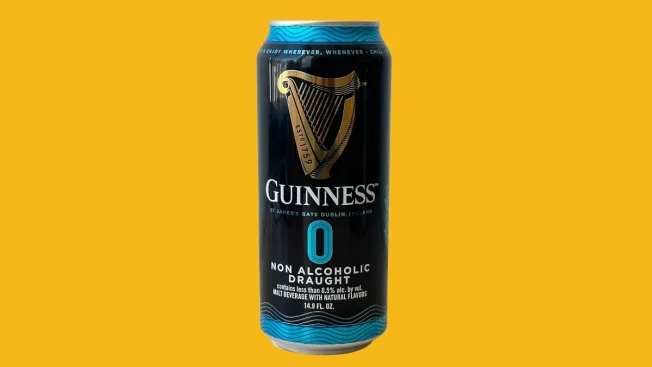
Guinness 0 does not fit comfortably within a strict ketogenic diet.
A single 440ml can contains approximately 16.7g of carbohydrates. A strict keto diet typically limits total daily carbohydrate intake to 20–50g. One can of Guinness 0 would use a significant portion of that daily carb budget.
For people following a moderate low-carb diet rather than strict keto, Guinness 0 can be included with careful tracking and portion awareness.
Yes. Guinness 0 is fully vegan.
Guinness removed isinglass (a fish-derived fining agent) from its entire production process in 2018. Both Guinness Draught and Guinness 0 now carry confirmed vegan-friendly status.
This was a meaningful change that opened both products to a large segment of consumers who had previously avoided Guinness for ethical reasons.
No. Guinness 0 is not gluten-free.
It is brewed with malted barley, which contains gluten. It is not suitable for people with coeliac disease or serious gluten sensitivity.
If you have a clinically diagnosed gluten condition, you should avoid Guinness 0 and seek out beers that are specifically brewed to be gluten-free.
Guinness 0 contains a maximum of 0.05% ABV — the lowest level of alcohol detectable by standard laboratory equipment.
For all practical and legal purposes, it is classified as alcohol-free. The product is labelled as 0.0% ABV.
Note that 0.05% ABV is not zero. People who are highly sensitive to alcohol, pregnant, or avoiding alcohol for medical or religious reasons should consult a doctor before consuming any product containing trace alcohol.
Guinness 0 performs competitively against other NA beers in the calorie and taste categories.
| Beer | Calories per 100ml | ABV |
|---|---|---|
| Guinness 0 | 17 kcal | <0.05% |
| Heineken 0.0 | 21 kcal | 0.0% |
| Budweiser Zero | 17 kcal | 0.0% |
| Athletic Run Wild IPA | 13 kcal | <0.5% |
| Partake Brewing | ~4 kcal | <0.5% |
| Erdinger Alkoholfrei | 24 kcal | <0.5% |
Guinness 0 sits at or near the bottom of the calorie range for non-alcoholic beers. Where it truly stands out is in taste — most reviewers rate it significantly higher than other NA beers for flavour, mouthfeel, and overall experience.
A full pint of Guinness 0 (568ml / 20 fl oz) contains approximately 97 calories.
This is under 100 calories for a full pint of beer with the full flavour, texture, and nitrogen pour of classic Guinness.
For context, a pint of regular Guinness Draught contains around 210 calories. A pint of Guinness 0 gives you the same experience for less than half the calories.
| Format | Volume | Calories |
|---|---|---|
| Shot glass | 44ml | 7 kcal |
| Half pint | 284ml | 48 kcal |
| Standard US can | 355ml | 60 kcal |
| UK/Ireland can | 440ml | 75 kcal |
| Full pint | 568ml | 97 kcal |
| 500ml bottle | 500ml | 85 kcal |
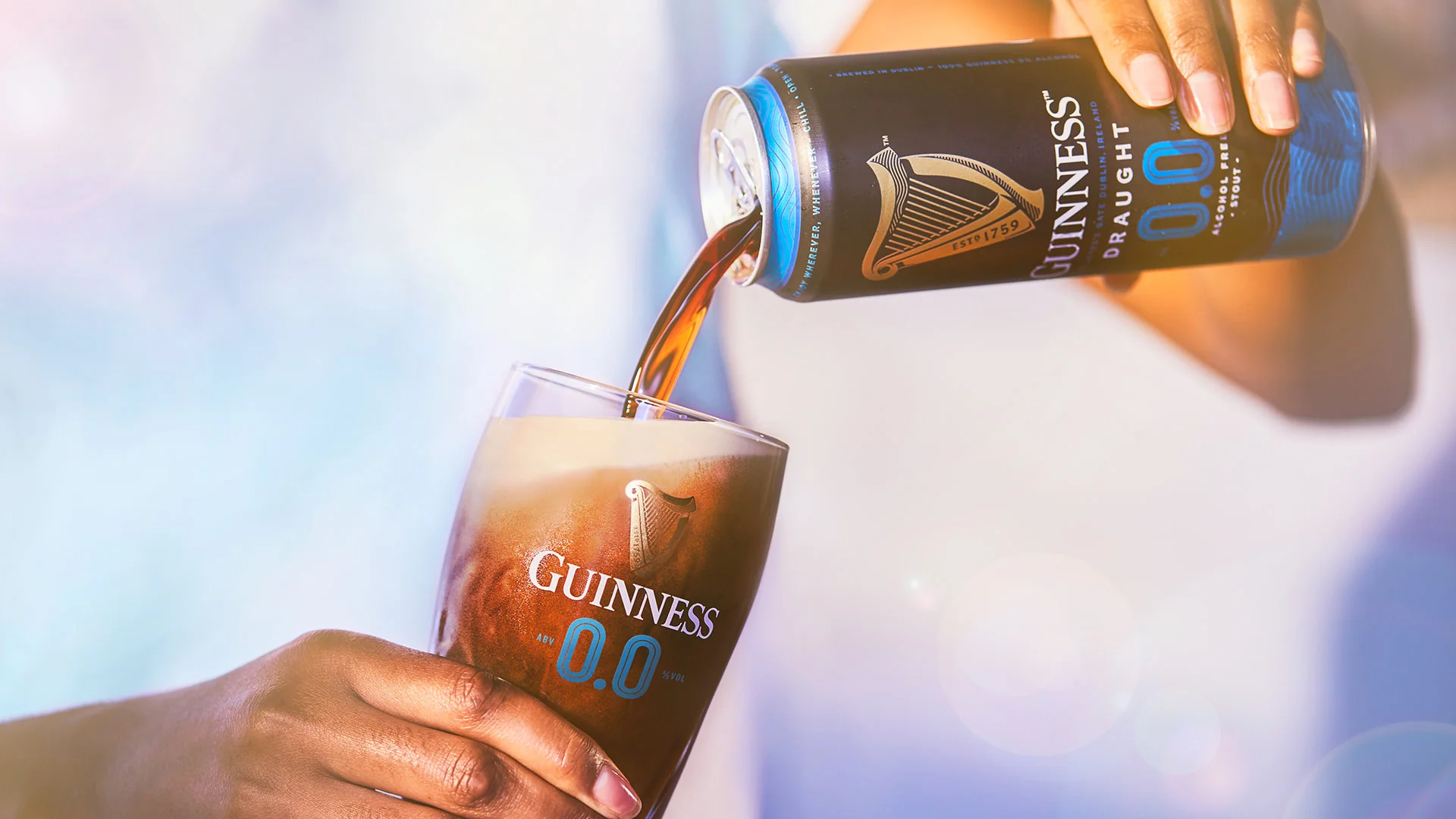
Athletes and fitness-focused consumers are among the fastest-growing segments of non-alcoholic beer drinkers in 2026.
Regular alcohol impairs protein synthesis, disrupts sleep quality, raises cortisol levels, and slows post-training recovery. Guinness 0 removes every one of those drawbacks.
At under 100 calories per pint, Guinness 0 fits within post-training nutrition windows without significantly affecting calorie balance.
It is not a recovery product in any clinical sense. But it is a far smarter choice than regular beer for people who care about physical performance and body composition.
A lot of false information circulates online about Guinness Zero. Let us correct the most common errors directly.
Misconception 1: Guinness 0 has zero calories. False. The “0” refers to alcohol content. A 440ml can contains approximately 75 calories.
Misconception 2: Guinness is a heavy, high-calorie beer. False. Regular Guinness Draught at 210 calories per pint is one of the lower-calorie beers in its category. BrewDog Punk IPA, for comparison, has around 292 calories per pint.
Misconception 3: Guinness 0 has more calories because of the added sugar. False. Despite more carbs per 100ml, total calories are less than half of regular Guinness because the calorie-dense alcohol has been removed.
Misconception 4: Guinness 0 is identical to regular Guinness in every way. Partially false. The taste is extremely close, but most experienced Guinness drinkers can detect a slightly lighter body and more prominent fruit notes in a direct comparison.
Guinness 0 is an excellent choice for a wide range of people in 2026.
It suits those doing Dry January or participating in sober months. It works well for pregnant people who enjoy the taste of stout but need to avoid alcohol. It fits athletes in training who want a post-workout social drink. It is a great option for designated drivers, people on calorie-controlled diets, and anyone simply reducing their alcohol intake for health reasons.
It is also a strong choice for anyone who just loves Guinness and wants to enjoy the taste without the effects of alcohol.
Serving Guinness 0 correctly makes a big difference to the experience.
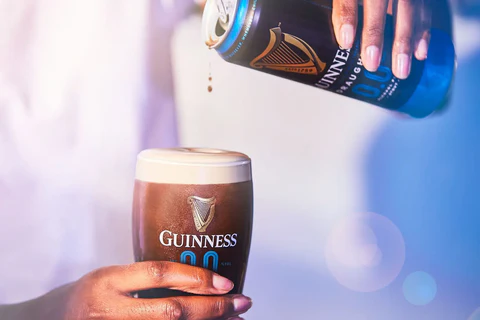
Pour it slowly into a clean pint glass at a 45-degree angle. Allow the nitrogen cascade to settle fully before topping up the glass. Let the head settle to a thick, creamy finish before drinking.
Serve it cold at around 6–8°C (43–46°F). This is the same serving temperature as regular Guinness Draught.
The nitrogen widget in canned versions creates the same legendary pour as regular Guinness, making it one of the most visually impressive non-alcoholic beers available.
Guinness 0 pairs well with the same foods as regular Guinness due to its similar flavour profile.
It works especially well alongside Irish stew, beef or lamb dishes, and hearty soups. The roasted barley notes complement smoked meats and BBQ. The coffee and chocolate hints make it a natural partner for chocolate desserts, tiramisu, or coffee-flavoured ice cream.
It also pairs naturally with oysters, following the same classic Guinness-and-oyster tradition.
Guinness 0 is widely available across the US, UK, Ireland, Canada, and Australia.
In the US, it is commonly stocked at Total Wine, BevMo, major grocery stores, and large beer retailers. A 4-pack of 14.9 fl oz cans typically retails for around $7.99–$9.99 in the US market.
In the UK and Ireland, it is available at Tesco, Sainsbury’s, Asda, Waitrose, and most major off-licences and supermarkets.
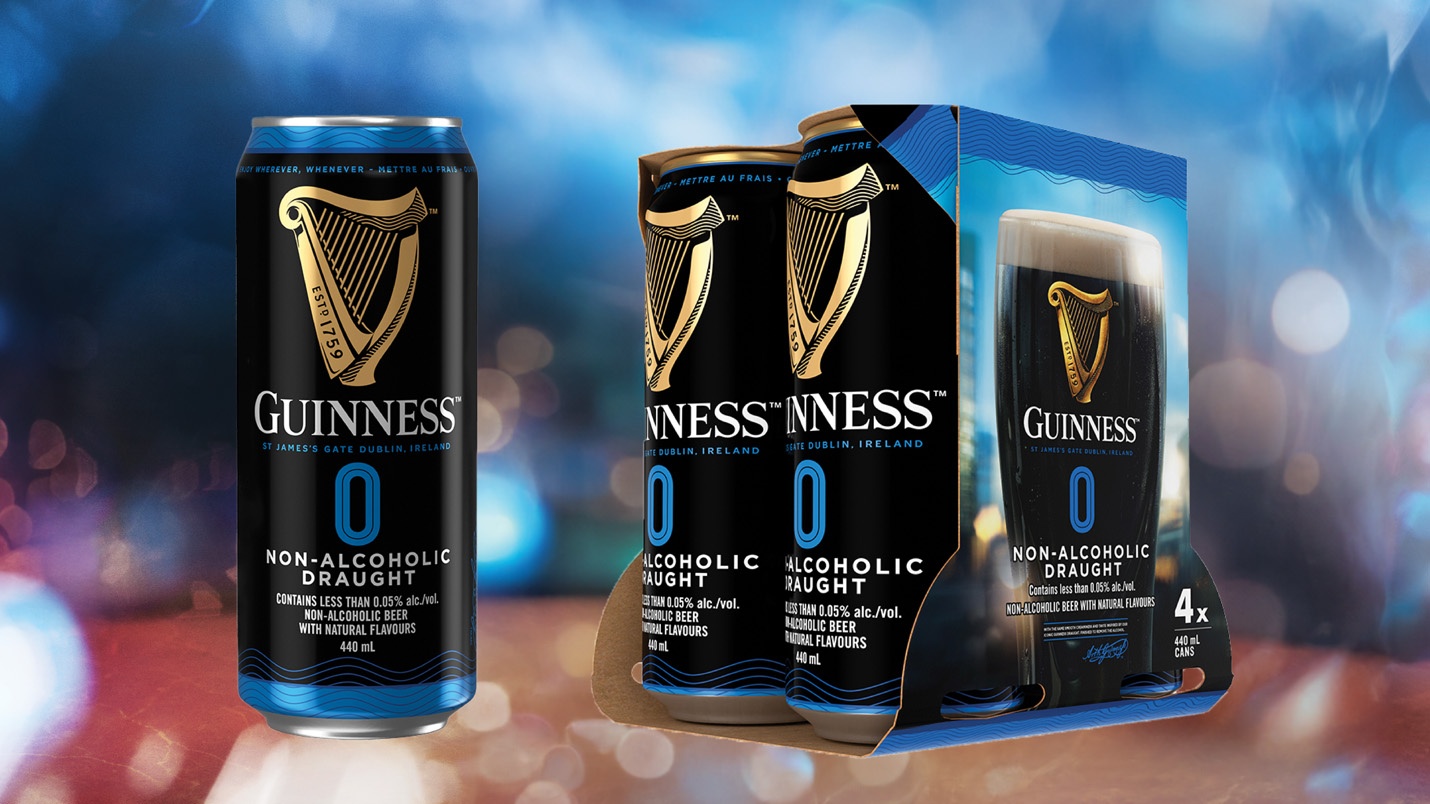
| Key Fact | Answer |
|---|---|
| Calories per 100ml | 17 kcal |
| Calories per 440ml can | ~75 kcal |
| Calories per pint | ~97 kcal |
| Carbs per can | 16.7g |
| Sugar per can | ~3g |
| Fat | 0g |
| Alcohol | <0.05% ABV |
| Vegan | Yes |
| Gluten-free | No |
| Keto-friendly | Not for strict keto |
No. The “0” in Guinness 0 refers to alcohol content, not calories. A standard 440ml can contains approximately 75 calories.
A full pint (568ml) of Guinness 0 contains approximately 97 calories — less than half the 210 calories found in a pint of regular Guinness Draught.
A small amount of natural fructose is added to Guinness 0 to replace the flavour and body lost when alcohol is removed. This adds carbs but far fewer calories than the alcohol it replaces.
It can support weight loss when substituted for regular Guinness, saving around 113 calories per pint. It is not calorie-free though, so moderation still matters within a balanced diet.
Yes. Guinness removed isinglass from its production process in 2018. Both Guinness Draught and Guinness 0 are now fully vegan-certified.
No. Guinness 0 is brewed with malted barley, which contains gluten. It is not suitable for people with coeliac disease or diagnosed gluten sensitivity.
Guinness 0 contains a maximum of 0.05% ABV — the lowest amount detectable by standard laboratory equipment. It is labelled as 0.0% ABV and considered alcohol-free for all practical purposes.
Not for strict keto. A 440ml can contains about 16.7g of carbohydrates, which is close to the full daily carb limit on a strict ketogenic diet. It can fit into moderate low-carb diets with tracking.
Very similar. It has the same roasted barley backbone, coffee and chocolate notes, and creamy nitro pour. Most people can only detect differences in a direct side-by-side comparison.
Pour slowly into a clean pint glass at a 45-degree angle, let the nitrogen cascade settle fully, and serve cold at 6–8°C (43–46°F) for the best flavour and appearance.
Understanding 0 Guinness calories starts with one important clarification: the “0” refers to alcohol, not calories. Guinness 0 contains around 17 calories per 100ml, 75 calories per can, and 97 calories per pint.
That is less than half the calorie count of regular Guinness Draught, making it one of the most calorie-efficient dark beers available in 2026.
It is fat-free, very low in sugar, fully vegan, and brewed with the same care and ingredients as the original.
Whether you are managing your weight, reducing alcohol, or simply curious about what you are drinking, Guinness 0 delivers exceptional value in both taste and nutrition.