
How many calories in a pint of Guinness Zero is one of the most searched beer nutrition questions in 2026, and the answer surprises almost everyone who asks it. Guinness Zero is not a zero-calorie drink — the “zero” refers to alcohol, not calories.
A full pint of Guinness Zero contains approximately 97 calories, compared to around 210 calories in a regular pint of Guinness Draught. That is less than half the calories, with the same iconic roasted flavour and creamy nitro pour.
Guinness Zero, officially called Guinness 0.0, is the non-alcoholic version of the world-famous Irish dry stout. It was developed over four years by the brewing team at St. James’s Gate in Dublin, Ireland, and launched publicly in 2021.
It contains a maximum of 0.05% ABV, the lowest level of alcohol detectable by standard laboratory equipment. For all practical and legal purposes, it is classified as completely alcohol-free.
The beer is brewed using the exact same ingredients as regular Guinness — water, malted barley, roasted barley, hops, and yeast. The key difference is that once brewing is complete, the alcohol is gently removed through a cold filtration process that preserves the signature flavour and creamy texture.
A standard UK pint of Guinness Zero (568ml) contains approximately 97 calories. This is based on the official nutritional value of 17 kcal per 100ml multiplied by the 568ml pint volume.
Some sources cite figures between 90 and 100 calories per pint depending on pour accuracy and serving temperature, but 97 kcal is the most consistent estimate using official label data.
This is a dramatic reduction from regular Guinness Draught, which contains approximately 210 calories per 568ml pint. Choosing Guinness Zero over regular Guinness saves you roughly 113 calories per pint.
The calorie count changes depending on which format you are drinking. Here is a complete breakdown across every available serving size.
| Serving Size | Volume | Calories (kcal) |
|---|---|---|
| Per 100ml | 100ml | 17 kcal |
| 330ml Bottle | 330ml | ~56 kcal |
| Standard UK Can | 440ml | ~75 kcal |
| 500ml Can (Tesco) | 500ml | ~85 kcal |
| US Large Can | 14.9 fl oz (440ml) | ~75 kcal |
| Full Pint Glass | 568ml | ~97 kcal |
The 440ml can is the most widely purchased format in the UK and Ireland and sits at approximately 75 calories — less than half a regular pint of Guinness Draught.
Calories are only one piece of the nutritional picture. Here is the complete nutrition profile of Guinness Zero per 100ml and per 440ml can.
| Nutrient | Per 100ml | Per 440ml Can |
|---|---|---|
| Energy | 17 kcal | ~75 kcal |
| Carbohydrates | 3.8g | ~16.7g |
| of which Sugars | 0.7g | ~3.1g |
| Fat | 0g | 0g |
| Saturated Fat | 0g | 0g |
| Protein | trace | trace |
| Fibre | trace | trace |
| Sodium | trace | trace |
| Alcohol (ABV) | 0.05% max | 0.05% max |
Guinness Zero is completely fat-free, very low in sugar, and contains only trace amounts of protein from the barley used in brewing. It also contains negligible amounts of B vitamins, potassium, and magnesium that occur naturally in malted barley.
Understanding how many calories in a pint of Guinness Zero is most useful when placed directly alongside regular Guinness. Here is the full side-by-side comparison.
| Category | Guinness Zero | Regular Guinness Draught |
|---|---|---|
| ABV | 0.05% max | 4.1–4.2% |
| Calories per 100ml | 17 kcal | 35 kcal |
| Calories per 440ml can | ~75 kcal | ~154 kcal |
| Calories per 568ml pint | ~97 kcal | ~200–210 kcal |
| Carbohydrates per 100ml | 3.8g | 2.7g |
| Sugar per 100ml | 0.7g | 0.2g |
| Fat per 100ml | 0g | 0g |
| Calorie saving per pint | — | ~113 kcal saved |
Guinness Zero has more carbohydrates per 100ml than regular Guinness, which surprises many people. A small amount of natural fructose is added during production to compensate for the flavour and body that alcohol provides. However, the total calorie count is still dramatically lower because alcohol itself contains 7 kcal per gram.
This is the science behind the calorie difference between Guinness Zero and regular Guinness.
Alcohol (ethanol) contains 7 kcal per gram. Fat contains 9 kcal per gram, carbohydrates and protein each contain 4 kcal per gram. Alcohol sits right between fat and carbohydrate in terms of calorie density.
In a regular pint of Guinness at 4.2% ABV, a large portion of the total 200+ calories comes directly from alcohol. The malt, barley, and hops contribute far fewer calories than the ethanol itself.
When cold filtration removes the alcohol entirely, those 7-kcal-per-gram units disappear. Even with a small fructose addition to restore flavour balance, the net calorie result drops by more than 50%. That is exactly why Guinness Zero is so much lower in calories despite tasting so remarkably similar to the original.
The brewing process behind Guinness Zero helps explain both its calorie profile and its surprisingly authentic taste.
Guinness Zero starts life as a full-strength Guinness Draught. The beer is brewed completely to the same standard as the regular product — same St. James’s Gate brewery, same ingredients, same quality controls, and the same iconic nitrogen-based carbonation process.
Once brewing is complete, the alcohol is removed using cold filtration. This process carefully strips the alcohol from the liquid while minimising thermal stress, which matters because heat damages the aromatic compounds responsible for Guinness’s distinctive coffee and roasted malt character.
After filtration, different batches are blended to balance the flavour profile. A small amount of fructose is added to restore the body and mouthfeel that alcohol normally provides. The result is a drink that is strikingly close to the alcoholic original in every sensory dimension.
Knowing how Guinness Zero ranks among other non-alcoholic beers helps put its calorie count in proper context.
| Non-Alcoholic Beer | Calories per Can (approx.) | ABV |
|---|---|---|
| Partake Brewing Pale | ~15 kcal | 0.3% |
| Lucky Saint | ~53 kcal | 0.5% |
| Beck’s Blue | ~66 kcal | 0.05% |
| Heineken 0.0 | ~69 kcal | 0.05% |
| Guinness Zero (440ml) | ~75 kcal | 0.05% |
| Brewdog Nanny State | ~80 kcal | 0.5% |
| Peroni Libera 0.0% | ~88 kcal | 0.0% |
| Corona Cero | ~88 kcal | 0.0% |
Guinness Zero is not the absolute lowest-calorie non-alcoholic option. Beers like Partake and Lucky Saint are lower. However, Guinness Zero delivers a significantly richer flavour experience and a far more satisfying drinking ritual than most ultra-low-calorie alternatives.
Guinness Zero can meaningfully support a weight management goal when substituted for regular Guinness or other alcoholic drinks. The calorie saving of approximately 113 calories per pint adds up quickly.
If you were drinking three regular pints of Guinness per evening and switched entirely to Guinness Zero, you would save approximately 339 calories in a single session. Over a month of weekly pub nights, that amounts to over 1,350 calories saved — a real and impactful contribution to a calorie deficit.
However, Guinness Zero is not a free drink in calorie terms. At 75–97 calories per serving, multiple cans still contribute meaningfully to daily intake. Moderation remains important even when choosing the non-alcoholic version.
Guinness Zero is not ideal for a strict ketogenic diet. A 440ml can contains approximately 16.7g of carbohydrates, which is close to the full daily carb limit on a standard keto diet of 20g per day.
For relaxed low-carb diets that allow up to 100g of carbohydrates per day, Guinness Zero can fit in occasionally without disrupting progress. The key is tracking the carbs accurately and accounting for them within your daily allowance.
If strict keto compliance is essential, beers like Partake Brewing (approximately 15 kcal and under 1g carbs per can) are a far better fit for your goals.
No. Guinness Zero is not gluten-free. It is brewed with malted barley and roasted barley, both of which naturally contain gluten. It is not suitable for people with coeliac disease or severe gluten sensitivity.
This is an important distinction because some non-alcoholic beers are specifically brewed using gluten-free grains such as sorghum or millet. Guinness Zero is not one of them.
People with diagnosed coeliac disease should avoid Guinness Zero entirely. Those with mild gluten intolerance should consult a doctor before consuming it.
Yes. Guinness Zero is fully vegan-friendly. Historically, Guinness used isinglass — a fining agent derived from fish bladders — to clarify the beer. In 2018, Guinness updated its entire production process to remove isinglass from filtration.
Both regular Guinness Draught and Guinness Zero now carry confirmed vegan status. This was a significant change that opened both products up to a large segment of consumers who had previously avoided them for ethical reasons.
Athletes and fitness-focused consumers are among the fastest-growing segments of non-alcoholic beer drinkers in 2026, and Guinness Zero fits well into an active lifestyle for several reasons.
Regular alcohol impairs protein synthesis, disrupts sleep quality, raises cortisol levels, and slows post-training recovery. Guinness Zero removes every one of those drawbacks while preserving the social drinking experience and the ritual of enjoying a pint after a training session, match, or race.
At under 100 calories per pint, Guinness Zero fits comfortably within post-training nutrition windows. It is not a recovery product in any clinical sense, but it is a far smarter choice than regular beer for people who care about their physical performance and body composition.
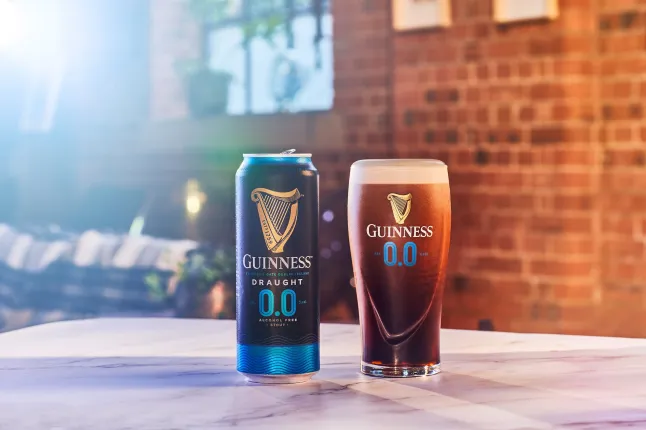
Several widely repeated misconceptions about Guinness Zero calories are worth correcting clearly and directly.
Misconception 1: Guinness Zero has zero calories. False. The “zero” refers to alcohol content, not calories. A 440ml can contains approximately 75 kcal and a full pint contains around 97 kcal.
Misconception 2: Guinness Zero has more calories than regular Guinness because of added sugar. Also false. Despite slightly higher carbohydrates per 100ml due to added fructose, the total calorie count is still less than half of regular Guinness because removing alcohol removes the most calorie-dense ingredient in beer.
Misconception 3: Dark beer always means more calories. False. The dark colour in Guinness comes from roasted barley, not from calorie density. Colour is not a reliable indicator of calorie content in beer.
Misconception 4: All non-alcoholic beers are low calorie. Not always true. Some non-alcoholic craft beers contain significant residual sugars and can be higher in calories than expected. Always check the label before assuming.
This calculation is striking and worth seeing clearly.
If you were drinking one regular pint of Guinness per day and switched entirely to Guinness Zero, you would save approximately 113 calories per pint. Over a full year of 365 days, that equals approximately 41,245 calories saved.
In pure energy terms, that is theoretically equivalent to more than 11 pounds of body fat — though real-world outcomes always depend on total diet and individual metabolism.
Even switching just two evenings per week from regular Guinness to Guinness Zero would save approximately 11,752 calories per year. The compounding effect of consistent lower-calorie choices is substantial over time.
Guinness Zero has become one of the most popular drink choices during Dry January in the UK and Ireland. Non-alcoholic beer sales surge significantly every January, and Guinness Zero consistently ranks among the top-selling products in the category.
The beer supports the Dry January experience particularly well because it replicates the pub ritual almost perfectly. The appearance, the creamy nitrogen head, the dark colour, and the roasted malt flavour all remain completely intact.
Participants can attend social events, order at the bar, and drink from a pint glass without drawing attention or feeling excluded from the group experience. For many people, that social continuity is the most important factor in successfully completing Dry January.
More people in 2026 are adopting mindful drinking practices — reducing alcohol consumption without eliminating the social pub experience entirely. Non-alcoholic beer sales in the UK grew by over 28% in recent years, and Guinness Zero is one of the leading products driving that growth.
For many people, choosing Guinness Zero is not primarily about calories. It is about maintaining mental clarity, physical wellbeing, and social connection simultaneously — without the cognitive impairment, dehydration, and next-day effects that alcohol brings.
The option to have a pint that looks, pours, and tastes like Guinness without any of the downsides of alcohol is genuinely valuable in 2026. Drivers, people on medication, those with health conditions, and anyone who simply wants to stay sharp can all benefit from the choice.
Guinness Zero pairs exceptionally well with food thanks to its roasted malt character, coffee notes, and creamy nitrogen texture. These flavour properties make it a natural match for rich and hearty dishes.
Traditional Irish stew is the classic pairing — the deep malt notes complement slow-cooked lamb and root vegetables perfectly. Beef and barley soup, shepherd’s pie, grilled sausages, and strong aged cheddar all work beautifully with the roasted character of the stout.
For dessert, the coffee and dark chocolate undertones in Guinness Zero make it an excellent match for dark chocolate cake, tiramisu, and coffee ice cream. A Guinness Zero float with vanilla ice cream is a popular non-alcoholic twist on the classic stout float.
Putting Guinness Zero’s calorie count next to other everyday drinks makes the numbers much more meaningful.
| Drink | Serving Size | Approximate Calories |
|---|---|---|
| Guinness Zero | Pint (568ml) | ~97 kcal |
| Coca-Cola (regular) | 330ml can | ~139 kcal |
| Orange Juice | 250ml glass | ~115 kcal |
| Semi-Skimmed Milk | 250ml glass | ~120 kcal |
| Glass of Red Wine | 175ml | ~133 kcal |
| Gin and Tonic | Single (250ml total) | ~120 kcal |
| Standard Lager | Pint (568ml) | ~180–230 kcal |
| Regular Guinness Draught | Pint (568ml) | ~210 kcal |
| Corona (regular) | 330ml bottle | ~148 kcal |
A full pint of Guinness Zero contains fewer calories than a standard glass of orange juice, a small glass of red wine, and most regular lagers. That comparison alone underlines just how impressive the calorie profile of Guinness Zero is.
Guinness Zero is widely stocked across major UK retailers. You can find it at Tesco, Sainsbury’s, ASDA, Morrisons, Waitrose, and most supermarket chains. It is available in 440ml four-packs and 500ml single cans throughout the year.
A four-pack of 440ml cans typically retails between £4.50 and £6.00 depending on the retailer and current promotions. This makes it competitively priced relative to other premium non-alcoholic beers.
Guinness Zero is also available on draught in a growing number of UK pubs, served using a special microdraught system that delivers the same creamy nitrogen pour the brand is famous for.
A full UK pint of Guinness Zero (568ml) contains approximately 97 calories, based on the official figure of 17 kcal per 100ml. This is less than half the 210 calories in a regular pint of Guinness Draught.
A standard 440ml can of Guinness Zero contains approximately 75 calories. This is the most commonly purchased format in the UK and one of the lowest-calorie non-alcoholic stout options available.
No. Guinness Zero is not zero calories. The “zero” refers to alcohol content at 0.0% ABV, not calorie content. A 440ml can contains around 75 kcal and a full pint contains approximately 97 kcal.
Yes, slightly more — 3.8g versus 2.7g per 100ml. Fructose is added during production to replace flavour lost when alcohol is removed. However, total calories are still less than half of regular Guinness because alcohol is more calorie-dense than sugar.
It can support weight loss when substituted for regular Guinness, saving approximately 113 calories per pint. It is not calorie-free though, so moderation still matters as part of an overall balanced and calorie-conscious diet.
No. Guinness Zero is brewed with malted barley, which contains gluten. It is not suitable for people with coeliac disease or serious gluten sensitivity and should be avoided by anyone with a clinically diagnosed gluten condition.
Yes, Guinness Zero is fully vegan. Guinness removed isinglass from its production process in 2018, and both Guinness Draught and Guinness Zero now carry confirmed vegan-friendly status.
No, not for strict keto. A 440ml can contains approximately 16.7g of carbohydrates, which is close to the full daily carb allowance on a ketogenic diet. For relaxed low-carb eating, it can fit in occasionally with careful tracking.
Guinness Zero is very close to regular Guinness in taste, colour, and texture. The nitrogen pour, creamy head, roasted malt, and coffee notes are all faithfully preserved. Most casual drinkers cannot detect a meaningful difference in a blind test.
Guinness Zero contains a maximum of 0.05% ABV, comparable to some fruit juices in alcohol content. However, the safest approach during pregnancy is always to consult your doctor or midwife before consuming any product that is not entirely and certifiably alcohol-free.
How many calories in a pint of Guinness Zero comes down to approximately 97 calories per full 568ml pint, making it one of the most impressive low-calorie choices in the non-alcoholic beer market in 2026.
At just 17 kcal per 100ml and approximately 75 calories in a standard 440ml can, Guinness Zero delivers less than half the calories of regular Guinness Draught without sacrificing the iconic creamy nitrogen pour, deep roasted malt character, or the coffee-chocolate flavour notes that define the brand.
Whether you are managing your weight, observing Dry January, training for a performance goal, or simply choosing to drink more mindfully, Guinness Zero fits comfortably into a health-conscious lifestyle.
The calorie savings compound quickly — over 113 calories saved per pint, more than 1,300 calories saved over a month of consistent switching. For anyone who enjoys Guinness and cares about what they put into their body, Guinness Zero deserves a permanent place in the fridge in 2026.