
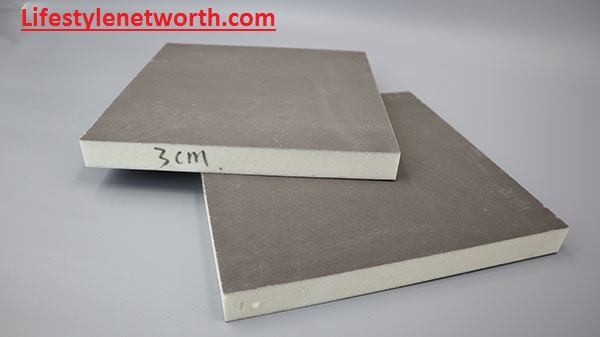
Is PIR insulation banned in the UK? This is one of the most searched questions by architects, contractors, and homeowners right now.
The short answer is no, PIR insulation is not completely banned, but significant restrictions apply depending on building height, type, and application.
Since the Grenfell Tower tragedy in 2017, UK building regulations have changed dramatically.
Understanding where PIR insulation is still permitted, where it is effectively banned, and what the rules look like in 2026 is essential for anyone involved in construction, renovation, or property development in the UK.
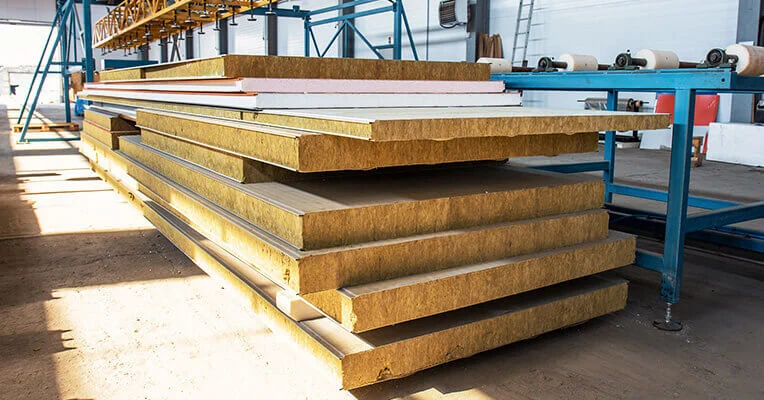
PIR stands for polyisocyanurate, a type of rigid foam insulation board widely used across the UK construction industry. It is made by reacting polyol with polymeric isocyanate in the presence of a blowing agent, forming a closed-cell rigid foam.
PIR insulation is popular because it offers a very high thermal performance relative to its thickness. A 100mm PIR board can achieve the same thermal resistance as roughly 170mm of mineral wool insulation.
It is used in roofs, floors, walls, and cavities. Brands like Celotex, Kingspan, and Recticel are among the most well-known PIR insulation manufacturers in the UK.
Is PIR insulation banned outright across all UK buildings? No. PIR insulation remains a legal and widely used product in 2026, but its use is heavily restricted in specific contexts, particularly in the external walls of residential buildings above certain height thresholds.
The confusion around whether PIR insulation is banned largely stems from the post-Grenfell regulatory changes that came into effect from 2018 onwards. These changes did not ban PIR insulation entirely but effectively removed it from use in external wall systems of taller residential buildings.
Understanding the specific height thresholds and building types is critical before specifying or purchasing PIR insulation for any construction project.
The Grenfell Tower fire of June 2017 killed 72 people and changed the entire landscape of UK building regulations. Investigations found that combustible cladding and insulation materials played a central role in how rapidly the fire spread.
Celotex RS5000, a PIR insulation board, was used in the Grenfell Tower refurbishment. The Phase 2 Grenfell Tower Inquiry Report, published on 4 September 2024, found that product manufacturers engaged in deliberate misrepresentation of fire test data.
Following Grenfell, the UK Government introduced sweeping regulatory changes to restrict combustible materials on the external walls of high-rise and high-risk buildings.
In December 2018, the UK Government introduced Regulation 7(2) to the Building Regulations. This rule banned the use of combustible materials in the external walls of relevant residential buildings over 18 metres in height.
This was the first time PIR insulation and other combustible rigid foams were effectively prohibited in specific building contexts. At 18m and above, only materials rated A1 or A2 on the Euroclass fire classification system were permitted.
PIR insulation typically achieves a Euroclass B to F rating, meaning it does not meet the A1 or A2 threshold required for high-rise external walls.
In December 2022, the Government extended the combustible materials ban to cover residential buildings between 11 metres and 18 metres in height. This was a significant expansion of the original 2018 restrictions.
Under these updated rules, all insulation and filler materials in the external walls of residential buildings with a floor above 11m must now achieve at least Class A2-s1,d0 on the Euroclass fire classification system.
This effectively means that all rigid foams, including PIR, PUR, EPS, and XPS, are banned from the external walls of residential buildings above 11 metres in height.
The clearest way to understand whether PIR insulation is banned in your context is to look at building height.
| Building Height | PIR in External Walls Permitted? | Rule Applied |
|---|---|---|
| Under 11m residential | Yes, with conditions | Building Regulations Part B |
| 11m to 18m residential | No (effectively banned) | Regulation 7 + ADB Dec 2022 |
| Over 18m residential | No (banned since 2018) | Regulation 7(2) 2018 |
| Flat roofs (all heights) | Yes, as part of a suitable system | IMA Guidance Nov 2024 |
| Commercial buildings | Depends on use and height | Approved Document B |
| Low-rise domestic roofs | Yes | Part L Building Regs |
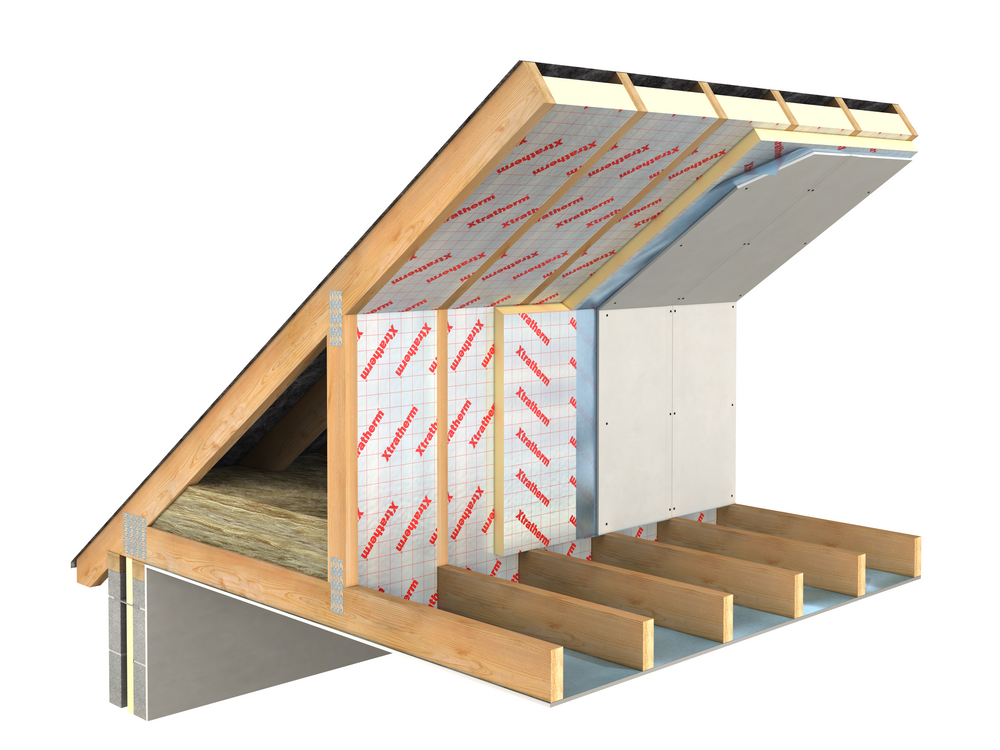
PIR insulation is still entirely legal and widely used in a number of applications across the UK. It has not been removed from the market and remains a top choice for many projects.
The restrictions on PIR insulation are clear and apply primarily to external wall systems in residential buildings.
Approved Document B (ADB) is the section of the UK Building Regulations that deals with fire safety. It sets out the minimum standards for fire safety in buildings in England and Wales and directly governs where PIR insulation can and cannot be used.
The December 2022 updates to ADB were the most significant changes since the 2018 Grenfell response. These changes extended the height-based restrictions and tightened the rules on what materials can be used in external wall systems.
A Government response published on 2 September 2024 also confirmed that national fire classifications will be removed from ADB over time, with the European standard becoming the sole specification route. This will further tighten how PIR insulation is classified and specified.
Understanding PIR’s fire behaviour helps explain why these regulations exist. PIR is a thermoset polymer, meaning it does not melt in a fire like thermoplastics such as EPS or XPS.
When exposed to fire, PIR forms a carbonaceous char rather than dripping burning material. This is a positive fire behaviour characteristic. However, PIR is still classified as combustible, and in external wall applications it can provide fuel for fire spread.
PIR typically achieves a Euroclass B to F fire classification depending on the specific product, thickness, and system configuration. This falls short of the A1 or A2 rating required for external walls of buildings above 11m.
The Euroclass fire classification system is the European standard used to rate the combustibility of construction materials.
| Euroclass Rating | Description | Permitted in High-Rise Ext. Walls? |
|---|---|---|
| A1 | Non-combustible | Yes |
| A2 | Very limited combustibility | Yes (with s1,d0 smoke conditions) |
| B | Very limited contribution to fire | No (above 11m residential) |
| C | Limited contribution to fire | No |
| D | Acceptable contribution to fire | No |
| E | Acceptable contribution to fire | No |
| F | No performance determined | No |
PIR insulation typically falls in the B to F range, which is why it cannot be used in the external walls of residential buildings above 11m.
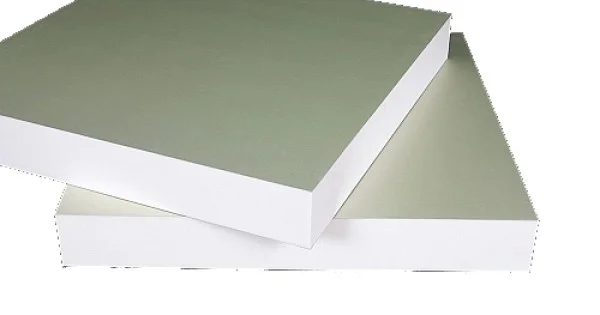
While Part B deals with fire safety, Part L of the UK Building Regulations deals with energy efficiency and thermal performance. PIR insulation plays a major role in helping buildings meet Part L compliance.
Part L sets out maximum U-values that different building elements must achieve. PIR insulation is one of the most efficient ways to meet these U-value targets with minimal thickness.
There are no restrictions on PIR insulation in Part L. Its restrictions come entirely from Part B and Regulation 7.
For buildings where PIR insulation is permitted, understanding the required thickness to meet U-value targets is essential.
| Application | Target U-Value (W/m²K) | Approximate PIR Thickness Needed |
|---|---|---|
| Flat roof | 0.16 | 140–200mm |
| Pitched roof | 0.18 | 100–150mm |
| External wall | 0.17 | 125–200mm |
| Floor | 0.25 | 90–120mm |
These values are indicative. The exact thickness required depends on the specific PIR product, its lambda value, and the overall construction system.
Is PIR insulation banned in Scotland, Wales, and Northern Ireland? The rules differ across the four nations, and it is important to verify which regulations apply to your specific project location.
For buildings where PIR insulation is banned, non-combustible alternatives must be used. The most common choices are mineral wool-based products.
One of the practical consequences of the PIR insulation ban in high-rise buildings is a direct impact on construction costs and thermal performance.
Non-combustible mineral wool insulation typically requires greater thickness to achieve the same U-value as PIR. A 270mm mineral wool layer may be needed where a 120mm PIR board would have sufficed.
This thicker wall construction increases material costs, reduces usable internal floor area, and can create challenges on constrained sites. It is one of the most debated aspects of the post-Grenfell regulatory changes.
The Phase 2 Grenfell Tower Inquiry Report, published in September 2024, had significant implications for PIR insulation and the construction industry more broadly.
The report found that manufacturers engaged in systematic dishonesty around fire test data. Celotex, whose RS5000 PIR board was used at Grenfell, was found to have rigged fire tests and misled the market.
The 2025 Construction Products Reform Green Paper, published by the UK Government in February 2025, set out further plans to reform how construction products including insulation are manufactured, tested, and sold.
There are several widespread misconceptions about the PIR insulation ban that lead to confusion among contractors and specifiers.
Misconception 1: PIR insulation is completely banned in the UK. This is false. PIR insulation remains legal and widely used in roofs, floors, low-rise walls, and cavity applications.
Misconception 2: The ban only applies to buildings over 18m. This was true until 2022, but the ban now extends to residential buildings above 11m for external wall applications.
Misconception 3: PIR can always be used if a fire test is passed. In some cases, passing a large-scale BS 8414 fire test could provide an alternative route to compliance, but this is prohibitively expensive for most projects and the tested system must be replicated exactly.
Misconception 4: The ban applies to all building types. The strict ban applies primarily to residential and certain other high-risk building types. Commercial buildings have different rules and PIR may be permitted in more contexts.
One important area of clarity in 2026 is that PIR insulation can be used in flat roofs on buildings of all heights in England. The IMA published updated guidance specifically on this in November 2024.
PIR insulation as part of a tested flat roofing system can achieve the highest fire classification of BROOF(t4) when tested in accordance with the relevant European standard. This means it meets the external fire exposure requirements for flat roofs.
The key is that PIR must be used as part of a system that has been tested and classified to the appropriate standard. It cannot simply be used in any configuration without considering fire performance.
If you are specifying or installing insulation in 2026, the guidance is clear but requires careful attention to building type and height.
Always check building height first. If the residential building has a floor above 11m, PIR insulation cannot be used in the external wall system. Non-combustible alternatives must be specified from the outset.
For roofs, refer to IMA guidance. The updated November 2024 IMA guidance provides detailed advice on using PIR in flat roofs across all building heights. This should be the reference document for all flat roof projects.
Work with a fire consultant. For complex or borderline projects, engaging a fire safety consultant to review material specifications against current Approved Document B requirements is strongly recommended.
Keep documentation. The building safety golden thread concept introduced post-Grenfell means that material specifications, fire test data, and compliance evidence must be recorded and maintained throughout the building’s lifecycle.
Despite the restrictions in high-rise external walls, PIR insulation remains a critical product in the UK’s drive towards Net Zero by 2050. Its high thermal performance in a thin profile makes it an efficient and cost-effective choice for the many millions of low-rise homes that need better insulation.
The ECO4 scheme and the Great British Insulation Scheme (GBIS) both fund insulation upgrades in low-income households, and PIR insulation is an eligible product under both programmes for appropriate applications.
PIR insulation accounts for around 40% of the total thermal insulation market in the UK according to the Insulation Manufacturers Association, and this market share is not expected to change significantly for low-rise applications.
No, PIR insulation is not completely banned. It is banned from external walls of residential buildings above 11m in height but remains widely used in roofs, floors, and low-rise domestic applications.
Following the Grenfell Tower fire in 2017, PIR insulation was found to be combustible and unable to meet the A1 or A2 Euroclass fire rating required for external walls of residential buildings above certain heights.
Since December 2022, the ban applies to residential buildings with any floor above 11 metres. The original 2018 ban only covered buildings above 18 metres.
Yes, PIR insulation can be used in flat roofs on buildings of all heights in England when used as part of a correctly specified and tested system that meets the required fire classification.
Mineral wool insulation, including stone wool and glass wool, is the most common non-combustible replacement for PIR in high-rise external wall systems. These products achieve A1 or A2 Euroclass ratings.
Scotland has its own building standards and does not fall under England’s Approved Document B. The specific PIR restrictions in Scotland differ from England, and the relevant Scottish building standards should be consulted.
In low-rise buildings under 11m, PIR insulation can still be used in cavity wall applications. In residential buildings above 11m, the external wall insulation must achieve A2 or A1 fire classification.
Yes, PIR insulation is permitted in floor applications across all building types. There are no height-based restrictions on PIR insulation used in floor construction.
Both PIR and PUR are rigid foam insulation types that fall in the Euroclass B to F range. Both are effectively banned from external walls of residential buildings above 11m under the same Regulation 7 rules.
PIR insulation typically achieves a Euroclass B to F reaction to fire classification depending on the product. This does not meet the A1 or A2 minimum required for external walls of residential buildings above 11 metres.
Is PIR insulation banned? The clear answer in 2026 is that PIR insulation is not banned outright but faces strict and enforceable restrictions in specific applications.
Since the 2018 post-Grenfell regulations and the December 2022 extension of the combustible materials ban to buildings above 11 metres, PIR insulation has been effectively removed from external wall use in the majority of residential buildings above that height threshold.
However, PIR insulation remains a legal, popular, and highly effective product for roofs, floors, and low-rise domestic insulation across the UK. Millions of homes and buildings continue to benefit from its exceptional thermal performance every day.
For any construction project in 2026, the golden rule is simple: always check the building height, refer to the latest Approved Document B guidance, consult an accredited professional, and ensure all material specifications are fully documented as part of the building safety golden thread.